CA metro

Restaurant financing in Santa Clarita.

Family-heavy suburbs and film production crews create two very different customer bases in Santa Clarita, and a menu built for one doesn't automatically satisfy the other.

How do Santa Clarita food businesses get funded?

Santa Clarita operators start with a free review with a specialist, share recent business bank statements, and are matched to the programs that fit the use of funds. Working capital funds in 1 to 3 business days after you choose an offer, equipment in 1 to 5, and buildout capital in 1 to 4 weeks.

Estimates, not offers: Amounts, terms, and funding times are estimates based on programs commonly available in food service. Actual terms vary by program, lender underwriting, time in business, revenue, and credit profile. Nothing here is an offer of credit or a guarantee of approval. See source and method.

How Santa Clarita eats, and what that does to cash

01

Where Santa Clarita eats

Old Town Newhall carries Santa Clarita's most walkable dining strip, with wine bars, breweries, and chef driven restaurants housed in renovated early 1900s storefronts along Main Street. Valencia, the city's planned commercial core, holds chain casual restaurants and food courts inside Westfield Valencia Town Center, drawing families and office workers from the nearby corporate parks. Canyon Country, on the city's east side, leans toward value priced Mexican and Asian counter service serving a mix of commuter and blue collar households. Stevenson Ranch and the area near Six Flags Magic Mountain see seasonal restaurant traffic tied directly to park attendance rather than year round residential demand. Prices in Valencia and Old Town run higher than Canyon Country, reflecting median household income differences across the city's geographically separated districts. College of the Canyons students add a lunch crowd to restaurants near the Valencia campus during the academic year. The gap between Old Town's evening wine bar crowd and Canyon Country's daytime counter service creates two distinct pricing tiers within one city limit.
02

What Santa Clarita serves

Santa Clarita's food identity leans toward brewery kitchens and gastropub menus in Old Town Newhall, where taprooms serve elevated bar food alongside local beer to an adult evening crowd. Valencia's food court and chain casual restaurants serve fast casual bowls, sandwiches, and pizza to office workers from the Valencia Corporate Center during weekday lunch. Patio dining is common across the city given the reliably dry Santa Clarita Valley climate, with restaurants in both Old Town and Valencia building outdoor seating into their footprint. Canyon Country's counter service Mexican and Vietnamese restaurants serve value priced plates to a commuter heavy population that leaves the valley for Los Angeles jobs. Film and television production crews working at nearby studio lots order catering and grab and go meals in bulk on shoot days, an irregular but recurring demand source. Late night dining is limited outside a few Old Town bars open past 10 p.m. Six Flags Magic Mountain visitors drive seasonal counter service demand near the park entrance. Studio catering orders that arrive and vanish with production schedules create unpredictable single day spikes in kitchen output.

03

Santa Clarita's calendar

Six Flags Magic Mountain, open year round but busiest from Memorial Day through Labor Day, sets the city's clearest tourism season and drives restaurant traffic near the park's Valencia Boulevard approach. Santa Clarita Studios and nearby soundstages bring film and television production crews whose catering needs spike unpredictably around shoot schedules rather than fixed months. College of the Canyons runs a fall and spring academic calendar that adds student dining demand near the Valencia campus, dropping off sharply during summer and winter breaks. The Santa Clarita Marathon and Cowboy Festival, both held in the spring, bring short bursts of visitor traffic to Old Town Newhall. Corporate tenants in the Valencia Industrial Center, including aerospace and biotech employers, keep weekday lunch demand steady but drop off entirely on weekends. Wildfire season, running roughly June through October in the surrounding hills, occasionally disrupts outdoor dining with air quality advisories. Summer's combined theme park and school break traffic is the single largest revenue driver, and its August end creates the sharpest single month drop in city wide restaurant receipts.

04

Growth and cost in Santa Clarita

New restaurant development concentrates in Valencia, where mixed use projects near the Westfield mall and the Vista Canyon transit oriented development have added ground floor retail space built specifically for food tenants. Old Town Newhall's historic buildings require costly seismic retrofits and facade preservation work that slow buildout timelines for new operators entering older storefronts. Rent in Valencia runs above Canyon Country and older Newhall stock, reflecting the city's higher median household income in its planned communities. Labor costs compete with the retail and corporate office jobs concentrated in Valencia's business parks, pushing wages above regional Inland Empire levels. City of Santa Clarita permitting for patio expansions requires additional review given the valley's fire hazard severity zone designation covering much of the surrounding hillside. Utility costs climb in late summer when HVAC systems run continuously against inland valley heat that regularly exceeds coastal Los Angeles temperatures. Buildout delays are common in Old Town due to historic preservation requirements layered onto standard health and safety upgrades, and those delays push opening dates past planned lease start payments in most historic district projects.

Food service operation in Santa Clarita
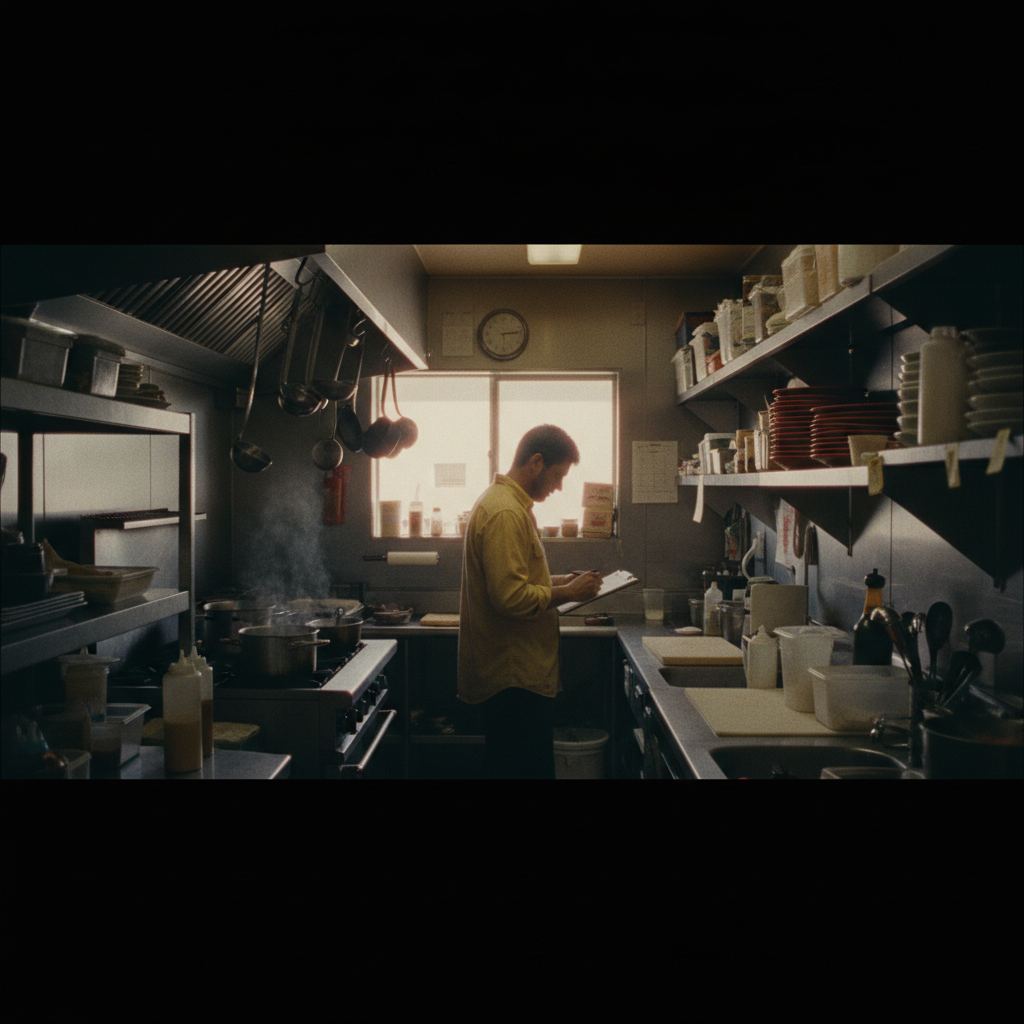
Santa Clarita food service. Illustration generated with AI. Not a photograph of a Foody Finance client or location.

What drives financing conversations in Santa Clarita

Capital here often funds catering capacity for film and TV production crews at nearby studio lots, alongside standard buildout for family dining in growing tracts like Valencia. A caterer landing a production contract needs working capital to cover ingredient costs and crew wages weeks before the studio pays the invoice.

Revenue and seasonality in Santa Clarita

Family dining in neighborhoods like Valencia holds a fairly even weekly pattern, while catering tied to film and TV production runs in bursts around shooting schedules that can shift with little notice. That unevenness means a caterer's biggest checks often arrive well after the crew has finished eating, so payroll has to be covered from reserves rather than the invoice itself.

What this does to your numbers

If you cater for film crews, you often have to pay your staff and buy food weeks before the production company pays you back.

Permitting in Santa Clarita, and what it costs to wait

Los Angeles County Environmental Health issues food facility permits for Santa Clarita, while city planning and fire review handle tenant improvement approval on a separate track, and mobile catering units serving studio productions need their own county mobile food permit. Financing for a catering operation expanding into studio work should budget for that added mobile permitting step and its own inspection timeline.

What the wait actually costs

Getting the extra permit needed for mobile catering on a studio lot adds a step most restaurants never deal with, and you can't bill the job until it's done.

What raises the cost of capital here

  • 01Mobile catering for studio productions requires a separate county mobile food facility permit
  • 02Production shooting schedules shift with little notice, disrupting planned catering volume
  • 03Family dining growth in newer tracts requires buildout financing sized for longer lease terms

Which program usually fits here

Working capital fits best here because it covers the wait between paying your crew and getting paid by the production company.

Santa Clarita
California outline. Boundary data: US Census Bureau cartographic boundary files, public domain. Simplified for display.

Free review, no hard credit pull

Get funds now and review your options

Step 01 of 03 · Your operation

A specialist reviews every request and reaches out the same business day

Areas we serve

  • Valencia
  • Newhall
  • Canyon Country
  • Saugus
  • Stevenson Ranch

Financing terms on this page

Definitions for the terms used above.

buildout capital
Money for the work that turns a space into a working kitchen: plumbing, electrical, hoods, walls, and permits. It pays for labor and materials you cannot resell, so it is priced differently than money for a fryer.
working capital
Cash for the everyday gaps: payroll, inventory, rent, and repairs. It is repaid out of daily or weekly sales rather than from one big event.
covers
The number of guests served. Lenders pair it with check average to judge how reliable a month really is.
commissary
A licensed production kitchen used to prep off site, most often by trucks and catering operations. It carries its own rent, equipment, and permits.
draw
Taking money out of an approved line or loan. Draws tied to construction milestones mean you only start paying interest on each piece as you use it.
equipment paper
A loan or lease tied to a specific machine. The machine itself is the security, so approval leans on the value of the hardware more than on your bank statements.
hard credit pull
A formal credit check that shows on your report and can move your score a few points. It happens only after you pick a specific lender, not to get information.
underwriting
The lender reading your numbers to decide how much risk you are. Bank statements, time in business, and existing debt carry the most weight.
shoulder season
The in between weeks on either side of your busy season. Sales fall while rent, insurance, and salaried payroll do not.
term
How long you have to repay. A longer term lowers the monthly payment and raises what the money costs in total.

Santa Clarita financing questions

What extra permitting applies to catering film production crews in Santa Clarita?

Beyond the standard Los Angeles County Environmental Health food facility permit, mobile catering units serving studio lots and location shoots need a separate mobile food facility permit with its own commissary and inspection requirements. A caterer moving into production work should size financing to cover that added approval step before the first contract starts.

Why does production catering strain cash flow differently than restaurant sales?

Studios and production companies typically pay invoices on terms of several weeks after service, but crew payroll and ingredient costs come due immediately. A caterer relying on production contracts needs working capital that bridges that gap rather than financing tied to steady daily register receipts.

How does Santa Clarita's status as a film production hub affect restaurant demand outside Old Town and Valencia?

Production companies filming at Santa Clarita Studios and other area lots often place large, irregular catering and craft services orders that arrive with little notice and disappear once a shoot wraps. Restaurants near the studio corridor sometimes see a single production account generate a meaningful share of a slow week's revenue, then nothing for weeks after wrap. Lenders evaluating a Santa Clarita restaurant's revenue history should separate steady walk in traffic from production catering income, since the latter depends on filming schedules set by studios and can disappear for months if a production relocates, leaving debt service coverage resting on the walk in base alone.

How do Santa Clarita food businesses start a financing conversation?

Start with a free review by a specialist. You share the basics of the business, the use of funds, and recent bank statements, and you see every program that fits before any credit application exists. Short term options commonly fund in 1 to 3 business days once you choose an offer.

Do you serve areas outside Santa Clarita in California?

Yes. Every program is available statewide in California and nationwide.

What is working capital, and when does it fit a Santa Clarita operator?

Cash for the everyday gaps, repaid out of sales on a set schedule instead of at the end of a project. Use it for payroll, inventory, a slow stretch, or a job you have to fund before the client pays you. Typical size is 10,000 to 500,000, funding runs 1 to 3 business days once you choose an offer, and you repay it as fixed daily, weekly, or monthly payment. You will be asked for: application, 3 to 6 months of bank statements.

What is buildout and expansion, and when does it fit a Santa Clarita operator?

Construction money for the work that turns a space into a working kitchen, usually released in stages as the job progresses. Use it for a second location, a remodel, a patio, or a kitchen conversion, and size it to cover the permit wait, not just the build. Typical size is 50,000 to 2,000,000, funding runs 1 to 4 weeks once you choose an offer, and you repay it as fixed payment, often with a draw schedule. You will be asked for: application, contractor bids, lease, financials.

What is equipment financing, and when does it fit a Santa Clarita operator?

You borrow against a specific machine, and the machine is what backs the loan. Use it when a fryer, a walk-in, an oven, or a vehicle has to be replaced and you would rather keep the cash in the account. Typical size is 5,000 to 500,000, funding runs 1 to 5 business days once you choose an offer, and you repay it as fixed monthly payment. You will be asked for: application, equipment quote, bank statements.

Why does the Santa Clarita calendar change what I should borrow?

If you cater for film crews, you often have to pay your staff and buy food weeks before the production company pays you back.

What does waiting actually cost me in Santa Clarita?

Getting the extra permit needed for mobile catering on a studio lot adds a step most restaurants never deal with, and you can't bill the job until it's done.

Which program do most Santa Clarita operators end up using?

Working capital fits best here because it covers the wait between paying your crew and getting paid by the production company. That is a starting point, not a decision. The specialist review looks at your deposits, your time in business, and what the money is for before anything is recommended.

Does asking about financing in Santa Clarita affect my credit?

No. Getting information is a conversation, not an application. There is no credit application and no hard credit pull until you have picked a specific lender and want to move forward.

Start the conversation

Talk to a specialist before you fill out an application.

Start with a free, no-obligation review. We will send the right application only after we know what you actually qualify for.

Start a free review

Prefer to call

(833) 505-1900