Industry
Breweries financing
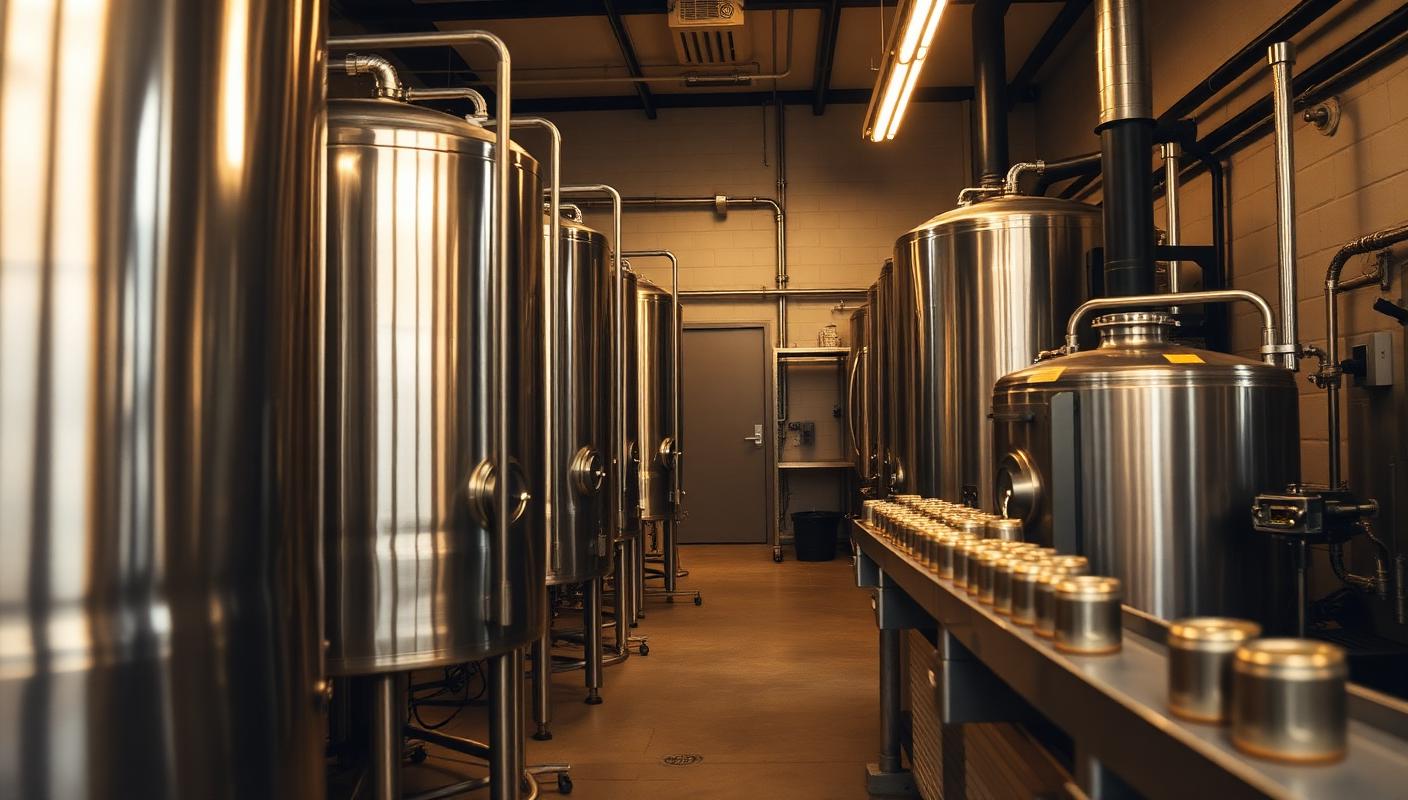
A brewery carries a manufacturing balance sheet inside a hospitality business. Tanks, a canning line, and cold storage are the capital load, and the beer sitting in fermentation is cash you already spent.
Illustrative image generated with AI.
How do breweries get financing?
Brewery financing covers tanks, canning and kegging lines, cold storage, taproom buildouts, and the working capital that carries grain, cans, and wholesale receivables. Equipment secures most brewery requests, and a line of credit covers the 30 day gap between shipping a distributor order and getting paid.
The pressure points
- /Tanks and packaging equipment are bought years before capacity is used
- /Wholesale accounts pay on 30 day terms while grain and cans pay on delivery
- /Taproom revenue lands on weekends while fixed costs run all week
What this does to your numbers
Beer is money you already spent, sitting in a tank for 3 to 6 weeks before it can be sold. Grain, cans, and labor are paid now, the taproom pays you back on weekends, and wholesale accounts pay 30 days after the delivery.
What the wait actually costs
A brewery that runs out of tank space stops brewing, and every week without capacity is beer you cannot make in a market where the tap handle goes to whoever can fill it.
What underwriting reads first for breweries
Bank deposits over the last 3 to 6 months, the split between taproom and wholesale, barrel volume trend, and whether the equipment being financed has a vendor quote behind it.
Programs that usually fit
Equipment Financing
Fund ovens, walk-ins, fryers, POS, and vehicles without draining cash.
Working Capital
Cover payroll, inventory, and slow months without stalling the operation.
Business Line of Credit
A standing limit you draw against only when the week calls for it.
Which program usually fits here
Equipment financing carries tanks, packaging, and cold storage against the hardware itself, and a line of credit covers the gap between shipping a distributor order and getting paid for it.
Financing terms on this page
Definitions for the terms used above. Every term links to its entry in the full glossary.
- equipment paper
- A loan or lease tied to a specific machine. The machine itself is the security, so approval leans on the value of the hardware more than on your bank statements.
- line of credit
- A preapproved pool of money you pull from only when you need it, then pay back and reuse. You pay for what you draw, not for the full amount sitting there.
- covers
- The number of guests served. Lenders pair it with check average to judge how reliable a month really is.
Every program a brewerie operator can use
Amount, term, speed, cost structure, and qualification for all 6 programs, so you can see what fits before any credit application exists.
| Typical amount | Term | Time to funding | Cost structure | |
|---|---|---|---|---|
| Equipment Financing | 5,000 to 500,000 | 24 to 84 months | 1 to 5 business days | Fixed monthly payment |
| Working Capital | 10,000 to 500,000 | 3 to 18 months | 1 to 3 business days | Fixed daily, weekly, or monthly payment |
| SBA Loans | 50,000 to 5,000,000 | 10 to 25 years | 3 to 12 weeks | Amortized interest, lowest payment of any program |
| Business Line of Credit | 10,000 to 250,000 | Revolving, reviewed periodically | 2 to 7 business days | Interest on the drawn balance only |
| Merchant Cash Advance | 5,000 to 250,000 | Repaid as card volume arrives | 1 to 3 business days | Factor rate, highest total cost |
| Buildout and Expansion | 50,000 to 2,000,000 | 36 to 84 months | 1 to 4 weeks | Fixed payment, often with a draw schedule |
Estimates, not offers: Amounts, terms, and funding times are estimates based on programs commonly available in food service. Actual terms vary by program, lender underwriting, time in business, revenue, and credit profile. Nothing here is an offer of credit or a guarantee of approval. See source and method.
| Time in business | Credit | Revenue | Collateral | |
|---|---|---|---|---|
| Equipment Financing | Month 1 with a down payment, common by month 6 | Options below 600, best terms above 700 | No minimum when the quote and asset are strong | The equipment itself |
| Working Capital | 6 months of deposits | Options below 600, pricing improves above 650 | About 15,000 per month in deposits | General business lien, no specific asset |
| SBA Loans | 2 or more years, exceptions for acquisitions | 660 and above with clean recent history | Documented profit and debt service coverage | Business assets, often real estate, plus a personal guarantee |
| Business Line of Credit | 12 months | 650 and above for most limits | Consistent monthly deposits across 12 months | General business lien |
| Merchant Cash Advance | 4 to 6 months of card processing history | Options in the low 500s | About 10,000 per month in card volume | Future card receivables |
| Buildout and Expansion | 12 months, or a funded project with an executed lease | 650 and above for most structures | Sized to the project and the operator contribution | The project, with 10 to 30 percent operator contribution |
Estimates, not offers: Amounts, terms, and funding times are estimates based on programs commonly available in food service. Actual terms vary by program, lender underwriting, time in business, revenue, and credit profile. Nothing here is an offer of credit or a guarantee of approval. See source and method.
Every request
- /Completed program application with ownership details
- /3 to 6 months of business bank statements
- /Time in business and entity details
Equipment and buildout
- /Vendor quote including delivery, installation, and freight
- /Contractor bids and the draw schedule on construction
- /Executed lease for the space
SBA and conventional term
- /3 years of business and personal tax returns
- /Interim profit and loss statement and balance sheet
- /Debt schedule and personal financial statement
- /Purchase agreement and seller financials on an acquisition
Run the numbers first
Three free tools that show what breweries are actually operating on, before any funding request is submitted.
Food cost calculator
Cost per barrel behaves like plate cost once grain, hops, cans, and loss are counted.
Labor and prime cost calculator
Production and taproom hours read differently, and prime cost blends both.
Break-even calculator
Find the barrels per month that clear rent, glycol, and the tank payment.
Financing built for breweries
Guides and calculators for breweries
Breweries financing questions
Can a brewery finance fermentation tanks and a canning line?
Yes. Tanks, brite tanks, canning and kegging lines, glycol systems, and cold storage are all standard equipment collateral, typically across 36 to 84 months against the asset.
Can a brewery in its first year qualify?
Equipment financing is realistic in year 1 because the hardware secures the transaction, often with 10 to 20 percent down. Unsecured working capital generally waits for 6 months of deposit history.
How do lenders treat taproom revenue versus wholesale revenue?
Taproom card volume reads like a bar and supports revenue based programs. Wholesale reads like receivables, which fits a line of credit sized against open invoices.
Can a taproom buildout be financed separately from the brewhouse?
Yes, and it usually should be. Leasehold improvements go on a buildout facility, while the brewhouse and packaging equipment go on longer equipment terms.
Is a used brewhouse financeable?
Yes. Used systems from a dealer or an auction are common collateral, generally at a shorter term and sometimes with a larger down payment.
Does self distribution change anything?
It adds vehicles and cold storage to the equipment side and puts receivables on the working capital side, so most self distributing breweries run 2 facilities at once.
What documents does a brewery need to start?
Start with a request. If a funding partner thinks it can help, it commonly asks for 3 to 6 months of business bank statements, plus a vendor quote for an equipment request. SBA commonly adds tax returns and interim financials.