Fresno's restaurant traffic tracks the Central Valley harvest calendar and Fresno State's academic year, so owners often need cash on hand for the gaps between those two cycles. Cash flow has to bridge both gaps.
How do Fresno food businesses get funded?
Fresno operators start with a free review with a specialist, share recent business bank statements, and are matched to the programs that fit the use of funds. Working capital funds in 1 to 3 business days after you choose an offer, equipment in 1 to 5, and buildout capital in 1 to 4 weeks.
Estimates, not offers: Amounts, terms, and funding times are estimates based on programs commonly available in food service. Actual terms vary by program, lender underwriting, time in business, revenue, and credit profile. Nothing here is an offer of credit or a guarantee of approval. See source and method.
How Fresno eats, and what that does to cash
01
Where Fresno eats
The Tower District, centered on Olive Avenue, carries Fresno's late night and counter service scene, with vintage theaters, dive bars, and 10 to 16 dollar plates drawing a younger, art house crowd. Downtown Fresno around the Fulton corridor has rebuilt slowly around Warnors Theatre and the county courthouse, with lunch counters serving government workers at 8 to 12 dollars. Tower and Downtown differ from the Fig Garden and River Park shopping districts on the north side, where chain and upscale casual restaurants serve suburban families and professionals at 20 to 35 dollars per person. Southeast Fresno and the Chinatown historic district hold long running Hmong, Laotian, and Mexican markets and restaurants tied to the Central Valley's immigrant agricultural workforce, with meals typically under 12 dollars. Fresno State's campus area along Shaw Avenue supports student focused fast casual and taco spots. This spread means a single citywide marketing approach misreads the market, and owners who open in the wrong district face months of underperformance before rent obligations catch up with actual receipts.
02
Dishes and formats Fresno is known for
Fresno sits at the center of California's Central Valley agricultural belt, and produce forward Mexican food, from taco trucks to sit down Michoacan style restaurants, defines the everyday format at 8 to 14 dollars a plate. The city's large Hmong and Laotian population supports noodle houses and market stalls in southeast Fresno, often counter service, in the 8 to 12 dollar range. Basque restaurants, a legacy of sheepherding immigration into the valley, still operate family style dinner service downtown and in Old Fig Garden, priced 20 to 30 dollars per person with shared plates. Raisin and grape growing history shows up in local bakeries and wineries offering tasting room food service. Drive through and fast casual formats dominate along Blackstone Avenue and Herndon Avenue, serving commuters. Food trucks cluster near packing houses and agricultural processing plants for early shift breakfast and lunch. Because so much of this format depends on the harvest calendar and shift work at processing plants, a slow harvest season directly reduces truck and counter revenue during what would otherwise be peak months.
03
Fresno's calendar
The Central Valley grape, raisin, and stone fruit harvest runs roughly July through September, filling agricultural payrolls and driving truck and counter traffic near packing facilities in southeast and west Fresno. Fresno State, with about 24,000 students, and Community Regional Medical Center anchor steady year round weekday demand near downtown and the Tower District. The Big Fresno Fair each October draws crowds to the fairgrounds for a two week run, a strong seasonal boost for nearby restaurants. Winter tule fog, common December through January, reduces evening and weekend dining out as visibility and road conditions worsen. Summer heat regularly exceeds 100 degrees from June through September, pushing diners toward air conditioned indoor seating and away from patios during the same months harvest work peaks. The Rogue Festival each February brings a smaller but reliable crowd downtown. This overlap of harvest driven cash inflow and extreme heat suppressing patio traffic means restaurant owners see uneven demand within the same summer months rather than one clean high season.
04
Growth and cost pattern in Fresno
New restaurant construction concentrates in the Fig Garden, River Park, and Clovis border areas, where newer retail centers offer turnkey shell space, while downtown and Tower District buildouts more often involve older buildings needing electrical and seismic upgrades. Rent runs well below coastal California metros, giving Fresno an advantage for first time owners, but agricultural labor competition during harvest months, July through September, pulls kitchen staff away and pushes wages up temporarily. Utility costs climb sharply in summer as valley heat drives air conditioning and refrigeration loads past winter levels. Water costs and drought related restrictions have affected landscaping and patio water features in newer suburban buildouts. Tule fog season in winter can delay outdoor construction and delivery schedules by a week or more at a time. Because harvest labor competition and summer utility spikes hit in the same months, owners planning a summer buildout should expect both higher wage offers to retain staff and higher energy bills before the location even opens.
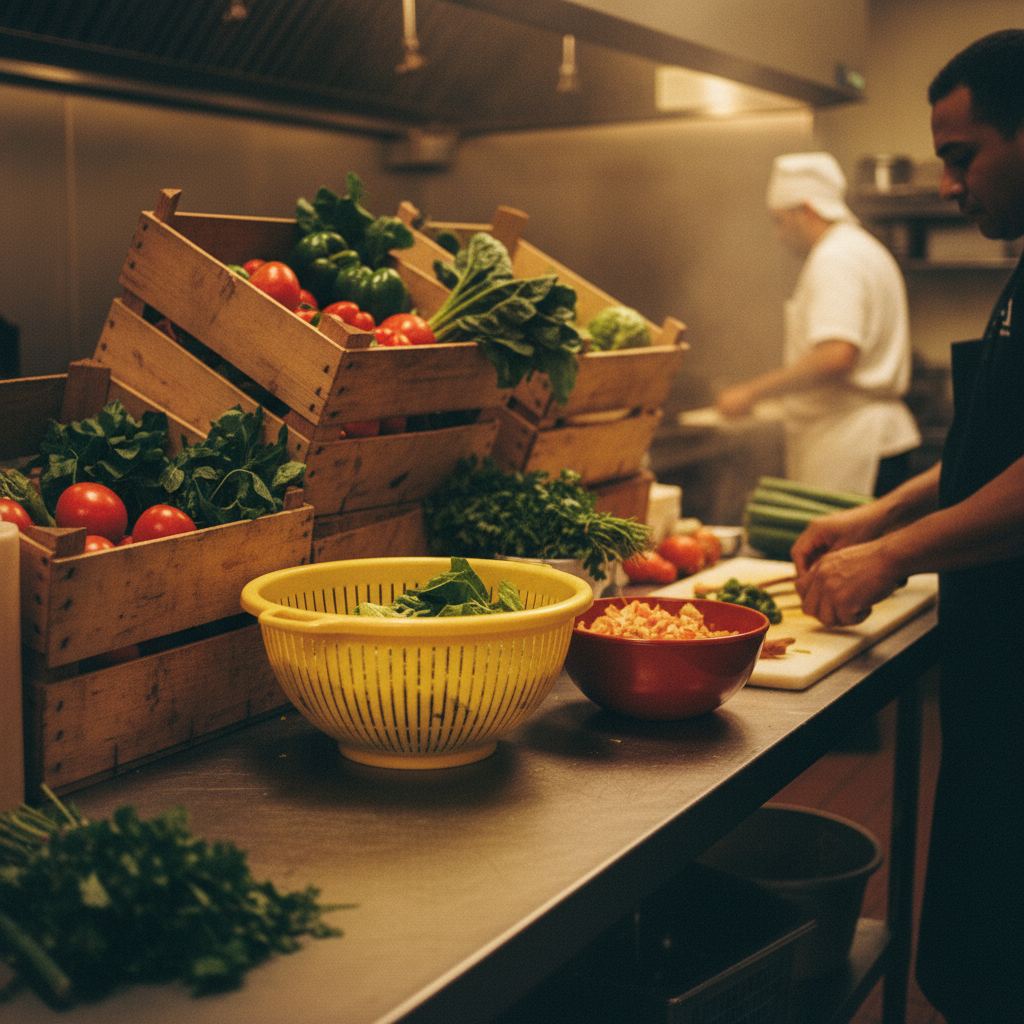
Fresno food service. Illustration generated with AI. Not a photograph of a Foody Finance client or location.
What drives financing conversations in Fresno
Financing here often goes toward walk-in storage and delivery vehicles tied to produce sourcing from the surrounding valley, along with buildout costs for spaces converted from older retail stock downtown. Catering operators serving agricultural and packing companies also use working capital to bridge invoice terms that can run 30 to 60 days.
Revenue and seasonality in Fresno
Summer heat and harvest season bring in valley visitors and seasonal ag workers who spend on quick-service meals, while winter fog and shorter days slow sit-down traffic. Catering tied to packing houses and farm operations pays on invoice terms rather than at the table, which creates a cash gap financing is used to bridge.
What this does to your numbers
Money flows differently depending on harvest season and when Fresno State is in session, so slow stretches can hit even a busy-looking restaurant.
Permitting in Fresno, and what it costs to wait
Fresno County Department of Public Health issues food facility permits and inspects plan checks, while California's Department of Alcoholic Beverage Control handles liquor licensing through its own regional office with a posting and protest period. A new full-service concept near Tower District should budget for these two timelines running independently, since a delayed license can leave a finished kitchen sitting unopened.
What the wait actually costs
Waiting on a liquor license or a finished buildout means missing weeks of steady traffic that will not repeat until the next semester or season starts.
What raises the cost of capital here
01Tule fog winters cut evening dine-in traffic across the valley for weeks at a stretch.
02Produce and dairy supply costs shift with harvest cycles, changing food cost margins seasonally.
03Older downtown retail buildings often need structural work before a kitchen buildout can pass inspection.
Which program usually fits here
Working capital fits for covering slow invoice payments from catering clients, and equipment financing fits for coolers and delivery vehicles tied to fresh produce sourcing.
California outline. Boundary data: US Census Bureau cartographic boundary files, public domain. Simplified for display.
Cash for the everyday gaps: payroll, inventory, rent, and repairs. It is repaid out of daily or weekly sales rather than from one big event.
equipment paper
A loan or lease tied to a specific machine. The machine itself is the security, so approval leans on the value of the hardware more than on your bank statements.
buildout capital
Money for the work that turns a space into a working kitchen: plumbing, electrical, hoods, walls, and permits. It pays for labor and materials you cannot resell, so it is priced differently than money for a fryer.
draw
Taking money out of an approved line or loan. Draws tied to construction milestones mean you only start paying interest on each piece as you use it.
hard credit pull
A formal credit check that shows on your report and can move your score a few points. It happens only after you pick a specific lender, not to get information.
underwriting
The lender reading your numbers to decide how much risk you are. Bank statements, time in business, and existing debt carry the most weight.
covers
The number of guests served. Lenders pair it with check average to judge how reliable a month really is.
shoulder season
The in between weeks on either side of your busy season. Sales fall while rent, insurance, and salaried payroll do not.
term
How long you have to repay. A longer term lowers the monthly payment and raises what the money costs in total.
Does Fresno's agricultural economy change how restaurant financing works?
Yes. Many Fresno restaurants and caterers serve packing houses, distributors, and farm operations that pay on 30 to 60 day invoice terms rather than at the point of sale. That gap between delivering a catering order and getting paid is why working capital and lines of credit come up often for operators whose client base sits in the ag sector rather than walk-in retail.
How does Fresno State's schedule affect restaurant demand near campus?
Fresno State's fall and spring semesters, plus its football and basketball schedules, drive steady traffic to restaurants near Shaw Avenue and Blackstone, while summer break thins that base out considerably. Owners near campus often plan equipment upgrades or buildouts for the summer lull so the space is ready before students return in August.
How does the Central Valley harvest calendar affect hiring for Fresno restaurants specifically?
From July through September, agricultural processors and packing houses raise wages to attract seasonal labor, and that pulls from the same pool of workers restaurants rely on for kitchen and prep positions. Restaurants near southeast Fresno and the packing corridors feel this most directly, sometimes losing staff mid season to higher paying field or plant work. Owners who plan ahead often shift toward part time and student labor from Fresno State during this window rather than compete directly on wages. Lenders reviewing payroll costs on a Fresno restaurant's statements should expect a summer wage bump that is not a management failure but a predictable feature of operating near this labor market.
How do Fresno food businesses start a financing conversation?
Start with a free review by a specialist. You share the basics of the business, the use of funds, and recent bank statements, and you see every program that fits before any credit application exists. Short term options commonly fund in 1 to 3 business days once you choose an offer.
Do you serve areas outside Fresno in California?
Yes. Every program is available statewide in California and nationwide.
What is equipment financing, and when does it fit a Fresno operator?
You borrow against a specific machine, and the machine is what backs the loan. Use it when a fryer, a walk-in, an oven, or a vehicle has to be replaced and you would rather keep the cash in the account. Typical size is 5,000 to 500,000, funding runs 1 to 5 business days once you choose an offer, and you repay it as fixed monthly payment. You will be asked for: application, equipment quote, bank statements.
What is working capital, and when does it fit a Fresno operator?
Cash for the everyday gaps, repaid out of sales on a set schedule instead of at the end of a project. Use it for payroll, inventory, a slow stretch, or a job you have to fund before the client pays you. Typical size is 10,000 to 500,000, funding runs 1 to 3 business days once you choose an offer, and you repay it as fixed daily, weekly, or monthly payment. You will be asked for: application, 3 to 6 months of bank statements.
What is buildout and expansion, and when does it fit a Fresno operator?
Construction money for the work that turns a space into a working kitchen, usually released in stages as the job progresses. Use it for a second location, a remodel, a patio, or a kitchen conversion, and size it to cover the permit wait, not just the build. Typical size is 50,000 to 2,000,000, funding runs 1 to 4 weeks once you choose an offer, and you repay it as fixed payment, often with a draw schedule. You will be asked for: application, contractor bids, lease, financials.
Why does the Fresno calendar change what I should borrow?
Money flows differently depending on harvest season and when Fresno State is in session, so slow stretches can hit even a busy-looking restaurant.
What does waiting actually cost me in Fresno?
Waiting on a liquor license or a finished buildout means missing weeks of steady traffic that will not repeat until the next semester or season starts.
Which program do most Fresno operators end up using?
Working capital fits for covering slow invoice payments from catering clients, and equipment financing fits for coolers and delivery vehicles tied to fresh produce sourcing. That is a starting point, not a decision. The specialist review looks at your deposits, your time in business, and what the money is for before anything is recommended.
Does asking about financing in Fresno affect my credit?
No. Getting information is a conversation, not an application. There is no credit application and no hard credit pull until you have picked a specific lender and want to move forward.
Start the conversation
Talk to a specialist before you fill out an application.
Start with a free, no-obligation review. We will send the right application only after we know what you actually qualify for.