AK metro

Restaurant financing in Anchorage.

A Spenard kitchen can run flat out through the midnight sun tourist season and then watch daylight and dinner traffic both disappear by November. The equipment still has to be paid for in January.

How do Anchorage food businesses get funded?

Anchorage operators start with a free review with a specialist, share recent business bank statements, and are matched to the programs that fit the use of funds. Working capital funds in 1 to 3 business days after you choose an offer, equipment in 1 to 5, and buildout capital in 1 to 4 weeks.

Estimates, not offers: Amounts, terms, and funding times are estimates based on programs commonly available in food service. Actual terms vary by program, lender underwriting, time in business, revenue, and credit profile. Nothing here is an offer of credit or a guarantee of approval. See source and method.

How Anchorage eats, and what that does to cash

01

Where Anchorage eats

Downtown Anchorage along 4th and 5th Avenues carries the tourist trade tied to cruise passengers and the Alaska Railroad depot, with seafood houses and gift-shop-adjacent cafes charging 30 to 60 dollars a head from May through September. Spenard, the city's older commercial strip along Spenard Road, holds a looser mix of dive bars, breweries, and ethnic restaurants serving a year-round local crowd at lower prices. Midtown, around the Northway Mall and Benson Boulevard corridor, runs chain and strip-mall dining aimed at office workers and shoppers. South Anchorage near the Dimond Center and Old Seward Highway carries suburban family dining tied to newer residential growth. Downtown's near-total dependence on the May through September tourist window means a restaurant's location relative to the cruise and rail traffic decides whether it can survive on 5 months of revenue or needs local traffic the other 7.
02

What Anchorage orders

Wild salmon and halibut, sold fresh or as fish and chips, anchor menus across the city and command a premium during the summer catch season. Reindeer sausage, served at street carts and diners, is a specifically Alaskan format tourists seek out downtown. King crab, though mostly caught elsewhere in the state, is marketed heavily to visitors at higher-end seafood rooms. Espresso stands, drive-through huts scattered across nearly every commercial corner of the city, are a distinct Anchorage format tied to long dark winters and function as year-round cash businesses independent of the tourist calendar. Breweries like Midnight Sun and Cynosure serve small food menus rather than full kitchens. The seasonal seafood supply means kitchens buy heavily against the short summer catch, and any delay in that supply chain during the peak tourist months directly cuts into the 5 months that carry the whole year's margin.

03

The Anchorage calendar

The cruise ship season, running roughly May through September, is the dominant driver for downtown restaurants, with ships arriving through the Port of Alaska and passengers routed through the city before or after rail and highway trips into the interior. Joint Base Elmendorf-Richardson provides a steady, non-seasonal customer base for restaurants in midtown and east Anchorage year round. The Fur Rendezvous festival in February and the ceremonial start of the Iditarod in early March bring a midwinter tourism bump that briefly offsets the dark season. University of Alaska Anchorage's academic calendar adds modest traffic near campus during the school year. The stretch from late September through November, after cruise season ends and before winter festival traffic begins, is the leanest period for downtown restaurants, and operators without military or local traffic often cut hours or staff through those weeks.

04

Growth and cost in Anchorage

New restaurant openings have leaned toward Spenard and midtown, where rents run below downtown's tourist-district premiums and a year-round local customer base reduces exposure to the summer-only cruise crowd. Downtown space remains attractive for concepts built specifically around the May through September season but carries higher risk for anyone trying to run it as a 12 month operation. Labor costs run high relative to the Lower 48 given Alaska's cost of living, and shipping delays for equipment and buildout materials, since nearly everything arrives by barge or air freight, routinely push construction timelines past what a Seattle or Denver contractor would quote. A buildout that misses its planned May opening by even a few weeks can lose most of a short summer season's revenue outright, since there is no comparable fallback period later in the year to make it up.

Food service operation in Anchorage
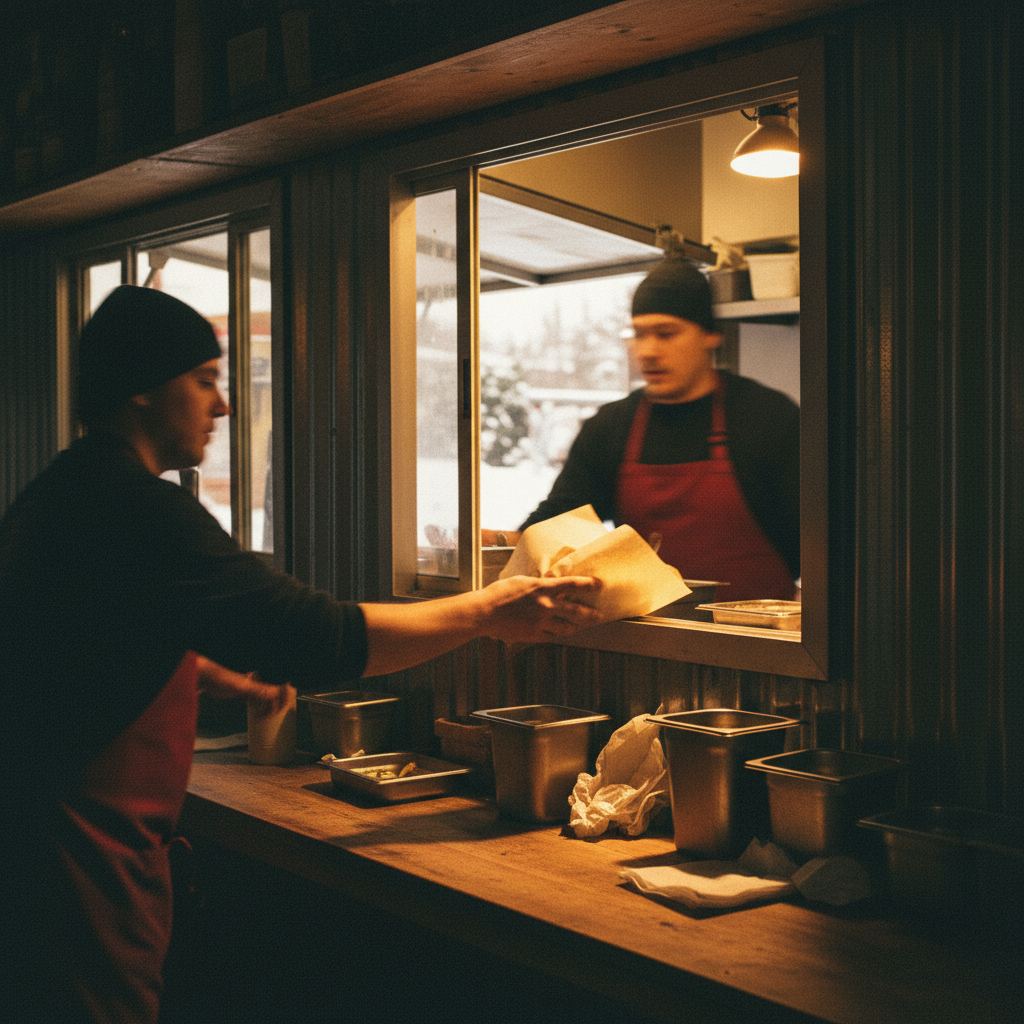
Anchorage food service. Illustration generated with AI. Not a photograph of a Foody Finance client or location.

What drives financing conversations in Anchorage

Spending here concentrates on walk-in freezer capacity and generator backup ahead of the short summer cruise and fishing season, when Anchorage absorbs the bulk of its annual visitor traffic. Winter spending shifts toward working capital to cover payroll through months of reduced daylight and thinner tourist demand. Financing has to account for a revenue season that runs roughly May through September and very little else.

Revenue and seasonality in Anchorage

Cruise ship and fishing season visitors drive the bulk of downtown and Spenard restaurant traffic between late spring and early fall, while Midtown and Eagle River lean more on year-round local demand. Winter cuts covers sharply as daylight hours shrink and tourism stops almost entirely, so a summer season's card settlements need to cover fixed costs through months where local traffic alone often isn't enough.

What this does to your numbers

Almost all the tourist money comes in over about five summer months, and winter can feel like a completely different business.

Permitting in Anchorage, and what it costs to wait

The Municipality of Anchorage's health department issues food service permits, while alcohol licensing runs through the Alaska Alcoholic Beverage Control Board, which meets on a fixed hearing schedule rather than processing applications continuously. Freight delays for kitchen equipment shipped up from the Lower 48 can also stretch a build-out timeline beyond what a comparable project would take elsewhere. Financing needs to cover months of rent and staffing before a summer-season opening actually generates revenue.

What the wait actually costs

If equipment gets stuck in freight from the Lower 48, you can miss the short season entirely and have to wait until next summer.

What raises the cost of capital here

  • 01Alaska ABC Board hearings run on a fixed meeting calendar rather than rolling approvals, which can delay licensing.
  • 02Equipment and supply shipments from the Lower 48 add freight time that other regions don't face.
  • 03Visitor season runs roughly five months, concentrating most annual tourist revenue into that window.

Which program usually fits here

Working capital financing fits a business that needs to survive a long off-season on revenue it earned months earlier in the summer.

Anchorage
Alaska outline. Boundary data: US Census Bureau cartographic boundary files, public domain. Simplified for display.

Free review, no hard credit pull

Get funds now and review your options

Step 01 of 03 · Your operation

A specialist reviews every request and reaches out the same business day

Areas we serve

  • Downtown Anchorage
  • Spenard
  • South Addition
  • Midtown
  • Eagle River

Financing terms on this page

Definitions for the terms used above.

covers
The number of guests served. Lenders pair it with check average to judge how reliable a month really is.
working capital
Cash for the everyday gaps: payroll, inventory, rent, and repairs. It is repaid out of daily or weekly sales rather than from one big event.
equipment paper
A loan or lease tied to a specific machine. The machine itself is the security, so approval leans on the value of the hardware more than on your bank statements.
merchant cash advance
You sell a slice of future card sales for cash today. Fastest money available, and the most expensive, so it fits an emergency rather than a plan.
factor rate
A flat multiplier instead of an interest rate. Borrow 50,000 at a 1.25 factor and you repay 62,500 total, no matter how fast you pay it off.
hard credit pull
A formal credit check that shows on your report and can move your score a few points. It happens only after you pick a specific lender, not to get information.
buildout capital
Money for the work that turns a space into a working kitchen: plumbing, electrical, hoods, walls, and permits. It pays for labor and materials you cannot resell, so it is priced differently than money for a fryer.
underwriting
The lender reading your numbers to decide how much risk you are. Bank statements, time in business, and existing debt carry the most weight.
term
How long you have to repay. A longer term lowers the monthly payment and raises what the money costs in total.
draw
Taking money out of an approved line or loan. Draws tied to construction milestones mean you only start paying interest on each piece as you use it.

Anchorage financing questions

Why does equipment financing timing matter more in Anchorage than in other cities?

Kitchen equipment and build-out materials typically ship up from the Lower 48 by barge or freight, which adds weeks that a comparable project in the continental US wouldn't face. Financing needs to be arranged early enough that the equipment can be ordered and delivered before the short summer visitor season begins, since missing that window means waiting until the next one.

How short is Anchorage's real tourist season for a restaurant's cash flow planning?

Cruise and fishing season traffic is concentrated roughly from May through September, and daylight hours and visitor counts both drop off sharply after that. A downtown or Spenard restaurant often needs that five month stretch to generate enough revenue to cover fixed costs through the darker, quieter months that follow.

How should a lender read an Anchorage restaurant's revenue given how short the tourist season is?

Downtown Anchorage restaurants tied to cruise traffic can generate most of their annual revenue between May and September, with a materially quieter fall and winter unless the location also draws military personnel from Joint Base Elmendorf-Richardson or year-round local traffic. A single strong summer month says little about a restaurant's ability to cover payroll in November. Lenders should weight full trailing 12 month statements rather than peak season snapshots, and should note whether a location has any non-tourist customer base before assuming summer revenue levels are representative of the whole year.

How do Anchorage food businesses start a financing conversation?

Start with a free review by a specialist. You share the basics of the business, the use of funds, and recent bank statements, and you see every program that fits before any credit application exists. Short term options commonly fund in 1 to 3 business days once you choose an offer.

Do you serve areas outside Anchorage in Alaska?

Yes. Every program is available statewide in Alaska and nationwide.

What is working capital, and when does it fit a Anchorage operator?

Cash for the everyday gaps, repaid out of sales on a set schedule instead of at the end of a project. Use it for payroll, inventory, a slow stretch, or a job you have to fund before the client pays you. Typical size is 10,000 to 500,000, funding runs 1 to 3 business days once you choose an offer, and you repay it as fixed daily, weekly, or monthly payment. You will be asked for: application, 3 to 6 months of bank statements.

What is equipment financing, and when does it fit a Anchorage operator?

You borrow against a specific machine, and the machine is what backs the loan. Use it when a fryer, a walk-in, an oven, or a vehicle has to be replaced and you would rather keep the cash in the account. Typical size is 5,000 to 500,000, funding runs 1 to 5 business days once you choose an offer, and you repay it as fixed monthly payment. You will be asked for: application, equipment quote, bank statements.

What is merchant cash advance, and when does it fit a Anchorage operator?

You sell a slice of future card sales for money today, repaid as the card volume arrives. Use it only when speed decides the outcome. It is the fastest option here and the most expensive one. Typical size is 5,000 to 250,000, funding runs 1 to 3 business days once you choose an offer, and you repay it as factor rate, highest total cost. You will be asked for: application, bank and processing statements.

Why does the Anchorage calendar change what I should borrow?

Almost all the tourist money comes in over about five summer months, and winter can feel like a completely different business.

What does waiting actually cost me in Anchorage?

If equipment gets stuck in freight from the Lower 48, you can miss the short season entirely and have to wait until next summer.

Which program do most Anchorage operators end up using?

Working capital financing fits a business that needs to survive a long off-season on revenue it earned months earlier in the summer. That is a starting point, not a decision. The specialist review looks at your deposits, your time in business, and what the money is for before anything is recommended.

Does asking about financing in Anchorage affect my credit?

No. Getting information is a conversation, not an application. There is no credit application and no hard credit pull until you have picked a specific lender and want to move forward.

Start the conversation

Talk to a specialist before you fill out an application.

Start with a free, no-obligation review. We will send the right application only after we know what you actually qualify for.

Start a free review

Prefer to call

(833) 505-1900