
Back to LocationsAll 50 states
Flag of Alaska

AK coverage

RESTAURANT AND FOOD SERVICE FINANCING IN ALASKA

Alaska food businesses face freight costs and a short high season that concentrates most of the year's revenue.

Flag of Alaska. Public domain, via Wikimedia Commons.

Can food businesses in Alaska get financing?

Yes. Foody Finance works with restaurants, bars, caterers, food trucks, ghost kitchens, and distributors across Alaska. Equipment requests commonly fund in 1 to 5 business days, working capital in 1 to 3, and SBA financing in 3 to 12 weeks.

Estimates, not offers: Amounts, terms, and funding times are estimates based on programs commonly available in food service. Actual terms vary by program, lender underwriting, time in business, revenue, and credit profile. Nothing here is an offer of credit or a guarantee of approval. See source and method.

How Alaska actually makes its money in food

01

What Alaska actually orders

Alaska's menu runs on salmon, halibut, and king crab, sourced from Bristol Bay, the Kenai Peninsula, and the Bering Sea fleets that dock in Dutch Harbor and Kodiak. Anchorage restaurants price wild king salmon and halibut fish and chips at a premium reflecting local catch value, not imported farmed stock. Fairbanks and the Interior lean toward moose and caribou when available through subsistence networks, alongside reindeer sausage sold from carts downtown. Juneau and coastal Southeast towns build menus around Dungeness crab and black cod tied to the same boats tourists photograph at the harbor. Espresso stands, a Pacific Northwest import, sit on nearly every Anchorage commercial corner and function as year-round quick-service staples rather than novelty. Native-owned enterprises in Bethel and rural villages serve traditional foods like akutaq and dried fish alongside standard diner fare. Cruise season from May through September pushes Ketchikan and Skagway restaurants toward high-volume seafood plates priced for one-time tourist visits rather than repeat local traffic. This split between subsistence-influenced rural menus and cruise-driven coastal pricing means a single bad halibut season changes menu economics in both places at once, forcing sudden substitutions that disrupt planned food cost margins.
02

How Alaska's food economy got built

Alaska's restaurant industry grew out of fishing, oil, and military settlement rather than agriculture. Russian and later Scandinavian fishing families settled Kodiak and the Aleutians beginning in the 1700s and 1800s, establishing the salmon and crab processing base that still supplies today's seafood restaurants. The 1898 Klondike Gold Rush built Skagway's tourist-facing food economy, a pattern later repeated by cruise tourism. The 1968 discovery of oil at Prudhoe Bay and the Trans-Alaska Pipeline construction of the 1970s brought a wave of workers and money into Anchorage and Fairbanks, funding the state's first fine-dining rooms and steakhouse culture that still defines downtown Anchorage. Military bases, including Joint Base Elmendorf-Richardson and Eielson Air Force Base near Fairbanks, sustain year-round dining demand independent of tourism or oil cycles. Filipino immigrant communities, drawn originally to cannery work in the early 20th century, now own a significant share of Anchorage's family restaurants and grocery-adjacent eateries. Alaska Native corporations formed under the 1971 Alaska Native Claims Settlement Act increasingly own commercial real estate that houses restaurants in Anchorage and regional hub towns. This layered ownership history means restaurant leases in Anchorage often run through Native corporation landlords, and lease renewal timing there can shift a location's entire rent structure with little local precedent to negotiate against.

03

Alaska's calendar of demand

Alaska's restaurant year is dictated by daylight and cruise ships. Southeast and Southcentral coastal towns see the bulk of annual revenue between May and September, when cruise ships dock daily in Juneau, Skagway, and Ketchikan and summer visitors fill Anchorage and the Kenai Peninsula for fishing trips. The Kenai Peninsula's sockeye salmon runs in July draw combat fishing crowds to Soldotna and Kenai that restaurants there depend on for a five-week surge. Winter darkness from November through February cuts foot traffic sharply outside Anchorage, though the Iditarod's March start in Anchorage and finish in Nome creates a mid-winter demand spike in both cities. Fairbanks leans on aurora tourism from September through March, drawing a smaller but steady winter visitor base distinct from the summer cruise economy further south. The Alaska State Fair in Palmer each August draws statewide crowds before the summer season closes. Whittier and other small port towns effectively shut down commercially outside the May-to-September window. This calendar forces most coastal Alaska restaurants to earn the bulk of a full year's revenue in roughly eighteen weeks, leaving owners to stretch that income across seven months of reduced or nonexistent cash flow.

04

Who runs Alaska's kitchens

Alaska's restaurant ownership skews toward independent and family operations, with far lower national chain density than any other state because of shipping costs and distance from distribution hubs. Anchorage carries the state's highest concentration of franchise locations, since it sits on the state's only significant highway and rail network connecting to Lower 48 supply chains. Rural hub towns like Bethel, Nome, and Utqiagvik rely almost entirely on independently owned restaurants and Native corporation-affiliated food service, since chain economics rarely justify the barge or air freight costs required to stock them. Labor availability is Alaska's defining operational constraint: a small year-round population combined with a seasonal tourist surge forces coastal restaurants to import summer workers, often on J-1 visas or from the Lower 48, housed in employer-provided dormitories near Denali and Southeast port towns. Alaska's minimum wage sits above the federal floor and adjusts annually for inflation, adding predictable but real cost pressure. Winter staffing in Anchorage and Fairbanks depends on a smaller, steadier local workforce willing to work through low-light months for year-round hours. This combination means summer operators pay for imported labor housing and transport up front, a cost committed months before the first tourist dollar arrives.

05

What it costs to operate in Alaska

Operating costs in Alaska run above the national average across nearly every category. Commercial rent in Anchorage sits near the top among West Coast-adjacent metros, and rural hub towns face limited available commercial space at all, often controlled by Native corporations or regional co-ops. Freight costs dominate the cost structure outside Southcentral Alaska: dry goods, produce, and packaging shipped by barge or air to Bethel, Nome, or Kodiak carry markups far beyond Anchorage prices, and winter ice can delay barge delivery for weeks. Fuel and heating costs run high statewide, with commercial heating oil and electricity rates in rural villages among the highest in the country. Labor costs stack the state's inflation-adjusted minimum wage on top of housing subsidies many operators must provide to attract seasonal workers. Insurance costs reflect both extreme weather exposure and the difficulty of emergency response in remote areas, raising premiums for rural operators specifically. Locally caught seafood offsets some protein cost pressure, but produce must travel from Washington state or further, and any Alaska Marine Highway ferry disruption or winter storm can cut off a restaurant's fresh produce supply for days at a time, forcing menu changes on short notice.

06

Where Alaska's restaurant growth is headed

New restaurant development in Alaska concentrates almost entirely in the Anchorage bowl and the Matanuska-Susitna Valley, where Wasilla and Palmer have added population and retail development as commuting suburbs to Anchorage. Fairbanks sees steady but slower growth tied to University of Alaska Fairbanks enrollment and continued military presence at Eielson. Coastal cruise towns like Juneau, Ketchikan, and Skagway see growth concentrated in seasonal, tourist-facing concepts near the docks rather than year-round full-service restaurants, since off-season revenue rarely supports a full staff. The Kenai Peninsula has added fishing-lodge-adjacent dining tied to sport fishing tourism growth around Soldotna and Homer. Rural hub communities see almost no new commercial restaurant construction, since population is flat or declining and construction costs run far above urban Alaska rates due to freight and foundation requirements tied to permafrost in some regions. Anchorage's airport-adjacent commercial corridor continues to draw new fast-casual and hotel-linked restaurant space tied to cargo and passenger traffic through Ted Stevens International. Because building materials for any new Alaska construction must largely be shipped in, a delayed barge or a closed winter road can push a planned opening date back by an entire season, not just weeks.

Licensing and permitting in Alaska, and what it costs to wait

Food establishment permits run through the state Department of Environmental Conservation, and remote locations add inspection scheduling delays.

Inspection scheduling in remote boroughs can push an opening past the season, which is why capital here is sized to carry rent and payroll through the delay, not just to buy the equipment.

What Alaska operators finance

Seasonal working capital and equipment financing dominate, since shipping a replacement unit can take weeks.

The Alaska revenue calendar

The cruise and tourism window from May through September carries the year, and October through April is planned as a controlled drawdown rather than a growth period.

Revenue mix and seasonality in Alaska

Roughly two thirds of annual revenue lands between Memorial Day and late September, checks run higher because freight is priced into every menu item, and the winter months are covered by locals rather than visitors.

What this does to your numbers

Roughly 5 months pay for 12. Money comes in from May to September, and the winter months spend it back down on rent, heat, and a skeleton crew.

What a delay costs in Alaska

A dead reach-in here is a barge schedule, not a service call. Weeks without that cooler means product loss and covers you cannot serve, on top of the replacement cost.

What underwriting looks at in Alaska

  • 01Barge and air freight schedules mean a failed reach-in can be down for weeks, not days
  • 02Fuel and utility cost per seat runs well above the Lower 48
  • 03Seasonal staffing forces front loaded payroll before the first tourist arrives

Which program usually fits here

Draw before the season opens and repay across the busy months. A level payment through October to April is what breaks operators here.

Markets we serve in Alaska

We work with operators across Alaska, including Anchorage, Fairbanks, Juneau, Wasilla, Ketchikan, and Sitka. Rural and small market operators qualify for the same programs.

Anchorage financingFairbanksJuneauWasillaKetchikanSitka

Metro market pages in Alaska

Food service operation in Alaska
Illustrative image generated with AI.
Alaska outline. Boundary data: US Census Bureau cartographic boundary files, public domain. Simplified for display.

Free review, no hard credit pull

Get funds now and review your options

Step 01 of 03 · Your operation

A specialist reviews every request and reaches out the same business day

Typical Alaska timelines
 Working capitalEquipmentSBA
Time to funding1 to 3 business days1 to 5 business days3 to 12 weeks
Documents3 to 6 months of bank statementsEquipment quote plus statementsTax returns, financials, debt schedule
Common use in this stateThe cruise and tourism window from May through September carries the year, and October through April is planned as a controlled drawdown rather than a growth period.Barge and air freight schedules mean a failed reach-in can be down for weeks, not daysAcquisition, refinance, or a longer buildout

Estimates, not offers: Amounts, terms, and funding times are estimates based on programs commonly available in food service. Actual terms vary by program, lender underwriting, time in business, revenue, and credit profile. Nothing here is an offer of credit or a guarantee of approval. See source and method.

One page PDF with the Alaska timelines table and the state plate photo.

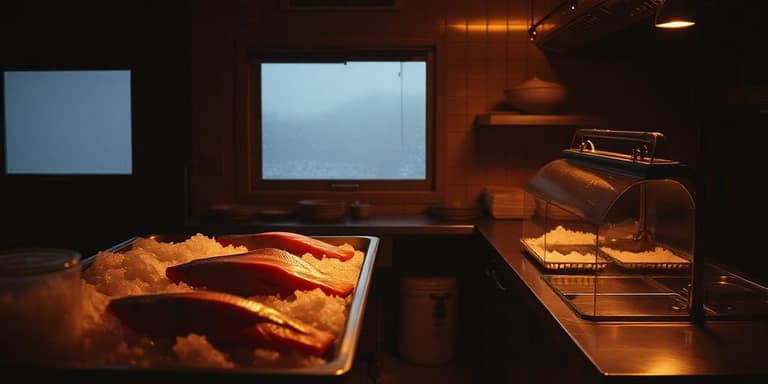
Alaska plateGrilled king salmonFreezer capacity is inventory strategy in Alaska, since the season lands the fish long before the covers arrive.

Financing terms on this page

Definitions for the terms used above.

working capital
Cash for the everyday gaps: payroll, inventory, rent, and repairs. It is repaid out of daily or weekly sales rather than from one big event.
equipment paper
A loan or lease tied to a specific machine. The machine itself is the security, so approval leans on the value of the hardware more than on your bank statements.
draw
Taking money out of an approved line or loan. Draws tied to construction milestones mean you only start paying interest on each piece as you use it.
covers
The number of guests served. Lenders pair it with check average to judge how reliable a month really is.
line of credit
A preapproved pool of money you pull from only when you need it, then pay back and reuse. You pay for what you draw, not for the full amount sitting there.
term
How long you have to repay. A longer term lowers the monthly payment and raises what the money costs in total.
hard credit pull
A formal credit check that shows on your report and can move your score a few points. It happens only after you pick a specific lender, not to get information.
SBA loan
A bank loan partly guaranteed by the Small Business Administration. Lowest cost of the options, longest paperwork, and the slowest to fund.
underwriting
The lender reading your numbers to decide how much risk you are. Bank statements, time in business, and existing debt carry the most weight.
merchant cash advance
You sell a slice of future card sales for cash today. Fastest money available, and the most expensive, so it fits an emergency rather than a plan.
buildout capital
Money for the work that turns a space into a working kitchen: plumbing, electrical, hoods, walls, and permits. It pays for labor and materials you cannot resell, so it is priced differently than money for a fryer.
commissary
A licensed production kitchen used to prep off site, most often by trucks and catering operations. It carries its own rent, equipment, and permits.
collateral
Something the lender can take back if the loan is not repaid, usually the equipment being financed. More collateral generally means a lower cost.

Alaska financing questions

Can I get restaurant financing in Alaska?

Yes. Every Foody Finance program is available to food service operators in Alaska, including equipment financing, working capital, lines of credit, SBA loans, and buildout capital.

How fast can a Alaska restaurant get funded?

Short term programs commonly fund in 1 to 3 business days and equipment requests in 1 to 5. SBA financing in Alaska runs 3 to 12 weeks.

How do Alaska operators finance around a 5 month season?

Most structure the request so the draw lands before the season opens and repayment concentrates in the high revenue months. A line of credit usually beats a fixed term note here, because the off season months cannot support a level payment.

Which Alaska cities do you serve?

All of them. Operators we work with in Alaska run in Anchorage, Fairbanks, Juneau, Wasilla, Ketchikan, and Sitka, along with smaller markets across the state. Underwriting reviews deposits and the use of funds, not the population of the market.

What documents do Alaska operators need?

For the first review, just the form. If you choose a short term program, the lender usually asks for 3 to 6 months of business bank statements. SBA adds tax returns, interim financials, and a debt schedule.

Does Alaska licensing affect financing?

Licensing affects buildout timelines and, in some transactions, collateral value. We factor local permitting into how a Alaska request is structured.

Do I need a hard credit pull to start in Alaska?

No. The first conversation is a review of your situation and the programs you likely qualify for. A hard pull only happens once you choose a specific lender and submit their application.

What is working capital, and when does it fit a Alaska operator?

Cash for the everyday gaps, repaid out of sales on a set schedule instead of at the end of a project. Use it for payroll, inventory, a slow stretch, or a job you have to fund before the client pays you. Typical size is 10,000 to 500,000, funding runs 1 to 3 business days once you choose an offer, and you repay it as fixed daily, weekly, or monthly payment. You will be asked for: application, 3 to 6 months of bank statements.

What is equipment financing, and when does it fit a Alaska operator?

You borrow against a specific machine, and the machine is what backs the loan. Use it when a fryer, a walk-in, an oven, or a vehicle has to be replaced and you would rather keep the cash in the account. Typical size is 5,000 to 500,000, funding runs 1 to 5 business days once you choose an offer, and you repay it as fixed monthly payment. You will be asked for: application, equipment quote, bank statements.

What is business line of credit, and when does it fit a Alaska operator?

An approved limit you pull from only when you need it, then repay and reuse. Use it for a season you can see coming, so you draw before the peak and pay it back out of the peak. Typical size is 10,000 to 250,000, funding runs 2 to 7 business days once you choose an offer, and you repay it as interest on the drawn balance only. You will be asked for: application, bank statements.

Why does the Alaska calendar change what I should borrow?

Roughly 5 months pay for 12. Money comes in from May to September, and the winter months spend it back down on rent, heat, and a skeleton crew.

What does waiting actually cost me in Alaska?

A dead reach-in here is a barge schedule, not a service call. Weeks without that cooler means product loss and covers you cannot serve, on top of the replacement cost.

Which program do most Alaska operators end up using?

Draw before the season opens and repay across the busy months. A level payment through October to April is what breaks operators here. That is a starting point, not a decision. The specialist review looks at your deposits, your time in business, and what the money is for before anything is recommended.

Does asking about financing in Alaska affect my credit?

No. Getting information is a conversation, not an application. There is no credit application and no hard credit pull until you have picked a specific lender and want to move forward.

Start the conversation

Talk to a specialist before you fill out an application.

Start with a free, no-obligation review. We will send the right application only after we know what you actually qualify for.

Start a free review

Prefer to call

(833) 505-1900