Yes. Foody Finance works with restaurants, bars, caterers, food trucks, ghost kitchens, and distributors across Oregon. Equipment requests commonly fund in 1 to 5 business days, working capital in 1 to 3, and SBA financing in 3 to 12 weeks.
Estimates, not offers: Amounts, terms, and funding times are estimates based on programs commonly available in food service. Actual terms vary by program, lender underwriting, time in business, revenue, and credit profile. Nothing here is an offer of credit or a guarantee of approval. See source and method.
How Oregon actually makes its money in food
01
What Oregon actually orders
Portland's food cart pods, dense clusters of a dozen or more independently owned trailers sharing a single lot, function as a distinct low-overhead restaurant category found nowhere else in the country at this scale. Dungeness crab from the Oregon coast anchors menus in towns like Astoria and Newport during the winter season when the fishery is open. Marionberries, developed at Oregon State University and grown almost exclusively in the Willamette Valley, show up in pies and syrups as a specifically regional ingredient. Pinot noir from the Willamette Valley has built a wine country dining economy around Dundee and McMinnville distinct from Portland's urban scene. Voodoo Doughnut's novelty pastry model, built for Portland's downtown nightlife crowd, does not translate the same way to Bend or Medford's more outdoor recreation-driven customer base. Bend's food and brewery scene serves a population built around skiing, mountain biking, and river recreation rather than urban nightlife. Eugene's food co-op and vegetarian-forward dining culture ties directly to the University of Oregon's student population and the city's long-standing counterculture identity. A cart-pod-based low overhead model that works in Portland does not transfer to Bend or Eugene's different zoning and space patterns, forcing operators expanding statewide to redesign the format rather than replicate it directly.
02
How Oregon's food economy was built
The Oregon Trail brought settlers into the Willamette Valley through the mid-1800s, establishing the wheat and produce farming base that still supplies Portland's farm-to-table restaurant sector today. Astoria's position at the mouth of the Columbia River built one of the Pacific Northwest's earliest commercial fishing and canning economies, with Scandinavian and Finnish immigrant labor dominating the fleet through the early 20th century. Timber industry towns across the Cascades and coast range, including Coos Bay and Roseburg, built a working-class diner economy tied to mill shift schedules that contracted sharply as timber employment declined from the 1980s onward. Portland's food cart culture emerged in the 2000s partly from lenient city permitting for mobile vending combined with high commercial rents that made a full brick-and-mortar restaurant a harder first step for new operators. The Willamette Valley's wine industry, planted seriously starting in the 1960s and 1970s by University of California Davis-trained winemakers, built the Dundee and Newberg dining economy from almost nothing within two generations. Oregon State University's horticulture program developed several berry varieties still central to the state's produce identity. Bend transformed from a timber town into a recreation-based economy starting in the 1990s as skiing, brewing, and outdoor tourism replaced mill jobs. Ownership today splits between multi-generational coastal fishing family restaurants and newer, often outside-capital-backed wine country and Bend hospitality ventures.
03
The calendar that carries the year
Dungeness crab season, which opens along the Oregon coast typically in December, drives a winter revenue surge for coastal restaurants at a time when tourist traffic is otherwise at its lowest. The Oregon Brewers Festival in Portland each July draws a crowd that fills downtown restaurants for a concentrated weekend. Harvest season in the Willamette Valley wine country from late September through October brings the year's heaviest tourist traffic to Dundee and McMinnville restaurants tied to grape picking and crush activity. Ski season at Mount Bachelor near Bend runs roughly late November through April and carries that city's winter restaurant revenue much as summer recreation carries its warm months, giving Bend an unusually even two-season demand pattern compared to most tourist towns. The University of Oregon and Oregon State football seasons from September through November drive Eugene and Corvallis bar traffic on Saturdays. Marionberry harvest in July supplies the short seasonal window during which fresh, rather than frozen, berries appear on menus statewide. Portland's rainy season from November through March depresses outdoor dining and food cart foot traffic significantly compared to the dry summer months. That split between a coastal winter crab surge and a Portland winter slowdown means the state's regions run on nearly opposite seasonal calendars within a few hours' drive of each other.
04
Who runs Oregon's restaurants
Portland's food cart model supports an unusually high number of low-capital independent owner-operators compared to cities where a brick-and-mortar buildout is the only entry point. Coastal fishing towns retain family-owned seafood restaurants often tied directly to a family's own commercial fishing operation. Willamette Valley wine country restaurants increasingly attract outside investment tied to the broader wine tourism economy, including out-of-state ownership groups. Franchise density in Oregon runs below the national average in Portland proper but rises significantly in Bend, Medford, and suburban Portland communities like Beaverton and Hillsboro. Oregon's minimum wage is set regionally, with a higher rate in the Portland metro area than in nonurban counties, a structure unique among states that directly shapes where operators choose to open lower-margin concepts. Labor availability in Bend has tightened as the city's population has grown faster than its housing stock, driven by remote workers and recreation-industry migration pricing out service workers. Eugene's restaurant labor pool ties closely to the University of Oregon's academic calendar, creating predictable staffing gaps each June and September. Coastal towns face seasonal labor shortages tied to the same tourist influx that drives their revenue, competing for workers against the fishing and tourism industries directly. Oregon's tiered minimum wage means a Portland operator and a rural coastal operator budget meaningfully different base labor costs for comparable roles.
05
What it costs to operate here
Portland commercial rent has moderated somewhat compared to its mid-2010s peak but remains the highest in the state, while Bend rent has climbed sharply enough in recent years to now rival Portland in some commercial corridors. Portland General Electric and Pacific Power rates run close to the national average, without a strong regional utility cost advantage. Oregon has no state sales tax, which simplifies point-of-sale pricing compared to neighboring Washington and California, though it does not reduce the state's regionally tiered minimum wage burden. Dungeness crab and other seafood costs swing with fishery openings that regulators can delay for weeks based on toxin testing, and a delayed season opening can push a coastal restaurant's highest-margin item off the menu during what would otherwise be peak winter demand. Willamette Valley produce and wine grape costs stay comparatively stable given the concentration of local supply, but wine country restaurant buildouts carry higher finish costs tied to the tourism-grade expectations of that market. Insurance costs statewide have risen with wildfire risk exposure, particularly for restaurants near forested areas in the Cascades foothills and southern Oregon. Property tax under Oregon's Measure 50 framework limits annual assessed value growth, giving long-tenured owners a predictable advantage over recent buyers facing full market-value reassessment upon purchase.
06
Where Oregon is expanding
Bend continues to see the state's fastest restaurant growth relative to its size, driven by sustained in-migration of remote workers and retirees drawn to its recreation economy, though that growth has pushed commercial rent up sharply enough to slow new independent openings in favor of better-capitalized concepts. Portland's growth has shifted from the historically dense inner eastside toward outer neighborhoods and suburbs like Vancouver, Washington just across the river, where lower rent and easier permitting attract operators priced out of the central city. The Willamette Valley wine country continues to add tasting-room-adjacent restaurant concepts in Newberg and Carlton as tourism infrastructure matures. Hillsboro and the broader Silicon Forest tech corridor west of Portland support steady franchise and fast casual growth tied to semiconductor and tech employment. Medford and the Rogue Valley have seen growth tied to both cannabis industry-adjacent business travel and retirement migration. Coastal town growth remains constrained by limited buildable land and strict coastal zone permitting under the state's land use planning system, which slows buildout timelines compared to inland areas. Oregon's statewide land use planning law, requiring urban growth boundaries around every city, means even fast-growing Bend faces a fixed buildable area, and that scarcity has already driven land and buildout costs up faster than population growth alone would predict.
Licensing and permitting in Oregon, and what it costs to wait
County health departments license food service, including mobile units, which carry their own commissary requirements.
Seismic and ventilation conditions tend to surface during review rather than before it, and that unplanned scope is financed as buildout capital.
What Oregon operators finance
Mobile equipment financing leads, followed by buildout capital for the move indoors.
The Oregon revenue calendar
Portland and Eugene run steady with a summer lift, while Bend and Ashland swing with tourism and festival calendars.
Revenue mix and seasonality in Oregon
Portland dining runs year round with a strong summer patio lift, coastal and Gorge markets concentrate revenue in the warm months, and beverage programs carry a large share of margin.
What this does to your numbers
Portland and Eugene run steady with a summer lift, while Bend and Ashland swing with tourism and festival calendars.
What a delay costs in Oregon
Cart and pod operations have their own siting and licensing path, and alcohol siting rules can hold a taproom after construction is finished.
What underwriting looks at in Oregon
01Food cart and cart pod operations are a distinct financing category here
02No sales tax simplifies pricing but does not soften labor cost
03OLCC licensing and local siting rules govern bar and taproom buildouts
Which program usually fits here
Carts finance closer to vehicles than to buildings, which changes both the paperwork and the term you should expect.
Markets we serve in Oregon
We work with operators across Oregon, including Portland, Eugene, Bend, Salem, Hillsboro, and Ashland. Rural and small market operators qualify for the same programs.
Portland and Eugene run steady with a summer lift, while Bend and Ashland swing with tourism and festival calendars
Food cart and cart pod operations are a distinct financing category here
Acquisition, refinance, or a longer buildout
Estimates, not offers: Amounts, terms, and funding times are estimates based on programs commonly available in food service. Actual terms vary by program, lender underwriting, time in business, revenue, and credit profile. Nothing here is an offer of credit or a guarantee of approval. See source and method.
Educational only. Not an offer to lend, a commitment to fund, or a rate quote. Figures are illustrative and actual terms are set by the funding partner after underwriting. Downloading this does not create a brokerage, advisory, or fiduciary relationship with Foody Finance.
One page PDF with the Oregon timelines table and the state plate photo
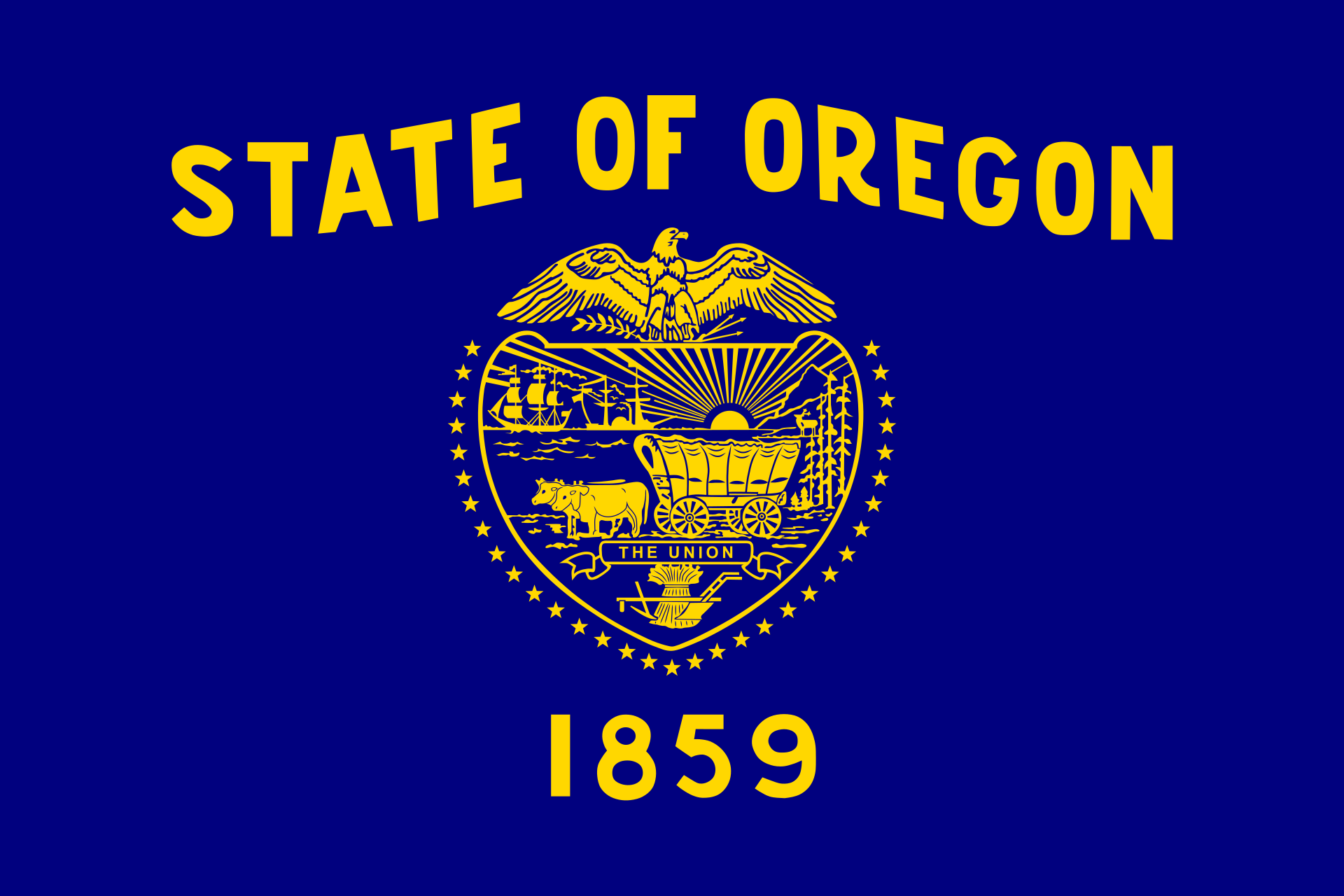
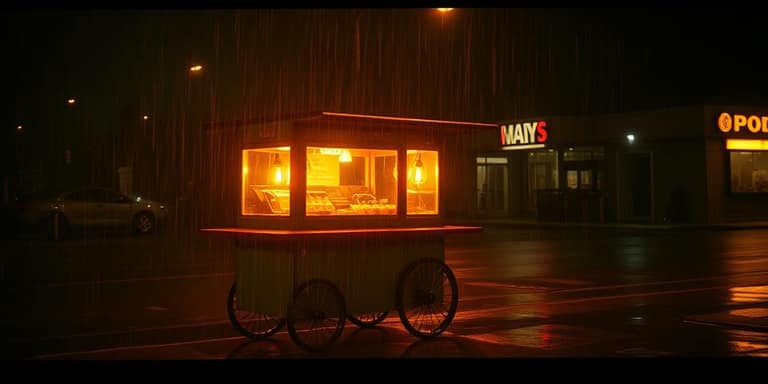
Oregon plateFood cart bowlCart and small footprint operators finance the build itself, since the kitchen and the storefront are the same asset
Financing terms on this page
Definitions for the terms used above. Every term links to its entry in the full glossary.
A loan or lease tied to a specific machine. The machine itself is the security, so approval leans on the value of the hardware more than on your bank statements.
Money for the work that turns a space into a working kitchen: plumbing, electrical, hoods, walls, and permits. It pays for labor and materials you cannot resell, so it is priced differently than money for a fryer.
A formal credit check that shows on your report and can move your score a few points. It happens only after you pick a specific lender, not to get information.
A preapproved pool of money you pull from only when you need it, then pay back and reuse. You pay for what you draw, not for the full amount sitting there.
Yes. Food service operators in Oregon are referred for equipment financing, working capital, lines of credit, SBA loans, and buildout capital. Program availability varies by state. Merchant cash advance and other revenue-based financing structures are not offered to businesses in Texas, Virginia, or Connecticut.
How fast can a Oregon restaurant get funded?
Short term programs commonly fund in 1 to 3 business days and equipment requests in 1 to 5. SBA financing in Oregon runs 3 to 12 weeks.
Can an Oregon food cart get financing?
Yes. Carts and trailers are financeable as equipment because the unit itself is collateral. What lenders look at is deposit history and how long the cart has been operating, not whether there is a dining room attached.
Which Oregon cities do you serve?
All of them. Operators we work with in Oregon run in Portland, Eugene, Bend, Salem, Hillsboro, and Ashland, along with smaller markets across the state. Underwriting reviews deposits and the use of funds, not the population of the market.
What documents do Oregon operators need?
For the first review, just the form. If you choose a short term program, the lender usually asks for 3 to 6 months of business bank statements. SBA adds tax returns, interim financials, and a debt schedule.
Does Oregon licensing affect financing?
Licensing affects buildout timelines and, in some transactions, collateral value. Include local permitting details in the request so a funding partner can account for them when structuring financing.
Do I need a hard credit pull to start in Oregon?
No. Our team reviews your request and looks for a funding partner that fits without a hard credit pull. A funding partner discusses programs with you and obtains your authorization before any hard credit pull.
What is equipment financing, and when does it fit a Oregon operator?
You borrow against a specific machine, and the machine is what backs the loan. Use it when a fryer, a walk-in, an oven, or a vehicle has to be replaced and you would rather keep the cash in the account. Typical size is 5,000 to 500,000, funding runs 1 to 5 business days once you choose an offer, and you repay it as fixed monthly payment. You will be asked for: application, equipment quote, bank statements.
What is working capital, and when does it fit a Oregon operator?
Cash for the everyday gaps, repaid out of sales on a set schedule instead of at the end of a project. Use it for payroll, inventory, a slow stretch, or a job you have to fund before the client pays you. Typical size is 10,000 to 500,000, funding runs 1 to 3 business days once you choose an offer, and you repay it as fixed daily, weekly, or monthly payment. You will be asked for: application, 3 to 6 months of bank statements.
What is buildout and expansion, and when does it fit a Oregon operator?
Construction money for the work that turns a space into a working kitchen, usually released in stages as the job progresses. Use it for a second location, a remodel, a patio, or a kitchen conversion, and size it to cover the permit wait, not just the build. Typical size is 50,000 to 2,000,000, funding runs 1 to 4 weeks once you choose an offer, and you repay it as fixed payment, often with a draw schedule. You will be asked for: application, contractor bids, lease, financials.
Why does the Oregon calendar change what I should borrow?
Portland and Eugene run steady with a summer lift, while Bend and Ashland swing with tourism and festival calendars.
What does waiting actually cost me in Oregon?
Cart and pod operations have their own siting and licensing path, and alcohol siting rules can hold a taproom after construction is finished.
Which program do most Oregon operators end up using?
Carts finance closer to vehicles than to buildings, which changes both the paperwork and the term you should expect. That is a starting point, not a decision. Our team reviews your deposits, time in business, and use of funds before looking for a funding partner that fits.
Does asking about financing in Oregon affect my credit?
No. Getting information is a conversation, not an application. There is no credit application and no hard credit pull until you have picked a specific lender and want to move forward.
A location page indicates that Foody Finance is taking clients in that market. It does not represent a physical office, storefront, or licensed presence in that city or state. All services are delivered remotely by our US-based team.
Start the conversation
Send a request before you fill out an application
Start with a free, no-obligation request. Our team reviews it and looks for a funding partner that fits.