San Jose's restaurant scene sits inside Silicon Valley's cost structure, where commercial lease rates and skilled kitchen labor both price above most of the country.
How do San Jose food businesses get funded?
San Jose operators start with a free review with a specialist, share recent business bank statements, and are matched to the programs that fit the use of funds. Working capital funds in 1 to 3 business days after you choose an offer, equipment in 1 to 5, and buildout capital in 1 to 4 weeks.
Estimates, not offers: Amounts, terms, and funding times are estimates based on programs commonly available in food service. Actual terms vary by program, lender underwriting, time in business, revenue, and credit profile. Nothing here is an offer of credit or a guarantee of approval. See source and method.
How San Jose eats, and what that does to cash
01
Where San Jose eats
Japantown, one of the few remaining historic Japantowns in the country, holds family-run Japanese restaurants and izakayas near North Fifth Street serving a mix of longtime residents and visitors at $20 to $35 checks. Little Saigon along Story Road and Senter Road carries Vietnamese restaurants and pho shops serving the city's large Vietnamese American population at $10 to $16 tickets. Santana Row holds upscale chain and chef-driven restaurants serving tech workers and shoppers at $30 to $50 checks. Downtown San Jose around San Pedro Square Market mixes food hall stalls with bars feeding office workers and Sharks hockey crowds. Willow Glen's Lincoln Avenue carries independent restaurants serving a residential, family-oriented crowd. The Berryessa and East San Jose neighborhoods hold Mexican and Vietnamese restaurants serving working class residential populations at lower price points than downtown. Unlike San Francisco's tourist-heavy downtown core, San Jose's restaurant traffic is driven almost entirely by residents and commuting tech employees rather than visiting tourists, so weekday lunch near corporate campuses outweighs weekend tourism revenue citywide.
02
What the city actually eats
San Jose is known for Vietnamese pho and banh mi concentrated in Little Saigon, a scale and density of Vietnamese food service that exceeds San Francisco's smaller Tenderloin cluster. Japanese ramen and izakaya counter service in Japantown runs $15 to $25 per person. Mexican taquerias serving East San Jose and Berryessa keep tacos and tortas under $12, reflecting the city's large Mexican American population. Food hall formats like San Pedro Square Market and Japantown's smaller food stalls charge moderate rents compared to downtown San Francisco's Ferry Building. Corporate cafeteria and catering demand tied to tech campuses pulls lunch spending away from nearby standalone restaurants on weekdays, a dynamic much stronger here than in San Francisco's more mixed downtown. Craft brewery kitchens have grown in the SoFA District near San Jose State University. Drive through and strip mall formats dominate suburban Evergreen and Almaden Valley given San Jose's more spread-out, car-dependent geography compared to San Francisco. This heavier reliance on car-dependent suburban dining plus internal corporate cafeterias means independent restaurants see thinner weekday lunch volume than the city's total office population would suggest.
03
The calendar that runs the year
Cisco, Adobe, PayPal, and eBay all keep major campuses in or near downtown San Jose, anchoring weekday lunch demand that drops sharply during company holiday shutdowns between Christmas and New Year's Day. The San Jose Sharks' NHL season from October through April fills SAP Center and nearby San Pedro Square restaurants and bars on game nights. San Jose State University's fall and spring semesters drive demand in the SoFA District and downtown, dropping during the summer break unlike Santa Clara County's tech calendar. Levi's Stadium in nearby Santa Clara, home to the 49ers, pulls some overflow dining traffic on NFL Sundays from August through January. Silicon Valley Comic Con and other convention business at the San Jose Convention Center create scattered multi-day spikes through the year. Cinco de Mayo and Vietnamese Tet celebrations each bring concentrated single-week surges to East San Jose and Little Saigon respectively. Unlike San Francisco's Dreamforce-driven single fall peak, San Jose's calendar spreads across several corporate holiday cycles and two ethnic community calendars, so its slow periods land specifically around major corporate shutdown weeks rather than one season.
04
Growth and cost pattern
New restaurant growth in San Jose concentrates in North San Jose near the tech corridor along North First Street, and in East San Jose along Story Road, where commercial rent runs below Santana Row or downtown but still above the Central Valley. Buildout in older strip centers in East San Jose and Berryessa often requires kitchen ventilation and grease trap upgrades to meet current Santa Clara County health code, adding weeks to permitting. Labor costs run high given Santa Clara County's minimum wage and the region's overall cost of living, similar to San Francisco but without the added city-mandated health care spending requirement. Utility costs stay elevated due to Silicon Valley Power and PG&E rate structures affecting commercial kitchens across the South Bay. Newer mixed-use developments near North First Street and Santana Row often require expensive tenant improvement buildouts to meet developer design standards, unlike older Willow Glen storefronts with simpler landlord requirements. Deposit and key money demands are lower than San Francisco's tightest corridors but still above nearby Central Valley cities. These combined high labor costs and mixed-use buildout standards mean new operators in North San Jose often carry larger upfront equipment loads than similar concepts opening in Willow Glen or East San Jose strip centers.
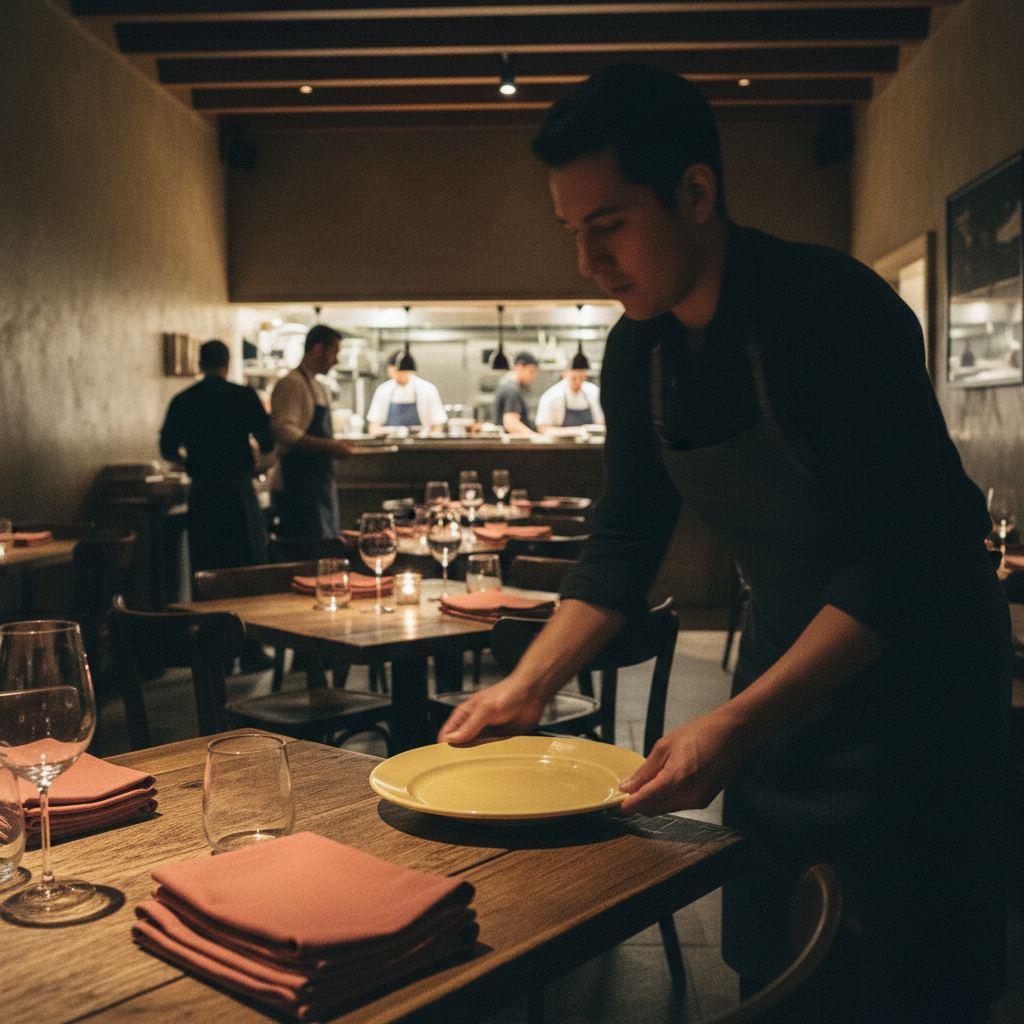
San Jose food service. Illustration generated with AI. Not a photograph of a Foody Finance client or location.
What drives financing conversations in San Jose
Financing here often covers labor cost overruns during buildout, since contractor and kitchen equipment installer demand stays high across the South Bay's broader construction market. Operators in Japantown and Willow Glen also invest in compact, space-efficient kitchen layouts to make the most of smaller footprints in a market where square footage carries a premium.
Revenue and seasonality in San Jose
Corporate campus proximity drives weekday lunch volume for restaurants near Santana Row and downtown, while residential neighborhoods like Willow Glen depend more on dinner and weekend family traffic. Tech industry layoff cycles have shown up in some corridors as reduced weekday lunch spend, so revenue planning needs room for demand shifts tied to the local employment base rather than typical seasonal patterns.
What this does to your numbers
Rent and labor both cost more here, so a slow month hits your bank balance harder than in a cheaper market.
Permitting in San Jose, and what it costs to wait
Santa Clara County Public Health issues food facility permits while the City of San Jose's Building Division handles construction permits on a separate track, and demand for licensed contractors across the South Bay's tech-driven construction boom can push buildout timelines past what the permits themselves require. A conditional use permit is sometimes needed for alcohol service depending on zoning, adding another review layer before a bar program can launch.
What the wait actually costs
Finding an available contractor can take longer than the permit process itself.
What raises the cost of capital here
01High demand for licensed contractors across the South Bay's tech-driven construction market extends buildout timelines.
02Commercial lease rates near corporate campuses raise the cost of every month spent waiting on permits.
03Zoning-dependent conditional use requirements for alcohol service add review time beyond the standard health permit.
Which program usually fits here
Equipment financingcovers the cost of building efficient in a tight space, while working capital absorbs shifts in nearby office worker traffic.
California outline. Boundary data: US Census Bureau cartographic boundary files, public domain. Simplified for display.
A loan or lease tied to a specific machine. The machine itself is the security, so approval leans on the value of the hardware more than on your bank statements.
covers
The number of guests served. Lenders pair it with check average to judge how reliable a month really is.
working capital
Cash for the everyday gaps: payroll, inventory, rent, and repairs. It is repaid out of daily or weekly sales rather than from one big event.
SBA loan
A bank loan partly guaranteed by the Small Business Administration. Lowest cost of the options, longest paperwork, and the slowest to fund.
hard credit pull
A formal credit check that shows on your report and can move your score a few points. It happens only after you pick a specific lender, not to get information.
buildout capital
Money for the work that turns a space into a working kitchen: plumbing, electrical, hoods, walls, and permits. It pays for labor and materials you cannot resell, so it is priced differently than money for a fryer.
underwriting
The lender reading your numbers to decide how much risk you are. Bank statements, time in business, and existing debt carry the most weight.
shoulder season
The in between weeks on either side of your busy season. Sales fall while rent, insurance, and salaried payroll do not.
term
How long you have to repay. A longer term lowers the monthly payment and raises what the money costs in total.
Why is it hard to find contractors for a restaurant buildout in San Jose?
The South Bay's broader tech-driven construction boom keeps licensed contractors and kitchen equipment installers in high demand across commercial and residential projects alike, which can push a restaurant buildout timeline past what the permits alone would require. Financing that accounts for a longer construction window, not just permit processing time, fits this market better.
How do tech industry layoffs affect restaurant revenue near Santana Row?
Restaurants depending on weekday lunch traffic from nearby corporate campuses have seen more variable demand during periods of tech sector layoffs or hybrid work shifts, since that customer base ties closely to local employment levels. Revenue planning around a single fixed weekday average understates that risk.
How does San Jose's tech layoff cycle affect restaurant demand differently than San Francisco?
San Jose's restaurant base sits closer to large single-employer campuses like Cisco and PayPal than San Francisco's more diversified downtown, so a layoff announcement at one major South Bay employer can visibly dent lunch traffic at nearby restaurants within weeks. San Francisco's downtown spreads office demand across more industries beyond tech, cushioning any single company's downturn. Lenders reviewing a San Jose restaurant near a corporate campus should ask which single employer drives the majority of its weekday lunch volume, since concentration in one company's headcount creates revenue risk that a downtown San Francisco location, with more varied office tenants nearby, would not carry to the same degree.
How do San Jose food businesses start a financing conversation?
Start with a free review by a specialist. You share the basics of the business, the use of funds, and recent bank statements, and you see every program that fits before any credit application exists. Short term options commonly fund in 1 to 3 business days once you choose an offer.
Do you serve areas outside San Jose in California?
Yes. Every program is available statewide in California and nationwide.
What is equipment financing, and when does it fit a San Jose operator?
You borrow against a specific machine, and the machine is what backs the loan. Use it when a fryer, a walk-in, an oven, or a vehicle has to be replaced and you would rather keep the cash in the account. Typical size is 5,000 to 500,000, funding runs 1 to 5 business days once you choose an offer, and you repay it as fixed monthly payment. You will be asked for: application, equipment quote, bank statements.
What is working capital, and when does it fit a San Jose operator?
Cash for the everyday gaps, repaid out of sales on a set schedule instead of at the end of a project. Use it for payroll, inventory, a slow stretch, or a job you have to fund before the client pays you. Typical size is 10,000 to 500,000, funding runs 1 to 3 business days once you choose an offer, and you repay it as fixed daily, weekly, or monthly payment. You will be asked for: application, 3 to 6 months of bank statements.
What is sba loans, and when does it fit a San Jose operator?
A bank loan partly guaranteed by the Small Business Administration, which is why the payment is the lowest available. Use it when you can plan months ahead. It is the cheapest money on this page and the slowest to arrive. Typical size is 50,000 to 5,000,000, funding runs 3 to 12 weeks once you choose an offer, and you repay it as amortized interest, lowest payment of any program. You will be asked for: tax returns, interim financials, debt schedule, plan.
Why does the San Jose calendar change what I should borrow?
Rent and labor both cost more here, so a slow month hits your bank balance harder than in a cheaper market.
What does waiting actually cost me in San Jose?
Finding an available contractor can take longer than the permit process itself.
Which program do most San Jose operators end up using?
Equipment financing covers the cost of building efficient in a tight space, while working capital absorbs shifts in nearby office worker traffic. That is a starting point, not a decision. The specialist review looks at your deposits, your time in business, and what the money is for before anything is recommended.
Does asking about financing in San Jose affect my credit?
No. Getting information is a conversation, not an application. There is no credit application and no hard credit pull until you have picked a specific lender and want to move forward.
Start the conversation
Talk to a specialist before you fill out an application.
Start with a free, no-obligation review. We will send the right application only after we know what you actually qualify for.