WA metro

Restaurant financing in Spokane.

A restaurant in Kendall Yards can be booked solid through Hoopfest weekend and then sit quiet once the courts come down, and the difference between those two weeks matters for planning ahead.

How do Spokane food businesses get funded?

Spokane operators start with a free review with a specialist, share recent business bank statements, and are matched to the programs that fit the use of funds. Working capital funds in 1 to 3 business days after you choose an offer, equipment in 1 to 5, and buildout capital in 1 to 4 weeks.

Estimates, not offers: Amounts, terms, and funding times are estimates based on programs commonly available in food service. Actual terms vary by program, lender underwriting, time in business, revenue, and credit profile. Nothing here is an offer of credit or a guarantee of approval. See source and method.

How Spokane eats, and what that does to cash

01

Where Spokane eats

Downtown Spokane, centered on Riverfront Park and the Davenport Hotel district, holds the city's higher-end restaurants and hotel bars serving business travelers and convention visitors. The South Perry District along Perry Street has grown into a walkable strip of neighborhood cafes and pizza spots serving nearby homeowners at moderate prices. Kendall Yards, a riverside redevelopment on the north bank, holds newer chef-driven restaurants like Yards Bruncheon and Central Food, serving a higher-spending crowd with river-view patio seating. Browne's Addition, west of downtown, mixes historic mansions with a handful of destination restaurants and bars serving a mixed-income local crowd. The Gonzaga University area near the Logan neighborhood runs on counter-service pizza and cheap eats serving students. North Division Street and the Spokane Valley corridor hold suburban chain and family dining serving commuters, at lower average tickets than the river-adjacent districts.
02

What Spokane orders

Pacific Northwest staples dominate here, with huckleberry desserts, regional trout, and craft brewery kitchens forming the backbone of the identity, led by breweries like No-Li Brewhouse and Iron Goat Brewing. Counter-service and food truck formats cluster around Riverfront Park and Kendall Yards, serving lunch crowds a twelve to sixteen dollar plate. Drive through demand stays strong along North Division Street, serving commuters heading toward Spokane Valley and the airport corridor. Patio seating carries real weight from May through September given the region's dry summers, and Kendall Yards restaurants built around river-view patios draw a premium over comparable indoor-only spots. A sit-down dinner for two with drinks downtown or in Kendall Yards runs sixty-five to ninety dollars. Winter, given heavy snowfall, pushes demand toward soup and comfort food at lunch counters, and restaurants without enclosed or heated outdoor seating lose their patio revenue for nearly five months of the year.

03

The Spokane calendar

Gonzaga University drives Logan neighborhood and downtown bar traffic heavily during basketball season, December through March, with Zags home games at the McCarthey Athletic Center filling nearby restaurants on game nights. Bloomsday, the major spring road race in early May, and Hoopfest, the outdoor basketball tournament held downtown in late June, each bring large single-weekend crowds that spike restaurant volume sharply. The Spokane Interstate Fair in September draws regional visitors to the fairgrounds. Downtown's convention business, tied to the Spokane Convention Center along the river, fills hotel restaurants on a rolling basis through spring and fall. Winter tourism tied to nearby Mt. Spokane and Schweitzer skiing supports some traffic, but the weeks after New Year's through February see the steepest drop in discretionary downtown dining as convention bookings thin out.

04

Growth and cost in Spokane

New restaurant growth concentrates in Kendall Yards and the Spokane Valley corridor, where Kendall Yards offers newer, higher-cost riverside buildout and Spokane Valley offers cheaper strip-retail space with heavier chain competition. Downtown commercial rents remain lower than comparable West Coast cities, drawing operators priced out of Seattle and Portland, though older downtown buildings often require costly electrical and HVAC upgrades before a kitchen buildout can proceed. Labor costs have risen as healthcare employers, including Providence Sacred Heart Medical Center, compete for the same hourly workforce restaurants depend on. Utility costs spike in January and February with heating load during the coldest stretch of the year, a cost many operators moving from milder West Coast markets underestimate. Buildout timelines in Kendall Yards can extend due to limited contractor availability given the pace of nearby residential construction, delaying opening dates and the start of revenue by several months.

Food service operation in Spokane
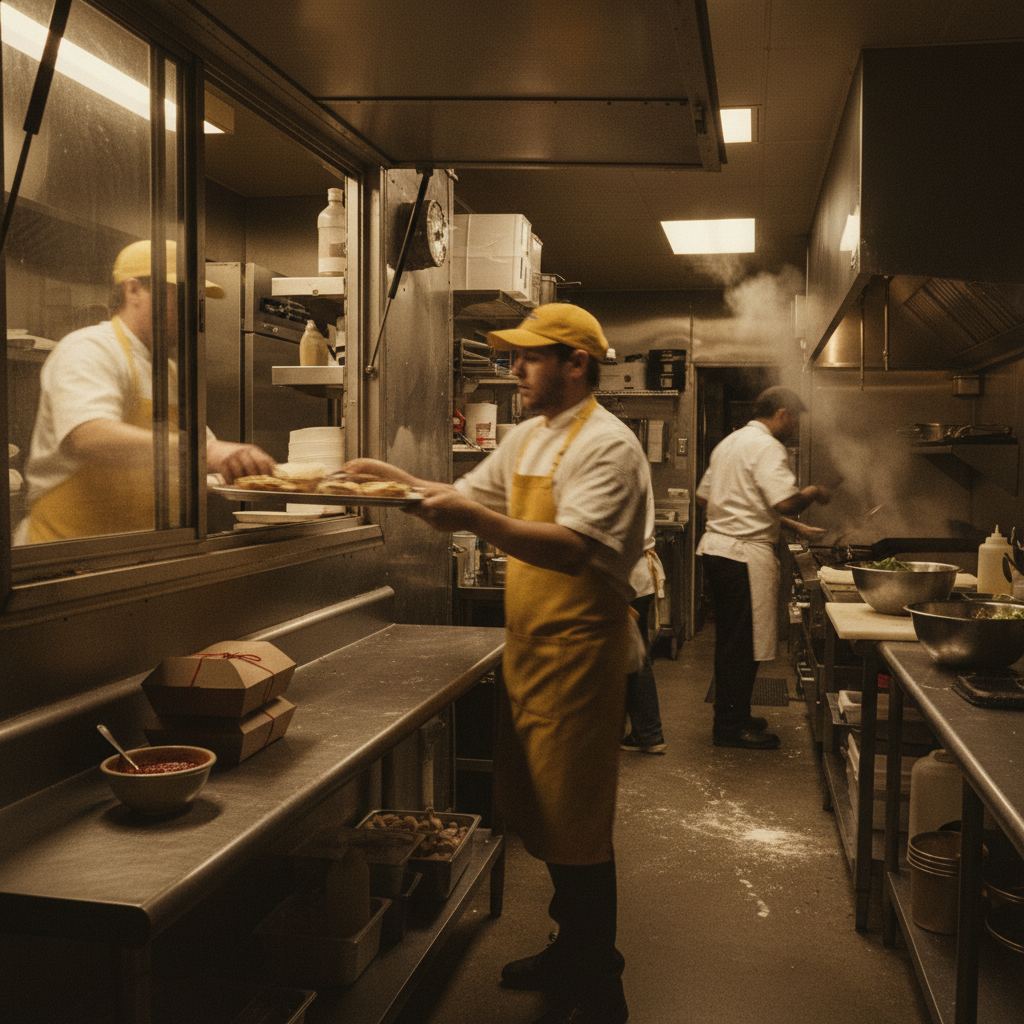
Spokane food service. Illustration generated with AI. Not a photograph of a Foody Finance client or location.

What drives financing conversations in Spokane

Financing in Spokane commonly funds seasonal staffing ramp-up and event-driven inventory, since the city's calendar of outdoor events like Hoopfest and its winter ski tourism tied to nearby mountains create sharp demand spikes rather than steady year-round traffic. A kitchen needs enough working capital to staff up fast for a festival weekend without overcommitting to that staffing level once the event ends.

Revenue and seasonality in Spokane

Spokane's restaurant revenue peaks around summer events like Hoopfest and outdoor festival season, with a secondary bump each winter from ski traffic heading to nearby mountains, while spring and fall run noticeably slower. Gonzaga's academic calendar adds a steady student customer base near downtown that helps offset some of that seasonal gap.

What this does to your numbers

Sales jump hard during summer festival weekends and ski season and go quieter in between, so the calendar has more effect on cash flow than the day-to-day menu does.

Permitting in Spokane, and what it costs to wait

The Spokane Regional Health District issues food establishment permits across the county while the City of Spokane's Planning and Development office handles zoning and building review separately, and a Washington State Liquor and Cannabis Board license runs on its own state-level track for any bar or brewery concept. Historic buildings in districts like the Garland District or downtown's older blocks can trigger additional review tied to building age, which can add weeks to a buildout before financing draws can be fully used.

What the wait actually costs

An older building in a historic district can need extra review before construction starts, and every week of that review is a week of rent with no kitchen running.

What raises the cost of capital here

  • 01Historic building review in older districts like Garland District can extend buildout timelines
  • 02Hoopfest and summer festival weekends create short but intense demand spikes downtown
  • 03Winter ski traffic to nearby mountains provides a secondary but shorter seasonal bump

Which program usually fits here

Working capital or a short-term advance fits well here because it can cover a fast staffing ramp-up for an event weekend without a long repayment term tied to a single busy stretch.

Spokane
Washington outline. Boundary data: US Census Bureau cartographic boundary files, public domain. Simplified for display.

Free review, no hard credit pull

Get funds now and review your options

Step 01 of 03 · Your operation

A specialist reviews every request and reaches out the same business day

Areas we serve

  • Downtown Spokane
  • South Hill
  • Kendall Yards
  • Garland District
  • Perry District

Financing terms on this page

Definitions for the terms used above.

draw
Taking money out of an approved line or loan. Draws tied to construction milestones mean you only start paying interest on each piece as you use it.
working capital
Cash for the everyday gaps: payroll, inventory, rent, and repairs. It is repaid out of daily or weekly sales rather than from one big event.
term
How long you have to repay. A longer term lowers the monthly payment and raises what the money costs in total.
equipment paper
A loan or lease tied to a specific machine. The machine itself is the security, so approval leans on the value of the hardware more than on your bank statements.
merchant cash advance
You sell a slice of future card sales for cash today. Fastest money available, and the most expensive, so it fits an emergency rather than a plan.
factor rate
A flat multiplier instead of an interest rate. Borrow 50,000 at a 1.25 factor and you repay 62,500 total, no matter how fast you pay it off.
hard credit pull
A formal credit check that shows on your report and can move your score a few points. It happens only after you pick a specific lender, not to get information.
buildout capital
Money for the work that turns a space into a working kitchen: plumbing, electrical, hoods, walls, and permits. It pays for labor and materials you cannot resell, so it is priced differently than money for a fryer.
covers
The number of guests served. Lenders pair it with check average to judge how reliable a month really is.
underwriting
The lender reading your numbers to decide how much risk you are. Bank statements, time in business, and existing debt carry the most weight.

Spokane financing questions

How does Hoopfest affect restaurant demand in downtown Spokane?

Hoopfest brings a large temporary population downtown for a single weekend each summer, and restaurants and bars in the area can see some of their highest volume of the year during that stretch. Because the surge is short and predictable on the calendar, many operators plan short-term staffing and inventory increases around it rather than treating it as a sign of ongoing demand growth.

Why do buildouts in historic Spokane neighborhoods like the Garland District take longer?

Older commercial buildings in districts like Garland District can trigger additional structural and code review tied to the building's age once a permit application is filed, separate from the standard health and building permit process. That review adds time before construction can proceed, and rent or mortgage costs on the space continue to accrue during that stretch.

Why does Gonzaga's basketball schedule matter to lenders evaluating Spokane restaurant concepts?

Gonzaga basketball season runs December through March and drives a measurable share of bar and restaurant traffic near downtown and the Logan neighborhood on home game nights, a pattern distinct from typical university dining cycles tied to the academic calendar. A concept located near the McCarthey Athletic Center or along the game-night walking routes downtown can see revenue tied closely to the team's home schedule and postseason run, which varies year to year. Lenders often ask whether a restaurant's traffic depends on tournament success in March, since a short postseason run removes several high-volume nights from that year's calculation.

How do Spokane food businesses start a financing conversation?

Start with a free review by a specialist. You share the basics of the business, the use of funds, and recent bank statements, and you see every program that fits before any credit application exists. Short term options commonly fund in 1 to 3 business days once you choose an offer.

Do you serve areas outside Spokane in Washington?

Yes. Every program is available statewide in Washington and nationwide.

What is working capital, and when does it fit a Spokane operator?

Cash for the everyday gaps, repaid out of sales on a set schedule instead of at the end of a project. Use it for payroll, inventory, a slow stretch, or a job you have to fund before the client pays you. Typical size is 10,000 to 500,000, funding runs 1 to 3 business days once you choose an offer, and you repay it as fixed daily, weekly, or monthly payment. You will be asked for: application, 3 to 6 months of bank statements.

What is equipment financing, and when does it fit a Spokane operator?

You borrow against a specific machine, and the machine is what backs the loan. Use it when a fryer, a walk-in, an oven, or a vehicle has to be replaced and you would rather keep the cash in the account. Typical size is 5,000 to 500,000, funding runs 1 to 5 business days once you choose an offer, and you repay it as fixed monthly payment. You will be asked for: application, equipment quote, bank statements.

What is merchant cash advance, and when does it fit a Spokane operator?

You sell a slice of future card sales for money today, repaid as the card volume arrives. Use it only when speed decides the outcome. It is the fastest option here and the most expensive one. Typical size is 5,000 to 250,000, funding runs 1 to 3 business days once you choose an offer, and you repay it as factor rate, highest total cost. You will be asked for: application, bank and processing statements.

Why does the Spokane calendar change what I should borrow?

Sales jump hard during summer festival weekends and ski season and go quieter in between, so the calendar has more effect on cash flow than the day-to-day menu does.

What does waiting actually cost me in Spokane?

An older building in a historic district can need extra review before construction starts, and every week of that review is a week of rent with no kitchen running.

Which program do most Spokane operators end up using?

Working capital or a short-term advance fits well here because it can cover a fast staffing ramp-up for an event weekend without a long repayment term tied to a single busy stretch. That is a starting point, not a decision. The specialist review looks at your deposits, your time in business, and what the money is for before anything is recommended.

Does asking about financing in Spokane affect my credit?

No. Getting information is a conversation, not an application. There is no credit application and no hard credit pull until you have picked a specific lender and want to move forward.

Start the conversation

Talk to a specialist before you fill out an application.

Start with a free, no-obligation review. We will send the right application only after we know what you actually qualify for.

Start a free review

Prefer to call

(833) 505-1900