WA metro

Restaurant financing in Seattle.

Seattle's minimum wage and benefit requirements put labor at the center of every cash flow conversation.

How do Seattle food businesses get funded?

Seattle operators start with a free review with a specialist, share recent business bank statements, and are matched to the programs that fit the use of funds. Working capital funds in 1 to 3 business days after you choose an offer, equipment in 1 to 5, and buildout capital in 1 to 4 weeks.

Estimates, not offers: Amounts, terms, and funding times are estimates based on programs commonly available in food service. Actual terms vary by program, lender underwriting, time in business, revenue, and credit profile. Nothing here is an offer of credit or a guarantee of approval. See source and method.

How Seattle eats, and what that does to cash

01

Where Seattle eats

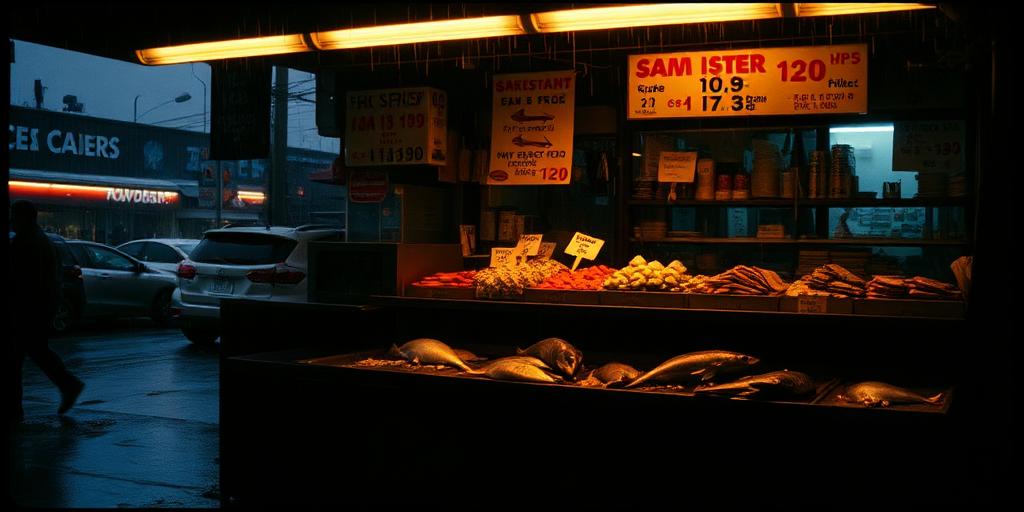
Pike Place Market downtown remains Seattle's most tourist heavy dining district, with seafood counters and small restaurants serving both visitors and downtown office workers at prices set for high foot traffic. Capitol Hill holds a dense bar and late night food scene serving a younger, LGBTQ friendly crowd at moderate prices. Ballard, a former fishing village neighborhood, supports a strong brewery and Nordic influenced restaurant scene serving a mixed local crowd. Fremont holds casual restaurants and breweries serving a younger, tech adjacent population. The International District, home to Seattle's historic Chinatown, holds dim sum halls and Vietnamese and Chinese restaurants serving both longtime residents and destination diners. South Lake Union, rebuilt around Amazon's headquarters campus, runs a weekday lunch economy of fast casual restaurants serving tech employees that goes quiet on weekends. Rent in South Lake Union reflects its office tenant base rather than residential density, meaning restaurants there depend heavily on one company's office attendance policies.
02

What Seattle orders

Seafood, particularly salmon and Dungeness crab, anchors Seattle's identity, sold at Pike Place Market counters and served at restaurants citywide, with prices moving with the fishing season's catch. Coffee culture runs deep given Seattle's role as the birthplace of major coffee chains, supporting a dense independent cafe scene beyond the well known corporate names. Teriyaki, a distinctly Seattle fast casual format that differs from Japanese teriyaki found elsewhere, is sold from small counter service shops across the city at low prices. Food trucks cluster near South Lake Union and other office districts, serving a weekday lunch crowd of tech workers. Pho and other Vietnamese dishes are widely available given the region's large Vietnamese population. Patio dining runs a shorter season than Sun Belt cities given Seattle's rainy climate, concentrated from June through September. A teriyaki plate runs eight to twelve dollars, Pike Place seafood runs fifteen to twenty five dollars, and a higher end seafood dinner elsewhere in the city runs fifty dollars and up. Seattle's rainy season from October through May forces restaurants to rely on covered or heated outdoor seating to keep any patio capacity usable.

03

The Seattle calendar

Amazon's headquarters in South Lake Union drives a weekday lunch economy directly tied to the company's office attendance policy, meaning any shift in return to office requirements measurably changes nearby restaurant traffic. T-Mobile Park and Climate Pledge Arena host Mariners, Kraken, and Storm games that spike restaurant traffic in the SoDo and Uptown neighborhoods on event nights. The Seattle Convention Center brings a steady weekday trade show calendar downtown. Summer, from June through September, is both Seattle's driest weather window and its peak cruise season, with Alaska bound cruise ships departing from the downtown waterfront and filling nearby restaurants. Winter, from November through March, brings Seattle's rainiest and darkest months, cutting outdoor dining entirely and reducing evening foot traffic downtown. The University of Washington's academic calendar drives dining in the University District, with a summer slowdown once students leave. A downtown Seattle restaurant near the cruise terminals sees a concentrated summer revenue window that drops sharply once cruise season ends each fall, a pattern owners must plan winter staffing and inventory around.

04

Growth and cost in Seattle

New restaurant growth has pushed into Bellevue and other Eastside suburbs as major tech employers, including Microsoft's Redmond campus, have added jobs there, while Seattle proper still sees openings concentrated in Ballard and Capitol Hill. Labor costs are among the highest in the country given Seattle's minimum wage requirements, among the first in the nation to reach fifteen dollars an hour, and the region's high cost of living continues to push wages upward. Buildout in older Pike Place Market and Pioneer Square buildings can require significant electrical and structural updates before a commercial kitchen passes inspection, since these are some of the oldest commercial buildings in the city. Rainy season construction delays exterior work on buildouts that require new patio or facade construction. Rent in South Lake Union is tied closely to Amazon's office footprint, so a slowdown in office attendance there directly affects nearby restaurant lease economics. A restaurant depending on downtown weekday office lunch traffic should factor in that hybrid work policies at major employers have made that daily customer base less predictable than it was before 2020.

Food service operation in Seattle
Seattle food service. Illustration generated with AI. Not a photograph of a Foody Finance client or location.

What drives financing conversations in Seattle

Working capital requests here are usually about payroll timing rather than growth, and automation equipment purchases are increasingly common.

Revenue and seasonality in Seattle

Steady year round volume with a strong summer lift, cruise season adding downtown traffic, and beverage programs carrying a meaningful share of margin.

What this does to your numbers

Steady year round with a summer lift, and scheduled wage increases raise labor cost on a known calendar.

Permitting in Seattle, and what it costs to wait

King County plan review and city permitting run long, and scheduled labor cost increases raise the payroll the project has to carry through that review. Requests here fund the delay along with the hardware.

What the wait actually costs

Permit review in the core gates every kitchen change, and older buildings frequently need utility upgrades first.

What raises the cost of capital here

  • 01Minimum wage and scheduling rules put labor at the top of the cost structure
  • 02Seattle and King County review both apply depending on the address
  • 03Tech campus catering demand shifts with return to office cycles

Which program usually fits here

Price the coming wage steps into the request. A plan that already accounts for them reads stronger than one that does not mention them.

Seattle
Washington outline. Boundary data: US Census Bureau cartographic boundary files, public domain. Simplified for display.

Free review, no hard credit pull

Get funds now and review your options

Step 01 of 03 · Your operation

A specialist reviews every request and reaches out the same business day

Areas we serve

  • Capitol Hill
  • Ballard
  • Belltown
  • Fremont
  • Bellevue

Financing terms on this page

Definitions for the terms used above.

plan review
The city or county reading your kitchen drawings before you are allowed to build. Nothing gets installed until it clears, and rent runs the whole time.
working capital
Cash for the everyday gaps: payroll, inventory, rent, and repairs. It is repaid out of daily or weekly sales rather than from one big event.
equipment paper
A loan or lease tied to a specific machine. The machine itself is the security, so approval leans on the value of the hardware more than on your bank statements.
line of credit
A preapproved pool of money you pull from only when you need it, then pay back and reuse. You pay for what you draw, not for the full amount sitting there.
draw
Taking money out of an approved line or loan. Draws tied to construction milestones mean you only start paying interest on each piece as you use it.
hard credit pull
A formal credit check that shows on your report and can move your score a few points. It happens only after you pick a specific lender, not to get information.
buildout capital
Money for the work that turns a space into a working kitchen: plumbing, electrical, hoods, walls, and permits. It pays for labor and materials you cannot resell, so it is priced differently than money for a fryer.
covers
The number of guests served. Lenders pair it with check average to judge how reliable a month really is.
underwriting
The lender reading your numbers to decide how much risk you are. Bank statements, time in business, and existing debt carry the most weight.
term
How long you have to repay. A longer term lowers the monthly payment and raises what the money costs in total.

Seattle financing questions

Does Seattle's labor cost affect what lenders will approve?

It affects the margin picture, so documentation matters more here. Showing labor as a stable percentage of revenue rather than a rising one is often what moves a marginal file into approval.

Can a Seattle operator finance payroll during a slow quarter?

Yes, that is a standard working capital use. The structure should be short and sized to the actual gap rather than a larger amount that carries interest past the point of need.

How does Amazon's office attendance policy affect South Lake Union restaurants?

South Lake Union was built largely around Amazon's headquarters campus, and restaurants there depend heavily on weekday lunch traffic from Amazon employees rather than residential or tourist foot traffic. When the company adjusts how many days employees are required to be in office, nearby restaurant sales move with that policy in a way most neighborhoods never experience from a single employer. Lenders evaluating a South Lake Union restaurant should ask how concentrated its customer base is around one company's office schedule rather than a broader, more diversified local population.

How do Seattle food businesses start a financing conversation?

Start with a free review by a specialist. You share the basics of the business, the use of funds, and recent bank statements, and you see every program that fits before any credit application exists. Short term options commonly fund in 1 to 3 business days once you choose an offer.

Do you serve areas outside Seattle in Washington?

Yes. Every program is available statewide in Washington and nationwide.

What is working capital, and when does it fit a Seattle operator?

Cash for the everyday gaps, repaid out of sales on a set schedule instead of at the end of a project. Use it for payroll, inventory, a slow stretch, or a job you have to fund before the client pays you. Typical size is 10,000 to 500,000, funding runs 1 to 3 business days once you choose an offer, and you repay it as fixed daily, weekly, or monthly payment. You will be asked for: application, 3 to 6 months of bank statements.

What is equipment financing, and when does it fit a Seattle operator?

You borrow against a specific machine, and the machine is what backs the loan. Use it when a fryer, a walk-in, an oven, or a vehicle has to be replaced and you would rather keep the cash in the account. Typical size is 5,000 to 500,000, funding runs 1 to 5 business days once you choose an offer, and you repay it as fixed monthly payment. You will be asked for: application, equipment quote, bank statements.

What is business line of credit, and when does it fit a Seattle operator?

An approved limit you pull from only when you need it, then repay and reuse. Use it for a season you can see coming, so you draw before the peak and pay it back out of the peak. Typical size is 10,000 to 250,000, funding runs 2 to 7 business days once you choose an offer, and you repay it as interest on the drawn balance only. You will be asked for: application, bank statements.

Why does the Seattle calendar change what I should borrow?

Steady year round with a summer lift, and scheduled wage increases raise labor cost on a known calendar.

What does waiting actually cost me in Seattle?

Permit review in the core gates every kitchen change, and older buildings frequently need utility upgrades first.

Which program do most Seattle operators end up using?

Price the coming wage steps into the request. A plan that already accounts for them reads stronger than one that does not mention them. That is a starting point, not a decision. The specialist review looks at your deposits, your time in business, and what the money is for before anything is recommended.

Does asking about financing in Seattle affect my credit?

No. Getting information is a conversation, not an application. There is no credit application and no hard credit pull until you have picked a specific lender and want to move forward.

Start the conversation

Talk to a specialist before you fill out an application.

Start with a free, no-obligation review. We will send the right application only after we know what you actually qualify for.

Start a free review

Prefer to call

(833) 505-1900