WA metro

Restaurant financing in Tacoma.

A restaurant on Sixth Avenue can be steady all year while a spot near the port depends on ship and cargo schedules that have nothing to do with the neighborhood's foot traffic.

How do Tacoma food businesses get funded?

Tacoma operators start with a free review with a specialist, share recent business bank statements, and are matched to the programs that fit the use of funds. Working capital funds in 1 to 3 business days after you choose an offer, equipment in 1 to 5, and buildout capital in 1 to 4 weeks.

Estimates, not offers: Amounts, terms, and funding times are estimates based on programs commonly available in food service. Actual terms vary by program, lender underwriting, time in business, revenue, and credit profile. Nothing here is an offer of credit or a guarantee of approval. See source and method.

How Tacoma eats, and what that does to cash

01

Where Tacoma eats

Sixth Avenue carries Tacoma's densest restaurant strip, mixing dive bars, pho shops, and pizza slice counters for a mixed-income, younger crowd with tickets often under 20 dollars. Proctor District near the University of Puget Sound draws a family and faculty crowd to sit-down brunch spots and a weekly farmers market on Saturdays. The Stadium District, anchored by the historic Stadium High School, pulls a slightly higher-spending crowd to wine bars and Italian restaurants overlooking Commencement Bay. Downtown's Theater District and the area near the Tacoma Dome serve concertgoers and convention visitors with quick-turn dinners before events. Point Ruston, a newer waterfront development on the old smelter site, has brought chain and upscale casual restaurants targeting a higher price point with harbor views. The Hilltop neighborhood, historically underserved by restaurant investment, has seen new counter-service openings tied to light rail extension, though foot traffic there remains uneven on weekday afternoons, creating inconsistent daily revenue for new operators still building a customer base.
02

What Tacoma actually eats

Tacoma claims the origin of the modern cheese-topped hamburger patty melt style associated with local diners, alongside a strong teriyaki counter-service tradition inherited from the broader Puget Sound region, with plates running 9 to 13 dollars. Seafood houses along Ruston Way serve salmon and oysters to a view-driven dinner crowd paying 25 dollars and up per entree. Vietnamese pho shops cluster on Sixth Avenue and South Tacoma Way, serving a working-class lunch crowd for under 12 dollars a bowl. Craft breweries, including Harmon Brewing near the Tacoma Dome, run taproom kitchens serving pub food to a game-day and concert crowd. Food trucks park near the University of Washington Tacoma campus on weekdays, serving students and downtown office workers. Late-night kitchens are scarce outside downtown, with most neighborhood restaurants closing by 9pm, which limits any location's ability to capture post-event traffic from Tacoma Dome shows ending after 10pm.

03

The Tacoma calendar

The Port of Tacoma and Joint Base Lewis-McChord to the south anchor steady weekday lunch and payday-driven dinner demand year round, with a noticeable spending bump around military paydays on the first and fifteenth of each month. The Tacoma Dome hosts concerts and trade shows that create sharp single-night surges for nearby restaurants, unevenly distributed across the calendar rather than seasonal. The University of Washington Tacoma and University of Puget Sound academic calendars drive Hilltop and Proctor District traffic from September through May, dropping off in summer. Ruston Way and Point Ruston waterfront restaurants see their strongest months from June through August when Commencement Bay draws boaters and tourists. The Puyallup Fair, held nearby each September, pulls some discretionary dining dollars away from Tacoma proper for its ten-day run, thinning weekday reservations at sit-down restaurants during that window.

04

Growth and cost in Tacoma

New restaurant development concentrates along the waterfront at Point Ruston and in the Stadium District, where redevelopment has replaced older industrial and residential lots with retail shells built for food service occupancy. Sixth Avenue and Hilltop see smaller, lower-capital openings in older storefronts with mixed plumbing and electrical conditions that can extend buildout timelines. Commercial rent runs lower than nearby Seattle but has climbed as Seattle's cost pressure pushes tenants south along the I-5 corridor. Labor costs compete directly with the Port of Tacoma's logistics wages and Joint Base Lewis-McChord's civilian contractor jobs, both of which draw workers away from kitchen roles. Waterfront buildouts near Ruston Way face additional permitting steps tied to shoreline regulations, which can add months to a project timeline and stretch the period an operator pays rent before any revenue arrives.

Food service operation in Tacoma
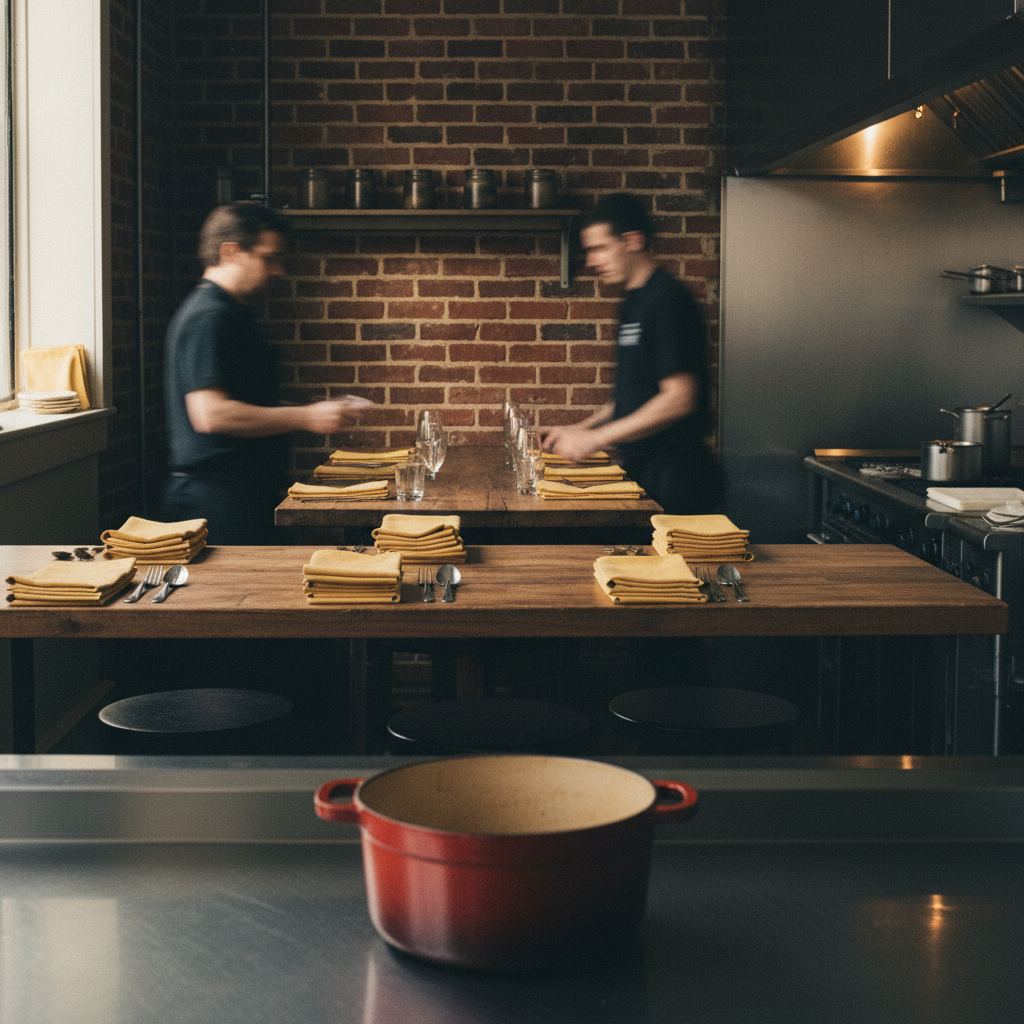
Tacoma food service. Illustration generated with AI. Not a photograph of a Foody Finance client or location.

What drives financing conversations in Tacoma

Financing in Tacoma frequently covers equipment for high-volume brewery and taproom kitchens, since the city's craft beverage and food truck scene has grown alongside a working port economy that keeps commercial rents lower than nearby Seattle. Owners also use capital to build out outdoor and covered seating that can be used through the Pacific Northwest's long stretch of mild but wet weather.

Revenue and seasonality in Tacoma

Tacoma's restaurant demand holds fairly steady across neighborhoods like Proctor District and Sixth Avenue thanks to a strong residential base, while port-adjacent businesses see revenue tied more closely to shipping and logistics activity than to walk-in traffic. The region's mild but wet climate limits outdoor seating revenue during the rainy months more than a drier city would experience.

What this does to your numbers

A residential neighborhood spot stays fairly steady through the year, but a location near the port can swing with shipping schedules that have nothing to do with local foot traffic.

Permitting in Tacoma, and what it costs to wait

Tacoma-Pierce County Health Department issues food establishment permits while the City of Tacoma's Planning and Development Services office handles building and zoning review on a separate track, and a Washington State Liquor and Cannabis Board license adds its own state timeline for any bar or brewery concept. Older commercial buildings in the Stadium District and parts of downtown can trigger seismic retrofit review given the region's earthquake risk, and that review can add real time to a buildout before financing draws are fully spent.

What the wait actually costs

An older building that needs seismic upgrades can take extra time to clear permitting, and that means paying rent longer before opening.

What raises the cost of capital here

  • 01Seismic retrofit review for older buildings in Stadium District can extend buildout timelines
  • 02Port of Tacoma logistics activity drives demand patterns for restaurants near the waterfront
  • 03Extended wet season limits outdoor seating revenue for a larger share of the year than drier markets

Which program usually fits here

Buildout financing fits well for older Tacoma buildings needing structural work, since the seismic and code upgrades are one-time costs that a standard equipment loan wouldn't cover.

Tacoma
Washington outline. Boundary data: US Census Bureau cartographic boundary files, public domain. Simplified for display.

Free review, no hard credit pull

Get funds now and review your options

Step 01 of 03 · Your operation

A specialist reviews every request and reaches out the same business day

Areas we serve

  • Sixth Avenue
  • Proctor District
  • Stadium District
  • Hilltop
  • Downtown Tacoma

Financing terms on this page

Definitions for the terms used above.

draw
Taking money out of an approved line or loan. Draws tied to construction milestones mean you only start paying interest on each piece as you use it.
buildout capital
Money for the work that turns a space into a working kitchen: plumbing, electrical, hoods, walls, and permits. It pays for labor and materials you cannot resell, so it is priced differently than money for a fryer.
equipment paper
A loan or lease tied to a specific machine. The machine itself is the security, so approval leans on the value of the hardware more than on your bank statements.
line of credit
A preapproved pool of money you pull from only when you need it, then pay back and reuse. You pay for what you draw, not for the full amount sitting there.
hard credit pull
A formal credit check that shows on your report and can move your score a few points. It happens only after you pick a specific lender, not to get information.
working capital
Cash for the everyday gaps: payroll, inventory, rent, and repairs. It is repaid out of daily or weekly sales rather than from one big event.
covers
The number of guests served. Lenders pair it with check average to judge how reliable a month really is.
underwriting
The lender reading your numbers to decide how much risk you are. Bank statements, time in business, and existing debt carry the most weight.
term
How long you have to repay. A longer term lowers the monthly payment and raises what the money costs in total.

Tacoma financing questions

Why do some Tacoma buildouts require seismic review before construction can proceed?

Washington sits in an active seismic zone, and older commercial buildings in areas like the Stadium District or downtown Tacoma can be required to meet current seismic standards before a change of occupancy is approved. That structural review runs separately from the standard health and building permit process and can add meaningful time to a project before a loan's construction draws are used up.

Does the Port of Tacoma affect restaurant demand near the waterfront?

Restaurants near the port often see demand tied to shipping schedules and logistics worker shifts rather than the steadier residential patterns found in neighborhoods like Proctor District. That connection means revenue near the waterfront can be less predictable week to week, which is worth accounting for separately from a typical neighborhood restaurant forecast.

How does Joint Base Lewis-McChord's payroll cycle affect Tacoma restaurant revenue?

Joint Base Lewis-McChord, just south of Tacoma, pays active-duty service members on the first and fifteenth of each month, and restaurants near the base and along the South Tacoma Way corridor see measurable upticks in weekday dinner traffic in the days immediately following each payday. Between paydays, discretionary restaurant spending among military families tapers, creating a twice-monthly rhythm rather than a smooth weekly pattern. An operator's daily sales data in these areas often shows this biweekly pattern clearly, and lenders reviewing deposit timing should expect two revenue peaks per month rather than assuming even weekly distribution.

How do Tacoma food businesses start a financing conversation?

Start with a free review by a specialist. You share the basics of the business, the use of funds, and recent bank statements, and you see every program that fits before any credit application exists. Short term options commonly fund in 1 to 3 business days once you choose an offer.

Do you serve areas outside Tacoma in Washington?

Yes. Every program is available statewide in Washington and nationwide.

What is equipment financing, and when does it fit a Tacoma operator?

You borrow against a specific machine, and the machine is what backs the loan. Use it when a fryer, a walk-in, an oven, or a vehicle has to be replaced and you would rather keep the cash in the account. Typical size is 5,000 to 500,000, funding runs 1 to 5 business days once you choose an offer, and you repay it as fixed monthly payment. You will be asked for: application, equipment quote, bank statements.

What is buildout and expansion, and when does it fit a Tacoma operator?

Construction money for the work that turns a space into a working kitchen, usually released in stages as the job progresses. Use it for a second location, a remodel, a patio, or a kitchen conversion, and size it to cover the permit wait, not just the build. Typical size is 50,000 to 2,000,000, funding runs 1 to 4 weeks once you choose an offer, and you repay it as fixed payment, often with a draw schedule. You will be asked for: application, contractor bids, lease, financials.

What is business line of credit, and when does it fit a Tacoma operator?

An approved limit you pull from only when you need it, then repay and reuse. Use it for a season you can see coming, so you draw before the peak and pay it back out of the peak. Typical size is 10,000 to 250,000, funding runs 2 to 7 business days once you choose an offer, and you repay it as interest on the drawn balance only. You will be asked for: application, bank statements.

Why does the Tacoma calendar change what I should borrow?

A residential neighborhood spot stays fairly steady through the year, but a location near the port can swing with shipping schedules that have nothing to do with local foot traffic.

What does waiting actually cost me in Tacoma?

An older building that needs seismic upgrades can take extra time to clear permitting, and that means paying rent longer before opening.

Which program do most Tacoma operators end up using?

Buildout financing fits well for older Tacoma buildings needing structural work, since the seismic and code upgrades are one-time costs that a standard equipment loan wouldn't cover. That is a starting point, not a decision. The specialist review looks at your deposits, your time in business, and what the money is for before anything is recommended.

Does asking about financing in Tacoma affect my credit?

No. Getting information is a conversation, not an application. There is no credit application and no hard credit pull until you have picked a specific lender and want to move forward.

Start the conversation

Talk to a specialist before you fill out an application.

Start with a free, no-obligation review. We will send the right application only after we know what you actually qualify for.

Start a free review

Prefer to call

(833) 505-1900