CA metro

Restaurant financing in Santa Ana.

Santa Ana's food scene is dense with small, family-run kitchens along Fourth Street and Willard, so a single slow month can hit an owner's personal finances as hard as the business.

How do Santa Ana food businesses get funded?

Santa Ana operators start with a free review with a specialist, share recent business bank statements, and are matched to the programs that fit the use of funds. Working capital funds in 1 to 3 business days after you choose an offer, equipment in 1 to 5, and buildout capital in 1 to 4 weeks.

Estimates, not offers: Amounts, terms, and funding times are estimates based on programs commonly available in food service. Actual terms vary by program, lender underwriting, time in business, revenue, and credit profile. Nothing here is an offer of credit or a guarantee of approval. See source and method.

How Santa Ana eats, and what that does to cash

01

Where Santa Ana eats

Fourth Street, historically known as Calle Cuatro, anchors Santa Ana's Mexican and Central American dining with taquerias, panaderias, and quinceanera dress shops sharing the same blocks, serving working-class families at low prices. The Downtown Santa Ana Arts District, centered around the Santora Building, runs a First Saturday Artwalk that pulls in a younger crowd to wine bars and chef-driven restaurants at moderate to higher prices than the rest of downtown. The Civic Center, home to the county government complex and Santa Ana's city hall, drives weekday lunch traffic from county employees and courthouse visitors, quiet on weekends. South Coast Metro's edge, shared with neighboring Costa Mesa, brings some upscale chain dining into Santa Ana's southern boundary. MainPlace Mall serves food-court and sit-down chain dining to shoppers from across central Orange County. Unlike Anaheim's tourist-driven districts, Santa Ana's dining pattern runs almost entirely on local and county-employee traffic, and a restaurant banking on Artwalk-night volume alone will sit empty the other twenty-nine nights of the month.
02

What Santa Ana actually orders

Mexican and Central American food defines Santa Ana's plate, with birria, al pastor tacos, and Salvadoran pupusas sold from taquerias and pupuserias along Fourth Street and Bristol Street at 8 to 14 dollars a plate. Mariscos trucks and sit-down seafood spots serve ceviche and shrimp cocktails, popular for weekend family lunches, typically 15 to 20 dollars a person. Panaderias sell conchas and other pan dulce as a morning staple across nearly every commercial corridor in the city. Downtown's Arts District restaurants lean into a more chef-driven, wine-forward format, 30 to 45 dollars a person, aimed at Artwalk visitors and a younger local crowd rather than tourists. Vietnamese restaurants near the Bristol Street corridor, spilling over from neighboring Westminster's Little Saigon, serve pho and banh mi at counter-service prices under 12 dollars. County courthouse workers around the Civic Center drive a fast-casual lunch trade, sandwiches and bowls under 12 dollars, that disappears after 2pm on weekdays and entirely on weekends. This produces a city where weekday lunch and weekend family dining carry very different menus and staffing needs from the same few blocks.

03

The Santa Ana calendar

Orange County's government complex in the Civic Center, including the county courthouse and county administration buildings, anchors a steady weekday lunch base that holds through the year regardless of tourist seasons, since it depends on employee and jury-duty foot traffic rather than visitors. The Discovery Cube science museum and the Bowers Museum draw family and school-group traffic on weekdays during the school year, September through May, with a dip each summer. The Original Mexican Restaurants and taquerias along Fourth Street see their strongest weekends around Mexican Independence Day in mid-September and around Dia de los Muertos in late October and early November, both drawing citywide crowds to Santa Ana specifically. Downtown's First Saturday Artwalk draws a monthly spike rather than a seasonal one. Summer months bring a slight slowdown as county offices run reduced holiday schedules around July 4th, and the two weeks around Christmas and New Year's see county buildings closed, cutting Civic Center lunch traffic to nearly nothing for that stretch.

04

Growth and cost pattern

New restaurant activity concentrates in the Downtown Santa Ana Arts District, where the city has pushed adaptive reuse of early-1900s commercial buildings like the Santora into small restaurant and gallery spaces, and along Bristol Street's newer mixed-use development near South Coast Metro. Fourth Street rent remains lower than downtown's Arts District blocks, but many storefronts are older buildings requiring kitchen ventilation and ADA upgrades before permits clear. Labor draws heavily from Santa Ana's dense Latino community, with wages generally below coastal Orange County cities like Newport Beach but rising alongside county minimum wage increases. Utility costs run through Southern California Edison and SoCal Gas, standard for the area, but older Fourth Street buildings often carry undersized electrical service that needs upgrading for modern kitchen equipment. Buildout timelines in the Arts District's historic buildings frequently extend past initial estimates once inspectors flag original 1920s wiring or plumbing, and that discovery mid-permit routinely pushes a planned opening back a full quarter while rent obligations continue.

Food service operation in Santa Ana
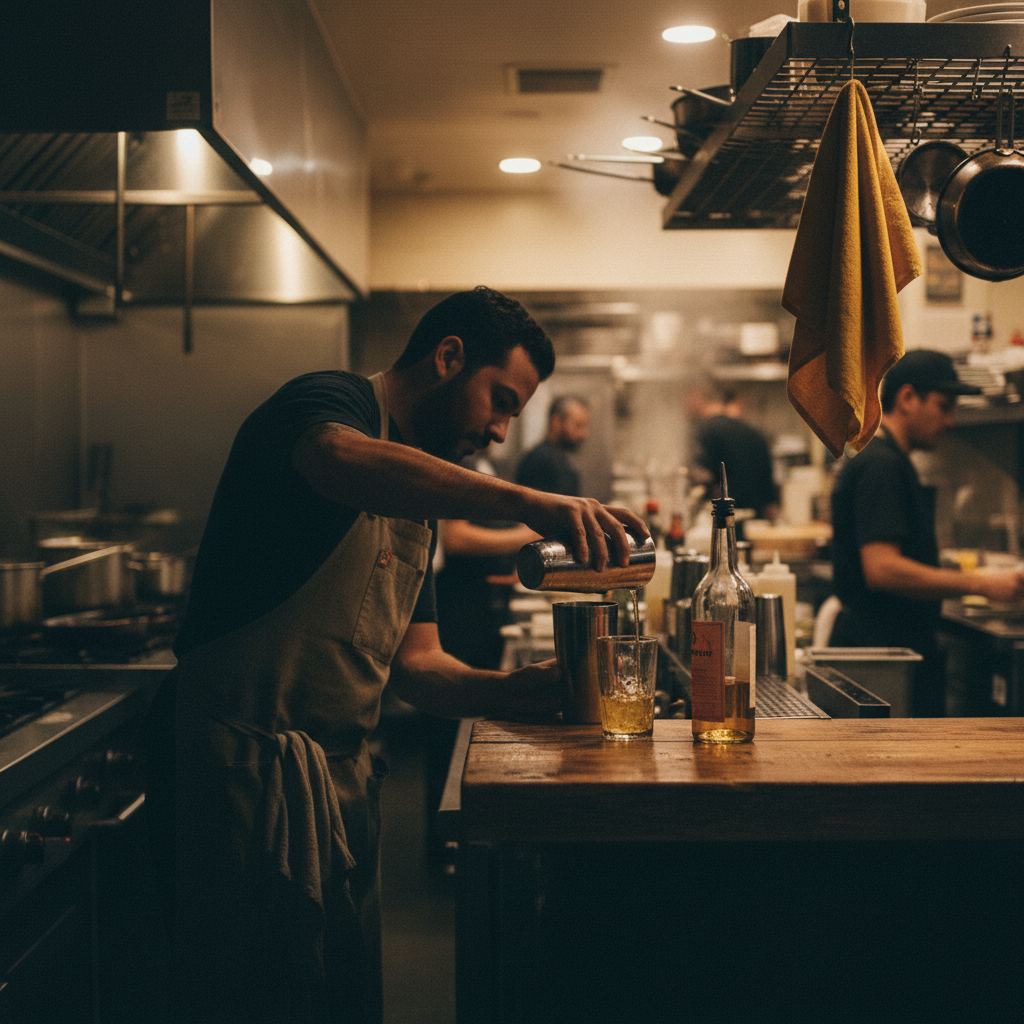
Santa Ana food service. Illustration generated with AI. Not a photograph of a Foody Finance client or location.

What drives financing conversations in Santa Ana

Financing here commonly covers point-of-sale and kitchen equipment upgrades for long-running family concepts moving from cash-heavy operations to card and delivery platforms. Buildout capital also supports newer spots opening in the Fourth Street historic district as foot traffic there has grown.

Revenue and seasonality in Santa Ana

Dense weekday foot traffic downtown supports strong lunch counts, while family and event-driven weekend business carries many neighborhood restaurants. Cash transactions remain common in older family-run kitchens, and a shift toward card and delivery revenue can complicate cash flow tracking during a financing application.

What this does to your numbers

A lot of long-running family restaurants here still run mostly on cash, which can make the books harder to show a lender.

Permitting in Santa Ana, and what it costs to wait

Orange County Health Care Agency handles food facility inspection while alcohol sales require a separate California ABC license, and Santa Ana's historic downtown buildings can add fire and building code review beyond a standard tenant improvement. A concept in an older Fourth Street storefront should plan financing around a buildout timeline longer than a newer strip center would need.

What the wait actually costs

Older buildings downtown can need extra fire and code work that a newer storefront never would, adding time before opening.

What raises the cost of capital here

  • 01Older downtown buildings near Fourth Street can trigger added fire and code review during buildout
  • 02California ABC alcohol licensing runs on a separate track from Orange County's health permitting
  • 03Long-standing cash-heavy operations sometimes need working capital just to formalize card and delivery revenue tracking

Which program usually fits here

A working capital loan that helps formalize point-of-sale and delivery revenue first can make a bigger financing request easier later.

Santa Ana
California outline. Boundary data: US Census Bureau cartographic boundary files, public domain. Simplified for display.

Free review, no hard credit pull

Get funds now and review your options

Step 01 of 03 · Your operation

A specialist reviews every request and reaches out the same business day

Areas we serve

  • Downtown Santa Ana
  • French Park
  • Fourth Street
  • Logan
  • Willard

Financing terms on this page

Definitions for the terms used above.

working capital
Cash for the everyday gaps: payroll, inventory, rent, and repairs. It is repaid out of daily or weekly sales rather than from one big event.
buildout capital
Money for the work that turns a space into a working kitchen: plumbing, electrical, hoods, walls, and permits. It pays for labor and materials you cannot resell, so it is priced differently than money for a fryer.
underwriting
The lender reading your numbers to decide how much risk you are. Bank statements, time in business, and existing debt carry the most weight.
equipment paper
A loan or lease tied to a specific machine. The machine itself is the security, so approval leans on the value of the hardware more than on your bank statements.
merchant cash advance
You sell a slice of future card sales for cash today. Fastest money available, and the most expensive, so it fits an emergency rather than a plan.
factor rate
A flat multiplier instead of an interest rate. Borrow 50,000 at a 1.25 factor and you repay 62,500 total, no matter how fast you pay it off.
hard credit pull
A formal credit check that shows on your report and can move your score a few points. It happens only after you pick a specific lender, not to get information.
covers
The number of guests served. Lenders pair it with check average to judge how reliable a month really is.
draw
Taking money out of an approved line or loan. Draws tied to construction milestones mean you only start paying interest on each piece as you use it.
term
How long you have to repay. A longer term lowers the monthly payment and raises what the money costs in total.
shoulder season
The in between weeks on either side of your busy season. Sales fall while rent, insurance, and salaried payroll do not.

Santa Ana financing questions

Why do buildouts in Santa Ana's historic Fourth Street district take longer than newer retail spaces?

Many buildings along Fourth Street predate current fire and building codes, so a tenant improvement project can trigger upgrades beyond what a newer strip center in outlying Santa Ana would need. Buildout financing sized with a contingency for those code items keeps a project from stalling once a contractor uncovers what the space actually requires.

Can a family-run restaurant in Santa Ana get financing if most of its sales history is cash?

Lenders generally want a clear revenue picture, so a cash-heavy kitchen moving toward card and delivery platforms often needs a few months of that transition documented before applying. Working capital used to formalize point-of-sale systems first can make a later financing request easier to underwrite.

How does Santa Ana's role as the Orange County seat change its restaurant demand compared to nearby Anaheim?

Santa Ana houses the county courthouse, county administration offices, and other government functions that generate consistent weekday lunch demand independent of tourism, unlike Anaheim's Resort District, which lives and dies by Disneyland attendance. This gives Santa Ana restaurants near the Civic Center a more predictable weekday base but a much quieter weekend and evening pattern than downtown Anaheim or the Packing District. Lenders comparing the two cities should weigh a Santa Ana location's proximity to government buildings and Fourth Street's local retail draw rather than applying Anaheim's tourism-driven revenue assumptions, since the two cities' demand drivers barely overlap despite sitting next to each other.

How do Santa Ana food businesses start a financing conversation?

Start with a free review by a specialist. You share the basics of the business, the use of funds, and recent bank statements, and you see every program that fits before any credit application exists. Short term options commonly fund in 1 to 3 business days once you choose an offer.

Do you serve areas outside Santa Ana in California?

Yes. Every program is available statewide in California and nationwide.

What is working capital, and when does it fit a Santa Ana operator?

Cash for the everyday gaps, repaid out of sales on a set schedule instead of at the end of a project. Use it for payroll, inventory, a slow stretch, or a job you have to fund before the client pays you. Typical size is 10,000 to 500,000, funding runs 1 to 3 business days once you choose an offer, and you repay it as fixed daily, weekly, or monthly payment. You will be asked for: application, 3 to 6 months of bank statements.

What is equipment financing, and when does it fit a Santa Ana operator?

You borrow against a specific machine, and the machine is what backs the loan. Use it when a fryer, a walk-in, an oven, or a vehicle has to be replaced and you would rather keep the cash in the account. Typical size is 5,000 to 500,000, funding runs 1 to 5 business days once you choose an offer, and you repay it as fixed monthly payment. You will be asked for: application, equipment quote, bank statements.

What is merchant cash advance, and when does it fit a Santa Ana operator?

You sell a slice of future card sales for money today, repaid as the card volume arrives. Use it only when speed decides the outcome. It is the fastest option here and the most expensive one. Typical size is 5,000 to 250,000, funding runs 1 to 3 business days once you choose an offer, and you repay it as factor rate, highest total cost. You will be asked for: application, bank and processing statements.

Why does the Santa Ana calendar change what I should borrow?

A lot of long-running family restaurants here still run mostly on cash, which can make the books harder to show a lender.

What does waiting actually cost me in Santa Ana?

Older buildings downtown can need extra fire and code work that a newer storefront never would, adding time before opening.

Which program do most Santa Ana operators end up using?

A working capital loan that helps formalize point-of-sale and delivery revenue first can make a bigger financing request easier later. That is a starting point, not a decision. The specialist review looks at your deposits, your time in business, and what the money is for before anything is recommended.

Does asking about financing in Santa Ana affect my credit?

No. Getting information is a conversation, not an application. There is no credit application and no hard credit pull until you have picked a specific lender and want to move forward.

Start the conversation

Talk to a specialist before you fill out an application.

Start with a free, no-obligation review. We will send the right application only after we know what you actually qualify for.

Start a free review

Prefer to call

(833) 505-1900