San Diego's patio and coastal dining model puts a premium on outdoor buildouts and the equipment that supports high volume weekends.
How do San Diego food businesses get funded?
San Diego operators start with a free review with a specialist, share recent business bank statements, and are matched to the programs that fit the use of funds. Working capital funds in 1 to 3 business days after you choose an offer, equipment in 1 to 5, and buildout capital in 1 to 4 weeks.
Estimates, not offers: Amounts, terms, and funding times are estimates based on programs commonly available in food service. Actual terms vary by program, lender underwriting, time in business, revenue, and credit profile. Nothing here is an offer of credit or a guarantee of approval. See source and method.
How San Diego eats, and what that does to cash
01
Where San Diego eats
The Gaslamp Quarter downtown carries the city's densest concentration of restaurants and nightclubs, serving a tourist and convention crowd tied to the nearby San Diego Convention Center at prices padded for visitors. North Park and South Park hold a craft brewery and gastropub scene serving a younger, local crowd at moderate prices, with University Avenue as the district's spine. La Jolla, an affluent coastal enclave, supports higher end seafood restaurants and wine bars serving an older, wealthier clientele. Little Italy downtown mixes Italian restaurants with a Saturday farmers market, drawing both tourists and downtown residents. Barrio Logan and Chicano Park hold Mexican restaurants and taquerias serving a historically working class, Latino community at lower price points. Pacific Beach and Ocean Beach carry a beach bar and casual dining scene serving a younger, tourist heavy crowd near the water. Rent in the Gaslamp Quarter reflects convention and tourist volume rather than neighborhood density, so a concept there depends heavily on the convention center's booking calendar rather than local foot traffic alone.
02
What San Diego orders
The California burrito, filled with carne asada, french fries, cheese, and guacamole, is a San Diego specific invention sold from taco shops citywide for under ten dollars. Fish tacos, tied to the city's Baja California proximity, appear on nearly every casual menu and are considered a local staple rather than a novelty. Craft beer defines much of the city's dining identity, with brewery kitchens across North Park, Miramar, and Barrio Logan pairing house made beer with pub food. Poke bowls and fast casual seafood formats have expanded quickly given the city's coastal identity and health conscious population. Patio dining runs nearly year round given San Diego's mild, dry climate, so outdoor seating is treated as core capacity rather than a seasonal bonus. Fish market style seafood counters near the harbor sell fresh catch alongside prepared plates. A California burrito runs seven to ten dollars, a fish taco plate runs ten to fifteen dollars, and La Jolla seafood dining regularly passes fifty dollars a person. Because patios operate all year, restaurants budget for outdoor furniture and heater maintenance as a continuous cost rather than a single seasonal purchase.
03
The San Diego calendar
San Diego Comic Con each July fills downtown hotels and the Gaslamp Quarter to capacity for a single week, spiking restaurant revenue near the convention center well above any other week of the year. Naval Base San Diego and Naval Base Coronado, among the largest naval installations in the country, support steady restaurant demand tied to military pay cycles independent of tourism. The University of California San Diego and San Diego State University set an academic calendar that drives dining near their campuses, with a summer slowdown each June through August. Balboa Park's museums and the San Diego Zoo draw year round tourist traffic that supports nearby restaurants in Hillcrest and North Park. Summer, from June through August, is peak beach tourism season for Pacific Beach and Ocean Beach, while convention business fills gaps in the fall and spring shoulder seasons downtown. A Gaslamp Quarter restaurant dependent on Comic Con week and other single conventions can see a disproportionate share of its annual profit concentrated into a handful of citywide event weeks, leaving quieter weeks reliant on local and military traffic.
04
Growth and cost in San Diego
New restaurant growth has pushed toward North Park, South Park, and East Village, where older commercial buildings offer lower rent than the Gaslamp Quarter or La Jolla while still drawing dense foot traffic. Labor costs run among the highest in the country given California's minimum wage requirements and the city's high cost of living, which pressures margins more than in comparable Sun Belt cities. Buildout costs are elevated by California's stringent building and health code requirements, and coastal zone permitting adds extra review for any property near the waterfront. Rent downtown near the convention center carries a premium tied directly to event booking volume, meaning a slow convention year can hit restaurant revenue even without any change in local population. Utility costs stay comparatively moderate given the mild climate, but real estate and labor costs offset that advantage. A restaurant near the coastal zone boundary should expect an added layer of California Coastal Commission review that inland San Diego buildouts do not face, which can add months to a permitting timeline and delay the first month of revenue.
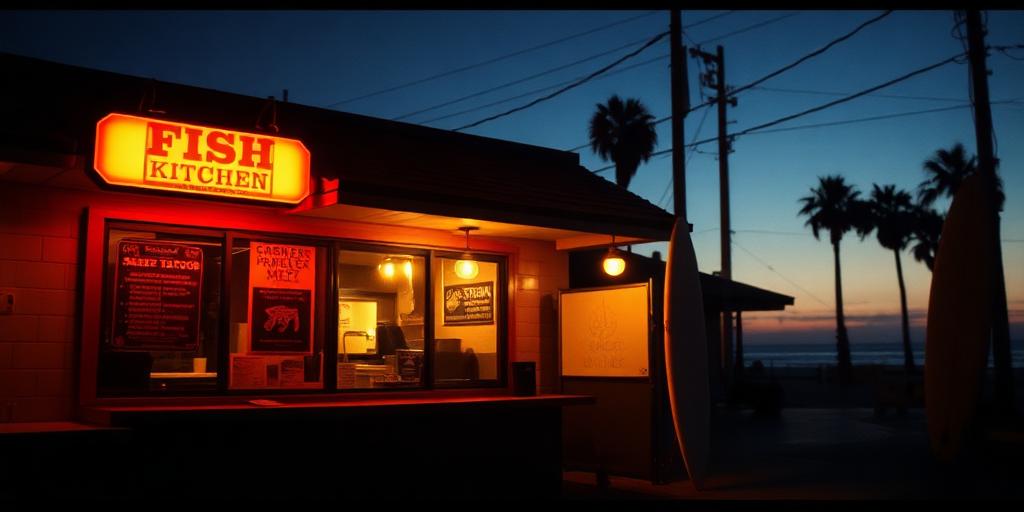
San Diego food service. Illustration generated with AI. Not a photograph of a Foody Finance client or location.
What drives financing conversations in San Diego
Craft beverage operators and coastal restaurants make up much of the demand, with expansion capital tied to lease opportunities that move quickly.
Revenue and seasonality in San Diego
Tourism lifts summer covers along the coast, military and biotech payrolls hold weekday volume steady, and patio service extends the selling season all year.
What this does to your numbers
Tourism lifts summer and holiday weeks, patio dining extends the year, and military and convention traffic add weekday volume.
Permitting in San Diego, and what it costs to wait
County Environmental Health plan check and coastal review can both apply to the same project, and outdoor and patio construction near the coast carries extra conditions. That review time is preopening rent, and it belongs in the buildout request.
What the wait actually costs
County environmental health plan check runs beside city permits, and coastal siting rules can add another approval on top of both.
What raises the cost of capital here
01Coastal patio and outdoor seating buildouts carry Coastal Commission and city review in some neighborhoods
02Military and tourism cycles create two different weekly revenue patterns in the same city
03County Environmental Health plan check precedes any kitchen change
Which program usually fits here
Buildout capital should cover the review window. Patio and outdoor seating investments pay back faster here than in most markets.
California outline. Boundary data: US Census Bureau cartographic boundary files, public domain. Simplified for display.
The city or county reading your kitchen drawings before you are allowed to build. Nothing gets installed until it clears, and rent runs the whole time.
covers
The number of guests served. Lenders pair it with check average to judge how reliable a month really is.
buildout capital
Money for the work that turns a space into a working kitchen: plumbing, electrical, hoods, walls, and permits. It pays for labor and materials you cannot resell, so it is priced differently than money for a fryer.
draw
Taking money out of an approved line or loan. Draws tied to construction milestones mean you only start paying interest on each piece as you use it.
shoulder season
The in between weeks on either side of your busy season. Sales fall while rent, insurance, and salaried payroll do not.
equipment paper
A loan or lease tied to a specific machine. The machine itself is the security, so approval leans on the value of the hardware more than on your bank statements.
working capital
Cash for the everyday gaps: payroll, inventory, rent, and repairs. It is repaid out of daily or weekly sales rather than from one big event.
hard credit pull
A formal credit check that shows on your report and can move your score a few points. It happens only after you pick a specific lender, not to get information.
underwriting
The lender reading your numbers to decide how much risk you are. Bank statements, time in business, and existing debt carry the most weight.
term
How long you have to repay. A longer term lowers the monthly payment and raises what the money costs in total.
Can outdoor seating and patio work be financed in San Diego?
Yes, as buildout capital. Structures, heaters, awnings, and the permitting cost all sit inside the request, and draws can be milestone based when review timelines are unpredictable.
How do San Diego operators finance around tourist season?
By sizing repayment against the trough, not the peak. A program that flexes with deposits keeps the shoulder months from carrying a payment set during July.
Why does convention business matter so much to downtown San Diego restaurants?
The San Diego Convention Center books large annual events, including Comic Con each July, and restaurants in the Gaslamp Quarter and East Village see revenue swing heavily based on that booking calendar rather than steady local population growth. A restaurant that opens near the convention center is effectively tying part of its income to a citywide events calendar it does not control, which can produce very strong single weeks alongside quieter stretches between major bookings. Lenders should ask what share of a downtown San Diego restaurant's projected revenue depends on convention traffic versus year round local and military demand.
How do San Diego food businesses start a financing conversation?
Start with a free review by a specialist. You share the basics of the business, the use of funds, and recent bank statements, and you see every program that fits before any credit application exists. Short term options commonly fund in 1 to 3 business days once you choose an offer.
Do you serve areas outside San Diego in California?
Yes. Every program is available statewide in California and nationwide.
What is buildout and expansion, and when does it fit a San Diego operator?
Construction money for the work that turns a space into a working kitchen, usually released in stages as the job progresses. Use it for a second location, a remodel, a patio, or a kitchen conversion, and size it to cover the permit wait, not just the build. Typical size is 50,000 to 2,000,000, funding runs 1 to 4 weeks once you choose an offer, and you repay it as fixed payment, often with a draw schedule. You will be asked for: application, contractor bids, lease, financials.
What is equipment financing, and when does it fit a San Diego operator?
You borrow against a specific machine, and the machine is what backs the loan. Use it when a fryer, a walk-in, an oven, or a vehicle has to be replaced and you would rather keep the cash in the account. Typical size is 5,000 to 500,000, funding runs 1 to 5 business days once you choose an offer, and you repay it as fixed monthly payment. You will be asked for: application, equipment quote, bank statements.
What is working capital, and when does it fit a San Diego operator?
Cash for the everyday gaps, repaid out of sales on a set schedule instead of at the end of a project. Use it for payroll, inventory, a slow stretch, or a job you have to fund before the client pays you. Typical size is 10,000 to 500,000, funding runs 1 to 3 business days once you choose an offer, and you repay it as fixed daily, weekly, or monthly payment. You will be asked for: application, 3 to 6 months of bank statements.
Why does the San Diego calendar change what I should borrow?
Tourism lifts summer and holiday weeks, patio dining extends the year, and military and convention traffic add weekday volume.
What does waiting actually cost me in San Diego?
County environmental health plan check runs beside city permits, and coastal siting rules can add another approval on top of both.
Which program do most San Diego operators end up using?
Buildout capital should cover the review window. Patio and outdoor seating investments pay back faster here than in most markets. That is a starting point, not a decision. The specialist review looks at your deposits, your time in business, and what the money is for before anything is recommended.
Does asking about financing in San Diego affect my credit?
No. Getting information is a conversation, not an application. There is no credit application and no hard credit pull until you have picked a specific lender and want to move forward.
Start the conversation
Talk to a specialist before you fill out an application.
Start with a free, no-obligation review. We will send the right application only after we know what you actually qualify for.