CA metro

Restaurant financing in San Bernardino.

Warehouse and logistics workers on shifted hours have made drive-thru and late-night counters more valuable than dine-in rooms, and lenders want proof a menu can survive that split.

How do San Bernardino food businesses get funded?

San Bernardino operators start with a free review with a specialist, share recent business bank statements, and are matched to the programs that fit the use of funds. Working capital funds in 1 to 3 business days after you choose an offer, equipment in 1 to 5, and buildout capital in 1 to 4 weeks.

Estimates, not offers: Amounts, terms, and funding times are estimates based on programs commonly available in food service. Actual terms vary by program, lender underwriting, time in business, revenue, and credit profile. Nothing here is an offer of credit or a guarantee of approval. See source and method.

How San Bernardino eats, and what that does to cash

01

Where San Bernardino eats

Downtown San Bernardino, near the Santa Fe Depot and the county government center, holds a lunch-driven counter-service cluster serving public employees and courthouse visitors, with tickets typically under 12 dollars. The Inland Center Mall corridor along Hospitality Lane carries chain casual dining aimed at travelers off Interstate 215 and business visitors, priced in the 15 to 25 dollar range. The Highland Avenue and Baseline Street corridors run a dense strip of taquerias and Mexican bakeries serving the city's majority Latino population at lower price points, often under 10 dollars a plate. Route 66 and the original McDonald's Site Museum draw a tourist and nostalgia crowd to Fifth and E Streets. California State University San Bernardino on the city's north side supports a student-priced cluster of pizza and burrito counters. San Bernardino's restaurant economy skews toward value pricing and volume rather than destination dining, leaving individual locations reliant on high table turnover to cover fixed rent.
02

What San Bernardino actually eats

This is the birthplace of the McDonald's fast-food format, and the drive-through and quick-service model still dominates the corridor along E Street and Highland Avenue more than in most comparable Inland Empire cities. Mexican food defines the everyday eating pattern, with birria tacos, tortas, and al pastor plates sold from both storefronts and trucks parked along Baseline Street, typically 2 to 4 dollars per taco. Inland Empire barbecue and tri-tip counters serve a lunch crowd near the government center. Chain casual dining concentrates on Hospitality Lane to capture business travelers staying near the 215 freeway. Sit-down, full-service dining remains thin relative to the city's population, with most investment going into counter-service and drive-through formats that require lower upfront staffing. This concentration in low-margin, high-volume formats means any slowdown in daily car and foot traffic translates quickly into thin operating margins for individual locations.

03

The San Bernardino calendar

San Bernardino International Airport and the logistics and warehouse corridor along the I-215 and I-10 interchange, home to Amazon and other distribution employers, anchor weekday lunch and shift-change meal demand around the clock rather than a single lunch peak. The National Orange Show Events Center hosts the Route 66 Rendition car show each September, drawing crowds downtown for a concentrated multi-day surge. California State University San Bernardino's fall and spring semesters, running late August through May, support north-side restaurant traffic near the campus, with a summer falloff. Extreme summer heat from June through September pushes outdoor and patio dining down and shifts demand toward drive-through and delivery. County government furlough periods and budget-driven office closures around the holidays in late December reduce downtown lunch counts, thinning the narrow lunch window that many counter-service operators depend on.

04

Growth and cost in San Bernardino

New restaurant activity concentrates along Hospitality Lane and near the Inland Center Mall, where larger retail pads and easier parking favor chain casual and quick-service formats over independent sit-down concepts. Downtown redevelopment near the Santa Fe Depot has added some smaller storefronts, though vacancy has kept lease rates lower than surrounding Inland Empire cities like Riverside. Warehouse and logistics employers along the I-215 corridor pay hourly wages that compete directly with quick-service kitchen staff, pushing labor costs up despite the region's lower cost of living. Summer utility costs spike sharply given the desert-adjacent heat, raising air conditioning loads for full-service dining rooms far more than for drive-through kiosks. Older downtown buildings near the depot often require seismic retrofitting before occupancy permits clear, a cost and timeline burden that has discouraged some sit-down concepts from choosing downtown storefronts over suburban shells.

Food service operation in San Bernardino
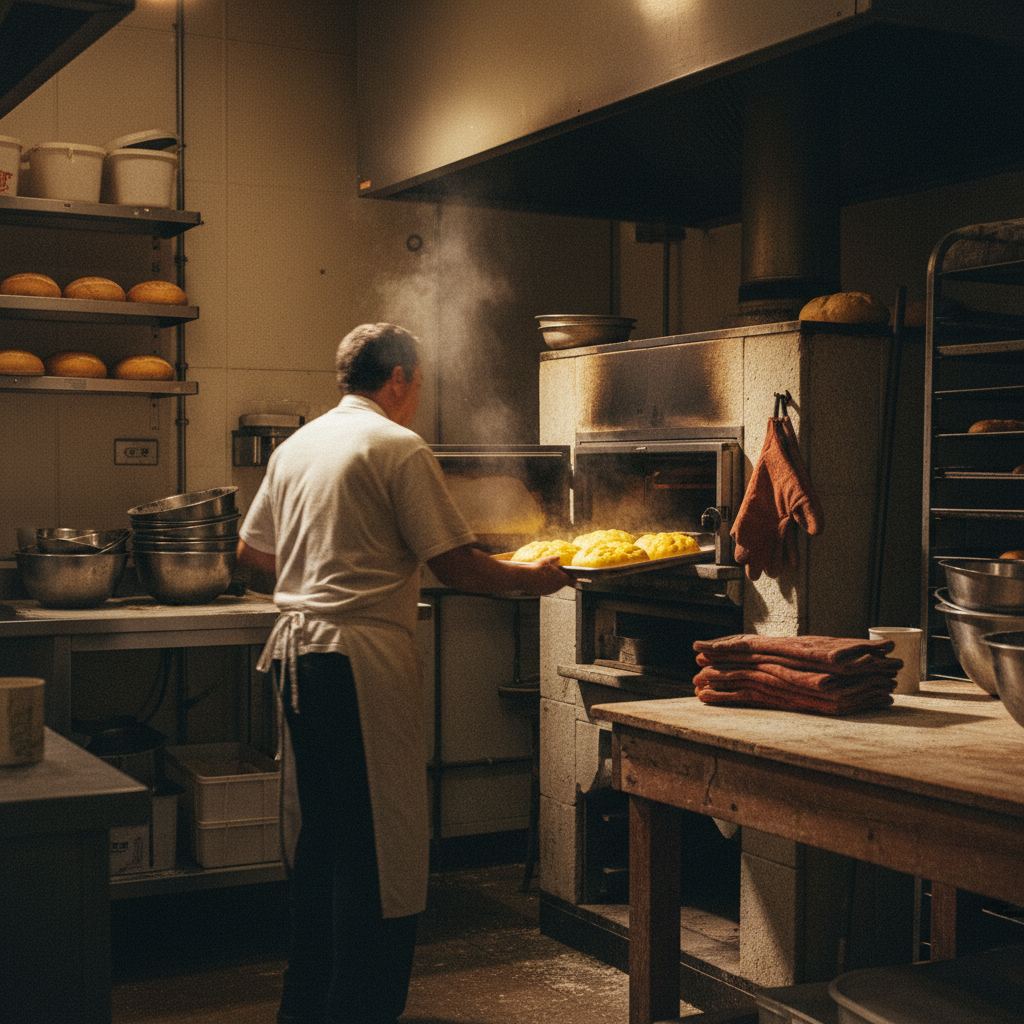
San Bernardino food service. Illustration generated with AI. Not a photograph of a Foody Finance client or location.

What drives financing conversations in San Bernardino

Capital here tends to go toward second-shift staffing, drive-thru lane upgrades, and delivery packaging built for the Inland Empire's long commute distances. A second furnace or walk-in cooler often outranks decor, since equipment failure during a summer heat spike shuts a kitchen faster than a slow dining room does.

Revenue and seasonality in San Bernardino

Ticket counts lean on commuters and warehouse shift changes rather than tourism, so revenue holds steady but rarely spikes. Summer heat above 100 degrees pushes customers toward delivery and drive-thru, shifting margin toward packaging and third-party platform fees that eat into the same cash a lender will ask about.

What this does to your numbers

Sales stay fairly even year round since shift workers eat on a schedule, but a summer heat wave can spike your utility bill and refrigeration repair costs at the same time.

Permitting in San Bernardino, and what it costs to wait

San Bernardino County Environmental Health issues food facility permits and inspects independently of city zoning and fire clearance, so a buildout can pass one review and stall on another. Operators planning a shell conversion should size financing to cover holding costs across all three approvals, not just the fastest one.

What the wait actually costs

While the county health permit and city fire sign-off move on separate timelines, you're still paying rent and utilities on an empty space.

What raises the cost of capital here

  • 01County health inspections run on a separate calendar from city fire and building sign-off
  • 02Extreme summer heat raises HVAC and refrigeration failure risk mid-season
  • 03Warehouse shift patterns concentrate sales in early morning and late night windows

Which program usually fits here

A line of credit covers the gap between paperwork stages, and equipment financing covers the walk-in cooler or fryer bank without draining your opening cash.

San Bernardino
California outline. Boundary data: US Census Bureau cartographic boundary files, public domain. Simplified for display.

Free review, no hard credit pull

Get funds now and review your options

Step 01 of 03 · Your operation

A specialist reviews every request and reaches out the same business day

Areas we serve

  • Downtown San Bernardino
  • Highland
  • Del Rosa
  • Waterman Gardens
  • Verdemont

Financing terms on this page

Definitions for the terms used above.

line of credit
A preapproved pool of money you pull from only when you need it, then pay back and reuse. You pay for what you draw, not for the full amount sitting there.
covers
The number of guests served. Lenders pair it with check average to judge how reliable a month really is.
equipment paper
A loan or lease tied to a specific machine. The machine itself is the security, so approval leans on the value of the hardware more than on your bank statements.
working capital
Cash for the everyday gaps: payroll, inventory, rent, and repairs. It is repaid out of daily or weekly sales rather than from one big event.
draw
Taking money out of an approved line or loan. Draws tied to construction milestones mean you only start paying interest on each piece as you use it.
hard credit pull
A formal credit check that shows on your report and can move your score a few points. It happens only after you pick a specific lender, not to get information.
buildout capital
Money for the work that turns a space into a working kitchen: plumbing, electrical, hoods, walls, and permits. It pays for labor and materials you cannot resell, so it is priced differently than money for a fryer.
underwriting
The lender reading your numbers to decide how much risk you are. Bank statements, time in business, and existing debt carry the most weight.
shoulder season
The in between weeks on either side of your busy season. Sales fall while rent, insurance, and salaried payroll do not.
term
How long you have to repay. A longer term lowers the monthly payment and raises what the money costs in total.

San Bernardino financing questions

Does the county or the city handle my food permit in San Bernardino?

San Bernardino County Environmental Health handles food facility permitting and inspection, separate from the city's building and fire sign-off for the same address. A buildout loan or credit line should assume the two tracks won't clear on the same week, since rent and utilities keep running while paperwork moves through each office.

Why do drive-thru upgrades matter more here than in a typical suburb?

With warehouse and distribution shift changes running early morning and overnight, a large share of ticket volume never sets foot inside. Equipment financing for a second drive-thru lane or faster fryer bank often pays back through throughput during those shift windows more directly than a dining room renovation would.

Why does San Bernardino have so few full-service, sit-down restaurants compared to nearby Riverside?

San Bernardino's restaurant base grew up around drive-through and counter-service formats tied to its history as the birthplace of the McDonald's speed-service model, and its household income levels sit below those in neighboring Riverside, which supports fewer higher-ticket sit-down concepts. Warehouse and logistics workers along the I-215 corridor also favor quick meals timed to shift changes over sit-down dinners. For lenders, this means San Bernardino applicants are more often quick-service or counter-service operators with thinner per-ticket margins and higher volume dependence than comparable Inland Empire cities, which changes how break-even volume should be modeled.

How do San Bernardino food businesses start a financing conversation?

Start with a free review by a specialist. You share the basics of the business, the use of funds, and recent bank statements, and you see every program that fits before any credit application exists. Short term options commonly fund in 1 to 3 business days once you choose an offer.

Do you serve areas outside San Bernardino in California?

Yes. Every program is available statewide in California and nationwide.

What is equipment financing, and when does it fit a San Bernardino operator?

You borrow against a specific machine, and the machine is what backs the loan. Use it when a fryer, a walk-in, an oven, or a vehicle has to be replaced and you would rather keep the cash in the account. Typical size is 5,000 to 500,000, funding runs 1 to 5 business days once you choose an offer, and you repay it as fixed monthly payment. You will be asked for: application, equipment quote, bank statements.

What is working capital, and when does it fit a San Bernardino operator?

Cash for the everyday gaps, repaid out of sales on a set schedule instead of at the end of a project. Use it for payroll, inventory, a slow stretch, or a job you have to fund before the client pays you. Typical size is 10,000 to 500,000, funding runs 1 to 3 business days once you choose an offer, and you repay it as fixed daily, weekly, or monthly payment. You will be asked for: application, 3 to 6 months of bank statements.

What is business line of credit, and when does it fit a San Bernardino operator?

An approved limit you pull from only when you need it, then repay and reuse. Use it for a season you can see coming, so you draw before the peak and pay it back out of the peak. Typical size is 10,000 to 250,000, funding runs 2 to 7 business days once you choose an offer, and you repay it as interest on the drawn balance only. You will be asked for: application, bank statements.

Why does the San Bernardino calendar change what I should borrow?

Sales stay fairly even year round since shift workers eat on a schedule, but a summer heat wave can spike your utility bill and refrigeration repair costs at the same time.

What does waiting actually cost me in San Bernardino?

While the county health permit and city fire sign-off move on separate timelines, you're still paying rent and utilities on an empty space.

Which program do most San Bernardino operators end up using?

A line of credit covers the gap between paperwork stages, and equipment financing covers the walk-in cooler or fryer bank without draining your opening cash. That is a starting point, not a decision. The specialist review looks at your deposits, your time in business, and what the money is for before anything is recommended.

Does asking about financing in San Bernardino affect my credit?

No. Getting information is a conversation, not an application. There is no credit application and no hard credit pull until you have picked a specific lender and want to move forward.

Start the conversation

Talk to a specialist before you fill out an application.

Start with a free, no-obligation review. We will send the right application only after we know what you actually qualify for.

Start a free review

Prefer to call

(833) 505-1900