Los Angeles operators run across a spread out market where a commissary, a truck fleet, and a dining room can all belong to the same business.
How do Los Angeles food businesses get funded?
Los Angeles operators start with a free review with a specialist, share recent business bank statements, and are matched to the programs that fit the use of funds. Working capital funds in 1 to 3 business days after you choose an offer, equipment in 1 to 5, and buildout capital in 1 to 4 weeks.
Estimates, not offers: Amounts, terms, and funding times are estimates based on programs commonly available in food service. Actual terms vary by program, lender underwriting, time in business, revenue, and credit profile. Nothing here is an offer of credit or a guarantee of approval. See source and method.
How Los Angeles eats, and what that does to cash
01
Where Los Angeles eats
Koreatown runs 24 hour barbecue and karaoke rooms serving a mixed late-night crowd of industry workers and students, with per-person checks often above 30 dollars at tabletop grill spots. Boyle Heights and East LA carry taco stands and birrieria counters built on cash transactions and family labor, where a plate rarely exceeds 12 dollars. Silver Lake and Echo Park run natural wine bars and chef-driven counters aimed at a 25 to 40 year old crowd with disposable income. Downtown's Arts District mixes brewery taprooms with Grand Central Market's stall economy, drawing both office lunch traffic and weekend tourists. West Hollywood and Beverly Hills carry the expense-account dinner trade tied to entertainment industry deals. The San Gabriel Valley, especially Monterey Park and Alhambra, runs the region's Chinese and Taiwanese food economy on strip mall rents far below the Westside. This spread means a single citywide rent assumption is useless, and operators price buildouts against their specific submarket rather than a Los Angeles average.
02
What Los Angeles actually serves
Tacos and birria sold from trucks and stands anchor the everyday price floor, typically 2 to 4 dollars a taco, while sit-down Oaxacan and Jaliscan restaurants run higher. Korean barbecue tabletop grill service in Koreatown depends on high check averages to offset meat cost and the labor of tableside cooking. Drive-through remains central to the city's geography, with In-N-Out and regional chains built around car culture rather than walk-up counters. Food halls like Smorgasburg LA and Grand Central Market let several small vendors share one kitchen infrastructure and one lease. Patio dining runs nearly year-round given the climate, which lets restaurants carry outdoor seating capacity that cities with real winters cannot. Late night Korean and Thai kitchens in Koreatown and East Hollywood serve past 1am on weekends. Because outdoor seating operates 12 months a year, a Los Angeles restaurant's patio revenue is a fixed planning input rather than a seasonal bonus, so losing patio permits or space mid-lease removes revenue with no seasonal excuse to fall back on.
03
The calendar that runs the year
Awards season, from the Golden Globes in January through the Oscars in early March, fills Beverly Hills and West Hollywood private dining rooms with industry events. USC and UCLA campuses drain in late May and refill in late August, swinging volume for delivery-heavy spots near both campuses. Coachella and Stagecoach in April pull a slice of the region's nightlife spending out to the Coachella Valley for two weekends. E3's cancellation shifted more convention weight to LA Comic Con in December and Anime Expo at the LA Convention Center each July, both filling Downtown lunch and dinner traffic for their run. Summer beach season, June through September, drives Santa Monica and Venice boardwalk traffic well above shoulder-season levels. The Hollywood production calendar itself matters: a writers' or actors' strike, as seen in 2023, cuts catering and expense-account dinner volume in Studio City and Burbank for months, a direct hit that owners near studio lots plan payroll around.
04
Where the money and the buildout go
New openings concentrate in Highland Park, Eagle Rock, and parts of Inglewood, where commercial rents sit well below Westside corridors like Melrose or Abbot Kinney. A Los Angeles buildout has to clear both city planning and, for many corridors, additional coastal or historic district review, which adds review cycles a inland city would not face. California's minimum wage floor plus the state's fast food council wage rate for chains over 60 locations pushes labor cost up for franchise operators specifically, a cost structure independent restaurants do not carry. DWP electricity rates and the state's higher commercial gas costs raise kitchen utility bills for hood-heavy concepts like Korean barbecue and wood-fired pizza. Parking requirements attached to many LA commercial leases can force a build-out to include costly lot restriping or a variance application before permits clear. Together these add weeks to a permit timeline that a franchise operator on a fixed opening date budget has to cover with holding costs and delayed payroll starts.
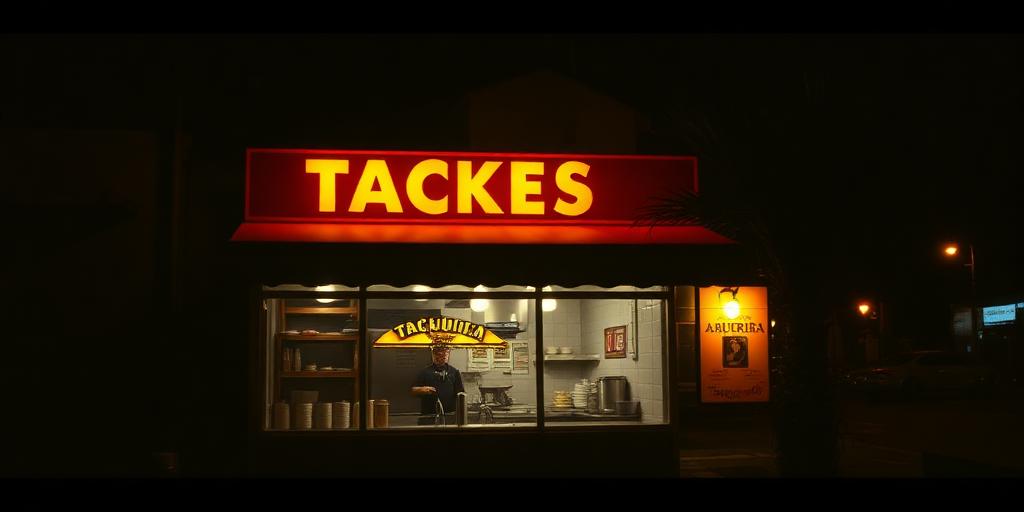
Los Angeles food service. Illustration generated with AI. Not a photograph of a Foody Finance client or location.
What drives financing conversations in Los Angeles
County health permitting and city buildout timelines stretch openings, so operators frequently need capital that covers payroll during a delayed launch as well as the equipment itself.
Revenue and seasonality in Los Angeles
A single operator often runs a dining room, a commissary, and trucks with three different revenue curves, entertainment and event catering lift spring and fall, and long delivery radii put fuel and vehicle cost against every off premise dollar.
What this does to your numbers
One operator often runs a dining room, a commissary, and trucks on 3 different revenue curves, and long delivery radii put fuel against every off site dollar.
Permitting in Los Angeles, and what it costs to wait
County Environmental Health plan check and city building permits are two separate approvals, and either one can hold an opening after construction is finished. Sixty to ninety days of rent and retained payroll belong inside the request rather than on a card afterward.
What the wait actually costs
County health plan check and city building permits are separate approvals, and either one can hold an opening after the build is done. Budget 60 to 90 days of rent and retained payroll for that window.
What raises the cost of capital here
01Los Angeles County Environmental Health plan check runs separately from city building permits, and both gate an opening
02Commissary rent plus a truck fleet means one operator can carry 3 separate equipment schedules
03Long delivery radii push vehicle and refrigerated transport into the financing request
Which program usually fits here
Finance the trucks against their titles and the commissary against its equipment. Two structures usually beat one bundled request here.
California outline. Boundary data: US Census Bureau cartographic boundary files, public domain. Simplified for display.
The city or county reading your kitchen drawings before you are allowed to build. Nothing gets installed until it clears, and rent runs the whole time.
commissary
A licensed production kitchen used to prep off site, most often by trucks and catering operations. It carries its own rent, equipment, and permits.
cash flow program
Financing sized against your deposits rather than against a piece of equipment. Approval follows revenue, so a strong sales month helps more than a strong asset does.
buildout capital
Money for the work that turns a space into a working kitchen: plumbing, electrical, hoods, walls, and permits. It pays for labor and materials you cannot resell, so it is priced differently than money for a fryer.
draw
Taking money out of an approved line or loan. Draws tied to construction milestones mean you only start paying interest on each piece as you use it.
equipment paper
A loan or lease tied to a specific machine. The machine itself is the security, so approval leans on the value of the hardware more than on your bank statements.
working capital
Cash for the everyday gaps: payroll, inventory, rent, and repairs. It is repaid out of daily or weekly sales rather than from one big event.
hard credit pull
A formal credit check that shows on your report and can move your score a few points. It happens only after you pick a specific lender, not to get information.
covers
The number of guests served. Lenders pair it with check average to judge how reliable a month really is.
underwriting
The lender reading your numbers to decide how much risk you are. Bank statements, time in business, and existing debt carry the most weight.
shoulder season
The in between weeks on either side of your busy season. Sales fall while rent, insurance, and salaried payroll do not.
term
How long you have to repay. A longer term lowers the monthly payment and raises what the money costs in total.
Can one request cover both a Los Angeles commissary and a truck fleet?
Usually as two structures rather than one. Vehicles finance against title and the commissary equipment finances against the hardware, so splitting them often produces better terms than bundling everything into a single cash flow program.
How do LA permitting delays change the amount to request?
Most operators here underfund the gap. If plan check and inspection add 60 to 90 days, rent and retained payroll during that window belong inside the request, not on a credit card afterward.
Why do Los Angeles restaurant loan applications get flagged for closer review more often than similar-revenue restaurants elsewhere?
Los Angeles restaurants often mix multiple revenue streams, patio seating, food truck satellites, catering tied to studio production, that do not show up cleanly on a single register tape. Lenders also see wider swings tied to the entertainment industry's own production calendar, which does not follow standard retail seasonality. A Koreatown barbecue spot and a Highland Park taco counter can post identical revenue while carrying very different labor cost structures under California's wage rules, so lenders look past the topline number to how each business actually generates it.
How do Los Angeles food businesses start a financing conversation?
Start with a free review by a specialist. You share the basics of the business, the use of funds, and recent bank statements, and you see every program that fits before any credit application exists. Short term options commonly fund in 1 to 3 business days once you choose an offer.
Do you serve areas outside Los Angeles in California?
Yes. Every program is available statewide in California and nationwide.
What is buildout and expansion, and when does it fit a Los Angeles operator?
Construction money for the work that turns a space into a working kitchen, usually released in stages as the job progresses. Use it for a second location, a remodel, a patio, or a kitchen conversion, and size it to cover the permit wait, not just the build. Typical size is 50,000 to 2,000,000, funding runs 1 to 4 weeks once you choose an offer, and you repay it as fixed payment, often with a draw schedule. You will be asked for: application, contractor bids, lease, financials.
What is equipment financing, and when does it fit a Los Angeles operator?
You borrow against a specific machine, and the machine is what backs the loan. Use it when a fryer, a walk-in, an oven, or a vehicle has to be replaced and you would rather keep the cash in the account. Typical size is 5,000 to 500,000, funding runs 1 to 5 business days once you choose an offer, and you repay it as fixed monthly payment. You will be asked for: application, equipment quote, bank statements.
What is working capital, and when does it fit a Los Angeles operator?
Cash for the everyday gaps, repaid out of sales on a set schedule instead of at the end of a project. Use it for payroll, inventory, a slow stretch, or a job you have to fund before the client pays you. Typical size is 10,000 to 500,000, funding runs 1 to 3 business days once you choose an offer, and you repay it as fixed daily, weekly, or monthly payment. You will be asked for: application, 3 to 6 months of bank statements.
Why does the Los Angeles calendar change what I should borrow?
One operator often runs a dining room, a commissary, and trucks on 3 different revenue curves, and long delivery radii put fuel against every off site dollar.
What does waiting actually cost me in Los Angeles?
County health plan check and city building permits are separate approvals, and either one can hold an opening after the build is done. Budget 60 to 90 days of rent and retained payroll for that window.
Which program do most Los Angeles operators end up using?
Finance the trucks against their titles and the commissary against its equipment. Two structures usually beat one bundled request here. That is a starting point, not a decision. The specialist review looks at your deposits, your time in business, and what the money is for before anything is recommended.
Does asking about financing in Los Angeles affect my credit?
No. Getting information is a conversation, not an application. There is no credit application and no hard credit pull until you have picked a specific lender and want to move forward.
Start the conversation
Talk to a specialist before you fill out an application.
Start with a free, no-obligation review. We will send the right application only after we know what you actually qualify for.