A restaurant in Eastlake can see steady family dinner traffic all year and still feel squeezed by build-out costs that ran higher than expected in a newer shopping center. The loan payment doesn't wait for the crowd to catch up.
How do Chula Vista food businesses get funded?
Chula Vista operators start with a free review with a specialist, share recent business bank statements, and are matched to the programs that fit the use of funds. Working capital funds in 1 to 3 business days after you choose an offer, equipment in 1 to 5, and buildout capital in 1 to 4 weeks.
Estimates, not offers: Amounts, terms, and funding times are estimates based on programs commonly available in food service. Actual terms vary by program, lender underwriting, time in business, revenue, and credit profile. Nothing here is an offer of credit or a guarantee of approval. See source and method.
How Chula Vista eats, and what that does to cash
01
Where Chula Vista eats
Third Avenue Village, the city's historic downtown corridor, carries independent restaurants and taco shops serving a mixed local crowd at moderate prices, distinct from the chain-heavy retail found elsewhere in the city. Eastlake, a master-planned community on the city's east side, is chain-heavy casual dining built around large residential developments and the Otay Ranch Town Center mall. Otay Ranch itself functions as a mall-anchored dining node, pulling shoppers from across the south San Diego County suburbs. The Bayfront, along San Diego Bay, is Chula Vista's newest development corridor, with new hotel and restaurant space being built as part of a larger waterfront redevelopment project. Because Chula Vista sits directly north of the San Ysidro border crossing, its restaurant customer base includes a steady cross-border shopping and dining population distinct from cities farther from the border. Local produce from the nearby Otay Valley agricultural areas occasionally supplies smaller independent kitchens directly. A Bayfront restaurant opening ahead of the surrounding hotel and convention space being finished sees thinner weekday traffic than its business plan assumed until that broader development catches up.
02
What Chula Vista actually orders
Baja-style seafood, including fish tacos and ceviche, reflects the city's proximity to the border and to Baja California's culinary influence more directly than most other San Diego County suburbs. Taco shops, run as counter-service and drive-thru operations, are the dominant restaurant format across Chula Vista, serving fast, low-ticket meals throughout the day rather than concentrating around lunch and dinner peaks. Otay Ranch and Eastlake's mall-adjacent restaurants lean toward national casual-dining chains rather than independent concepts, reflecting the newer, more suburban development pattern on the city's east side. Third Avenue Village's independent restaurants serve a slower, sit-down pace distinct from the counter-service taco shop format found elsewhere in the city. Because so much of Chula Vista's dining runs on counter service and drive-thru formats, labor costs stay lower than a full-service-heavy city, but per-ticket revenue runs correspondingly lower too. A taco shop relying on cross-border shopping traffic sees revenue tied to exchange rate swings between the US dollar and Mexican peso, a factor most inland restaurants never have to track.
03
The calendar that carries Chula Vista
The Chula Vista Elite Athlete Training Center, a US Olympic and Paralympic training facility, brings periodic training camps and events that add modest visitor traffic distinct from the city's regular population base. Otay Ranch Town Center's retail calendar, including back-to-school and holiday shopping periods, drives measurable swings in the mall-adjacent restaurant traffic on the east side. The city's Bayfront summer beach season draws visitors to the waterfront corridor as new hotel and dining development comes online. Cross-border shopping traffic from Tijuana tends to rise around Mexican holidays and during the U.S. back-to-school season, adding a demand pattern to Third Avenue Village and border-adjacent taco shops that does not track the standard American retail calendar. San Diego's generally mild climate means Chula Vista lacks the sharp seasonal restaurant swings some colder cities see, but the Bayfront's summer beach crowd still measurably outpaces its winter weekday traffic, and a waterfront restaurant staffed for peak summer volume sees that labor cost outrun revenue once the beach crowd thins each fall.
04
Growth and cost pattern in Chula Vista
New restaurant development concentrates on the Bayfront, where a new resort hotel and convention center are being built along San Diego Bay, and in Eastlake and Otay Ranch as those planned communities continue adding rooftops. Eastlake and Otay Ranch commercial rent runs below coastal San Diego rates, giving new restaurants there a lower fixed-cost base than a comparable Third Avenue Village or downtown San Diego location. Bayfront development, because it sits on land overseen partly by the Port of San Diego rather than the city alone, involves an additional layer of permitting review that can extend a buildout timeline beyond what a standard commercial project would face. Labor costs track the broader San Diego County market, which runs higher than inland Southern California due to the region's overall cost of living. A restaurant securing space in the early phase of Bayfront redevelopment faces the risk that Port of San Diego permitting delays on the surrounding infrastructure could push back its own opening well past the date used to plan its initial financing.
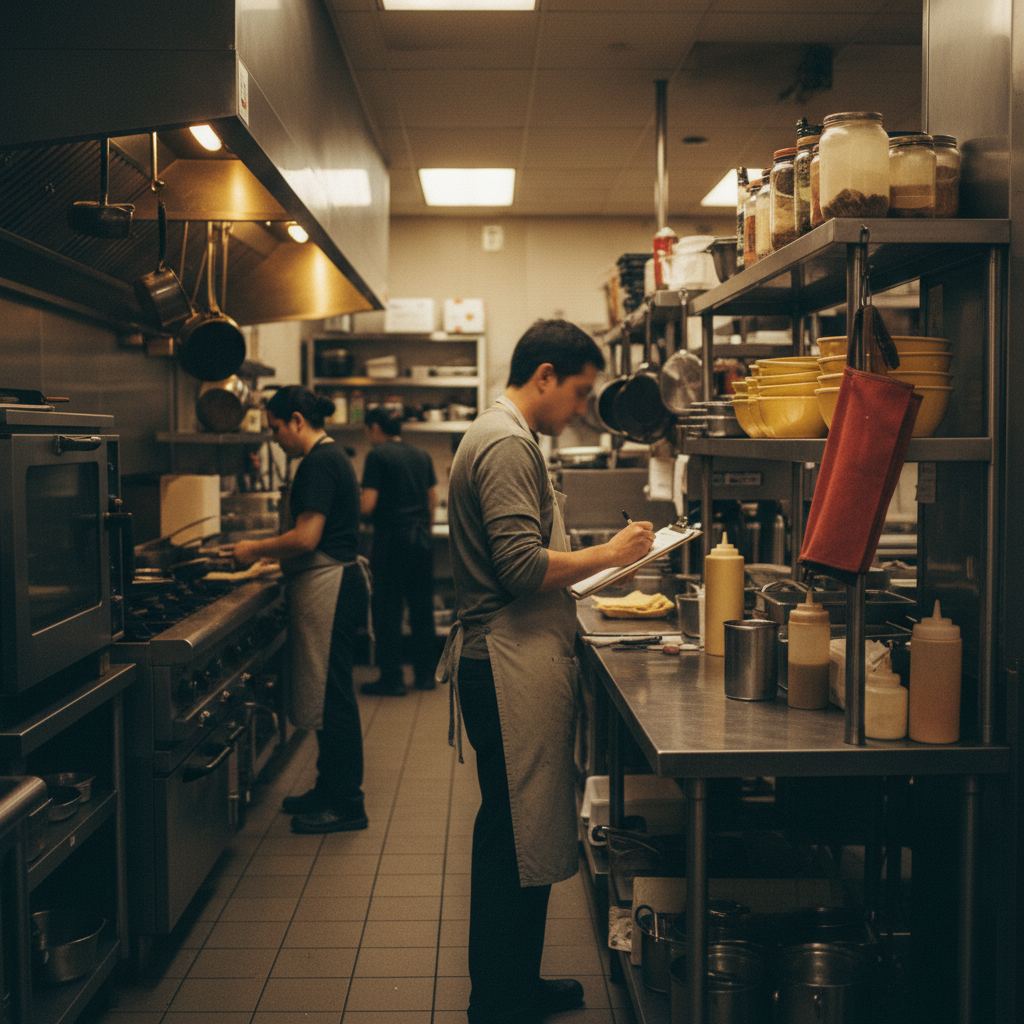
Chula Vista food service. Illustration generated with AI. Not a photograph of a Foody Finance client or location.
What drives financing conversations in Chula Vista
Spending here concentrates on build-outs in newer retail centers around Eastlake and Otay Ranch, where landlord standards and utility hookups in recently developed areas can add cost compared with older commercial space closer to the bay. Cross-border shopping and dining patterns near the San Ysidro corridor also shape demand for some concepts, requiring working capital to manage currency and traffic swings. Financing needs to cover the run-up period before a newer development area reaches stable local traffic.
Revenue and seasonality in Chula Vista
Eastlake and Otay Ranch draw steady family and suburban dining traffic year-round, supported by the area's continued residential growth, while Third Avenue Village leans on a more local, walkable customer base near downtown Chula Vista. San Diego's mild climate keeps patio seating usable most months, which helps smooth revenue, but higher California labor costs mean weekday volume needs to stay consistent to cover payroll without relying only on weekend traffic.
What this does to your numbers
Family dining traffic in newer neighborhoods stays fairly steady year-round, but the higher cost of labor here means the business needs strong weekday numbers, not just weekends.
Permitting in Chula Vista, and what it costs to wait
The County of San Diego Department of Environmental Health and Quality issues food facility permits covering Chula Vista, while California's Department of Alcoholic Beverage Control handles liquor licensing on a separate state timeline, with license quotas by census tract sometimes limiting availability in growing areas like Otay Ranch. New construction in these newer submarkets can also mean waiting on utility connections tied to the broader development's build-out phase. Rent often starts before all of these separate approvals clear.
What the wait actually costs
If utility hookups in a newer development area run behind schedule, you're paying rent before the kitchen can even open.
What raises the cost of capital here
01California ABC license quotas by census tract can limit availability in fast-growing areas like Otay Ranch and Eastlake.
02New development phases in eastern Chula Vista can delay utility hookups needed before a certificate of occupancy.
03Higher state minimum wage and labor cost requirements raise the weekday volume needed to cover fixed payroll.
Which program usually fits here
A buildout and expansion loan fits the higher finish-out cost of opening in a newer shopping center, spreading that cost over the years it takes to build a steady customer base.
California outline. Boundary data: US Census Bureau cartographic boundary files, public domain. Simplified for display.
Taking money out of an approved line or loan. Draws tied to construction milestones mean you only start paying interest on each piece as you use it.
buildout capital
Money for the work that turns a space into a working kitchen: plumbing, electrical, hoods, walls, and permits. It pays for labor and materials you cannot resell, so it is priced differently than money for a fryer.
working capital
Cash for the everyday gaps: payroll, inventory, rent, and repairs. It is repaid out of daily or weekly sales rather than from one big event.
equipment paper
A loan or lease tied to a specific machine. The machine itself is the security, so approval leans on the value of the hardware more than on your bank statements.
hard credit pull
A formal credit check that shows on your report and can move your score a few points. It happens only after you pick a specific lender, not to get information.
covers
The number of guests served. Lenders pair it with check average to judge how reliable a month really is.
underwriting
The lender reading your numbers to decide how much risk you are. Bank statements, time in business, and existing debt carry the most weight.
shoulder season
The in between weeks on either side of your busy season. Sales fall while rent, insurance, and salaried payroll do not.
term
How long you have to repay. A longer term lowers the monthly payment and raises what the money costs in total.
Why might a new restaurant in Otay Ranch wait longer on utility hookups than one on Third Avenue?
Otay Ranch and other eastern Chula Vista submarkets are still being built out in phases, and a new commercial space there can be waiting on the broader development's utility infrastructure to be completed and connected, a step an established corridor like Third Avenue Village typically doesn't face.
Does California's mild climate reduce the seasonal cash flow risk for a Chula Vista restaurant?
It helps. Patio and outdoor seating stay usable across most of the year in the San Diego area, which smooths out some of the seasonal swing that colder climates see, though it doesn't offset the higher year-round labor cost that California's minimum wage rules place on weekday staffing.
How does the San Ysidro border crossing shape a Chula Vista taco shop's revenue differently than a typical San Diego County restaurant?
A Chula Vista taco shop near the border draws a portion of its customers from Tijuana residents crossing north for shopping and dining, a customer base that responds to the peso-to-dollar exchange rate and to Mexican holiday calendars rather than only to local San Diego patterns. When the peso weakens against the dollar, that cross-border traffic tends to soften, and a lender should expect that revenue dip to show up regardless of how well the restaurant itself is run. This makes exchange rate context genuinely relevant when reading deposit histories for restaurants close to the border crossing.
How do Chula Vista food businesses start a financing conversation?
Start with a free review by a specialist. You share the basics of the business, the use of funds, and recent bank statements, and you see every program that fits before any credit application exists. Short term options commonly fund in 1 to 3 business days once you choose an offer.
Do you serve areas outside Chula Vista in California?
Yes. Every program is available statewide in California and nationwide.
What is buildout and expansion, and when does it fit a Chula Vista operator?
Construction money for the work that turns a space into a working kitchen, usually released in stages as the job progresses. Use it for a second location, a remodel, a patio, or a kitchen conversion, and size it to cover the permit wait, not just the build. Typical size is 50,000 to 2,000,000, funding runs 1 to 4 weeks once you choose an offer, and you repay it as fixed payment, often with a draw schedule. You will be asked for: application, contractor bids, lease, financials.
What is working capital, and when does it fit a Chula Vista operator?
Cash for the everyday gaps, repaid out of sales on a set schedule instead of at the end of a project. Use it for payroll, inventory, a slow stretch, or a job you have to fund before the client pays you. Typical size is 10,000 to 500,000, funding runs 1 to 3 business days once you choose an offer, and you repay it as fixed daily, weekly, or monthly payment. You will be asked for: application, 3 to 6 months of bank statements.
What is equipment financing, and when does it fit a Chula Vista operator?
You borrow against a specific machine, and the machine is what backs the loan. Use it when a fryer, a walk-in, an oven, or a vehicle has to be replaced and you would rather keep the cash in the account. Typical size is 5,000 to 500,000, funding runs 1 to 5 business days once you choose an offer, and you repay it as fixed monthly payment. You will be asked for: application, equipment quote, bank statements.
Why does the Chula Vista calendar change what I should borrow?
Family dining traffic in newer neighborhoods stays fairly steady year-round, but the higher cost of labor here means the business needs strong weekday numbers, not just weekends.
What does waiting actually cost me in Chula Vista?
If utility hookups in a newer development area run behind schedule, you're paying rent before the kitchen can even open.
Which program do most Chula Vista operators end up using?
A buildout and expansion loan fits the higher finish-out cost of opening in a newer shopping center, spreading that cost over the years it takes to build a steady customer base. That is a starting point, not a decision. The specialist review looks at your deposits, your time in business, and what the money is for before anything is recommended.
Does asking about financing in Chula Vista affect my credit?
No. Getting information is a conversation, not an application. There is no credit application and no hard credit pull until you have picked a specific lender and want to move forward.
Start the conversation
Talk to a specialist before you fill out an application.
Start with a free, no-obligation review. We will send the right application only after we know what you actually qualify for.