Anaheim restaurants live and die by the gap between convention weeks near the Resort District and the quieter stretches when the crowds thin out.
How do Anaheim food businesses get funded?
Anaheim operators start with a free review with a specialist, share recent business bank statements, and are matched to the programs that fit the use of funds. Working capital funds in 1 to 3 business days after you choose an offer, equipment in 1 to 5, and buildout capital in 1 to 4 weeks.
Estimates, not offers: Amounts, terms, and funding times are estimates based on programs commonly available in food service. Actual terms vary by program, lender underwriting, time in business, revenue, and credit profile. Nothing here is an offer of credit or a guarantee of approval. See source and method.
How Anaheim eats, and what that does to cash
01
Where Anaheim eats
The Anaheim Resort District around Disneyland and the Anaheim Convention Center carries the highest tourist volume, with theme-park-adjacent restaurants on Harbor Boulevard and hotel restaurants charging resort prices to visitors on multi-day trips. The Anaheim Packing District, a converted 1919 citrus packing house near downtown, runs a food hall format with a dozen-plus vendors sharing communal seating, drawing both locals and tourists at moderate prices. Downtown Anaheim's Center Street Promenade mixes small chef-driven restaurants with a weekly farmers market crowd. Anaheim's Little Arabia, centered on Brookhurst Street, serves Middle Eastern families and a wider Southern California crowd with shawarma, hookah lounges, and bakeries open late into the night. The Platinum Triangle near Angel Stadium and the Honda Center pulls in sports crowds on game nights, with restaurants timing kitchen staffing around first pitch and puck drop rather than standard dinner hours. A restaurant built for the Resort District's steady tourist flow will not survive on Platinum Triangle's game-night-only traffic pattern, and mismatching the two leaves empty dining rooms on the nights games are away.
02
What Anaheim actually orders
Little Arabia's Brookhurst Street corridor serves shawarma plates, falafel, and knafeh at counter-service prices, typically 10 to 15 dollars a plate, with several spots open past midnight for hookah service. The Anaheim Packing District's food hall format sells everything from ramen to craft doughnuts at individual vendor stalls, with per-person spend around 15 to 20 dollars across two or three stops. Disneyland-area restaurants lean into character dining and themed menus, charging 30 to 50 dollars a person for family-style service tied to park visits. Angel Stadium and Honda Center game nights drive stadium concession spend plus a wave of pre-game and post-game bar traffic at nearby sports bars, typically 20 to 30 dollars a person with drinks. Downtown Anaheim's smaller restaurants push a chef-driven casual format, 25 to 40 dollars an entree, aimed at Orange County diners rather than tourists. Taco trucks and taquerias serving the city's large Latino population operate along Anaheim Boulevard and State College Boulevard at under 10 dollars a plate. This range means a kitchen designed for park-goer volume cannot simply relocate to Little Arabia without rebuilding its entire supplier and staffing model.
03
The Anaheim calendar
Disneyland and Disney California Adventure drive year-round baseline traffic, but summer months, June through August, and the winter holiday season from Thanksgiving through New Year's bring the heaviest visitor counts, including the parks' holiday overlay decorations that extend evening dining hours. The Anaheim Convention Center books major trade shows and conventions through the year, with events like the Natural Products Expo West in the spring filling nearby hotels and restaurants for multi-day stretches. Angel Stadium's baseball season runs April through September or October, and Honda Center's hockey and concert calendar picks up load in the fall and winter when the Platinum Triangle would otherwise be quiet. January and September see dips in park attendance between major holiday and summer peaks. Restaurants dependent on convention bookings see swings tied to the Convention Center's calendar rather than the school-year tourist calendar, so a slow month for family tourism can still be a strong month for a downtown restaurant near a large trade show, and misreading which calendar drives a given location leads to overstaffing or understaffing against actual demand.
04
Growth and cost pattern
New restaurant development concentrates in the Anaheim Packing District and surrounding downtown blocks, where the city has actively courted food hall and small-format concepts into renovated historic buildings, and in the Resort District, where hotel and Disney-adjacent development keeps adding ground-floor retail. Rent in the Resort District runs well above citywide averages given tourist foot traffic, while Little Arabia and neighborhoods along Anaheim Boulevard offer lower rent but older strip mall buildings that often need plumbing and ventilation upgrades for restaurant use. Labor costs reflect Orange County's broader wage pressure, and staffing during Disneyland's peak summer and holiday seasons competes directly with the parks' own seasonal hiring, which pulls from the same local labor pool. Utility and buildout costs for Resort District locations run higher due to stricter design standards tied to the district's tourism branding requirements, which can add review cycles before permits clear. A restaurant opening near the Resort District timed for summer season that hits a design review delay can miss the entire peak season and face a full year's wait before the next comparable revenue window opens.
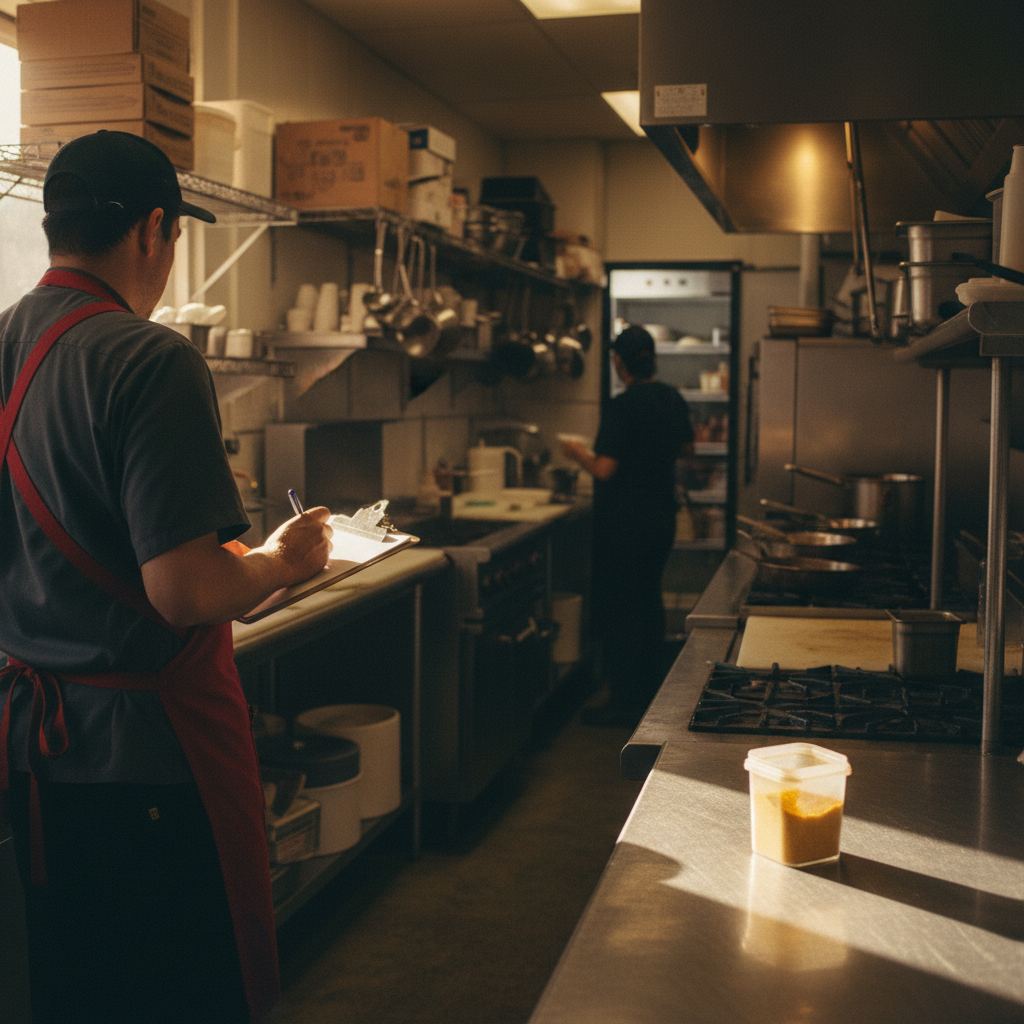
Anaheim food service. Illustration generated with AI. Not a photograph of a Foody Finance client or location.
What drives financing conversations in Anaheim
Financing here frequently covers labor scheduling software and cross-trained staff to handle Disneyland and convention center surges without overstaffing on off weeks. Concepts outside the resort corridor, like those in the Packing House area, draw more on capital for buildout and less on seasonal staffing swings.
Revenue and seasonality in Anaheim
Resort District volume tracks Disneyland attendance and Angel Stadium and Honda Center event dates, producing high but uneven daily counts. Neighborhood spots in West Anaheim see steadier repeat business with smaller checks, and a resort-dependent concept needs reserve to cover a slower month between conventions.
What this does to your numbers
Big theme park and convention weeks bring in strong sales, but the calendar has real gaps in between that the bank account has to absorb.
Permitting in Anaheim, and what it costs to wait
Orange County Health Care Agency issues the food facility permit while alcohol licensing runs through California ABC on its own separate queue, and resort-area concepts sometimes face added review tied to the Anaheim Resort Specific Plan. A tourist-corridor opening should assume the alcohol and specific-plan reviews finish later than the health permit.
What the wait actually costs
Extra review tied to the resort area's specific plan can slow the opening beyond what the health and alcohol permits alone would take.
What raises the cost of capital here
01Anaheim Resort Specific Plan review can add steps beyond standard county and state approvals near the parks
02Convention and theme park attendance swings create some of the widest daily revenue gaps of any submarket
03Tourist-corridor lease rates run well above neighborhood rates in West Anaheim or Anaheim Canyon
Which program usually fits here
A merchant cash advance or working capital line that scales with sales fits a resort-driven concept better than a fixed monthly loan payment.
California outline. Boundary data: US Census Bureau cartographic boundary files, public domain. Simplified for display.
The city or county reading your kitchen drawings before you are allowed to build. Nothing gets installed until it clears, and rent runs the whole time.
merchant cash advance
You sell a slice of future card sales for cash today. Fastest money available, and the most expensive, so it fits an emergency rather than a plan.
working capital
Cash for the everyday gaps: payroll, inventory, rent, and repairs. It is repaid out of daily or weekly sales rather than from one big event.
covers
The number of guests served. Lenders pair it with check average to judge how reliable a month really is.
buildout capital
Money for the work that turns a space into a working kitchen: plumbing, electrical, hoods, walls, and permits. It pays for labor and materials you cannot resell, so it is priced differently than money for a fryer.
factor rate
A flat multiplier instead of an interest rate. Borrow 50,000 at a 1.25 factor and you repay 62,500 total, no matter how fast you pay it off.
draw
Taking money out of an approved line or loan. Draws tied to construction milestones mean you only start paying interest on each piece as you use it.
hard credit pull
A formal credit check that shows on your report and can move your score a few points. It happens only after you pick a specific lender, not to get information.
term
How long you have to repay. A longer term lowers the monthly payment and raises what the money costs in total.
equipment paper
A loan or lease tied to a specific machine. The machine itself is the security, so approval leans on the value of the hardware more than on your bank statements.
shoulder season
The in between weeks on either side of your busy season. Sales fall while rent, insurance, and salaried payroll do not.
Why do restaurants near the Anaheim Resort District need different financing than neighborhood spots?
A location near Disneyland or the Anaheim Convention Center rides attendance swings that can double or halve daily covers within the same month, so it needs working capital or a revenue-based advance that flexes with sales rather than a fixed monthly payment. A West Anaheim neighborhood restaurant with steadier local traffic can usually plan around a more predictable repayment schedule instead.
Does opening in the Anaheim Resort Specific Plan area slow down permitting?
Concepts inside the Resort Specific Plan boundary can face design and use review tied to that plan in addition to standard Orange County health permitting and California ABC alcohol licensing, and those reviews do not always run on the same calendar. Buildout financing sized with a buffer for that added review keeps rent and contractor payments covered if the timeline stretches.
Why does Disneyland's presence make Anaheim's restaurant revenue harder to compare to other Orange County cities?
Anaheim's Resort District generates restaurant revenue tied to park attendance cycles and Disney's own holiday and event calendar rather than typical local dining patterns, so month-over-month swings there look different from a standard suburban restaurant. Lenders comparing an Anaheim applicant to comps in nearby Orange County cities need to separate Resort District revenue, which follows park seasonality, from Platinum Triangle revenue, which follows the Angels and Ducks schedules, and from Little Arabia or downtown revenue, which follows normal local demand. Blending these three patterns into one citywide average produces a misleading baseline for judging whether a specific location's numbers are strong or weak.
How do Anaheim food businesses start a financing conversation?
Start with a free review by a specialist. You share the basics of the business, the use of funds, and recent bank statements, and you see every program that fits before any credit application exists. Short term options commonly fund in 1 to 3 business days once you choose an offer.
Do you serve areas outside Anaheim in California?
Yes. Every program is available statewide in California and nationwide.
What is working capital, and when does it fit a Anaheim operator?
Cash for the everyday gaps, repaid out of sales on a set schedule instead of at the end of a project. Use it for payroll, inventory, a slow stretch, or a job you have to fund before the client pays you. Typical size is 10,000 to 500,000, funding runs 1 to 3 business days once you choose an offer, and you repay it as fixed daily, weekly, or monthly payment. You will be asked for: application, 3 to 6 months of bank statements.
What is merchant cash advance, and when does it fit a Anaheim operator?
You sell a slice of future card sales for money today, repaid as the card volume arrives. Use it only when speed decides the outcome. It is the fastest option here and the most expensive one. Typical size is 5,000 to 250,000, funding runs 1 to 3 business days once you choose an offer, and you repay it as factor rate, highest total cost. You will be asked for: application, bank and processing statements.
What is buildout and expansion, and when does it fit a Anaheim operator?
Construction money for the work that turns a space into a working kitchen, usually released in stages as the job progresses. Use it for a second location, a remodel, a patio, or a kitchen conversion, and size it to cover the permit wait, not just the build. Typical size is 50,000 to 2,000,000, funding runs 1 to 4 weeks once you choose an offer, and you repay it as fixed payment, often with a draw schedule. You will be asked for: application, contractor bids, lease, financials.
Why does the Anaheim calendar change what I should borrow?
Big theme park and convention weeks bring in strong sales, but the calendar has real gaps in between that the bank account has to absorb.
What does waiting actually cost me in Anaheim?
Extra review tied to the resort area's specific plan can slow the opening beyond what the health and alcohol permits alone would take.
Which program do most Anaheim operators end up using?
A merchant cash advance or working capital line that scales with sales fits a resort-driven concept better than a fixed monthly loan payment. That is a starting point, not a decision. The specialist review looks at your deposits, your time in business, and what the money is for before anything is recommended.
Does asking about financing in Anaheim affect my credit?
No. Getting information is a conversation, not an application. There is no credit application and no hard credit pull until you have picked a specific lender and want to move forward.
Start the conversation
Talk to a specialist before you fill out an application.
Start with a free, no-obligation review. We will send the right application only after we know what you actually qualify for.