Yes. Foody Finance works with restaurants, bars, caterers, food trucks, ghost kitchens, and distributors across Texas. Equipment requests commonly fund in 1 to 5 business days, working capital in 1 to 3, and SBA financing in 3 to 12 weeks.
Estimates, not offers: Amounts, terms, and funding times are estimates based on programs commonly available in food service. Actual terms vary by program, lender underwriting, time in business, revenue, and credit profile. Nothing here is an offer of credit or a guarantee of approval. See source and method.
How Texas actually makes its money in food
01
What Texas actually orders
Central Texas barbecue, built on post oak-smoked brisket sold by the pound at places like Lockhart and Taylor, runs a fundamentally different business model than Tex-Mex, where breakfast tacos and combination plates in San Antonio and Austin drive all-day traffic rather than a single midday rush. Houston's Vietnamese and Gulf Coast seafood scene, including crawfish boils that peak every spring, reflects the state's largest and most diverse immigrant restaurant economy. West Texas and the Panhandle run chicken-fried steak and Tex-Mex plates aimed at a ranching and oil-field customer base with different price tolerance than Dallas or Austin diners. El Paso and the Rio Grande Valley operate on a border-adjacent menu and pricing structure tied to peso exchange rates and cross-border shopping traffic. Dallas-Fort Worth supports the state's heaviest steakhouse and franchise density, fed by continued corporate relocation. Kolaches, introduced by Czech immigrants around West and Caldwell, remain a distinct pastry-and-breakfast category found almost nowhere outside the state's Czech Belt. This regional spread, barbecue country, Tex-Mex border corridor, Gulf Coast, Panhandle ranching country, and DFW corporate dining, means no single Texas concept transfers cleanly across the state's own borders.
02
How cattle, oil, and immigration built the Texas restaurant map
German and Czech immigrants who settled the Hill Country and Central Texas in the mid-1800s brought meat market traditions that became the direct ancestor of Central Texas barbecue, with several current pitmasters tracing ownership to the same family-run meat markets founded over a century ago. Mexican and Tejano foodways, present since before Texas independence, form the base of Tex-Mex cuisine, which developed its own identity distinct from interior Mexican cooking in San Antonio kitchens through the 20th century. The oil boom, from the early 1900s Spindletop discovery through the Permian Basin's modern shale expansion around Midland and Odessa, built a boom-and-bust restaurant economy in West Texas tied directly to crude prices. Houston's post-1975 refugee resettlement, particularly Vietnamese communities after the fall of Saigon, built the Gulf Coast's Vietnamese-Cajun seafood fusion now found citywide. NASA's Johnson Space Center and the Texas Medical Center added stable white-collar dining demand to Houston independent of the energy sector's cycles. Dallas-Fort Worth's growth as a corporate headquarters hub, accelerating through the 1980s and again after 2010 with relocations from California, built the state's densest steakhouse and franchise corridor. Ownership today reflects these waves directly: German-Czech family meat markets in Central Texas, Tejano family restaurants along the border, and investor-backed groups concentrated in Dallas and Austin.
03
The calendar that carries Texas restaurants
South by Southwest in Austin every March is the single largest concentrated restaurant revenue event in the state, filling every kitchen within walking distance of downtown for ten days. The State Fair of Texas in Dallas every fall, running late September through October, draws deep-fried novelty food traffic that some vendors depend on for a large share of annual income. College football fills College Station, Austin, and Lubbock on Aggie, Longhorn, and Red Raider home Saturdays from September through November, with tailgate catering spiking those specific weekends. Houston's rodeo, the Houston Livestock Show and Rodeo each February and March, is a three-week event that drives concentrated demand across the city's barbecue and Tex-Mex sectors. Fiesta San Antonio every April fills that city's restaurant calendar for eleven days. Cinco de Mayo and Diez y Seis de Septiembre carry outsized weight in San Antonio and the Rio Grande Valley compared to the rest of the country. Hurricane season, June through November along the Gulf Coast, can shut Houston and Corpus Christi kitchens for days without warning and disrupt seafood supply for weeks after a major storm. West Texas restaurants track oil rig counts more than seasons, with Permian Basin towns booming or emptying based on drilling activity rather than the calendar.
04
Who staffs Texas kitchens
Texas has no state minimum wage above the federal floor and no state income tax, and its right-to-work status keeps restaurant labor largely non-union outside a small number of Houston hospitality operations. Austin's restaurant labor market has tightened significantly as tech-sector relocation, including Tesla's Travis County plant and Samsung's Taylor expansion, pulls workers toward higher-paying manufacturing and corporate jobs. Houston restaurants draw on the largest immigrant labor pool of any Texas metro, spanning Vietnamese, Mexican, Central American, and West African communities, giving it deeper staffing depth than any other part of the state. The Permian Basin's oil-field wages routinely outbid restaurant pay in Midland and Odessa, forcing kitchens there to raise wages or run understaffed during drilling booms. Border cities including El Paso and McAllen draw on cross-border commuting labor from Ciudad Juarez and Reynosa, a workforce sensitive to border wait times and immigration policy shifts. College towns, College Station and Lubbock especially, supply a rotating student labor base that empties out during December and May breaks. Central Texas barbecue operations often rely on long-tenured pit staff rather than high-turnover hourly hiring, a structural difference from the state's fast-casual and franchise segments.
05
What it costs to run a kitchen in Texas
Texas has no state income tax, but commercial property taxes run among the highest in the country and land directly on restaurant lease costs through pass-through structures common in Texas retail leases. Austin's commercial rent has risen sharply since 2015 due to tech-sector relocation, with buildout costs downtown now rivaling coastal markets, while rural West Texas and the Panhandle remain considerably cheaper outside oil-boom towns. Beef sourcing benefits from direct proximity to the nation's largest cattle feeding region in the Panhandle, giving Texas barbecue and steakhouse operators a persistent cost advantage over coastal markets, though drought years across the Hill Country and Panhandle push cattle prices up sharply. Gulf Coast seafood sourcing faces recurring supply disruption from hurricane season and Gulf shrimp import competition. Produce sourcing benefits from the Rio Grande Valley's year-round growing season, supplying much of the state with winter vegetables unavailable elsewhere in the country during those months. Property insurance along the Gulf Coast carries hurricane and flood exposure that inland and West Texas operators do not pay for. Utility costs spike sharply during summer cooling loads statewide, and the state's deregulated grid, exposed by the February 2021 winter storm, has left some operators facing sudden spot-market electricity price surges during rare hard freezes.
06
Where Texas restaurants expand next
Austin's suburban ring, Round Rock, Pflugerville, and Georgetown, continues to draw both national fast-casual brands and independent groups chasing population growth tied to the Tesla and Samsung manufacturing corridor. Dallas-Fort Worth's growth concentrates in Frisco, McKinney, and the surrounding Collin County suburbs, fed by continued corporate headquarters relocation from California and the Northeast. Houston's expansion follows the Grand Parkway loop into Katy, Fulshear, and Cypress, where new residential development brings rooftops without the inner loop's parking and permitting delays. San Antonio's growth clusters along the northern 1604 loop near the medical center district. The Permian Basin's Midland-Odessa corridor sees restaurant investment rise and fall directly with drilling activity, a boom-bust cycle unmatched elsewhere in the state. El Paso's growth follows the Fort Bliss-adjacent east side. Statewide, contractor availability is tightest in Austin and Dallas-Fort Worth, where residential construction competes directly for the same crews as restaurant buildouts, a bottleneck that regularly pushes a location's opening date past its original construction loan timeline.
Licensing and permitting in Texas, and what it costs to wait
The Department of State Health Services and local health departments issue food establishment permits, with city specific plan review for buildouts.
TABC and local health approvals run in parallel but rarely finish together, so a Texas buildout request is sized to carry rent and payroll until the later date.
What Texas operators finance
Expansion and equipment packages are frequently structured together so construction and hardware carry separate terms.
The Texas revenue calendar
Volume holds year round across the major metros, with a summer heat dip on patios and event driven peaks around festivals and conventions.
Revenue mix and seasonality in Texas
Metro markets run steady year round with patio season on both ends of summer, oil corridor markets track energy employment, and border and coastal markets follow their own visitor calendars.
What this does to your numbers
Volume holds year round across the major metros, with a summer patio dip and event driven peaks around festivals and holidays.
What a delay costs in Texas
Freeze and storm events have taken out equipment and inventory statewide at once, and alcohol licensing runs on its own clock beside county health permits.
What underwriting looks at in Texas
01Storm and freeze events have caused simultaneous equipment and inventory loss statewide
02Multi unit expansion is common because metro growth supports second and third locations
03TABC licensing runs on its own timeline alongside county health permitting
Which program usually fits here
Multi unit growth is common here, so lenders look at whether unit 1 can carry itself while unit 2 is still in permitting.
Markets we serve in Texas
We work with operators across Texas, including Houston, Dallas, Austin, San Antonio, Fort Worth, El Paso, and Plano. Rural and small market operators qualify for the same programs.
Volume holds year round across the major metros, with a summer heat dip on patios and event driven peaks around festivals and conventions
Storm and freeze events have caused simultaneous equipment and inventory loss statewide
Acquisition, refinance, or a longer buildout
Estimates, not offers: Amounts, terms, and funding times are estimates based on programs commonly available in food service. Actual terms vary by program, lender underwriting, time in business, revenue, and credit profile. Nothing here is an offer of credit or a guarantee of approval. See source and method.
Educational only. Not an offer to lend, a commitment to fund, or a rate quote. Figures are illustrative and actual terms are set by the funding partner after underwriting. Downloading this does not create a brokerage, advisory, or fiduciary relationship with Foody Finance.
One page PDF with the Texas timelines table and the state plate photo
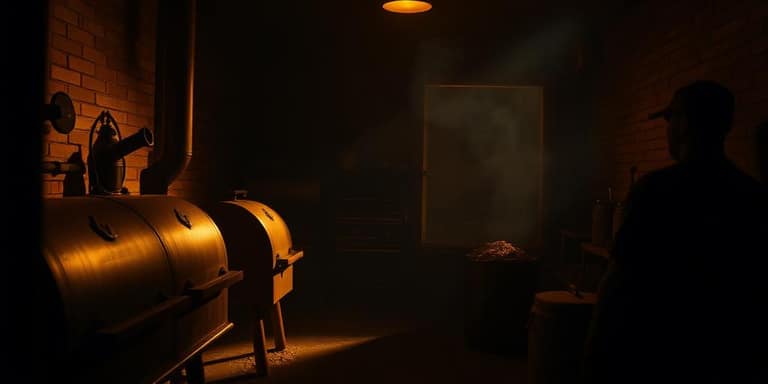
Texas plateBrisketSmoker capacity and protein inventory are both large capital items, and they compete for the same dollars
Financing terms on this page
Definitions for the terms used above. Every term links to its entry in the full glossary.
A loan or lease tied to a specific machine. The machine itself is the security, so approval leans on the value of the hardware more than on your bank statements.
Money for the work that turns a space into a working kitchen: plumbing, electrical, hoods, walls, and permits. It pays for labor and materials you cannot resell, so it is priced differently than money for a fryer.
A formal credit check that shows on your report and can move your score a few points. It happens only after you pick a specific lender, not to get information.
The city or county reading your kitchen drawings before you are allowed to build. Nothing gets installed until it clears, and rent runs the whole time.
A preapproved pool of money you pull from only when you need it, then pay back and reuse. You pay for what you draw, not for the full amount sitting there.
Yes. Food service operators in Texas are referred for equipment financing, working capital, lines of credit, SBA loans, and buildout capital. Program availability varies by state. Merchant cash advance and other revenue-based financing structures are not offered to businesses in Texas, Virginia, or Connecticut.
How fast can a Texas restaurant get funded?
Short term programs commonly fund in 1 to 3 business days and equipment requests in 1 to 5. SBA financing in Texas runs 3 to 12 weeks.
Why do Texas operators finance multiple units at once?
Because growth here outpaces the cash a single location generates. Operators frequently structure equipment on secured paper for the new unit and keep a separate line for the working capital the opening consumes.
Which Texas cities do you serve?
All of them. Operators we work with in Texas run in Houston, Dallas, Austin, San Antonio, Fort Worth, El Paso, and Plano, along with smaller markets across the state. Underwriting reviews deposits and the use of funds, not the population of the market.
What documents do Texas operators need?
For the first review, just the form. If you choose a short term program, the lender usually asks for 3 to 6 months of business bank statements. SBA adds tax returns, interim financials, and a debt schedule.
Does Texas licensing affect financing?
Licensing affects buildout timelines and, in some transactions, collateral value. Include local permitting details in the request so a funding partner can account for them when structuring financing.
Do I need a hard credit pull to start in Texas?
No. Our team reviews your request and looks for a funding partner that fits without a hard credit pull. A funding partner discusses programs with you and obtains your authorization before any hard credit pull.
What is equipment financing, and when does it fit a Texas operator?
You borrow against a specific machine, and the machine is what backs the loan. Use it when a fryer, a walk-in, an oven, or a vehicle has to be replaced and you would rather keep the cash in the account. Typical size is 5,000 to 500,000, funding runs 1 to 5 business days once you choose an offer, and you repay it as fixed monthly payment. You will be asked for: application, equipment quote, bank statements.
What is buildout and expansion, and when does it fit a Texas operator?
Construction money for the work that turns a space into a working kitchen, usually released in stages as the job progresses. Use it for a second location, a remodel, a patio, or a kitchen conversion, and size it to cover the permit wait, not just the build. Typical size is 50,000 to 2,000,000, funding runs 1 to 4 weeks once you choose an offer, and you repay it as fixed payment, often with a draw schedule. You will be asked for: application, contractor bids, lease, financials.
What is working capital, and when does it fit a Texas operator?
Cash for the everyday gaps, repaid out of sales on a set schedule instead of at the end of a project. Use it for payroll, inventory, a slow stretch, or a job you have to fund before the client pays you. Typical size is 10,000 to 500,000, funding runs 1 to 3 business days once you choose an offer, and you repay it as fixed daily, weekly, or monthly payment. You will be asked for: application, 3 to 6 months of bank statements.
Why does the Texas calendar change what I should borrow?
Volume holds year round across the major metros, with a summer patio dip and event driven peaks around festivals and holidays.
What does waiting actually cost me in Texas?
Freeze and storm events have taken out equipment and inventory statewide at once, and alcohol licensing runs on its own clock beside county health permits.
Which program do most Texas operators end up using?
Multi unit growth is common here, so lenders look at whether unit 1 can carry itself while unit 2 is still in permitting. That is a starting point, not a decision. Our team reviews your deposits, time in business, and use of funds before looking for a funding partner that fits.
Does asking about financing in Texas affect my credit?
No. Getting information is a conversation, not an application. There is no credit application and no hard credit pull until you have picked a specific lender and want to move forward.
A location page indicates that Foody Finance is taking clients in that market. It does not represent a physical office, storefront, or licensed presence in that city or state. All services are delivered remotely by our US-based team.
Start the conversation
Send a request before you fill out an application
Start with a free, no-obligation request. Our team reviews it and looks for a funding partner that fits.