Wind, hail, and dust storms roll through the Panhandle often enough that Amarillo operators budget for property damage the way other cities budget for slow Tuesdays.
How do Amarillo food businesses get funded?
Amarillo operators start with a free review with a specialist, share recent business bank statements, and are matched to the programs that fit the use of funds. Working capital funds in 1 to 3 business days after you choose an offer, equipment in 1 to 5, and buildout capital in 1 to 4 weeks.
Estimates, not offers: Amounts, terms, and funding times are estimates based on programs commonly available in food service. Actual terms vary by program, lender underwriting, time in business, revenue, and credit profile. Nothing here is an offer of credit or a guarantee of approval. See source and method.
How Amarillo eats, and what that does to cash
01
Where Amarillo eats
Route 66 through San Jacinto Heights carries the tourist trade, with the Big Texan Steak Ranch pulling highway traffic on a 72 ounce steak challenge that draws families willing to spend 40 to 60 dollars a head. Downtown along Polk Street has rebuilt slowly around the Bassett Tower and Hodgetown ballpark, drawing office workers for lunch and Sod Poodles baseball crowds for pregame dinners. Wolflin and the streets around Sunset Terrace hold the city's older money, with sit-down restaurants and wine bars priced above the Amarillo median. West Amarillo along Soncy Road and Coulter Street is the newest commercial corridor, dense with chain casual dining and drive-throughs serving suburban families and Texas Tech physician assistant students at the west campus. South of downtown, the neighborhoods near the old stockyards still support cafes that open before dawn for cattle buyers and feedlot crews. Price points split hard between the tourist steakhouse tier on Route 66 and the everyday plate lunch tier that serves the meatpacking and feedlot workforce, and that gap defines which storefronts survive turnover on each side of town.
02
What Amarillo actually eats
Beef dominates the menu because Amarillo sits inside the largest cattle feeding region in the country, and steakhouses here compete on cut size and value, not plating. Chicken fried steak with cream gravy is a standard plate lunch item priced under 12 dollars at diners along 6th Street and Amarillo Boulevard. Tex-Mex and New Mexico style red and green chile plates are common given the Panhandle's proximity to eastern New Mexico, served counter service at family-run spots rather than full service rooms. Drive-through burger stands do steady volume on Georgia Street and Western Street, built for pickup truck traffic and shift workers from the Tyson and JBS beef plants. Brewery kitchens, including Long Wooden Spoon and Six Car, have added food menus in the last several years, serving smoked meat plates on patios during the mild spring and fall months. Barbecue trailers operate seasonally, often closing or cutting hours in the coldest winter weeks when outdoor seating and smoker fuel costs both work against margin, creating a predictable slow stretch for anyone running an open pit operation.
03
The Amarillo calendar
Pantex, the nation's nuclear weapons assembly plant east of the city, and the Tyson and JBS beef processing plants anchor steady year-round payrolls that keep weekday lunch traffic level regardless of tourist flow. West Texas A&M University in nearby Canyon and Amarillo College both drive a August through May academic calendar that fills breakfast and late-night spots near their satellite campuses, then goes quiet in June and July. Route 66 tourism peaks from June through August as summer road trip traffic passes through, filling the Big Texan and nearby motels along I-40. The Tri-State Fair in September brings a concentrated week of concession and food truck demand at the fairgrounds. Winter storms between December and February regularly close I-40 for stretches, cutting off through traffic that Route 66 businesses depend on. Hodgetown's Sod Poodles minor league baseball season runs April through September, adding weeknight dinner traffic downtown that disappears completely once the season ends, leaving downtown restaurants to rebuild covers from scratch each spring.
04
Growth and cost pattern
New restaurant construction concentrates along Soncy Road, Coulter Street, and the I-40 frontage near Western Street, where big box retail and rooftops have expanded over the past decade. Land and buildout costs run lower than in Texas metro areas like Austin or Dallas, but contractor and equipment lead times stretch longer because fewer commercial kitchen suppliers and HVAC contractors serve the Panhandle, often pushing opening dates back by several weeks. Labor competes directly with the meatpacking plants, which pay hourly wages that can match or beat entry-level kitchen pay, forcing restaurants to raise starting wages or accept chronic understaffing. Utility costs spike in both directions, with summer cooling loads for kitchens sitting near 100 degree highs and winter heating costs climbing during Panhandle cold snaps that can drop temperatures well below freezing for days. Older downtown buildings near Polk Street often need full mechanical and electrical upgrades before a kitchen can open, adding buildout costs that new operators must fund before any revenue arrives, straining early cash reserves.
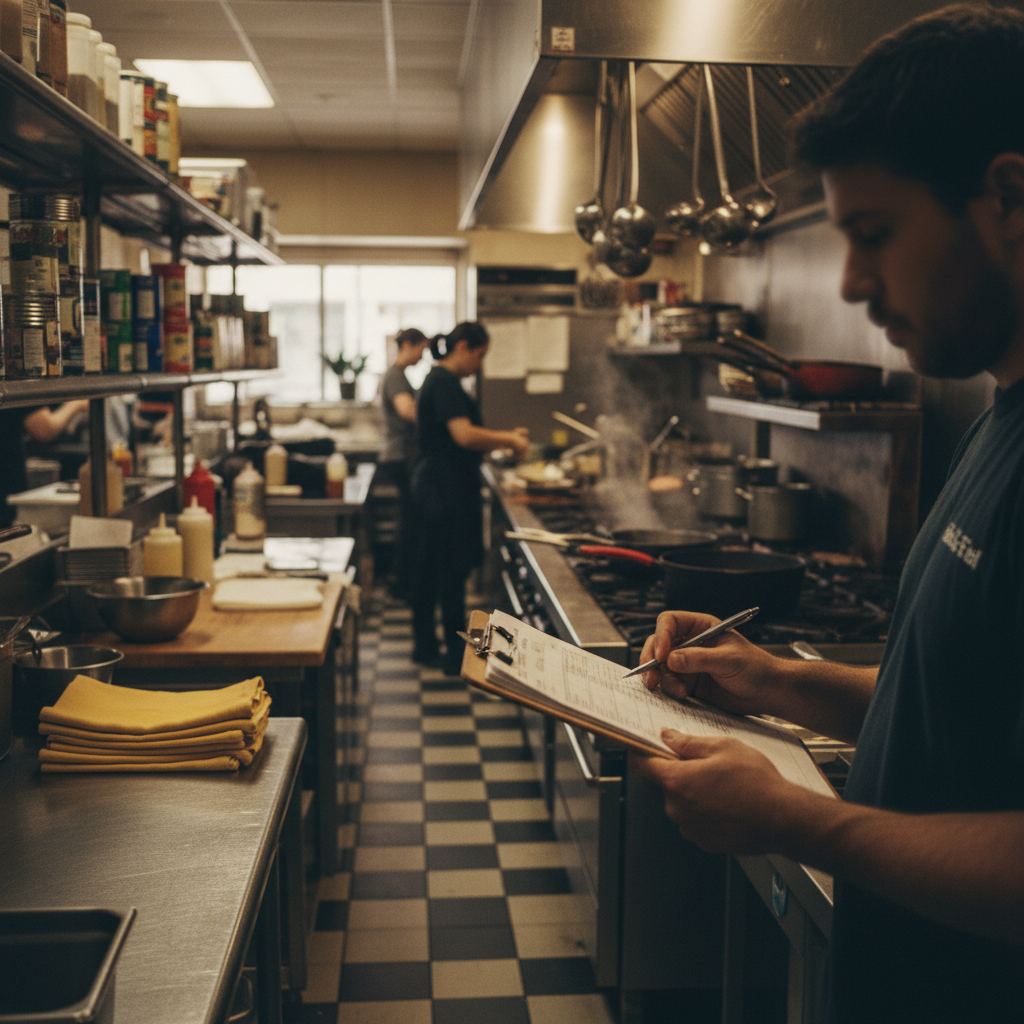
Amarillo food service. Illustration generated with AI. Not a photograph of a Foody Finance client or location.
What drives financing conversations in Amarillo
Cattle-country steakhouses and Route 66 diners lean on capital to cover walk-in cooler repairs and roof damage after hailstorms, since insurance claims can take longer to settle than the kitchen can stay closed. Truck stop and travel-corridor operators also use it to stock up ahead of summer tourist traffic heading to Palo Duro Canyon.
Revenue and seasonality in Amarillo
Beef and travel dollars dominate the ticket mix, with tourist traffic spiking in summer along Route 66 and cattle-industry business lunches steady through the week. Storm season can knock out power or damage a location with little warning, so operators keep cash set aside for repairs that insurance timing doesn't always cover fast enough.
What this does to your numbers
Summer tourist traffic on Route 66 carries the year, but a hailstorm can wipe out a week of income overnight with repair bills on top.
Permitting in Amarillo, and what it costs to wait
The Amarillo Public Health Department handles food establishment permits while the Texas Alcoholic Beverage Commission issues beer, wine, and liquor permits under separate paperwork and its own timeline. A new steakhouse or bar buildout on the Route 66 corridor has to sequence contractor work around both approvals, and delays on either side push back the date rent starts earning instead of just going out.
What the wait actually costs
Every week spent waiting on a liquor permit or an insurance check is a week of rent paid on a kitchen that isn't serving anyone.
What raises the cost of capital here
01Hailstorms are frequent enough to require budgeting for roof and HVAC repair on short notice
02TABC permit processing runs on a different clock than city health inspections
03Distance from major distribution hubs raises freight costs on perishable inventory
Which program usually fits here
Working capitalcovers the unpredictable repair bills, while equipment financing suits replacing a walk-in cooler or fryer without draining the operating account.
Texas outline. Boundary data: US Census Bureau cartographic boundary files, public domain. Simplified for display.
Cash for the everyday gaps: payroll, inventory, rent, and repairs. It is repaid out of daily or weekly sales rather than from one big event.
covers
The number of guests served. Lenders pair it with check average to judge how reliable a month really is.
equipment paper
A loan or lease tied to a specific machine. The machine itself is the security, so approval leans on the value of the hardware more than on your bank statements.
merchant cash advance
You sell a slice of future card sales for cash today. Fastest money available, and the most expensive, so it fits an emergency rather than a plan.
factor rate
A flat multiplier instead of an interest rate. Borrow 50,000 at a 1.25 factor and you repay 62,500 total, no matter how fast you pay it off.
hard credit pull
A formal credit check that shows on your report and can move your score a few points. It happens only after you pick a specific lender, not to get information.
buildout capital
Money for the work that turns a space into a working kitchen: plumbing, electrical, hoods, walls, and permits. It pays for labor and materials you cannot resell, so it is priced differently than money for a fryer.
draw
Taking money out of an approved line or loan. Draws tied to construction milestones mean you only start paying interest on each piece as you use it.
underwriting
The lender reading your numbers to decide how much risk you are. Bank statements, time in business, and existing debt carry the most weight.
term
How long you have to repay. A longer term lowers the monthly payment and raises what the money costs in total.
Why do Amarillo restaurants need working capital for storm season specifically?
Panhandle hailstorms can damage roofing, signage, and HVAC systems with little warning, and insurance claims often take weeks to process even after an adjuster visits. Restaurants along Route 66 and in Wolflin commonly keep working capital available so repairs can start before the claim settles, since a closed kitchen still owes rent and payroll.
How does TABC licensing affect a new bar opening in Amarillo?
TABC issues permits separately from the city's food service inspection, and processing runs on its own weeks-long timeline that doesn't automatically sync with buildout completion. Operators financing a new bar near Downtown or Georgia Street typically plan for the space to sit unopened for a stretch after construction wraps while the permit clears.
Why do so many Amarillo restaurants close for a stretch in January and February?
Panhandle winter storms routinely shut down I-40 and drop wind chills far below freezing, and both cut dine-in and drive-through traffic at once since fewer people leave home in a car. Restaurants along Route 66 lose their highway tourist base entirely in these months, and even neighborhood spots see fewer walk-ins. Operators who plan for this treat December through February as a cash reserve period rather than a growth period, trimming hours or staff temporarily instead of assuming steady demand. Lenders reviewing Amarillo restaurant financials should expect this seasonal dip and weigh annual averages over any single winter month.
How do Amarillo food businesses start a financing conversation?
Start with a free review by a specialist. You share the basics of the business, the use of funds, and recent bank statements, and you see every program that fits before any credit application exists. Short term options commonly fund in 1 to 3 business days once you choose an offer.
Do you serve areas outside Amarillo in Texas?
Yes. Every program is available statewide in Texas and nationwide.
What is working capital, and when does it fit a Amarillo operator?
Cash for the everyday gaps, repaid out of sales on a set schedule instead of at the end of a project. Use it for payroll, inventory, a slow stretch, or a job you have to fund before the client pays you. Typical size is 10,000 to 500,000, funding runs 1 to 3 business days once you choose an offer, and you repay it as fixed daily, weekly, or monthly payment. You will be asked for: application, 3 to 6 months of bank statements.
What is equipment financing, and when does it fit a Amarillo operator?
You borrow against a specific machine, and the machine is what backs the loan. Use it when a fryer, a walk-in, an oven, or a vehicle has to be replaced and you would rather keep the cash in the account. Typical size is 5,000 to 500,000, funding runs 1 to 5 business days once you choose an offer, and you repay it as fixed monthly payment. You will be asked for: application, equipment quote, bank statements.
What is merchant cash advance, and when does it fit a Amarillo operator?
You sell a slice of future card sales for money today, repaid as the card volume arrives. Use it only when speed decides the outcome. It is the fastest option here and the most expensive one. Typical size is 5,000 to 250,000, funding runs 1 to 3 business days once you choose an offer, and you repay it as factor rate, highest total cost. You will be asked for: application, bank and processing statements.
Why does the Amarillo calendar change what I should borrow?
Summer tourist traffic on Route 66 carries the year, but a hailstorm can wipe out a week of income overnight with repair bills on top.
What does waiting actually cost me in Amarillo?
Every week spent waiting on a liquor permit or an insurance check is a week of rent paid on a kitchen that isn't serving anyone.
Which program do most Amarillo operators end up using?
Working capital covers the unpredictable repair bills, while equipment financing suits replacing a walk-in cooler or fryer without draining the operating account. That is a starting point, not a decision. The specialist review looks at your deposits, your time in business, and what the money is for before anything is recommended.
Does asking about financing in Amarillo affect my credit?
No. Getting information is a conversation, not an application. There is no credit application and no hard credit pull until you have picked a specific lender and want to move forward.
Start the conversation
Talk to a specialist before you fill out an application.
Start with a free, no-obligation review. We will send the right application only after we know what you actually qualify for.