AR metro

Restaurant financing in Little Rock.

River Market crowds swell for downtown events and thin out fast once they end, leaving Little Rock operators to plan payroll around a calendar that isn't steady.

How do Little Rock food businesses get funded?

Little Rock operators start with a free review with a specialist, share recent business bank statements, and are matched to the programs that fit the use of funds. Working capital funds in 1 to 3 business days after you choose an offer, equipment in 1 to 5, and buildout capital in 1 to 4 weeks.

Estimates, not offers: Amounts, terms, and funding times are estimates based on programs commonly available in food service. Actual terms vary by program, lender underwriting, time in business, revenue, and credit profile. Nothing here is an offer of credit or a guarantee of approval. See source and method.

How Little Rock eats, and what that does to cash

01

Where Little Rock eats

The River Market District downtown anchors Little Rock's dining and nightlife, with restaurants and bars along President Clinton Avenue serving a mix of Clinton Presidential Library visitors, downtown office workers, and weekend crowds at fifteen to thirty dollar tickets. Hillcrest, on the west side, is Little Rock's walkable neighborhood dining district, with bungalow restaurants and coffee shops along Kavanaugh Boulevard drawing a higher-income, mixed-age crowd. The Heights, just north of Hillcrest, carries some of the city's higher-end sit-down restaurants at thirty to fifty dollar tickets. West Little Rock along Chenal Parkway holds the city's newer chain casual and suburban dining growth tied to residential expansion. South Main Street, known locally as SoMa, has redeveloped with smaller independent restaurants and a farmers market drawing a younger crowd. Little Rock's downtown depends heavily on convention and legislative traffic, and slows noticeably when the Arkansas State Capitol and the Statehouse Convention Center have no events scheduled.
02

What Little Rock orders

Fried catfish and Delta-style barbecue anchor Little Rock's sit-down and counter service menus, sold at ten to eighteen dollars a plate across the River Market and South Main. Cheese dip, a dish Little Rock claims as a local original, appears on nearly every casual restaurant menu as a shared appetizer at six to nine dollars. Food trucks cluster around the River Market pavilion and at Riverfest-adjacent events, selling tacos and barbecue at eight to twelve dollars. Craft breweries have grown in SoMa and along the river, serving pub food alongside beer flights at fifteen to twenty dollars a person. West Little Rock's Chenal Parkway carries most of the city's drive through and fast casual chain volume, feeding car traffic from newer subdivisions. The River Market Farmers Market runs Tuesdays and Saturdays from spring through fall, supporting produce vendors more than prepared hot food.

03

Little Rock's calendar

The Arkansas Legislature meets in regular session in odd-numbered years from January through spring, and downtown River Market restaurants see a measurable lunch increase during those months that does not repeat in even years. The Clinton Presidential Library and adjacent convention facilities bring steady tourist and conference traffic year round, smoothing some of the seasonal swing other Arkansas cities feel. The University of Arkansas at Little Rock and Philander Smith College add modest student dining demand concentrated in fall and spring semesters. Riverfest historically drew large Memorial Day weekend crowds downtown before ending, and its absence has left that specific weekend quieter than it once was. Hot, humid summers from June through August depress outdoor dining along the River Market pavilion. The odd-year legislative session creates a two-year cycle where downtown restaurants budget for a stronger January through April in odd years and a flatter one in even years.

04

Little Rock's growth and cost pattern

New restaurant construction concentrates in West Little Rock along Chenal Parkway, where newer retail centers offer faster buildout timelines than the River Market district's converted warehouse spaces downtown. Hillcrest and the Heights have limited available real estate, so new entrants there typically take over existing restaurant spaces rather than building new, cutting permitting time but requiring negotiation over existing equipment. Downtown River Market buildings, many converted from historic warehouses, often need structural and electrical upgrades that extend buildout timelines by several weeks compared to a Chenal Parkway shell space. Labor draws from Little Rock proper along with commuters from North Little Rock and Conway, and Arkansas's state minimum wage runs above the federal floor, raising base labor costs compared to neighboring states. Entergy Arkansas serves the region, with summer cooling costs peaking during the same June through August stretch when patio traffic drops, squeezing margins at exactly the wrong time.

Food service operation in Little Rock
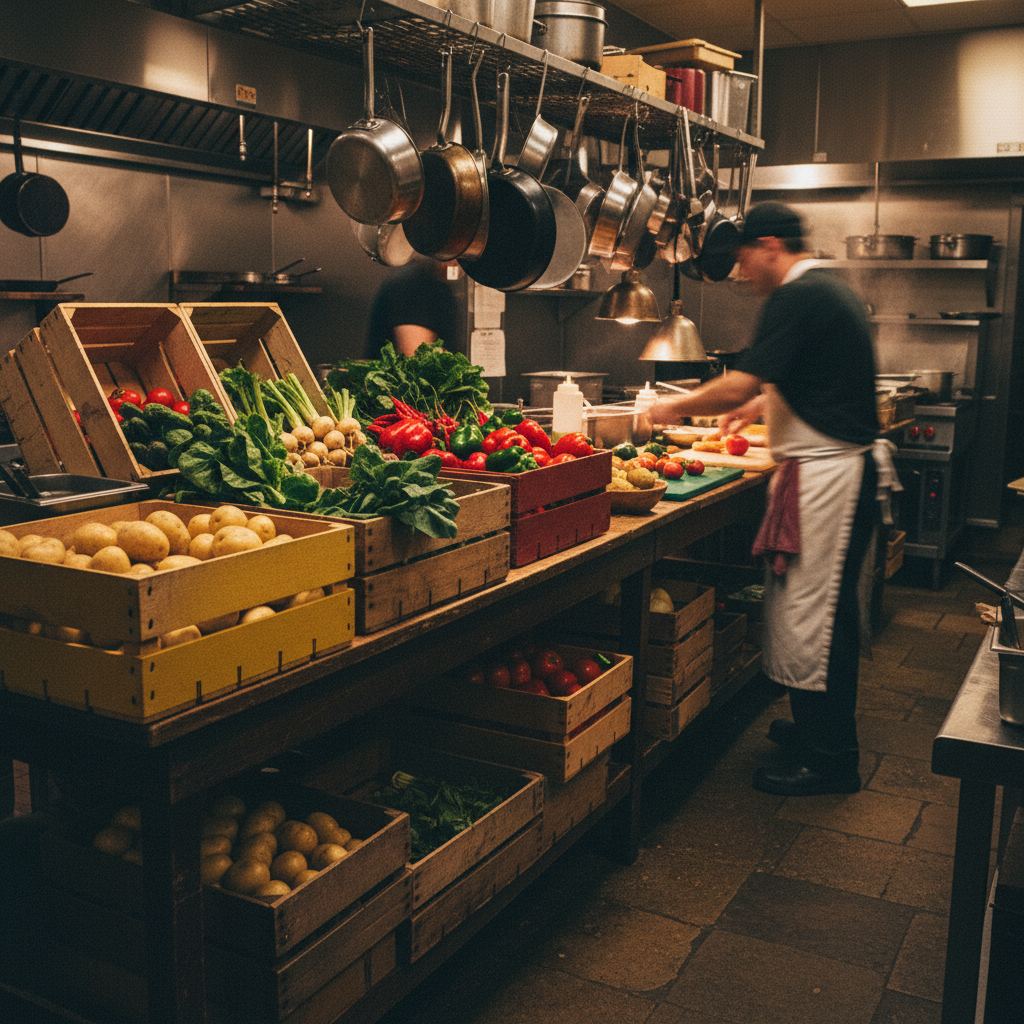
Little Rock food service. Illustration generated with AI. Not a photograph of a Foody Finance client or location.

What drives financing conversations in Little Rock

River Market District and SoMa restaurants use capital to staff up for convention and legislative session traffic that arrives in bursts rather than evenly across the year. Hillcrest and Heights operators lean more on financing for buildouts, since older bungalow-style commercial spaces need retrofitting most new leases don't account for.

Revenue and seasonality in Little Rock

Convention business tied to the Statehouse Convention Center and legislative sessions drives spikes in downtown restaurant traffic that don't repeat evenly through the year, while Hillcrest and Heights locations depend more on steady neighborhood dinner business. Spring tornado season can also disrupt outdoor events with little notice, so operators plan cash reserves around unpredictable weather cancellations.

What this does to your numbers

Legislative session and convention weeks bring a rush, but the calendar between them is much quieter, so the average has to be planned for.

Permitting in Little Rock, and what it costs to wait

The Arkansas Department of Health handles food service permitting statewide, while the Arkansas Alcoholic Beverage Control division issues liquor permits through its own separate application process. Restaurants opening in River Market or SoMa converting older buildings should expect ABC review to move independently of the health inspection, and a mismatch between the two can leave a finished space unable to serve its full menu for weeks.

What the wait actually costs

A slow state liquor permit means paying rent on a restaurant that can only serve half its menu.

What raises the cost of capital here

  • 01Legislative session and convention traffic create uneven demand spikes downtown
  • 02Arkansas ABC permit review runs on a separate track from health department inspection
  • 03Spring tornado risk can force last-minute event and patio cancellations

Which program usually fits here

Working capital covers the uneven convention and session schedule, while buildout financing fits renovating an older Hillcrest or Heights storefront.

Little Rock
Arkansas outline. Boundary data: US Census Bureau cartographic boundary files, public domain. Simplified for display.

Free review, no hard credit pull

Get funds now and review your options

Step 01 of 03 · Your operation

A specialist reviews every request and reaches out the same business day

Areas we serve

  • River Market District
  • Hillcrest
  • SoMa (South Main)
  • The Heights
  • Downtown

Financing terms on this page

Definitions for the terms used above.

working capital
Cash for the everyday gaps: payroll, inventory, rent, and repairs. It is repaid out of daily or weekly sales rather than from one big event.
covers
The number of guests served. Lenders pair it with check average to judge how reliable a month really is.
buildout capital
Money for the work that turns a space into a working kitchen: plumbing, electrical, hoods, walls, and permits. It pays for labor and materials you cannot resell, so it is priced differently than money for a fryer.
draw
Taking money out of an approved line or loan. Draws tied to construction milestones mean you only start paying interest on each piece as you use it.
equipment paper
A loan or lease tied to a specific machine. The machine itself is the security, so approval leans on the value of the hardware more than on your bank statements.
hard credit pull
A formal credit check that shows on your report and can move your score a few points. It happens only after you pick a specific lender, not to get information.
underwriting
The lender reading your numbers to decide how much risk you are. Bank statements, time in business, and existing debt carry the most weight.
term
How long you have to repay. A longer term lowers the monthly payment and raises what the money costs in total.

Little Rock financing questions

How does the Arkansas legislative session affect River Market restaurant revenue?

When the legislature is in session, downtown Little Rock sees a noticeable jump in lunch and dinner traffic from staff, lobbyists, and visitors, but that demand doesn't repeat during the months the legislature isn't meeting. River Market District restaurants often plan staffing and inventory financing around this uneven schedule rather than assuming steady year-round volume.

Why does opening a bar in SoMa take longer than the renovation timeline suggests?

Arkansas ABC liquor permits move through a state-level review that runs on its own schedule, separate from the Arkansas Department of Health's food service inspection. A SoMa buildout can finish construction and still wait weeks for the ABC approval to clear before alcohol sales can start, which is a gap operators typically plan financing around.

How does Arkansas's odd-year legislative session change revenue expectations for a downtown Little Rock restaurant?

Because the Arkansas Legislature only meets in regular session in odd-numbered years, downtown River Market restaurants near the Capitol see a stronger January through April in 2025 or 2027 than they do in 2026 or 2028, when no session is underway. Lenders reviewing two years of financials for a downtown Little Rock location need to check which year fell on the legislative calendar before drawing conclusions about seasonal strength, since comparing an odd session year to a flatter even year without that context can overstate or understate the location's baseline performance.

How do Little Rock food businesses start a financing conversation?

Start with a free review by a specialist. You share the basics of the business, the use of funds, and recent bank statements, and you see every program that fits before any credit application exists. Short term options commonly fund in 1 to 3 business days once you choose an offer.

Do you serve areas outside Little Rock in Arkansas?

Yes. Every program is available statewide in Arkansas and nationwide.

What is working capital, and when does it fit a Little Rock operator?

Cash for the everyday gaps, repaid out of sales on a set schedule instead of at the end of a project. Use it for payroll, inventory, a slow stretch, or a job you have to fund before the client pays you. Typical size is 10,000 to 500,000, funding runs 1 to 3 business days once you choose an offer, and you repay it as fixed daily, weekly, or monthly payment. You will be asked for: application, 3 to 6 months of bank statements.

What is buildout and expansion, and when does it fit a Little Rock operator?

Construction money for the work that turns a space into a working kitchen, usually released in stages as the job progresses. Use it for a second location, a remodel, a patio, or a kitchen conversion, and size it to cover the permit wait, not just the build. Typical size is 50,000 to 2,000,000, funding runs 1 to 4 weeks once you choose an offer, and you repay it as fixed payment, often with a draw schedule. You will be asked for: application, contractor bids, lease, financials.

What is equipment financing, and when does it fit a Little Rock operator?

You borrow against a specific machine, and the machine is what backs the loan. Use it when a fryer, a walk-in, an oven, or a vehicle has to be replaced and you would rather keep the cash in the account. Typical size is 5,000 to 500,000, funding runs 1 to 5 business days once you choose an offer, and you repay it as fixed monthly payment. You will be asked for: application, equipment quote, bank statements.

Why does the Little Rock calendar change what I should borrow?

Legislative session and convention weeks bring a rush, but the calendar between them is much quieter, so the average has to be planned for.

What does waiting actually cost me in Little Rock?

A slow state liquor permit means paying rent on a restaurant that can only serve half its menu.

Which program do most Little Rock operators end up using?

Working capital covers the uneven convention and session schedule, while buildout financing fits renovating an older Hillcrest or Heights storefront. That is a starting point, not a decision. The specialist review looks at your deposits, your time in business, and what the money is for before anything is recommended.

Does asking about financing in Little Rock affect my credit?

No. Getting information is a conversation, not an application. There is no credit application and no hard credit pull until you have picked a specific lender and want to move forward.

Start the conversation

Talk to a specialist before you fill out an application.

Start with a free, no-obligation review. We will send the right application only after we know what you actually qualify for.

Start a free review

Prefer to call

(833) 505-1900