Tulsa's restaurant growth has followed the Gathering Place park and downtown Arts District revival, but older buildings in those areas often cost more to convert than a new lease suggests.
How do Tulsa food businesses get funded?
Tulsa operators start with a free review with a specialist, share recent business bank statements, and are matched to the programs that fit the use of funds. Working capital funds in 1 to 3 business days after you choose an offer, equipment in 1 to 5, and buildout capital in 1 to 4 weeks.
Estimates, not offers: Amounts, terms, and funding times are estimates based on programs commonly available in food service. Actual terms vary by program, lender underwriting, time in business, revenue, and credit profile. Nothing here is an offer of credit or a guarantee of approval. See source and method.
How Tulsa eats, and what that does to cash
01
Where Tulsa eats
The Blue Dome District downtown carries the late night bar and small plates crowd, with brewery kitchens and patio bars drawing a mixed age crowd on weekends at moderate prices. Cherry Street, along 15th Street, holds an older, higher spend dinner crowd at chef driven restaurants and wine bars, plus a Saturday farmers market that feeds foot traffic to nearby cafes. Brookside, stretching down Peoria Avenue, mixes family diners, ice cream stops, and college age crowds from nearby University of Tulsa at lower average tickets. The Brady Arts District holds Kitchen 66, a food hall and business incubator kitchen, alongside the Woody Guthrie and Bob Dylan centers, pulling in a tourist and arts crowd on gallery walk nights. Harvard Avenue between 11th and 21st carries Tulsa's Vietnamese and Asian grocery corridor, with pho and banh mi shops running lean lunch counters. Each district draws a different budget and a different hour, and that split means a single-location operator in one district cannot assume the same ticket average or the same peak hour applies two miles away, which forces separate staffing plans and separate cash flow timing by address.
02
What Tulsa orders
Tulsa's signature plate is the fried onion burger, a thin patty griddled with shaved onions pressed into the meat, served at counter stools rather than table service, usually under 10 dollars. Coney dogs, chili topped and mustard heavy, run through small stand up counters across the east side, a format built on speed rather than seating. Chicken fried steak with cream gravy remains a full sit down plate at diners and steakhouses, priced as a dinner entree rather than a snack. Barbecue, led by smoked brisket and burnt ends at operators like Burn Co, runs a counter service, butcher paper model with lines that peak at lunch and again for early dinner before meat runs out. Late night eating concentrates in Blue Dome and Cherry Street, where kitchens stay open past midnight on weekends to catch bar traffic. Food halls, following Kitchen 66's model, let multiple small kitchens share overhead under one roof. Because several of these formats sell out their day's cooked product rather than holding inventory overnight, a slow lunch does not carry forward and a strong dinner cannot be rescued the next morning, which creates daily revenue swings a fixed weekly budget cannot smooth.
03
Tulsa's calendar
Tulsa's economy still centers on energy company headquarters, including Williams Companies and ONEOK downtown, whose weekday lunch crowds anchor nearby counter service restaurants Monday through Friday and disappear on holidays and slow weeks in the industry. The University of Tulsa campus near Cherry Street adds a September through May student population that thins sharply over summer break and winter break, cutting nearby lunch volume during those weeks. The BOK Center downtown books concerts and Tulsa Oilers hockey from October through March, driving pre event dinner reservations on show nights and leaving those same restaurants quiet on non event weeknights. The Tulsa State Fair at Expo Square runs 10 days in late September and early October and pulls fairground food vendors into their single busiest stretch of the year. Route 66 tourism brings steady but modest weekday traffic to diners along the historic route, heavier in summer months when road trip travel peaks. A restaurant near Expo Square built around fair week traffic can see a single 10 day stretch outperform an entire slow month elsewhere on the calendar, concentrating cash collection into a narrow window.
04
Growth and cost in Tulsa
New restaurant openings in Tulsa concentrate along the 71st Street corridor near the mall and big box retail, where larger footprints and parking lots suit chain and fast casual formats at lower per square foot rent than downtown. Cherry Street and Brookside carry higher buildout costs because older commercial buildings need electrical and plumbing upgrades before a kitchen can pass inspection, adding weeks to opening timelines. Downtown Blue Dome and Brady district spaces converted from historic warehouses often require facade and code work tied to the buildings' historic status, which slows permitting compared to suburban shells. Labor draws from a market where energy sector wages compete for the same workforce as hospitality, pushing kitchen staff pay above what a strictly retail town would set. Utility costs run lower than coastal metros, but summer cooling loads for kitchens with open hoods and patio misting systems raise electric bills from June through August. A downtown historic building buildout that stalls on code compliance for even a few extra weeks pushes back the first revenue date while lease payments and equipment loan payments continue regardless, front loading cash outlay before any sales arrive.
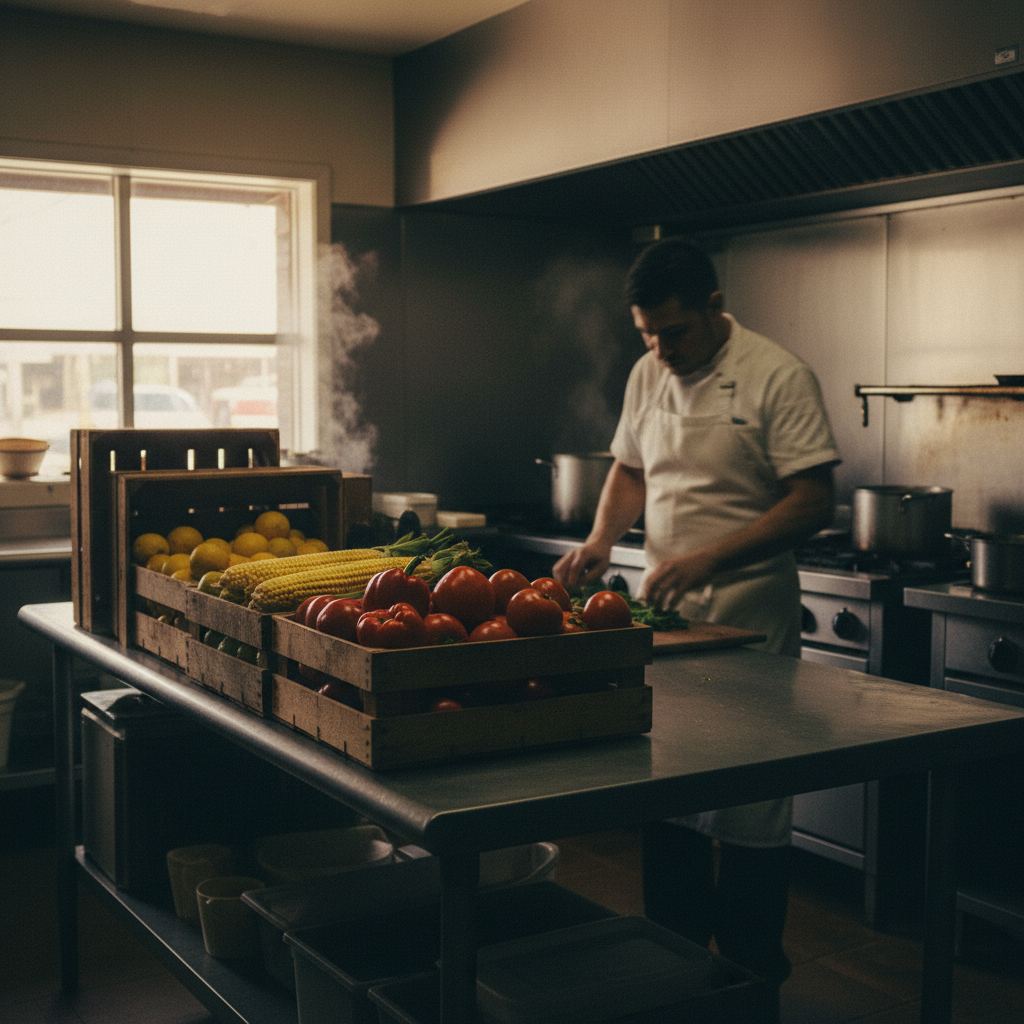
Tulsa food service. Illustration generated with AI. Not a photograph of a Foody Finance client or location.
What drives financing conversations in Tulsa
Capital here frequently covers structural and mechanical upgrades in historic Blue Dome and Arts District buildings, plus staffing tied to Gathering Place's tourist traffic and downtown events. Restaurants along Cherry Street and Brookside use working capital to bridge slower winter months against a busier spring and fall.
Revenue and seasonality in Tulsa
Spring and fall bring the steadiest downtown traffic, tied to Gathering Place visits and Arts District events, while summer heat and winter cold both soften outdoor dining. Cherry Street and Brookside see consistent local patterns, and card payments dominate with catering on standard invoice terms.
What this does to your numbers
Spring and fall are the busiest times downtown, tied to park visits and events, while summer and winter bring things down a notch.
Permitting in Tulsa, and what it costs to wait
The Tulsa Health Department issues food service permits and conducts plan review for new restaurants, while liquor licensing runs through the Oklahoma ABLE Commission on a state process separate from local health approval. A Blue Dome District buildout in a historic building should plan for both fire code compliance and the ABLE Commission review to add time beyond a standard kitchen inspection.
What the wait actually costs
An older building can hide costly repairs that delay opening well past the planned date.
What raises the cost of capital here
01Historic Blue Dome and Arts District buildings often require fire code and structural upgrades not visible in a standard lease walkthrough.
02Gathering Place park draws visitor traffic that supports nearby restaurants but concentrates spending around park hours and events.
03Oklahoma's ABLE Commission liquor process runs on a separate state timeline from local health permitting.
Which program usually fits here
Buildout financing fits for renovating a historic downtown space, and working capital fits for covering payroll through the slower summer and winter months.
Oklahoma outline. Boundary data: US Census Bureau cartographic boundary files, public domain. Simplified for display.
The city or county reading your kitchen drawings before you are allowed to build. Nothing gets installed until it clears, and rent runs the whole time.
draw
Taking money out of an approved line or loan. Draws tied to construction milestones mean you only start paying interest on each piece as you use it.
buildout capital
Money for the work that turns a space into a working kitchen: plumbing, electrical, hoods, walls, and permits. It pays for labor and materials you cannot resell, so it is priced differently than money for a fryer.
working capital
Cash for the everyday gaps: payroll, inventory, rent, and repairs. It is repaid out of daily or weekly sales rather than from one big event.
equipment paper
A loan or lease tied to a specific machine. The machine itself is the security, so approval leans on the value of the hardware more than on your bank statements.
hard credit pull
A formal credit check that shows on your report and can move your score a few points. It happens only after you pick a specific lender, not to get information.
covers
The number of guests served. Lenders pair it with check average to judge how reliable a month really is.
underwriting
The lender reading your numbers to decide how much risk you are. Bank statements, time in business, and existing debt carry the most weight.
term
How long you have to repay. A longer term lowers the monthly payment and raises what the money costs in total.
Why do historic building conversions in Tulsa need extra financing planning?
Many Blue Dome District and Arts District buildings date back decades and were not built for commercial kitchen loads, so a buildout often uncovers electrical, plumbing, or fire suppression work beyond the initial renovation plan. Buildout financing that leaves room for those discoveries tends to avoid the stalled project problem that catches owners who budget only for the visible scope.
Has Gathering Place changed restaurant demand patterns in Tulsa?
Gathering Place has drawn steady visitor traffic to the riverfront and nearby neighborhoods since opening, giving restaurants in that corridor a customer base tied to park hours, weather, and event programming rather than a traditional lunch and dinner rhythm alone. Owners positioning near that traffic often plan staffing and inventory financing around the park's own seasonal and event calendar.
Why do Tulsa restaurant sales look so different between downtown and the 71st Street corridor?
Downtown Tulsa runs on energy company lunch traffic and evening event crowds tied to the BOK Center and Blue Dome bars, so its restaurants see sharp weekday lunch peaks and weekend night peaks with quiet stretches between. The 71st Street corridor runs on steady car traffic tied to retail and mall visits, spreading sales more evenly across the week but with lower per visit spend. A lender reading bank statements from a downtown address should expect spikier daily deposits than a suburban corridor address with the same monthly total, and treat a single quiet week downtown as normal rather than a warning sign.
How do Tulsa food businesses start a financing conversation?
Start with a free review by a specialist. You share the basics of the business, the use of funds, and recent bank statements, and you see every program that fits before any credit application exists. Short term options commonly fund in 1 to 3 business days once you choose an offer.
Do you serve areas outside Tulsa in Oklahoma?
Yes. Every program is available statewide in Oklahoma and nationwide.
What is buildout and expansion, and when does it fit a Tulsa operator?
Construction money for the work that turns a space into a working kitchen, usually released in stages as the job progresses. Use it for a second location, a remodel, a patio, or a kitchen conversion, and size it to cover the permit wait, not just the build. Typical size is 50,000 to 2,000,000, funding runs 1 to 4 weeks once you choose an offer, and you repay it as fixed payment, often with a draw schedule. You will be asked for: application, contractor bids, lease, financials.
What is working capital, and when does it fit a Tulsa operator?
Cash for the everyday gaps, repaid out of sales on a set schedule instead of at the end of a project. Use it for payroll, inventory, a slow stretch, or a job you have to fund before the client pays you. Typical size is 10,000 to 500,000, funding runs 1 to 3 business days once you choose an offer, and you repay it as fixed daily, weekly, or monthly payment. You will be asked for: application, 3 to 6 months of bank statements.
What is equipment financing, and when does it fit a Tulsa operator?
You borrow against a specific machine, and the machine is what backs the loan. Use it when a fryer, a walk-in, an oven, or a vehicle has to be replaced and you would rather keep the cash in the account. Typical size is 5,000 to 500,000, funding runs 1 to 5 business days once you choose an offer, and you repay it as fixed monthly payment. You will be asked for: application, equipment quote, bank statements.
Why does the Tulsa calendar change what I should borrow?
Spring and fall are the busiest times downtown, tied to park visits and events, while summer and winter bring things down a notch.
What does waiting actually cost me in Tulsa?
An older building can hide costly repairs that delay opening well past the planned date.
Which program do most Tulsa operators end up using?
Buildout financing fits for renovating a historic downtown space, and working capital fits for covering payroll through the slower summer and winter months. That is a starting point, not a decision. The specialist review looks at your deposits, your time in business, and what the money is for before anything is recommended.
Does asking about financing in Tulsa affect my credit?
No. Getting information is a conversation, not an application. There is no credit application and no hard credit pull until you have picked a specific lender and want to move forward.
Start the conversation
Talk to a specialist before you fill out an application.
Start with a free, no-obligation review. We will send the right application only after we know what you actually qualify for.