TX metro

Restaurant financing in Dallas Fort Worth.

Dallas Fort Worth adds restaurant seats faster than most metros in the country, and multi unit operators here tend to be planning unit 3 before unit 2 is stabilized.

How do Dallas Fort Worth food businesses get funded?

Dallas Fort Worth operators start with a free review with a specialist, share recent business bank statements, and are matched to the programs that fit the use of funds. Working capital funds in 1 to 3 business days after you choose an offer, equipment in 1 to 5, and buildout capital in 1 to 4 weeks.

Estimates, not offers: Amounts, terms, and funding times are estimates based on programs commonly available in food service. Actual terms vary by program, lender underwriting, time in business, revenue, and credit profile. Nothing here is an offer of credit or a guarantee of approval. See source and method.

How Dallas Fort Worth eats, and what that does to cash

01

Where Dallas eats

Deep Ellum carries the late night bar and live music crowd with cheap tacos and wing spots feeding twenty somethings after midnight. Uptown and Knox Henderson run higher checks, with steakhouses and cocktail lounges pulling professionals from the nearby office towers on McKinney Avenue. Bishop Arts in Oak Cliff mixes Tex Mex counters with brunch spots drawing a younger, mixed income crowd on weekends. Lower Greenville holds a strip of patio bars and mid price restaurants that fill on Texas Rangers and Cowboys game days. Trinity Groves near the Margaret Hunt Hill Bridge was built as a restaurant incubator district with shared kitchen space for new concepts. Preston Hollow and North Dallas carry white tablecloth dining tied to old money clientele, while Farmers Branch and Addison hold chain heavy corridors serving suburban office parks. Each district draws a different wallet, from five dollar taco trucks near Fair Park to ninety dollar tasting menus near the Dallas Arts District. Rent per square foot in Uptown runs well above what a Bishop Arts storefront commands, which changes how fast a new concept must hit break even.
02

What Dallas orders

Tex Mex and breakfast tacos anchor daily eating, with queso as a near mandatory starter across price points. Barbecue trailers and brick and mortar smokehouses compete on brisket, with weekend lines forming before noon and meat selling out by two. Chicken fried steak and fried catfish still hold on suburban diner menus outside the Interstate 635 loop. Food halls like Legacy Hall in Plano and The Exchange downtown pack multiple counter service vendors under one roof, letting diners order from four kitchens in a single visit. Patio dining runs nearly year round given the mild winters, so restaurants budget for outdoor seating covers and misting systems for summer. Late night queso and taco counters serve the Deep Ellum bar crowd past 2am on weekends. Drive through remains dominant for fast casual chains headquartered locally. A brisket plate averages in the mid teens, a sit down Tex Mex dinner runs high teens to twenties, and the tasting menu tier in Uptown climbs past seventy five dollars. Patio heaters and misters for the long, hot season add a recurring summer utility cost most owners underbudget.

03

The Dallas calendar

AT&T Stadium in Arlington and the American Airlines Center downtown drive Cowboys, Mavericks, and Stars game day traffic that spikes bar and restaurant revenue on scattered weeknights and weekends. The State Fair of Texas runs from late September through October at Fair Park, pulling over two million visitors and pressuring staffing at nearby restaurants for a full month. Downtown's convention business, anchored by the Kay Bailey Hutchison Convention Center, brings steady weekday lunch and dinner traffic tied to trade show schedules. Legacy West and the Toyota headquarters campus in Plano support a weekday lunch economy that goes quiet on weekends. Southern Methodist University and the University of Texas at Dallas create pockets of student dining tied to the fall and spring semesters, with a slow stretch in July and August. Summer heat above 100 degrees regularly cuts outdoor dining traffic in July and August, pushing revenue toward air conditioned indoor rooms. January after the holidays and the last two weeks of August before school starts run consistently slow for full service restaurants. Owners near Fair Park plan staffing and inventory around a single month that can carry a disproportionate share of annual revenue.

04

Growth and cost in Dallas

New restaurant growth concentrates in Plano, Frisco, and McKinney, where suburban rooftops and corporate relocations from California have pulled national and local chains north along the Dallas North Tollway. Deep Ellum and Bishop Arts still draw independent openings because buildout costs run lower than Uptown high rises. Labor costs have risen with Texas's growing population but remain below coastal markets, though line cook and kitchen staff turnover stays high given the competitive suburban job market. Buildout timelines stretch when a space requires new grease trap or HVAC capacity to handle a full kitchen hood in an older Deep Ellum brick building. Utility costs spike in July and August as walk in coolers and HVAC systems work harder against extended triple digit heat. Landlords in Legacy West and other new developments often require longer buildout periods before rent commences, since these are ground up shells rather than second generation restaurant spaces. A Bishop Arts second generation space can open in under 90 days, while a Legacy West shell buildout regularly stretches past six months, delaying the first month of actual revenue against fixed loan payments.

Food service operation in Dallas Fort Worth
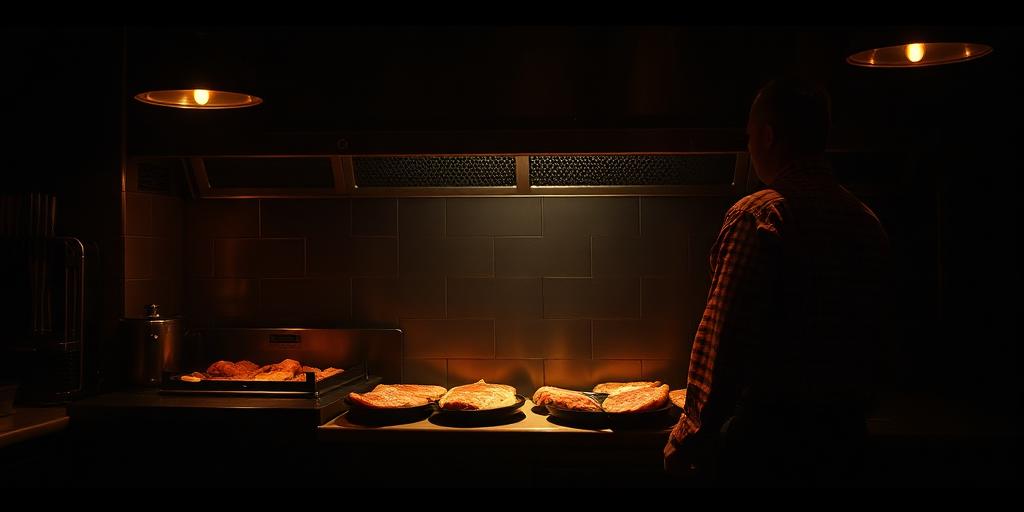
Dallas Fort Worth food service. Illustration generated with AI. Not a photograph of a Foody Finance client or location.

What drives financing conversations in Dallas Fort Worth

Expansion and equipment packages are the common combination, often structured together so construction and hardware carry separate terms.

Revenue and seasonality in Dallas Fort Worth

Suburban growth adds seats faster than most metros in the country, corporate catering supports weekday volume, and patio seasons on both ends of summer extend the selling calendar.

What this does to your numbers

Corporate catering and suburban growth keep weekdays steady, and event weekends add a second, sharper peak.

Permitting in Dallas Fort Worth, and what it costs to wait

Health permits and TABC approval move on different clocks across a metro that spans dozens of municipalities, so the same concept can face two very different timelines in Dallas and in a suburb. Multi unit operators size expansion capital per site because one slow jurisdiction can carry rent for months.

What the wait actually costs

Alcohol licensing and county health permits run on separate clocks, so a finished kitchen can wait weeks for the paperwork that lets it open.

What raises the cost of capital here

  • 01Suburban expansion across Collin and Denton counties drives second and third location requests
  • 02Each municipality in the Metroplex runs its own health and building review, so timelines vary inside one metro
  • 03Corporate relocations support weekday catering that most Sun Belt markets do not have

Which program usually fits here

Growth here supports second and third locations, so lenders check whether the first unit carries itself while the next one is still in permitting.

Dallas Fort Worth
Texas outline. Boundary data: US Census Bureau cartographic boundary files, public domain. Simplified for display.

Free review, no hard credit pull

Get funds now and review your options

Step 01 of 03 · Your operation

A specialist reviews every request and reaches out the same business day

Areas we serve

  • Deep Ellum
  • Uptown
  • Bishop Arts
  • Plano
  • Fort Worth

Financing terms on this page

Definitions for the terms used above.

buildout capital
Money for the work that turns a space into a working kitchen: plumbing, electrical, hoods, walls, and permits. It pays for labor and materials you cannot resell, so it is priced differently than money for a fryer.
draw
Taking money out of an approved line or loan. Draws tied to construction milestones mean you only start paying interest on each piece as you use it.
equipment paper
A loan or lease tied to a specific machine. The machine itself is the security, so approval leans on the value of the hardware more than on your bank statements.
SBA loan
A bank loan partly guaranteed by the Small Business Administration. Lowest cost of the options, longest paperwork, and the slowest to fund.
hard credit pull
A formal credit check that shows on your report and can move your score a few points. It happens only after you pick a specific lender, not to get information.
working capital
Cash for the everyday gaps: payroll, inventory, rent, and repairs. It is repaid out of daily or weekly sales rather than from one big event.
covers
The number of guests served. Lenders pair it with check average to judge how reliable a month really is.
underwriting
The lender reading your numbers to decide how much risk you are. Bank statements, time in business, and existing debt carry the most weight.
term
How long you have to repay. A longer term lowers the monthly payment and raises what the money costs in total.

Dallas Fort Worth financing questions

How is a second Dallas Fort Worth location financed differently than a first?

The existing location's deposit history does the work. With 12 months of operating history a specialist can present expansion capital sized against proven revenue rather than projections, which is normally cheaper than startup paper.

Do different Metroplex cities change the buildout timeline?

Yes, and it changes how much capital to request. Plano, Fort Worth, and Dallas each run their own review, so the same buildout can carry very different carrying costs depending on the address.

Why do so many Dallas restaurants open in the suburbs instead of downtown?

Corporate campuses for Toyota, JPMorgan, and other relocated headquarters sit in Plano, Frisco, and McKinney, not downtown Dallas, and those employees eat lunch and dinner near their offices and new subdivisions rather than driving into the central business district after work. Downtown Dallas empties out on nights and weekends outside of convention and event traffic, which makes a full service restaurant there dependent on a narrower set of hours. Lenders reviewing a Dallas metro loan request typically weigh suburban rooftop growth and daytime population near a site more heavily than downtown foot traffic counts alone.

How do Dallas Fort Worth food businesses start a financing conversation?

Start with a free review by a specialist. You share the basics of the business, the use of funds, and recent bank statements, and you see every program that fits before any credit application exists. Short term options commonly fund in 1 to 3 business days once you choose an offer.

Do you serve areas outside Dallas Fort Worth in Texas?

Yes. Every program is available statewide in Texas and nationwide.

What is buildout and expansion, and when does it fit a Dallas Fort Worth operator?

Construction money for the work that turns a space into a working kitchen, usually released in stages as the job progresses. Use it for a second location, a remodel, a patio, or a kitchen conversion, and size it to cover the permit wait, not just the build. Typical size is 50,000 to 2,000,000, funding runs 1 to 4 weeks once you choose an offer, and you repay it as fixed payment, often with a draw schedule. You will be asked for: application, contractor bids, lease, financials.

What is equipment financing, and when does it fit a Dallas Fort Worth operator?

You borrow against a specific machine, and the machine is what backs the loan. Use it when a fryer, a walk-in, an oven, or a vehicle has to be replaced and you would rather keep the cash in the account. Typical size is 5,000 to 500,000, funding runs 1 to 5 business days once you choose an offer, and you repay it as fixed monthly payment. You will be asked for: application, equipment quote, bank statements.

What is sba loans, and when does it fit a Dallas Fort Worth operator?

A bank loan partly guaranteed by the Small Business Administration, which is why the payment is the lowest available. Use it when you can plan months ahead. It is the cheapest money on this page and the slowest to arrive. Typical size is 50,000 to 5,000,000, funding runs 3 to 12 weeks once you choose an offer, and you repay it as amortized interest, lowest payment of any program. You will be asked for: tax returns, interim financials, debt schedule, plan.

Why does the Dallas Fort Worth calendar change what I should borrow?

Corporate catering and suburban growth keep weekdays steady, and event weekends add a second, sharper peak.

What does waiting actually cost me in Dallas Fort Worth?

Alcohol licensing and county health permits run on separate clocks, so a finished kitchen can wait weeks for the paperwork that lets it open.

Which program do most Dallas Fort Worth operators end up using?

Growth here supports second and third locations, so lenders check whether the first unit carries itself while the next one is still in permitting. That is a starting point, not a decision. The specialist review looks at your deposits, your time in business, and what the money is for before anything is recommended.

Does asking about financing in Dallas Fort Worth affect my credit?

No. Getting information is a conversation, not an application. There is no credit application and no hard credit pull until you have picked a specific lender and want to move forward.

Start the conversation

Talk to a specialist before you fill out an application.

Start with a free, no-obligation review. We will send the right application only after we know what you actually qualify for.

Start a free review

Prefer to call

(833) 505-1900