WI metro

Restaurant financing in Milwaukee.

Milwaukee's short outdoor season packs most of the city's beer garden and patio revenue into a handful of warm months, leaving winter to run on indoor traffic alone.

How do Milwaukee food businesses get funded?

Milwaukee operators start with a free review with a specialist, share recent business bank statements, and are matched to the programs that fit the use of funds. Working capital funds in 1 to 3 business days after you choose an offer, equipment in 1 to 5, and buildout capital in 1 to 4 weeks.

Estimates, not offers: Amounts, terms, and funding times are estimates based on programs commonly available in food service. Actual terms vary by program, lender underwriting, time in business, revenue, and credit profile. Nothing here is an offer of credit or a guarantee of approval. See source and method.

How Milwaukee eats, and what that does to cash

01

Where Milwaukee eats

The Historic Third Ward, south of Downtown, holds the city's chef-driven dining and gallery-district feel, with tasting menus and cocktail bars running 25 to 45 dollars a head near the Milwaukee Public Market. Bay View, along Kinnickinnic Avenue, mixes breweries, coffee shops, and casual kitchens for a younger local crowd at 12 to 20 dollars. Brady Street carries an older Italian and Polish dining identity alongside newer bars, drawing a mixed-age neighborhood crowd. Walker's Point has grown a brewery and distillery cluster in former industrial buildings, pairing tasting rooms with food trucks rather than full kitchens. Downtown, anchored by Fiserv Forum, depends on Milwaukee Bucks game nights and convention traffic through the Wisconsin Center for bar and restaurant volume. The East Side, near the University of Wisconsin-Milwaukee campus, runs cheaper pizza and bar food tied to student schedules. A Third Ward tasting menu built around weekend date-night reservations carries a different cash pattern than a Downtown sports bar built around Bucks playoff runs, and a first-round exit removes weeks of projected late-spring revenue for the latter.
02

What Milwaukee serves

The Friday fish fry, typically beer-battered cod or perch served with rye bread and coleslaw, is a weekly institution at supper clubs, taverns, and church halls, running 12 to 18 dollars a plate and driving the single busiest dinner service of the week at many kitchens. Bratwurst, often simmered in beer before grilling, anchors both tailgate stands and sit-down German restaurants. Frozen custard, thicker than ice cream, is sold from walk-up stands across the city as a year-round dessert format distinct from soft-serve chains elsewhere. Supper clubs, a Wisconsin-specific format pairing relish trays, brandy old fashioneds, and steak or fish dinners, persist mainly in outer neighborhoods and suburbs rather than Downtown. Cream City brick buildings in the Third Ward and Walker's Point house brewery taprooms that pair beer flights with limited food menus. Bay View's Kinnickinnic strip supports a growing brunch trade on weekends. A supper club's Friday fish fry driving a disproportionate share of weekly covers means a slow Friday, whether from weather or a competing event, creates a revenue gap that the rest of the week's slower dinner service cannot offset.

03

The Milwaukee calendar

Northwestern Mutual, Fiserv, and Froedtert Hospital anchor steady weekday lunch demand Downtown and near the Milwaukee Regional Medical Center campus in Wauwatosa. Milwaukee Bucks games at Fiserv Forum drive Downtown bar traffic from October through spring, with playoff runs extending that window unpredictably. Summer Festivals, including Summerfest at Henry Maier Festival Park in late June and early July, along with the Wisconsin State Fair in West Allis in August, pull enormous single-event crowds that briefly overwhelm nearby restaurants while pulling discretionary spending away from neighborhood kitchens across the rest of the city. Lakefront festival season generally runs June through September, driving Third Ward and Bay View patio traffic. Winter, particularly January and February, brings a sharp drop in patio-dependent revenue and forces supper clubs and taverns to rely on the Friday fish fry and indoor dining to carry the season. Marquette University's academic calendar adds student traffic near campus that empties out each summer.

04

Growth and cost pattern

New restaurant activity concentrates in the Historic Third Ward, where converted cream city brick warehouses offer character space but require significant HVAC and grease-trap retrofitting, and in Bay View, where smaller storefronts along Kinnickinnic Avenue carry lower rent but limited square footage for full kitchens. Walker's Point has drawn brewery and distillery buildouts that favor tank space over dining room square footage, keeping food service secondary. Downtown high-rise ground floors near Fiserv Forum command higher rent tied directly to event-night traffic. Labor competes with Northwestern Mutual and Fiserv's large office workforce, which offers steadier hours than restaurant shift work and pulls from the same young workforce pool. Wisconsin winters add heating costs and can delay exterior construction on patio-dependent buildouts from November through March. A Third Ward buildout that hits a winter permitting delay can push a planned spring opening into summer festival season, which helps foot traffic but compresses the runway an owner has to fix early operational problems before the year's heaviest revenue weeks arrive.

Food service operation in Milwaukee
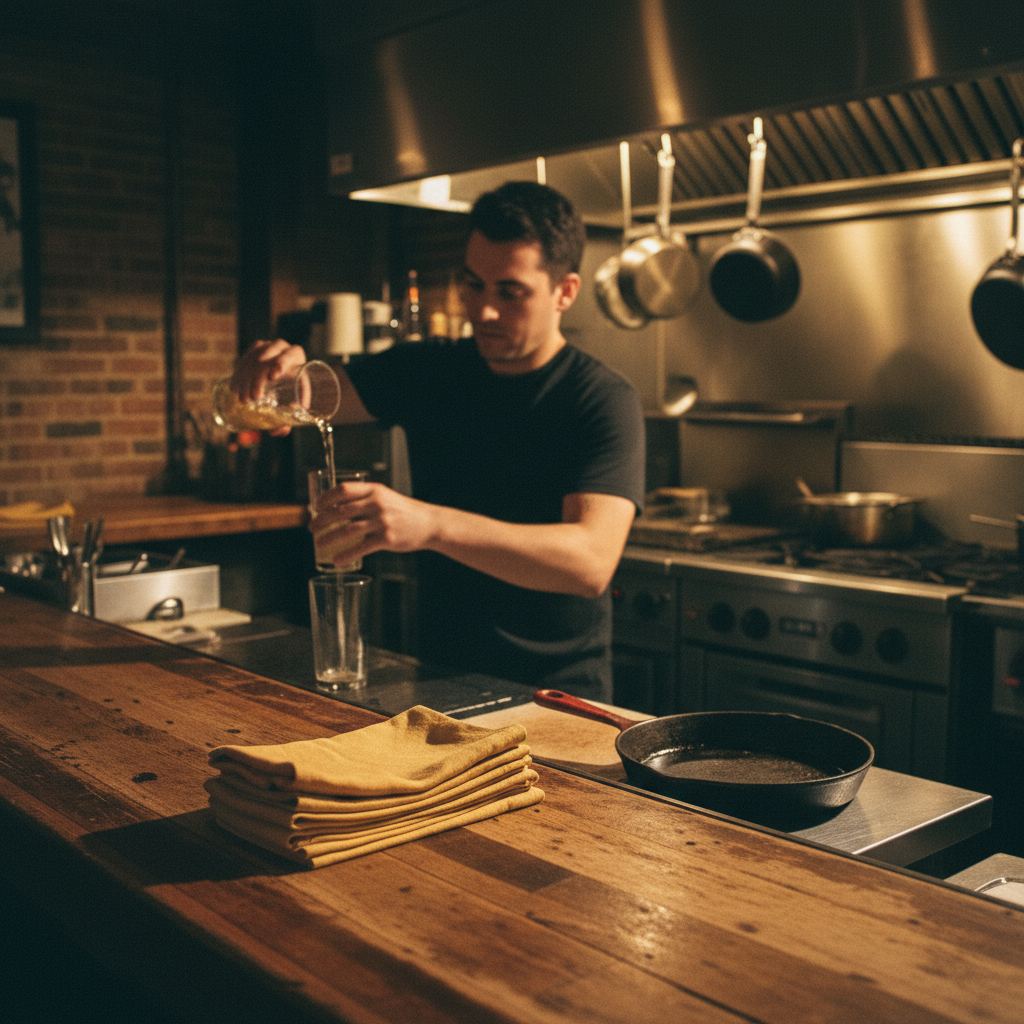
Milwaukee food service. Illustration generated with AI. Not a photograph of a Foody Finance client or location.

What drives financing conversations in Milwaukee

Financing here often funds indoor dining capacity and bar equipment meant to carry revenue through a long, cold off-season, alongside brewery and tap system investments tied to the city's beer culture. Third Ward and Bay View buildouts also account for older building stock that needs mechanical upgrades before a commercial kitchen passes inspection.

Revenue and seasonality in Milwaukee

Summer beer gardens and patio season in Bay View and the Third Ward drive a concentrated share of annual revenue between May and September, while winter months push business indoors and reduce overall foot traffic. Bar and tap-focused revenue tends to hold steadier through winter than food-only concepts, so revenue mix matters as much as location for how deep the seasonal dip runs.

What this does to your numbers

Warm months bring in most of your patio revenue, and winter can be a lot quieter for a long stretch.

Permitting in Milwaukee, and what it costs to wait

The City of Milwaukee Health Department handles food establishment licensing while the Department of Neighborhood Services manages building permits and inspections separately, and older commercial buildings in Walker's Point and Riverwest often need mechanical system upgrades identified during that review. Wisconsin's alcohol licensing runs through the local Common Council on its own approval schedule, which matters given how central bar and tap programs are to most concepts here.

What the wait actually costs

The city council has to approve your liquor license separately, and that doesn't always match your construction timeline.

What raises the cost of capital here

  • 01Beer garden and patio season concentrates a large share of annual revenue into roughly five warm months.
  • 02Older commercial buildings in Walker's Point and Riverwest often need mechanical upgrades before passing inspection.
  • 03Local Common Council alcohol licensing approval runs separately from health and building permits.

Which program usually fits here

Working capital helps carry the business through the cold months, while equipment financing supports indoor capacity built to last.

Milwaukee
Wisconsin outline. Boundary data: US Census Bureau cartographic boundary files, public domain. Simplified for display.

Free review, no hard credit pull

Get funds now and review your options

Step 01 of 03 · Your operation

A specialist reviews every request and reaches out the same business day

Areas we serve

  • Third Ward
  • Bay View
  • Walker's Point
  • Riverwest
  • East Side

Financing terms on this page

Definitions for the terms used above.

working capital
Cash for the everyday gaps: payroll, inventory, rent, and repairs. It is repaid out of daily or weekly sales rather than from one big event.
equipment paper
A loan or lease tied to a specific machine. The machine itself is the security, so approval leans on the value of the hardware more than on your bank statements.
buildout capital
Money for the work that turns a space into a working kitchen: plumbing, electrical, hoods, walls, and permits. It pays for labor and materials you cannot resell, so it is priced differently than money for a fryer.
draw
Taking money out of an approved line or loan. Draws tied to construction milestones mean you only start paying interest on each piece as you use it.
hard credit pull
A formal credit check that shows on your report and can move your score a few points. It happens only after you pick a specific lender, not to get information.
covers
The number of guests served. Lenders pair it with check average to judge how reliable a month really is.
underwriting
The lender reading your numbers to decide how much risk you are. Bank statements, time in business, and existing debt carry the most weight.
term
How long you have to repay. A longer term lowers the monthly payment and raises what the money costs in total.

Milwaukee financing questions

How much does Milwaukee's short summer matter for restaurant financing?

Beer gardens and patio-focused venues in Bay View and the Third Ward earn a large share of their annual revenue between May and September, and winter months bring a real drop in outdoor seating capacity and foot traffic. A loan payment sized around peak summer months can strain cash flow during the long stretch of colder weather that follows.

Why does Milwaukee's alcohol licensing process take extra planning?

Alcohol licenses in Milwaukee go through local Common Council approval on a schedule separate from the health department's food establishment license and the city's building permit review. Given how central tap systems and bar programs are to many Milwaukee concepts, that approval timing needs to be built into the opening plan rather than assumed to run alongside construction.

Why does the Friday fish fry matter so much to a Milwaukee restaurant's weekly cash flow?

Many Milwaukee supper clubs and taverns generate a disproportionate share of weekly revenue from Friday fish fry service alone, a pattern rooted in the city's Catholic parish fish fry tradition rather than typical restaurant seasonality. A lender reviewing weekly deposit patterns for a Milwaukee applicant may see a pronounced Friday spike that would look unusual in most other markets but is standard here. Understanding that this single day carries outsized weight helps explain why a bad-weather Friday or a competing event can visibly dent a week's total revenue in a way one day rarely would elsewhere.

How do Milwaukee food businesses start a financing conversation?

Start with a free review by a specialist. You share the basics of the business, the use of funds, and recent bank statements, and you see every program that fits before any credit application exists. Short term options commonly fund in 1 to 3 business days once you choose an offer.

Do you serve areas outside Milwaukee in Wisconsin?

Yes. Every program is available statewide in Wisconsin and nationwide.

What is equipment financing, and when does it fit a Milwaukee operator?

You borrow against a specific machine, and the machine is what backs the loan. Use it when a fryer, a walk-in, an oven, or a vehicle has to be replaced and you would rather keep the cash in the account. Typical size is 5,000 to 500,000, funding runs 1 to 5 business days once you choose an offer, and you repay it as fixed monthly payment. You will be asked for: application, equipment quote, bank statements.

What is working capital, and when does it fit a Milwaukee operator?

Cash for the everyday gaps, repaid out of sales on a set schedule instead of at the end of a project. Use it for payroll, inventory, a slow stretch, or a job you have to fund before the client pays you. Typical size is 10,000 to 500,000, funding runs 1 to 3 business days once you choose an offer, and you repay it as fixed daily, weekly, or monthly payment. You will be asked for: application, 3 to 6 months of bank statements.

What is buildout and expansion, and when does it fit a Milwaukee operator?

Construction money for the work that turns a space into a working kitchen, usually released in stages as the job progresses. Use it for a second location, a remodel, a patio, or a kitchen conversion, and size it to cover the permit wait, not just the build. Typical size is 50,000 to 2,000,000, funding runs 1 to 4 weeks once you choose an offer, and you repay it as fixed payment, often with a draw schedule. You will be asked for: application, contractor bids, lease, financials.

Why does the Milwaukee calendar change what I should borrow?

Warm months bring in most of your patio revenue, and winter can be a lot quieter for a long stretch.

What does waiting actually cost me in Milwaukee?

The city council has to approve your liquor license separately, and that doesn't always match your construction timeline.

Which program do most Milwaukee operators end up using?

Working capital helps carry the business through the cold months, while equipment financing supports indoor capacity built to last. That is a starting point, not a decision. The specialist review looks at your deposits, your time in business, and what the money is for before anything is recommended.

Does asking about financing in Milwaukee affect my credit?

No. Getting information is a conversation, not an application. There is no credit application and no hard credit pull until you have picked a specific lender and want to move forward.

Start the conversation

Talk to a specialist before you fill out an application.

Start with a free, no-obligation review. We will send the right application only after we know what you actually qualify for.

Start a free review

Prefer to call

(833) 505-1900