WI metro

Restaurant financing in Madison.

State Street fills with students in the fall and empties out every summer break, and a Wisconsin winter can shut down patio seating for nearly half the year.

How do Madison food businesses get funded?

Madison operators start with a free review with a specialist, share recent business bank statements, and are matched to the programs that fit the use of funds. Working capital funds in 1 to 3 business days after you choose an offer, equipment in 1 to 5, and buildout capital in 1 to 4 weeks.

Estimates, not offers: Amounts, terms, and funding times are estimates based on programs commonly available in food service. Actual terms vary by program, lender underwriting, time in business, revenue, and credit profile. Nothing here is an offer of credit or a guarantee of approval. See source and method.

How Madison eats, and what that does to cash

01

Where Madison eats

State Street, running from the Capitol Square to the University of Wisconsin campus, is Madison's densest restaurant strip, mixing student-budget pizza and taco counters with sit-down spots that fill up on football Saturdays. The Capitol Square itself hosts the city's fine-dining anchors, where state legislators, lobbyists, and university administrators run up 40 dollar dinner tabs on weeknights when the legislature is in session. Williamson Street, known locally as Willy Street, carries an older, more bohemian food co-op crowd with lower average tickets and a strong brunch trade on weekends. Atwood Avenue on the east side has become a newer restaurant row for younger residents priced out of downtown, with a mix of breweries and casual ethnic kitchens. Hilldale, on the west side, draws a wealthier, car-dependent suburban crowd to a shopping-center format with higher per-ticket spending. Fitchburg and Middleton, just outside city limits, pull overflow demand from residents who want Madison-quality food without downtown parking. A kitchen on State Street depends heavily on the university calendar, so summer break traffic drops sharply compared to the fall semester rush.
02

What Madison orders

Wisconsin supper club tradition still runs strong here, especially the Friday night fish fry, usually fried lake perch or cod served with rye bread and brandy old fashioneds, a near-mandatory weekly ritual at many neighborhood restaurants. Cheese curds, fresh and squeaky, are sold both as bar food and as a genuine local export item at the Dane County Farmers Market. Bratwurst, grilled or beer-simmered, remains a tailgate and bar staple tied directly to Badgers football season. The farmers market on the Capitol Square, running late April through early November on Saturdays, functions almost like a weekly food hall, with vendors selling cheese, bread, and prepared foods to a crowd of thousands each week. State Street's ethnic counter-service scene, including Middle Eastern, Nepali, and Southeast Asian spots, caters to the student budget with meals typically under 12 dollars. Craft breweries with attached kitchens have multiplied on the east side, serving pub food built around 15 to 20 dollar entrees. When the farmers market closes for winter in early November, downtown foot traffic on Saturday mornings drops sharply, cutting into a source of weekly walk-in revenue for nearby restaurants.

03

The Madison calendar

University of Wisconsin Badgers football, with home games at Camp Randall Stadium on fall Saturdays, drives some of the single busiest days of the year for bars and restaurants near campus and downtown. The Wisconsin State Legislature's session schedule matters more here than in most cities, since lobbyists and staff fill Capitol Square restaurants on weeknights when the legislature is active and thin out during recess periods. The Dane County Farmers Market runs late April through early November, anchoring Saturday morning traffic downtown for most of the year. Summer brings Concerts on the Square and a wave of tourism tied to the lakes, but it also empties campus-area restaurants once students leave for break in May. Winter, particularly January and February, is Madison's genuine slow season, with cold temperatures and a quiet campus cutting foot traffic across most neighborhoods. The academic calendar overall means late August move-in week and September brings a sharp demand spike, while winter break in late December leaves campus-adjacent restaurants with a multi-week gap in student customers, a predictable seasonal payroll gap kitchens have to plan staffing around.

04

Growth and cost pattern

New restaurant growth concentrates along East Washington Avenue, a corridor that has been rebuilt with apartment towers and ground-floor retail over the past decade, and in Fitchburg and Middleton, where suburban buildouts cost less per square foot than downtown State Street storefronts. Commercial rent on State Street and the Capitol Square runs high given tourist and legislative foot traffic, while Atwood Avenue and Willy Street remain comparatively affordable for a first-time operator. Labor in Madison leans heavily on the student workforce from the University of Wisconsin, which keeps wages competitive but creates staffing gaps every May and August when students leave or return. Winter buildout work carries added cost, since construction crews face a shorter outdoor working season and heating requirements for any partially exposed patio space. Utility costs swing seasonally too, with heating bills climbing sharply from November through March. A restaurant that times its opening for the fall semester rush can hit its first slow season within weeks once students leave for winter break, creating an early payroll gap before the business has built any cash cushion.

Food service operation in Madison
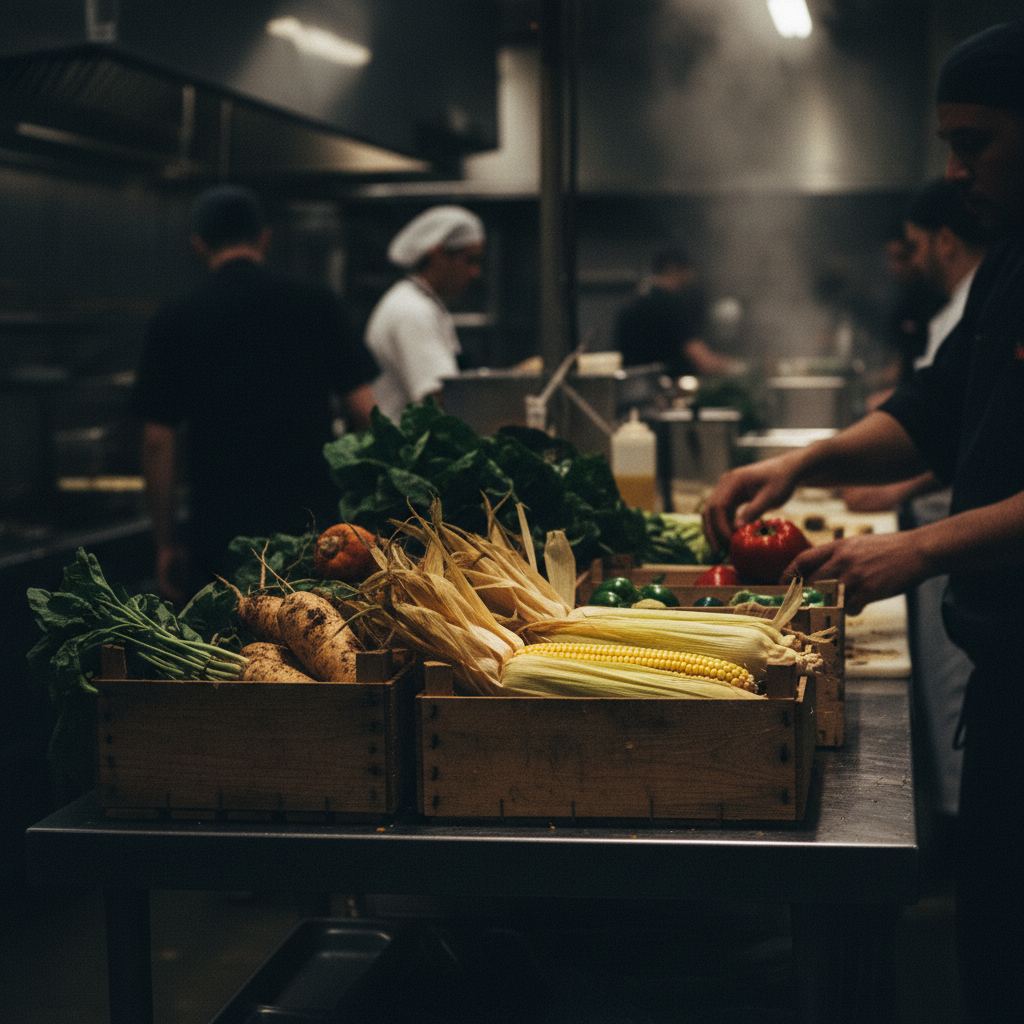
Madison food service. Illustration generated with AI. Not a photograph of a Foody Finance client or location.

What drives financing conversations in Madison

Capital here typically funds indoor seating capacity to replace lost patio revenue during winter and staffing coverage that flexes around the University of Wisconsin's academic calendar. Farm-to-table and co-op-adjacent concepts also need working capital to manage seasonal produce sourcing tied to the Dane County Farmers' Market cycle.

Revenue and seasonality in Madison

Fall and spring semesters drive heavy foot traffic near campus, while summer break and the deep winter months bring a real drop in walk-in volume. Badger football weekends and graduation periods create sharp, short spikes that owners have to staff up for without over-committing to labor the rest of the year.

What this does to your numbers

Fall semester and football weekends bring in strong money, but winter break and summer can leave the account thin.

Permitting in Madison, and what it costs to wait

Public Health Madison & Dane County licenses food establishments on a track separate from the city's alcohol license review, which runs through the city clerk's office and can involve alder and neighborhood input. A concept planning a bar program should expect the alcohol approval to move on its own timeline, and financing needs to cover staffing during any stretch where food service starts before drink sales are cleared.

What the wait actually costs

A slow alcohol license approval means paying staff before the bar side of the business earns anything.

What raises the cost of capital here

  • 01Winter weather cuts patio seating capacity for close to five months a year
  • 02University academic breaks create predictable multi-week revenue dips near campus
  • 03Neighborhood alder review can extend alcohol license timelines beyond the standard state process

Which program usually fits here

A business line of credit covers the gap between semesters, and equipment financing pays for indoor seating to replace lost patio months.

Madison
Wisconsin outline. Boundary data: US Census Bureau cartographic boundary files, public domain. Simplified for display.

Free review, no hard credit pull

Get funds now and review your options

Step 01 of 03 · Your operation

A specialist reviews every request and reaches out the same business day

Areas we serve

  • State Street
  • Williamson Street
  • Atwood
  • Hilldale
  • Middleton

Financing terms on this page

Definitions for the terms used above.

line of credit
A preapproved pool of money you pull from only when you need it, then pay back and reuse. You pay for what you draw, not for the full amount sitting there.
covers
The number of guests served. Lenders pair it with check average to judge how reliable a month really is.
equipment paper
A loan or lease tied to a specific machine. The machine itself is the security, so approval leans on the value of the hardware more than on your bank statements.
working capital
Cash for the everyday gaps: payroll, inventory, rent, and repairs. It is repaid out of daily or weekly sales rather than from one big event.
draw
Taking money out of an approved line or loan. Draws tied to construction milestones mean you only start paying interest on each piece as you use it.
hard credit pull
A formal credit check that shows on your report and can move your score a few points. It happens only after you pick a specific lender, not to get information.
buildout capital
Money for the work that turns a space into a working kitchen: plumbing, electrical, hoods, walls, and permits. It pays for labor and materials you cannot resell, so it is priced differently than money for a fryer.
underwriting
The lender reading your numbers to decide how much risk you are. Bank statements, time in business, and existing debt carry the most weight.
term
How long you have to repay. A longer term lowers the monthly payment and raises what the money costs in total.

Madison financing questions

Why does Madison's academic calendar matter for restaurant financing?

Businesses near State Street or the University of Wisconsin campus see foot traffic drop sharply during winter break and again over summer, since a large share of the customer base leaves town. A financing plan sized to average monthly revenue misses that swing, so working capital or a credit line needs to be scaled to cover the empty weeks between semesters.

How does Wisconsin winter affect patio-dependent restaurants in Madison?

Outdoor seating on stretches like Williamson Street or near the Capitol Square goes unusable for a large part of the year once temperatures drop, cutting total seating capacity through winter. Equipment financing for heated enclosures or added indoor seating is often what keeps revenue from falling as hard as the outdoor season ends.

How much does the university's academic calendar actually move a Madison restaurant's monthly revenue?

For any restaurant within a few blocks of State Street or the university campus, the academic calendar can move monthly revenue more than the weather does. September, when tens of thousands of students return,, and winter break in late December and early January and the slower stretch in May and June after graduation can each cut foot traffic noticeably. Lenders who know this market read a dip in a January bank statement as calendar-driven rather than a business problem, but they still expect the kitchen to show it built enough reserve during the fall semester to cover that gap.

How do Madison food businesses start a financing conversation?

Start with a free review by a specialist. You share the basics of the business, the use of funds, and recent bank statements, and you see every program that fits before any credit application exists. Short term options commonly fund in 1 to 3 business days once you choose an offer.

Do you serve areas outside Madison in Wisconsin?

Yes. Every program is available statewide in Wisconsin and nationwide.

What is working capital, and when does it fit a Madison operator?

Cash for the everyday gaps, repaid out of sales on a set schedule instead of at the end of a project. Use it for payroll, inventory, a slow stretch, or a job you have to fund before the client pays you. Typical size is 10,000 to 500,000, funding runs 1 to 3 business days once you choose an offer, and you repay it as fixed daily, weekly, or monthly payment. You will be asked for: application, 3 to 6 months of bank statements.

What is business line of credit, and when does it fit a Madison operator?

An approved limit you pull from only when you need it, then repay and reuse. Use it for a season you can see coming, so you draw before the peak and pay it back out of the peak. Typical size is 10,000 to 250,000, funding runs 2 to 7 business days once you choose an offer, and you repay it as interest on the drawn balance only. You will be asked for: application, bank statements.

What is equipment financing, and when does it fit a Madison operator?

You borrow against a specific machine, and the machine is what backs the loan. Use it when a fryer, a walk-in, an oven, or a vehicle has to be replaced and you would rather keep the cash in the account. Typical size is 5,000 to 500,000, funding runs 1 to 5 business days once you choose an offer, and you repay it as fixed monthly payment. You will be asked for: application, equipment quote, bank statements.

Why does the Madison calendar change what I should borrow?

Fall semester and football weekends bring in strong money, but winter break and summer can leave the account thin.

What does waiting actually cost me in Madison?

A slow alcohol license approval means paying staff before the bar side of the business earns anything.

Which program do most Madison operators end up using?

A business line of credit covers the gap between semesters, and equipment financing pays for indoor seating to replace lost patio months. That is a starting point, not a decision. The specialist review looks at your deposits, your time in business, and what the money is for before anything is recommended.

Does asking about financing in Madison affect my credit?

No. Getting information is a conversation, not an application. There is no credit application and no hard credit pull until you have picked a specific lender and want to move forward.

Start the conversation

Talk to a specialist before you fill out an application.

Start with a free, no-obligation review. We will send the right application only after we know what you actually qualify for.

Start a free review

Prefer to call

(833) 505-1900