IL metro

Restaurant financing in Chicago.

Chicago revenue is seasonal in a way that surprises new operators: patio months carry the year and January through March runs lean.

How do Chicago food businesses get funded?

Chicago operators start with a free review with a specialist, share recent business bank statements, and are matched to the programs that fit the use of funds. Working capital funds in 1 to 3 business days after you choose an offer, equipment in 1 to 5, and buildout capital in 1 to 4 weeks.

Estimates, not offers: Amounts, terms, and funding times are estimates based on programs commonly available in food service. Actual terms vary by program, lender underwriting, time in business, revenue, and credit profile. Nothing here is an offer of credit or a guarantee of approval. See source and method.

How Chicago eats, and what that does to cash

01

Where Chicago eats

River North and West Loop carry the white tablecloth and destination tasting menu trade, with Randolph Street and Fulton Market drawing conventioneers from McCormick Place and corporate expense accounts on weeknights. Wicker Park and Logan Square run younger and later, with natural wine bars and chef-driven counters that turn tables past midnight on Milwaukee Avenue. Pilsen and Little Village hold the taqueria and panaderia core, cash-heavy and lunch-driven around 26th Street. Chinatown on Wentworth is dense with dim sum halls and hot pot rooms that depend on weekend family groups. Andersonville and Lincoln Square skew neighborhood sit-down with a steady $15 to $30 check, while the Loop itself lives and dies on office lunch traffic that empties out by 3pm and on weekends. Bronzeville is rebuilding its soul food and jazz-adjacent dining base block by block. A restaurant's break-even math depends entirely on which of these traffic patterns it sits inside, because a Loop lunch spot and a Wicker Park late-night bar carry completely different staffing curves.
02

What Chicago actually orders

Deep dish gets the tourist attention, but tavern-style thin crust cut in squares is the daily order at neighborhood pizzerias from Beverly to Portage Park. Italian beef counters, Maxwell Street polish sausage carts, and Malort-pouring corner taverns run on $8 to $14 tickets and thin margins per unit. The Italian and Mexican beef combo, deep dish by the slice, and Chicago-style hot dogs (no ketchup, always) define the counter-service tier. Food halls like Time Out Market and Revival on the South Loop and West Loop corridors bundle multiple small kitchens under one lease and one utility meter. Fulton Market's chef-driven tasting menus run $150 to $250 per head and depend on the same building's neighbors for foot traffic. Craft brewery taprooms with attached kitchens have spread through Logan Square and Avondale, pairing $12 pretzels with flights. Patio season is short and fiercely used, from May to September, and every operator with outdoor seating counts on those five months to cover a chunk of the fixed costs that winter alone cannot carry.

03

The Chicago calendar

McCormick Place drives citywide hotel and restaurant demand around its major conventions, including the National Restaurant Association Show in May and the International Manufacturing Technology Show in September, both filling River North and West Loop tables for a week at a time. Lollapalooza in Grant Park each August floods the Loop and South Loop with young out-of-town spenders. Cubs games at Wrigley Field drive Wrigleyville's bar and restaurant revenue April through September, while Sox games do the same for Bridgeport around Guaranteed Rate Field. The Taste of Chicago in July and the Air and Water Show in August pull crowds to the lakefront. O'Hare's year-round business travel keeps River North hotel restaurants busier than pure leisure demand would justify. January and February bring the sharpest drop, when cold keeps walk-in traffic down and patio seating disappears entirely, and operators without a banquet or catering line to fill those two months often see their weakest cash position of the year land right after the holiday season's fixed costs come due.

04

Growth and cost pattern

New restaurant openings cluster in Fulton Market, where former meatpacking warehouses converted to Google's and other tech offices pushed ground-floor retail rents well above older West Loop rates, and in Pilsen, where lower rents still support first-time operators despite rising pressure from redevelopment. Logan Square and Avondale offer a middle tier for build-out costs, with more available second-generation restaurant space than Fulton Market. Chicago's plumbing and electrical permitting through the Department of Buildings can run slower than neighboring suburbs, and older Chicago and Cook County housing stock buildings often carry outdated grease trap and HVAC infrastructure that adds unbudgeted mechanical costs to any build-out. Winter construction adds weeks to any exterior or rooftop equipment work, since concrete and roofing crews slow down below freezing. ComEd and Peoples Gas utility costs run higher for kitchens with heavy hood and exhaust loads than in most Midwest secondary markets. A West Loop build-out that hits an unexpected boiler or grease trap replacement in December can face a six to eight week delay before opening, pushing a spring launch into summer and missing the patio season entirely.

Food service operation in Chicago
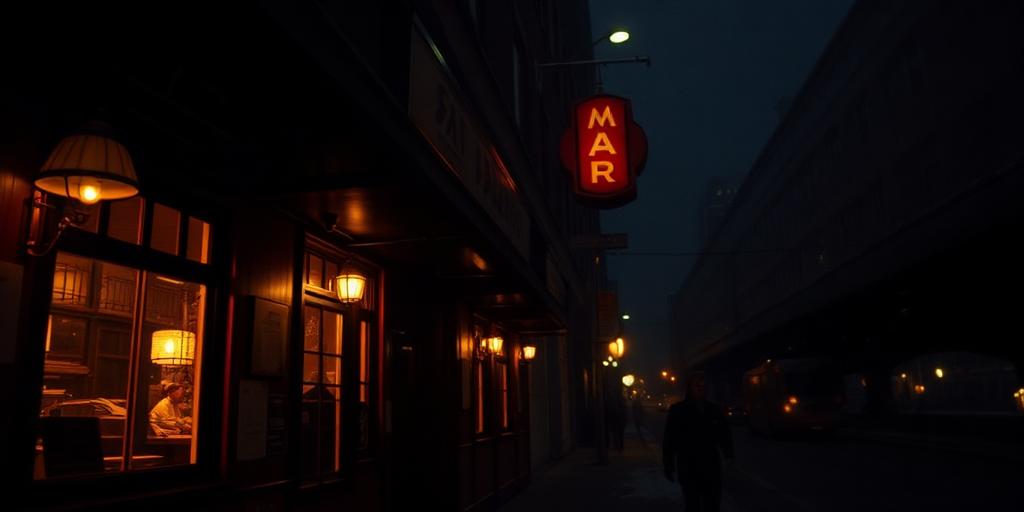
Chicago food service. Illustration generated with AI. Not a photograph of a Foody Finance client or location.

What drives financing conversations in Chicago

Lines of credit and working capital dominate requests here because the winter gap is predictable and best funded before it starts.

Revenue and seasonality in Chicago

Patio months from May through October carry the year, January through March runs predictably lean, and downtown adds a convention and office calendar the neighborhoods do not share.

What this does to your numbers

Patio months from May to October carry the year. January to March is a planned shortfall, and downtown adds a convention calendar the neighborhoods do not share.

Permitting in Chicago, and what it costs to wait

City of Chicago licensing runs separately from suburban county health departments, and older building stock frequently forces an electrical or gas service upgrade before new equipment can be set. That upgrade is buildout capital, not equipment paper, and it has to be funded before the hardware is ordered.

What the wait actually costs

Older buildings often need an electrical or gas service upgrade before a new machine can be set. That work is construction, it is paid before the equipment ships, and it is the piece operators forget to fund.

What raises the cost of capital here

  • 01Patio season carries the year, and the winter months are underwritten as a planned drawdown
  • 02City of Chicago licensing runs separately from suburban county health departments
  • 03Older building stock means electrical and gas service upgrades often precede any new equipment

Which program usually fits here

A line of credit beats a fixed monthly payment here, because you can draw in February and repay across patio season instead of carrying the same payment through the slowest quarter.

Chicago
Illinois outline. Boundary data: US Census Bureau cartographic boundary files, public domain. Simplified for display.

Free review, no hard credit pull

Get funds now and review your options

Step 01 of 03 · Your operation

A specialist reviews every request and reaches out the same business day

Areas we serve

  • The Loop
  • West Loop
  • Logan Square
  • Lincoln Park
  • Pilsen

Financing terms on this page

Definitions for the terms used above.

buildout capital
Money for the work that turns a space into a working kitchen: plumbing, electrical, hoods, walls, and permits. It pays for labor and materials you cannot resell, so it is priced differently than money for a fryer.
equipment paper
A loan or lease tied to a specific machine. The machine itself is the security, so approval leans on the value of the hardware more than on your bank statements.
underwriting
The lender reading your numbers to decide how much risk you are. Bank statements, time in business, and existing debt carry the most weight.
draw
Taking money out of an approved line or loan. Draws tied to construction milestones mean you only start paying interest on each piece as you use it.
line of credit
A preapproved pool of money you pull from only when you need it, then pay back and reuse. You pay for what you draw, not for the full amount sitting there.
term
How long you have to repay. A longer term lowers the monthly payment and raises what the money costs in total.
working capital
Cash for the everyday gaps: payroll, inventory, rent, and repairs. It is repaid out of daily or weekly sales rather than from one big event.
hard credit pull
A formal credit check that shows on your report and can move your score a few points. It happens only after you pick a specific lender, not to get information.
covers
The number of guests served. Lenders pair it with check average to judge how reliable a month really is.

Chicago financing questions

How do Chicago operators finance around a winter revenue gap?

A line of credit generally beats a fixed term note here. It lets you draw in February and repay across the patio months instead of carrying a level payment through the slowest quarter of the year.

Does a patio buildout qualify for financing in Chicago?

Yes. Patio structures, heaters, and enclosure work are financed as buildout capital. Operators typically request in the fall so the work is finished before the first warm weekend.

How do lenders view a Chicago restaurant that depends heavily on convention and event traffic near McCormick Place?

Lenders reviewing a River North or West Loop restaurant near McCormick Place typically ask for month-by-month revenue rather than a trailing twelve-month average, because a location that leans on the National Restaurant Association Show, the auto show, or Lollapalooza can show strong aggregate numbers while masking weak baseline traffic in January and February. A restaurant with a steady neighborhood customer base in Andersonville or Lincoln Square reads as more predictable than one built around a handful of convention weeks, even if their annual revenue totals look similar on paper.

How do Chicago food businesses start a financing conversation?

Start with a free review by a specialist. You share the basics of the business, the use of funds, and recent bank statements, and you see every program that fits before any credit application exists. Short term options commonly fund in 1 to 3 business days once you choose an offer.

Do you serve areas outside Chicago in Illinois?

Yes. Every program is available statewide in Illinois and nationwide.

What is working capital, and when does it fit a Chicago operator?

Cash for the everyday gaps, repaid out of sales on a set schedule instead of at the end of a project. Use it for payroll, inventory, a slow stretch, or a job you have to fund before the client pays you. Typical size is 10,000 to 500,000, funding runs 1 to 3 business days once you choose an offer, and you repay it as fixed daily, weekly, or monthly payment. You will be asked for: application, 3 to 6 months of bank statements.

What is business line of credit, and when does it fit a Chicago operator?

An approved limit you pull from only when you need it, then repay and reuse. Use it for a season you can see coming, so you draw before the peak and pay it back out of the peak. Typical size is 10,000 to 250,000, funding runs 2 to 7 business days once you choose an offer, and you repay it as interest on the drawn balance only. You will be asked for: application, bank statements.

What is equipment financing, and when does it fit a Chicago operator?

You borrow against a specific machine, and the machine is what backs the loan. Use it when a fryer, a walk-in, an oven, or a vehicle has to be replaced and you would rather keep the cash in the account. Typical size is 5,000 to 500,000, funding runs 1 to 5 business days once you choose an offer, and you repay it as fixed monthly payment. You will be asked for: application, equipment quote, bank statements.

Why does the Chicago calendar change what I should borrow?

Patio months from May to October carry the year. January to March is a planned shortfall, and downtown adds a convention calendar the neighborhoods do not share.

What does waiting actually cost me in Chicago?

Older buildings often need an electrical or gas service upgrade before a new machine can be set. That work is construction, it is paid before the equipment ships, and it is the piece operators forget to fund.

Which program do most Chicago operators end up using?

A line of credit beats a fixed monthly payment here, because you can draw in February and repay across patio season instead of carrying the same payment through the slowest quarter. That is a starting point, not a decision. The specialist review looks at your deposits, your time in business, and what the money is for before anything is recommended.

Does asking about financing in Chicago affect my credit?

No. Getting information is a conversation, not an application. There is no credit application and no hard credit pull until you have picked a specific lender and want to move forward.

Start the conversation

Talk to a specialist before you fill out an application.

Start with a free, no-obligation review. We will send the right application only after we know what you actually qualify for.

Start a free review

Prefer to call

(833) 505-1900