
Back to LocationsAll 50 states
Flag of Illinois

IL coverage

RESTAURANT AND FOOD SERVICE FINANCING IN ILLINOIS

Illinois operators plan around a patio season that carries the year and a winter that does not.

Flag of Illinois. Public domain, via Wikimedia Commons.

Can food businesses in Illinois get financing?

Yes. Foody Finance works with restaurants, bars, caterers, food trucks, ghost kitchens, and distributors across Illinois. Equipment requests commonly fund in 1 to 5 business days, working capital in 1 to 3, and SBA financing in 3 to 12 weeks.

Estimates, not offers: Amounts, terms, and funding times are estimates based on programs commonly available in food service. Actual terms vary by program, lender underwriting, time in business, revenue, and credit profile. Nothing here is an offer of credit or a guarantee of approval. See source and method.

How Illinois actually makes its money in food

01

What Illinois actually orders

Chicago's deep-dish pizza, invented at Pizzeria Uno in 1943, remains the state's most exported identity, but daily eating runs more through Italian beef sandwiches, the Chicago-style hot dog with its specific mustard, relish and celery salt build, and Maxwell Street-style polish sausage. The city's Pilsen and Little Village neighborhoods carry a dense Mexican food economy built over decades of migration, while Devon Avenue on the North Side runs one of the country's most concentrated South Asian restaurant corridors. Downstate Illinois, particularly around Springfield, claims the horseshoe sandwich, an open-faced dish with fries and cheese sauce found almost nowhere outside central Illinois. Chicago's fine dining scene, anchored by decades of chef-driven restaurants downtown and in the West Loop, contrasts sharply with the tavern and supper club tradition still common in small downstate towns. Illinois cornfields supply little directly to restaurant menus beyond regional corn festivals, since most of the crop is commodity corn for feed and ethanol rather than table food. A downstate tavern's slow weeknight traffic outside Chicago's metro area means fixed costs must be covered by a much thinner and more seasonal customer base than a comparable Chicago neighborhood spot.
02

How immigration and industry built the plate

Chicago's meatpacking industry, centered on the Union Stock Yards from 1865 until their 1971 closure, built a working-class food culture around cheap cuts and quick service that produced the Italian beef sandwich and the Chicago hot dog. Mexican immigration through the 20th century, accelerating after the 1960s, built Pilsen and Little Village into major restaurant corridors, while more recent immigration has extended that base into suburban Cicero and Berwyn. Devon Avenue's South Asian food corridor grew from Indian and Pakistani immigration beginning in the 1965 immigration reform era, building one of the country's densest concentrations of that cuisine outside major coastal cities. Polish immigration, historically concentrated on the Northwest Side, built a still-visible Polish restaurant and deli tradition around Jefferson Park and Avondale. Downstate Illinois's agricultural economy, built on corn and soybean commodity farming rather than direct-to-table produce, shaped a tavern and diner culture serving farm labor rather than a farm-to-table restaurant identity. Chicago's continued position as a national rail and trucking hub keeps food distribution costs comparatively efficient for a city its size. A Pilsen restaurant tied to a specific immigrant community's spending patterns can see traffic shift measurably when that neighborhood's demographics change through gentrification-driven displacement.

03

A calendar built around weather extremes and the Cubs

Chicago's restaurant year is shaped by brutal weather swings: summer brings outdoor dining, street festivals like Taste of Chicago in July, and peak tourism, while winter cold routinely drops foot traffic and forces heating costs up simultaneously. Cubs and White Sox home games, April through September or October, drive predictable surges near Wrigley Field and Guaranteed Rate Field, with restaurant traffic tracking the schedule almost exactly. The Chicago Marathon each October brings a single massive traffic weekend downtown. Downstate, the Illinois State Fair in Springfield each August draws statewide agricultural and rural traffic to the capital for roughly two weeks. Lollapalooza in Grant Park each August adds another concentrated downtown surge tied to a specific four-day window. Winter's harshest months, January and February, are reliably the slowest for most Chicago restaurants outside a small Valentine's Day bump, forcing many to cut hours or staff. A restaurant near Wrigley Field that overstaffs for a rained-out Cubs homestand faces a payroll cost it cannot recover once the game and its foot traffic disappear.

04

Who owns the restaurant and who staffs it

Illinois restaurant ownership splits sharply between Chicago's dense mix of immigrant family-owned restaurants in Pilsen, Little Village and Devon Avenue, chef-driven independent groups concentrated downtown and in the West Loop, and a downstate landscape dominated by family-owned taverns, diners and franchise casual dining along interstate corridors. Chicago's minimum wage, set independently by city ordinance above the state floor, runs higher than most of Illinois, creating a real cost gap between city and downstate operators for the same state regulatory environment. Chicago's dense public transit system supports a restaurant labor pool that can commute without a car, unlike most of downstate Illinois where restaurant staff depend on personal vehicles and are more exposed to gas price swings. Downstate labor markets are tighter given population decline in many rural counties, pushing some small-town restaurants to cut hours simply because they cannot fill shifts. Chicago's culinary school pipeline, including programs at Kendall College, feeds a steady stream of trained kitchen staff into the city's fine dining scene that downstate restaurants cannot draw on. A downstate tavern that loses even one or two staff members in a shrinking rural labor market can be forced to cut operating days rather than raise wages it cannot sustain.

05

The cost of running a kitchen from Chicago to downstate

Chicago's commercial rent in the Loop, West Loop and River North reflects big-city real estate pressure, while rent in neighborhoods like Pilsen or on the Northwest Side remains comparatively affordable, supporting the immigrant-owned restaurant base there. Downstate rent is far lower across the board, but customer density is thin outside county seats and university towns. Illinois's overall tax burden, including a state income tax and Chicago's additional local taxes on food and beverage sales, adds cost layers that downstate operators face at a lower rate than their Chicago counterparts. Produce sourcing in Chicago benefits from the city's role as a national food distribution hub, keeping wholesale costs efficient despite the city's size. Downstate restaurants near agricultural areas have access to local corn, soybean-fed livestock and dairy, but direct farm-to-table sourcing remains a smaller niche than the region's commodity-scale farming would suggest. Winter heating costs statewide add a predictable seasonal expense given Illinois's cold winters, while summer cooling costs in Chicago's older commercial buildings, many lacking modern HVAC, can run higher than newer construction elsewhere. A Chicago restaurant paying the city's added food and beverage tax on top of state sales tax operates on a thinner net margin than a downstate restaurant serving an identical menu at an identical price.

06

Where the next location opens

Growth in Chicago concentrates in the West Loop, which has continued adding restaurant space tied to office and residential redevelopment of former industrial buildings, and in neighborhoods like Logan Square and Pilsen, where younger populations and gentrification-driven investment support new concepts alongside longstanding immigrant-owned restaurants. Fulton Market's continued build-out, anchored by Google's Chicago offices and other corporate relocations, keeps adding upscale dining aimed at a daytime office population. Suburban growth concentrates in collar counties like Will and Kane, where population growth has outpaced existing restaurant supply along new retail corridors. Downstate growth is far more limited, concentrated mainly around university towns like Champaign-Urbana, home to the University of Illinois, where student population sustains restaurant demand that most other downstate towns lack. Illinois's overall population decline in recent years has made downstate expansion a harder sell for growth-minded restaurant groups compared to the Chicago metro area. A restaurant building out in Fulton Market alongside major corporate construction projects can face delays tied to the same limited pool of commercial contractors serving both the restaurant and the office towers around it.

Licensing and permitting in Illinois, and what it costs to wait

Local health departments issue food service sanitation permits under state rules, with Chicago running its own licensing process.

A Chicago license and a suburban county permit run on different clocks, so a second location is financed with more cushion for rent and payroll than the first one needed.

What Illinois operators finance

Lines of credit and working capital sized to the winter gap are the most common requests.

The Illinois revenue calendar

Patio months from May through September carry the year, and January through March runs lean enough that operators plan for it as a known gap.

Revenue mix and seasonality in Illinois

Patio season from May through October carries the year, January through March runs lean and predictable, and downtown Chicago adds a convention and office calendar that suburban operators do not share.

What this does to your numbers

May through September carries the year. January through March is a planned shortfall, not a surprise, and it repeats on the same calendar every year.

What a delay costs in Illinois

Winter heat, snow removal, and salaried payroll stay exactly the same while covers drop. That is a fixed cost sitting on a shrinking sales base for 90 days.

What underwriting looks at in Illinois

  • 01Chicago runs its own licensing process separate from the surrounding counties
  • 02Winter heating and snow removal are real fixed costs on a shrinking revenue base
  • 03Convention and event calendars swing weekday volume in the Loop and West Loop

Which program usually fits here

A line of credit lets you pull in February and repay across patio season. A fixed monthly payment forces the slowest quarter to carry the same load as the best one.

Markets we serve in Illinois

We work with operators across Illinois, including Chicago, Naperville, Aurora, Rockford, Springfield, Peoria, and Evanston. Rural and small market operators qualify for the same programs.

Chicago financingNapervilleAuroraRockfordSpringfieldPeoriaEvanston

Metro market pages in Illinois

Food service operation in Illinois
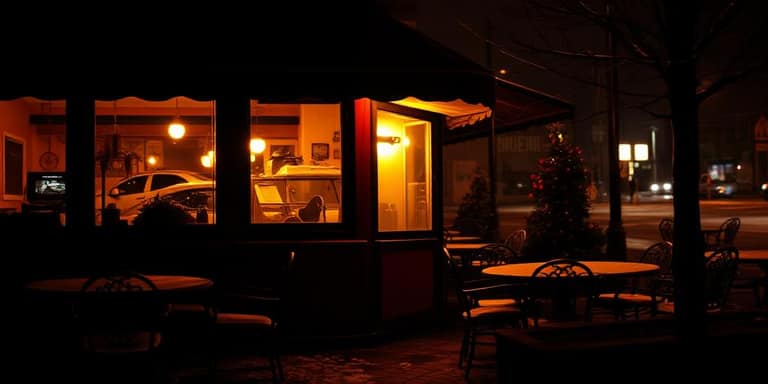
Illustrative image generated with AI.
Illinois outline. Boundary data: US Census Bureau cartographic boundary files, public domain. Simplified for display.

Free review, no hard credit pull

Get funds now and review your options

Step 01 of 03 · Your operation

A specialist reviews every request and reaches out the same business day

Typical Illinois timelines
 Working capitalEquipmentSBA
Time to funding1 to 3 business days1 to 5 business days3 to 12 weeks
Documents3 to 6 months of bank statementsEquipment quote plus statementsTax returns, financials, debt schedule
Common use in this statePatio months from May through September carry the year, and January through March runs lean enough that operators plan for it as a known gap.Chicago runs its own licensing process separate from the surrounding countiesAcquisition, refinance, or a longer buildout

Estimates, not offers: Amounts, terms, and funding times are estimates based on programs commonly available in food service. Actual terms vary by program, lender underwriting, time in business, revenue, and credit profile. Nothing here is an offer of credit or a guarantee of approval. See source and method.

One page PDF with the Illinois timelines table and the state plate photo.

Illinois plateDeep dish pizzaDeck oven capacity is the constraint on every Friday night, and it is the most common equipment request in the state.

Financing terms on this page

Definitions for the terms used above.

working capital
Cash for the everyday gaps: payroll, inventory, rent, and repairs. It is repaid out of daily or weekly sales rather than from one big event.
covers
The number of guests served. Lenders pair it with check average to judge how reliable a month really is.
line of credit
A preapproved pool of money you pull from only when you need it, then pay back and reuse. You pay for what you draw, not for the full amount sitting there.
draw
Taking money out of an approved line or loan. Draws tied to construction milestones mean you only start paying interest on each piece as you use it.
equipment paper
A loan or lease tied to a specific machine. The machine itself is the security, so approval leans on the value of the hardware more than on your bank statements.
hard credit pull
A formal credit check that shows on your report and can move your score a few points. It happens only after you pick a specific lender, not to get information.
SBA loan
A bank loan partly guaranteed by the Small Business Administration. Lowest cost of the options, longest paperwork, and the slowest to fund.
underwriting
The lender reading your numbers to decide how much risk you are. Bank statements, time in business, and existing debt carry the most weight.
merchant cash advance
You sell a slice of future card sales for cash today. Fastest money available, and the most expensive, so it fits an emergency rather than a plan.
term
How long you have to repay. A longer term lowers the monthly payment and raises what the money costs in total.
buildout capital
Money for the work that turns a space into a working kitchen: plumbing, electrical, hoods, walls, and permits. It pays for labor and materials you cannot resell, so it is priced differently than money for a fryer.
commissary
A licensed production kitchen used to prep off site, most often by trucks and catering operations. It carries its own rent, equipment, and permits.
collateral
Something the lender can take back if the loan is not repaid, usually the equipment being financed. More collateral generally means a lower cost.

Illinois financing questions

Can I get restaurant financing in Illinois?

Yes. Every Foody Finance program is available to food service operators in Illinois, including equipment financing, working capital, lines of credit, SBA loans, and buildout capital.

How fast can a Illinois restaurant get funded?

Short term programs commonly fund in 1 to 3 business days and equipment requests in 1 to 5. SBA financing in Illinois runs 3 to 12 weeks.

When should an Illinois operator arrange winter capital?

In the fall, while summer revenue is still on the bank statements underwriters read. Applying in February means presenting the weakest 3 months of the year as the current picture.

Which Illinois cities do you serve?

All of them. Operators we work with in Illinois run in Chicago, Naperville, Aurora, Rockford, Springfield, Peoria, and Evanston, along with smaller markets across the state. Underwriting reviews deposits and the use of funds, not the population of the market.

What documents do Illinois operators need?

For the first review, just the form. If you choose a short term program, the lender usually asks for 3 to 6 months of business bank statements. SBA adds tax returns, interim financials, and a debt schedule.

Does Illinois licensing affect financing?

Licensing affects buildout timelines and, in some transactions, collateral value. We factor local permitting into how a Illinois request is structured.

Do I need a hard credit pull to start in Illinois?

No. The first conversation is a review of your situation and the programs you likely qualify for. A hard pull only happens once you choose a specific lender and submit their application.

What is business line of credit, and when does it fit a Illinois operator?

An approved limit you pull from only when you need it, then repay and reuse. Use it for a season you can see coming, so you draw before the peak and pay it back out of the peak. Typical size is 10,000 to 250,000, funding runs 2 to 7 business days once you choose an offer, and you repay it as interest on the drawn balance only. You will be asked for: application, bank statements.

What is working capital, and when does it fit a Illinois operator?

Cash for the everyday gaps, repaid out of sales on a set schedule instead of at the end of a project. Use it for payroll, inventory, a slow stretch, or a job you have to fund before the client pays you. Typical size is 10,000 to 500,000, funding runs 1 to 3 business days once you choose an offer, and you repay it as fixed daily, weekly, or monthly payment. You will be asked for: application, 3 to 6 months of bank statements.

What is equipment financing, and when does it fit a Illinois operator?

You borrow against a specific machine, and the machine is what backs the loan. Use it when a fryer, a walk-in, an oven, or a vehicle has to be replaced and you would rather keep the cash in the account. Typical size is 5,000 to 500,000, funding runs 1 to 5 business days once you choose an offer, and you repay it as fixed monthly payment. You will be asked for: application, equipment quote, bank statements.

Why does the Illinois calendar change what I should borrow?

May through September carries the year. January through March is a planned shortfall, not a surprise, and it repeats on the same calendar every year.

What does waiting actually cost me in Illinois?

Winter heat, snow removal, and salaried payroll stay exactly the same while covers drop. That is a fixed cost sitting on a shrinking sales base for 90 days.

Which program do most Illinois operators end up using?

A line of credit lets you pull in February and repay across patio season. A fixed monthly payment forces the slowest quarter to carry the same load as the best one. That is a starting point, not a decision. The specialist review looks at your deposits, your time in business, and what the money is for before anything is recommended.

Does asking about financing in Illinois affect my credit?

No. Getting information is a conversation, not an application. There is no credit application and no hard credit pull until you have picked a specific lender and want to move forward.

Start the conversation

Talk to a specialist before you fill out an application.

Start with a free, no-obligation review. We will send the right application only after we know what you actually qualify for.

Start a free review

Prefer to call

(833) 505-1900