MI metro

Restaurant financing in Grand Rapids.

West Michigan winters slow foot traffic for months while rent, insurance, and staff hours keep running at full speed regardless of the weather outside.

How do Grand Rapids food businesses get funded?

Grand Rapids operators start with a free review with a specialist, share recent business bank statements, and are matched to the programs that fit the use of funds. Working capital funds in 1 to 3 business days after you choose an offer, equipment in 1 to 5, and buildout capital in 1 to 4 weeks.

Estimates, not offers: Amounts, terms, and funding times are estimates based on programs commonly available in food service. Actual terms vary by program, lender underwriting, time in business, revenue, and credit profile. Nothing here is an offer of credit or a guarantee of approval. See source and method.

How Grand Rapids eats, and what that does to cash

01

Where Grand Rapids eats

The Downtown Grand Rapids corridor along Monroe Center and Ionia Avenue carries the city's brewery and convention-driven dining, anchored by DeVos Place convention traffic and weekday office lunch from Fifth Third Bank and Amway's downtown presence. Eastown, along Wealthy Street, holds an older, artsier restaurant strip with lower rent than downtown, drawing a mixed student and longtime-resident crowd on evenings and weekends. The Uptown corridor combining East Fulton and East Hills runs a denser cluster of coffee shops and bars near Fuller Avenue serving Grand Valley State University's downtown campus population. Wealthy Street further southeast holds smaller storefront restaurants and bakeries at a residential, walk-in scale. Grandville Avenue on the west side carries a Hispanic grocery and taqueria corridor with weekday lunch trade tied to nearby industrial employers. Rent downtown near DeVos Place runs higher than Eastown or the west side, and a brewery or restaurant built around convention-week traffic downtown can see a strong single week followed by several quiet ones, a swing that does not show up the same way for an Eastown restaurant living on steady neighborhood repeat business.
02

What Grand Rapids orders

Grand Rapids calls itself Beer City, and its brewery-kitchen format, led by Founders Brewing and Brewery Vivant, pairs house beer with a full pub kitchen serving 12 to 18 dollar entrees, a format that depends on both taproom and food revenue lines to make rent. Gordon Food Service's headquarters presence shapes an unusually deep local restaurant supply chain and a base of food-service employees who eat out on their own schedule outside typical dinner hours. Vietnamese and Laotian restaurants cluster on the city's south side, reflecting a long-settled Southeast Asian community distinct from the Hispanic taqueria corridor on Grandville Avenue. Downtown food halls, including the Downtown Market on Ionia Avenue, run a counter-service, multi-vendor format that shares seating and pulls both office lunch and weekend family traffic. Paczki Day in late winter, tied to the region's Polish heritage, produces a single-day bakery sales spike each year. A brewery kitchen that overstaffs for a downtown convention week that gets rescheduled or cancelled carries a full week of labor cost against revenue that never arrives.

03

The calendar that runs Grand Rapids

ArtPrize, the citywide public art competition held every two years in September and October, is Grand Rapids's single largest tourism event, filling downtown restaurants and bars for roughly three weeks with visitors from across West Michigan. DeVos Place's year-round convention and trade show calendar sets recurring weekday spikes tied to specific announced booking weeks rather than a single season. Grand Valley State University's fall and winter semesters drive Uptown and Eastown lunch and late-night traffic, which drops sharply during the May-to-August summer term when enrollment is lowest. Amway's annual leadership conferences and Fifth Third Bank's downtown office population anchor steady weekday lunch demand outside of ArtPrize and convention weeks. Michigan's harsh winter, December through February, cuts patio season and outdoor foot traffic across every neighborhood, forcing many brewery kitchens to rely on indoor taproom volume alone. Founders Brewing's anniversary events each spring draw a beer-tourism crowd distinct from ArtPrize's general art audience. A restaurant that times its hiring for an ArtPrize year in odd-numbered fall seasons has to plan separately for the even-numbered fall with no ArtPrize crowd at all.

04

Growth and cost pattern

New restaurant growth concentrates on Wealthy Street and in the West Side neighborhoods near Bridge Street, where older commercial buildings offer lower rent than downtown but frequently need full kitchen ventilation and grease-trap retrofits before opening, since many were built for retail rather than food service. Downtown Grand Rapids buildouts near DeVos Place face higher base rent and often require compliance with the city's historic-district review for storefronts along Monroe Center, adding a permitting step that can extend a buildout by several weeks. Grand Rapids's brewery-heavy restaurant scene requires significant upfront equipment investment in fermentation and cold-storage systems beyond a standard commercial kitchen, raising the buildout cost ceiling for that format specifically. Winter construction delays are common given Michigan's freeze season from December through March, which can push exterior and utility work past a planned spring opening date. Labor draws partly from Grand Valley State University's downtown campus for part-time restaurant staff, creating predictable staffing gaps during winter and summer academic breaks. A brewery build that adds fermentation tank installation to its buildout scope midway through construction often faces a multi-month delay and a cost overrun that a standard restaurant kitchen would not encounter.

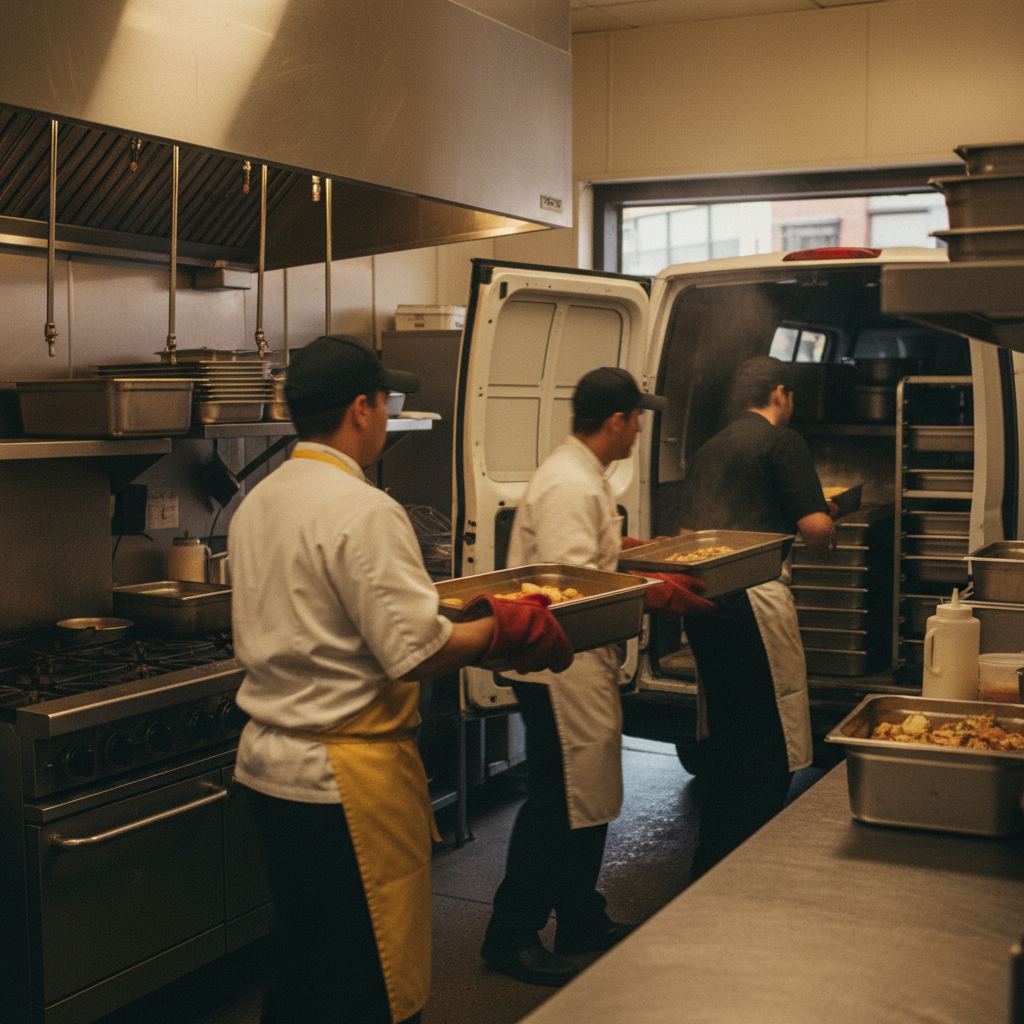
Food service operation in Grand Rapids
Grand Rapids food service. Illustration generated with AI. Not a photograph of a Foody Finance client or location.

What drives financing conversations in Grand Rapids

Craft brewers and Eastown restaurants use capital to smooth the gap between ArtPrize-season crowds and the long stretch of gray months that follows. Kitchen upgrades and tank expansions get financed ahead of festival demand, not after it, since equipment lead times run longer than the event calendar allows.

Revenue and seasonality in Grand Rapids

Ticket sizes lean casual outside downtown, with weekday lunch traffic from office workers and weekend volume tied to Van Andel Arena events and ArtPrize crowds each fall. Winter months bring a real drop in walk-ins, so operators plan payroll and vendor terms around a leaner first quarter.

What this does to your numbers

Business is busy in the fall and quiet in deep winter, so the bank balance has to stretch across months with much less walk-in traffic.

Permitting in Grand Rapids, and what it costs to wait

Kent County Health Department handles food service inspections while the Michigan Liquor Control Commission runs beer, wine, and spirits licensing on its own separate calendar. A brewery adding a kitchen or a restaurant adding a bar has to plan for both tracks moving at different speeds, so the buildout budget needs a cushion for weeks of dead time before doors open.

What the wait actually costs

Waiting on a liquor license transfer or a health inspection means paying rent and staff on a space that isn't earning yet.

What raises the cost of capital here

  • 01Snow removal and heating costs add fixed overhead through five months of the year
  • 02MLCC license transfers can stall a sale or reconcept for weeks
  • 03Furniture-district commercial rents run higher near Monroe Center than in outer neighborhoods

Which program usually fits here

A line of credit works for riding out the slow winter months, while equipment financing fits a brewery or kitchen buying gear with a long delivery wait.

Grand Rapids
Michigan outline. Boundary data: US Census Bureau cartographic boundary files, public domain. Simplified for display.

Free review, no hard credit pull

Get funds now and review your options

Step 01 of 03 · Your operation

A specialist reviews every request and reaches out the same business day

Areas we serve

  • Eastown
  • Heritage Hill
  • West Side
  • Cherry Hill
  • Downtown

Financing terms on this page

Definitions for the terms used above.

line of credit
A preapproved pool of money you pull from only when you need it, then pay back and reuse. You pay for what you draw, not for the full amount sitting there.
equipment paper
A loan or lease tied to a specific machine. The machine itself is the security, so approval leans on the value of the hardware more than on your bank statements.
draw
Taking money out of an approved line or loan. Draws tied to construction milestones mean you only start paying interest on each piece as you use it.
working capital
Cash for the everyday gaps: payroll, inventory, rent, and repairs. It is repaid out of daily or weekly sales rather than from one big event.
hard credit pull
A formal credit check that shows on your report and can move your score a few points. It happens only after you pick a specific lender, not to get information.
buildout capital
Money for the work that turns a space into a working kitchen: plumbing, electrical, hoods, walls, and permits. It pays for labor and materials you cannot resell, so it is priced differently than money for a fryer.
term
How long you have to repay. A longer term lowers the monthly payment and raises what the money costs in total.
underwriting
The lender reading your numbers to decide how much risk you are. Bank statements, time in business, and existing debt carry the most weight.
covers
The number of guests served. Lenders pair it with check average to judge how reliable a month really is.

Grand Rapids financing questions

How does ArtPrize season affect financing timing for a Grand Rapids restaurant?

ArtPrize draws heavy foot traffic downtown and through Heritage Hill for several weeks each fall, and operators often want patio seating, extra staff, or menu changes locked in before it starts. Because MLCC license changes and buildout permits move on their own schedules, financing decisions usually need to happen in late summer, not once the festival is already underway.

Why do Grand Rapids brewers finance tank expansions separately from kitchen buildouts?

Brewing equipment often has a multi-month manufacturing lead time that doesn't line up with a kitchen renovation timeline, so many Eastown and West Side breweries stagger the two projects. Financing each phase separately keeps cash available for the slower winter months between them.

Why does ArtPrize matter so much for Grand Rapids restaurant revenue?

ArtPrize runs only every other year, in odd-numbered years each September and October, so a downtown Grand Rapids restaurant's revenue pattern looks meaningfully different between an ArtPrize fall and a non-ArtPrize fall even though both are the same calendar season. Lenders comparing year-over-year bank statements for a downtown restaurant should check whether the prior comparable period fell in an ArtPrize year before treating a lower fall revenue figure as a decline, since the difference may simply reflect the two-year cycle rather than a change in the underlying business.

How do Grand Rapids food businesses start a financing conversation?

Start with a free review by a specialist. You share the basics of the business, the use of funds, and recent bank statements, and you see every program that fits before any credit application exists. Short term options commonly fund in 1 to 3 business days once you choose an offer.

Do you serve areas outside Grand Rapids in Michigan?

Yes. Every program is available statewide in Michigan and nationwide.

What is equipment financing, and when does it fit a Grand Rapids operator?

You borrow against a specific machine, and the machine is what backs the loan. Use it when a fryer, a walk-in, an oven, or a vehicle has to be replaced and you would rather keep the cash in the account. Typical size is 5,000 to 500,000, funding runs 1 to 5 business days once you choose an offer, and you repay it as fixed monthly payment. You will be asked for: application, equipment quote, bank statements.

What is working capital, and when does it fit a Grand Rapids operator?

Cash for the everyday gaps, repaid out of sales on a set schedule instead of at the end of a project. Use it for payroll, inventory, a slow stretch, or a job you have to fund before the client pays you. Typical size is 10,000 to 500,000, funding runs 1 to 3 business days once you choose an offer, and you repay it as fixed daily, weekly, or monthly payment. You will be asked for: application, 3 to 6 months of bank statements.

What is business line of credit, and when does it fit a Grand Rapids operator?

An approved limit you pull from only when you need it, then repay and reuse. Use it for a season you can see coming, so you draw before the peak and pay it back out of the peak. Typical size is 10,000 to 250,000, funding runs 2 to 7 business days once you choose an offer, and you repay it as interest on the drawn balance only. You will be asked for: application, bank statements.

Why does the Grand Rapids calendar change what I should borrow?

Business is busy in the fall and quiet in deep winter, so the bank balance has to stretch across months with much less walk-in traffic.

What does waiting actually cost me in Grand Rapids?

Waiting on a liquor license transfer or a health inspection means paying rent and staff on a space that isn't earning yet.

Which program do most Grand Rapids operators end up using?

A line of credit works for riding out the slow winter months, while equipment financing fits a brewery or kitchen buying gear with a long delivery wait. That is a starting point, not a decision. The specialist review looks at your deposits, your time in business, and what the money is for before anything is recommended.

Does asking about financing in Grand Rapids affect my credit?

No. Getting information is a conversation, not an application. There is no credit application and no hard credit pull until you have picked a specific lender and want to move forward.

Start the conversation

Talk to a specialist before you fill out an application.

Start with a free, no-obligation review. We will send the right application only after we know what you actually qualify for.

Start a free review

Prefer to call

(833) 505-1900