MI metro

Restaurant financing in Detroit.

Detroit operators frequently take on older buildings where the kitchen has to be built from bare shell.

How do Detroit food businesses get funded?

Detroit operators start with a free review with a specialist, share recent business bank statements, and are matched to the programs that fit the use of funds. Working capital funds in 1 to 3 business days after you choose an offer, equipment in 1 to 5, and buildout capital in 1 to 4 weeks.

Estimates, not offers: Amounts, terms, and funding times are estimates based on programs commonly available in food service. Actual terms vary by program, lender underwriting, time in business, revenue, and credit profile. Nothing here is an offer of credit or a guarantee of approval. See source and method.

How Detroit eats, and what that does to cash

01

Where Detroit eats

Downtown, around Campus Martius and the Little Caesars Arena district, has rebuilt with new restaurants tied to Tigers, Red Wings, and Pistons game traffic and Quicken Loans, now Rocket Companies, employee lunch crowds. Corktown, Detroit's oldest neighborhood, holds a cluster of chef driven restaurants near the old Michigan Central Station, now redeveloped by Ford, serving 22 to 35 dollars an entree. Eastern Market, the city's historic wholesale produce market, draws Saturday crowds to restaurants and food stalls built around fresh produce access. Mexicantown, along Bagley Street in southwest Detroit, carries a dense strip of Mexican restaurants serving 9 to 15 dollar meals to a longstanding immigrant community largely separate from downtown's redevelopment dollars. Hamtramck, a separate city within Detroit's borders, holds Polish and increasingly Yemeni and Bangladeshi restaurants. Belle Isle and riverfront restaurants see a seasonal summer bump tied to warm weather recreation that largely disappears once Michigan's winter sets in. A downtown restaurant built around Rocket Companies' office lunch crowd loses that anchor entirely if the company shifts more employees to remote work.
02

What Detroit actually serves

Detroit style pizza, square with a thick, crisp cheese edge and sauce on top, originated here at Buddy's Pizza and now anchors a citywide format sold at 15 to 25 dollars a pizza. Coney dogs, sold at rival institutions American Coney Island and Lafayette Coney Island downtown, run 3 to 5 dollars and represent the city's classic late night counter format. Southwest Detroit's Mexican restaurants serve tacos and tortas at 8 to 12 dollars, counter service with no reservation culture. Eastern Market's Saturday market supports produce forward restaurant menus that shift with seasonal Michigan harvests. Ford Field and Little Caesars Arena drive concession and nearby bar food sales on game nights. Wayne State University's academic calendar drives Midtown restaurant traffic in a pattern similar to Dinkytown's dependence on the University of Minnesota. A coney dog counter selling a 4 dollar item needs enormous volume to cover Detroit's downtown rents, so foot traffic swings hit margin faster than at a full service restaurant.

03

The calendar that runs Detroit

The Detroit Lions play at Ford Field from September through January, the Red Wings play at Little Caesars Arena from October through April, and the Pistons also play downtown from October through April, stacking three overlapping seasons of game night restaurant traffic. The North American International Auto Show, historically held each January, brings automotive industry visitors downtown during an otherwise slow winter month. Ford's and General Motors' corporate calendars, including summer shutdown weeks at some plants, affect suburban restaurant traffic near Dearborn and the Renaissance Center. Michigan winters, November through March, cut outdoor dining and slow foot traffic citywide. The Detroit Jazz Festival over Labor Day weekend downtown adds a late summer tourism spike distinct from the sports season calendars. A restaurant near the Renaissance Center that depends on GM's office population sees a real dip during the company's traditional summer plant shutdown weeks.

04

Where Detroit growth and costs land

New restaurant construction concentrates in Corktown, driven by Ford's Michigan Central Station redevelopment, and in Midtown near Wayne State University, where buildout costs run lower than most comparable Midwest downtown cores due to Detroit's lower overall commercial real estate prices. Downtown rents have climbed near the arena district as new residential towers fill in, though they remain below peer cities like Chicago. Property insurance and vacancy adjacent buildout risk run higher in neighborhoods still recovering from decades of population loss, since lenders and insurers price in surrounding blight even when a specific block has redeveloped. Labor costs remain lower than coastal cities but have risen as suburban competition for restaurant staff increases. Suburban Dearborn's concentration of Yemeni and Lebanese restaurants, tied to one of the largest Arab American populations in the country, draws a regional crowd distinct from downtown. A restaurant opening in a rebuilding block of Corktown may face higher insurance costs tied to surrounding vacant properties even after its own building is fully renovated.

Food service operation in Detroit
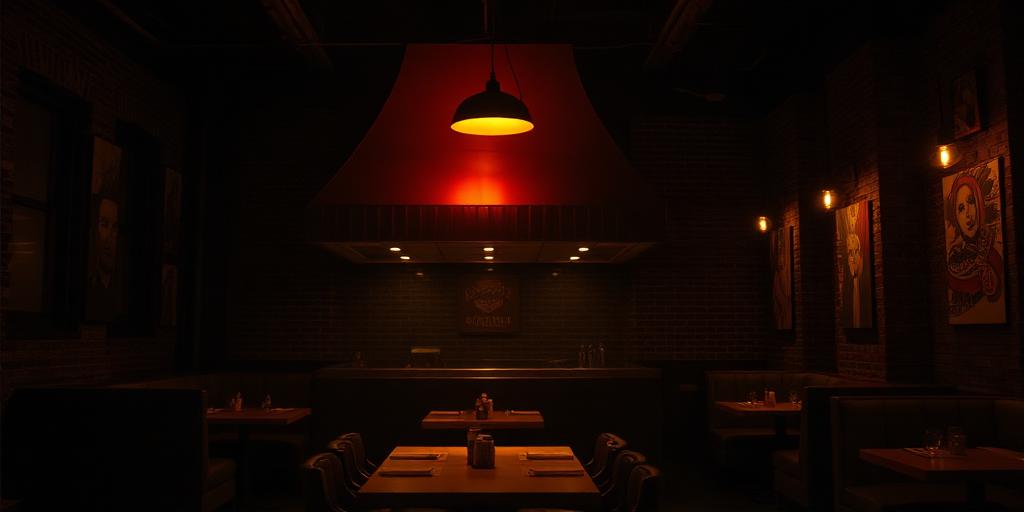
Detroit food service. Illustration generated with AI. Not a photograph of a Foody Finance client or location.

What drives financing conversations in Detroit

Buildout capital and used equipment financing pair often here, and acquisition of existing restaurants is more affordable than in comparable metros.

Revenue and seasonality in Detroit

Downtown and Corktown run on event and office traffic, neighborhood operators on steady local volume at lower check averages, and summer carries a disproportionate share of the year.

What this does to your numbers

Downtown and Corktown redevelopment has pulled volume back into the core, while suburban rooms hold steadier through winter.

Permitting in Detroit, and what it costs to wait

City of Detroit permitting plus Michigan liquor licensing run on separate tracks, and older buildings rarely pass with the kitchen as found. Mechanical work discovered during review is buildout capital that has to be funded before the equipment order.

What the wait actually costs

Older industrial buildings usually need utility and ventilation work before any new equipment can be set, and that lands before the hardware ships.

What raises the cost of capital here

  • 01Redevelopment incentives in some districts offset part of a buildout, changing the amount needed
  • 02Older building stock means service upgrades often precede equipment installation
  • 03Automotive sector employment cycles move corporate catering volume

Which program usually fits here

Fund the building work as construction and the machines separately, so a permit delay does not stall the equipment order.

Detroit
Michigan outline. Boundary data: US Census Bureau cartographic boundary files, public domain. Simplified for display.

Free review, no hard credit pull

Get funds now and review your options

Step 01 of 03 · Your operation

A specialist reviews every request and reaches out the same business day

Areas we serve

  • Downtown
  • Corktown
  • Midtown
  • Ferndale
  • Royal Oak

Financing terms on this page

Definitions for the terms used above.

buildout capital
Money for the work that turns a space into a working kitchen: plumbing, electrical, hoods, walls, and permits. It pays for labor and materials you cannot resell, so it is priced differently than money for a fryer.
covers
The number of guests served. Lenders pair it with check average to judge how reliable a month really is.
equipment paper
A loan or lease tied to a specific machine. The machine itself is the security, so approval leans on the value of the hardware more than on your bank statements.
draw
Taking money out of an approved line or loan. Draws tied to construction milestones mean you only start paying interest on each piece as you use it.
SBA loan
A bank loan partly guaranteed by the Small Business Administration. Lowest cost of the options, longest paperwork, and the slowest to fund.
hard credit pull
A formal credit check that shows on your report and can move your score a few points. It happens only after you pick a specific lender, not to get information.
working capital
Cash for the everyday gaps: payroll, inventory, rent, and repairs. It is repaid out of daily or weekly sales rather than from one big event.
underwriting
The lender reading your numbers to decide how much risk you are. Bank statements, time in business, and existing debt carry the most weight.
term
How long you have to repay. A longer term lowers the monthly payment and raises what the money costs in total.

Detroit financing questions

Do Detroit redevelopment incentives affect a financing request?

They reduce it. When a district program covers part of the buildout, the request should be sized to the remaining gap and the timing of the reimbursement, since incentive money usually arrives after the work is done.

Why do Detroit buildouts run over the equipment quote?

Electrical service, gas line capacity, and ventilation in older buildings frequently cost more than the appliances. Buildout capital covers that work, equipment paper does not.

How does Detroit's downtown redevelopment timeline affect how a new restaurant's early sales should be read?

A restaurant opening in a still rebuilding corridor like Corktown or parts of downtown often shows rising month over month sales as neighboring buildings fill with residents and offices, a growth pattern tied to the surrounding block's occupancy rather than the restaurant's own marketing or menu changes. Lenders evaluating a Detroit restaurant's financials in these areas typically look at neighboring building occupancy and recent development announcements alongside the restaurant's own numbers, since a location's revenue trajectory here can depend heavily on redevelopment timing that the restaurant itself does not control.

How do Detroit food businesses start a financing conversation?

Start with a free review by a specialist. You share the basics of the business, the use of funds, and recent bank statements, and you see every program that fits before any credit application exists. Short term options commonly fund in 1 to 3 business days once you choose an offer.

Do you serve areas outside Detroit in Michigan?

Yes. Every program is available statewide in Michigan and nationwide.

What is buildout and expansion, and when does it fit a Detroit operator?

Construction money for the work that turns a space into a working kitchen, usually released in stages as the job progresses. Use it for a second location, a remodel, a patio, or a kitchen conversion, and size it to cover the permit wait, not just the build. Typical size is 50,000 to 2,000,000, funding runs 1 to 4 weeks once you choose an offer, and you repay it as fixed payment, often with a draw schedule. You will be asked for: application, contractor bids, lease, financials.

What is equipment financing, and when does it fit a Detroit operator?

You borrow against a specific machine, and the machine is what backs the loan. Use it when a fryer, a walk-in, an oven, or a vehicle has to be replaced and you would rather keep the cash in the account. Typical size is 5,000 to 500,000, funding runs 1 to 5 business days once you choose an offer, and you repay it as fixed monthly payment. You will be asked for: application, equipment quote, bank statements.

What is sba loans, and when does it fit a Detroit operator?

A bank loan partly guaranteed by the Small Business Administration, which is why the payment is the lowest available. Use it when you can plan months ahead. It is the cheapest money on this page and the slowest to arrive. Typical size is 50,000 to 5,000,000, funding runs 3 to 12 weeks once you choose an offer, and you repay it as amortized interest, lowest payment of any program. You will be asked for: tax returns, interim financials, debt schedule, plan.

Why does the Detroit calendar change what I should borrow?

Downtown and Corktown redevelopment has pulled volume back into the core, while suburban rooms hold steadier through winter.

What does waiting actually cost me in Detroit?

Older industrial buildings usually need utility and ventilation work before any new equipment can be set, and that lands before the hardware ships.

Which program do most Detroit operators end up using?

Fund the building work as construction and the machines separately, so a permit delay does not stall the equipment order. That is a starting point, not a decision. The specialist review looks at your deposits, your time in business, and what the money is for before anything is recommended.

Does asking about financing in Detroit affect my credit?

No. Getting information is a conversation, not an application. There is no credit application and no hard credit pull until you have picked a specific lender and want to move forward.

Start the conversation

Talk to a specialist before you fill out an application.

Start with a free, no-obligation review. We will send the right application only after we know what you actually qualify for.

Start a free review

Prefer to call

(833) 505-1900