OH metro

Restaurant financing in Toledo.

A restaurant near the Toledo Zoo or Glass City can see a strong summer tourist bump and then a much quieter fall once the visitor traffic clears out. Heating bills go up right as revenue goes down.

How do Toledo food businesses get funded?

Toledo operators start with a free review with a specialist, share recent business bank statements, and are matched to the programs that fit the use of funds. Working capital funds in 1 to 3 business days after you choose an offer, equipment in 1 to 5, and buildout capital in 1 to 4 weeks.

Estimates, not offers: Amounts, terms, and funding times are estimates based on programs commonly available in food service. Actual terms vary by program, lender underwriting, time in business, revenue, and credit profile. Nothing here is an offer of credit or a guarantee of approval. See source and method.

How Toledo eats, and what that does to cash

01

Where Toledo eats

The Warehouse District downtown, around St. Clair and Superior streets, holds Toledo's concentration of brewery kitchens and gastropubs, drawing young professionals and Mud Hens baseball crowds at $15 to $28 a check on game nights at nearby Fifth Third Field. The Old West End and Uptown areas support slower, neighborhood sit-down restaurants at $12 to $20 serving a more residential crowd. North Toledo's Lagrange Street corridor, historically Toledo's Polish neighborhood, still holds a handful of pierogi and kielbasa focused spots at $10 to $16. South Toledo and the area near the University of Toledo's main campus carry cheap pizza, wing, and sub shops at $6 to $12 built around student budgets and late-night hours. Perrysburg and Maumee just outside city limits pull the suburban family dinner trade with chain casual restaurants, and that suburban draw keeps some downtown Toledo restaurants dependent on daytime office and event traffic rather than steady evening crowds.
02

What Toledo orders

Toledo's signature format is the Tony Packo's style Hungarian hot dog, a chili-topped hot dog tradition tied to the city's Hungarian immigrant history, sold at counter service prices of $4 to $8. Pierogi and Polish sausage plates persist in North Toledo at $10 to $16, mostly sit-down family restaurants. Frog legs, oddly, remain a signature bar food across several long-running Toledo establishments near the Maumee River, a regional quirk tied to the area's history as a walleye and frog leg supply hub, priced $12 to $20 as an appetizer or plate. Brewery kitchens downtown serve elevated pub food at $14 to $22 with a strong beer-pairing focus. University of Toledo's campus area runs on $6 to $10 pizza and wing counters open late for students. Game-day food at Fifth Third Field and the Huntington Center draws concession-heavy spending concentrated into single afternoons and evenings rather than steady weekly patterns.

03

Toledo's calendar

The University of Toledo, with roughly 15,000 students, and ProMedica's downtown headquarters and hospital campuses anchor year-round weekday traffic, with ProMedica office lunch crowds steady but student-driven restaurants dropping off each summer from May through August. The Mud Hens minor league baseball season runs April through September at Fifth Third Field downtown, driving Warehouse District restaurant traffic on game nights specifically rather than across the whole season evenly. The Glass City Marathon each April and the Toledo Jeep Fest each August bring one-weekend surges tied to Toledo's manufacturing identity, including the Jeep assembly plant that still operates in the city. Winter months from January through March see reduced foot traffic downtown as Lake Erie-driven snow and cold cut walk-in dining. Restaurants near the University of Toledo campus face a hard summer revenue drop when student population leaves, a predictable multi-month gap that outlasts any single slow week.

04

Growth and cost in Toledo

New restaurant activity concentrates in the Warehouse District downtown, where city and county incentive programs tied to downtown redevelopment have kept buildout costs lower than comparable Midwest downtowns, alongside secondary growth in Perrysburg and Maumee where suburban rooftops keep expanding restaurant demand outward from the city core. Older commercial buildings in North Toledo and the Old West End often carry higher renovation costs due to aging electrical and HVAC systems that must be brought up to code before a kitchen can open. Labor costs in Toledo run below the Midwest metro average, giving operators more margin room than in Columbus or Cleveland, though the workforce is smaller and harder to staff during University of Toledo's academic calendar gaps. Utility costs spike each winter as heating demand rises sharply during Lake Erie's snowbelt season, hitting restaurants with older, less efficient buildings hardest. Downtown buildout timelines often stretch when incentive financing requires additional city approval steps, delaying opening dates past a targeted Mud Hens season start.

Food service operation in Toledo
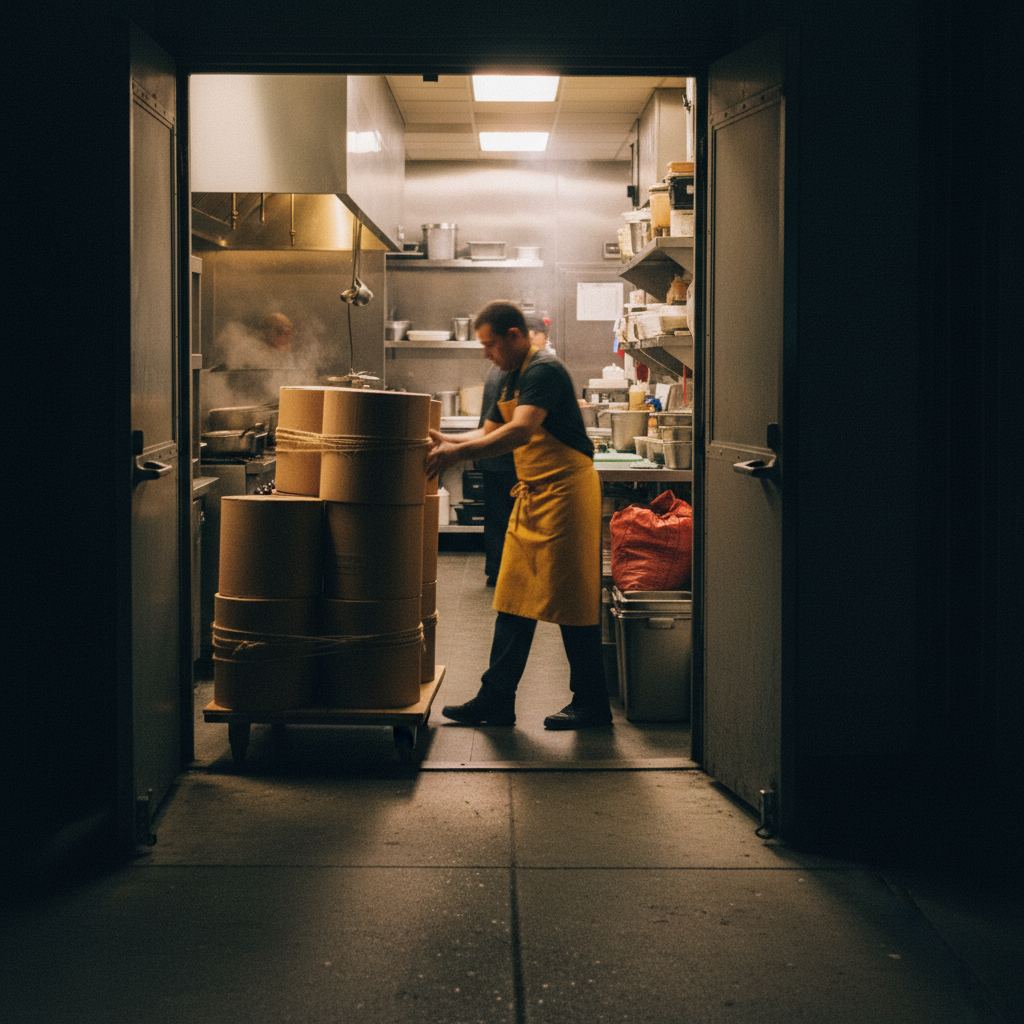
Toledo food service. Illustration generated with AI. Not a photograph of a Foody Finance client or location.

What drives financing conversations in Toledo

Spending here tends to focus on HVAC and hood replacement in older Old West End and downtown buildings, many of which need updated systems before passing inspection. Toledo's manufacturing and glass industry base supports steady weekday lunch traffic that operators build working capital plans around to cover slower winter weekends. Financing needs to bridge the gap between a summer tourism bump and the longer stretch of ordinary local demand that follows it.

Revenue and seasonality in Toledo

Summer tourism tied to the Toledo Zoo and Aquarium and the Metroparks system brings visitor traffic that lifts revenue for several months, while the rest of the year runs on local demand supported by the region's manufacturing and healthcare employers. Winter weather cuts into weekend dining noticeably, and because card settlement trails the actual sale, a strong summer weekend's cash doesn't fully offset a slow February payroll cycle on its own.

What this does to your numbers

Summer visitor traffic near the zoo brings in extra money for a few months, then things settle back down to local business the rest of the year.

Permitting in Toledo, and what it costs to wait

The Toledo-Lucas County Health Department issues food service licenses citywide, while liquor permits go through the Ohio Division of Liquor Control on a separate state review. Renovation projects in Old West End's historic housing stock or downtown's older commercial buildings can also trigger additional fire and building code review tied to their age. Rent and utility costs on these properties often start accruing well before the liquor permit clears.

What the wait actually costs

If the state liquor permit lags behind an older building's renovation, you're paying rent and utilities before you can serve a drink.

What raises the cost of capital here

  • 01Ohio Division of Liquor Control review runs separately from the county health license and on its own timeline.
  • 02Older Old West End and downtown building stock often requires fire and electrical upgrades tied to historic construction.
  • 03Summer tourism tied to the zoo and Metroparks system concentrates a meaningful share of annual visitor revenue into a few months.

Which program usually fits here

A line of credit fits the swing between a strong summer season and the steadier, thinner local demand that carries the rest of the year.

Toledo
Ohio outline. Boundary data: US Census Bureau cartographic boundary files, public domain. Simplified for display.

Free review, no hard credit pull

Get funds now and review your options

Step 01 of 03 · Your operation

A specialist reviews every request and reaches out the same business day

Areas we serve

  • Downtown Toledo
  • Old West End
  • Uptown
  • Point Place
  • Westgate

Financing terms on this page

Definitions for the terms used above.

line of credit
A preapproved pool of money you pull from only when you need it, then pay back and reuse. You pay for what you draw, not for the full amount sitting there.
draw
Taking money out of an approved line or loan. Draws tied to construction milestones mean you only start paying interest on each piece as you use it.
covers
The number of guests served. Lenders pair it with check average to judge how reliable a month really is.
equipment paper
A loan or lease tied to a specific machine. The machine itself is the security, so approval leans on the value of the hardware more than on your bank statements.
working capital
Cash for the everyday gaps: payroll, inventory, rent, and repairs. It is repaid out of daily or weekly sales rather than from one big event.
hard credit pull
A formal credit check that shows on your report and can move your score a few points. It happens only after you pick a specific lender, not to get information.
buildout capital
Money for the work that turns a space into a working kitchen: plumbing, electrical, hoods, walls, and permits. It pays for labor and materials you cannot resell, so it is priced differently than money for a fryer.
underwriting
The lender reading your numbers to decide how much risk you are. Bank statements, time in business, and existing debt carry the most weight.
term
How long you have to repay. A longer term lowers the monthly payment and raises what the money costs in total.

Toledo financing questions

Does renovating an Old West End building create extra permitting steps in Toledo?

Many buildings in the Old West End date to the early 1900s, and bringing one up to current commercial code for a restaurant can require electrical, fire suppression, and structural work that a newer building wouldn't need, all reviewed separately from the Toledo-Lucas County Health Department's food service license.

How much does the Toledo Zoo's summer season really affect nearby restaurant revenue?

The zoo and the surrounding Metroparks system draw significant regional and out-of-state visitor traffic during summer months, and restaurants near those attractions typically see a meaningful lift in weekday and weekend covers during that window compared with the slower fall and winter months that follow.

Why does Toledo's restaurant scene lean so heavily on a handful of long-running legacy establishments rather than newer concepts?

Toledo's population has stayed relatively flat for decades, so restaurant demand has not grown the way it has in expanding Sun Belt cities, and that stability rewards operators like Tony Packo's who built brand loyalty over generations rather than newer entrants competing for the same fixed customer base. Legacy restaurants also benefit from paid-off real estate and long-depreciated equipment, letting them operate profitably at price points newer operators cannot match with current lease and buildout costs. Lenders should read a strong legacy Toledo restaurant's stable revenue as a sign of loyal repeat customers rather than assume flat growth reflects declining demand.

How do Toledo food businesses start a financing conversation?

Start with a free review by a specialist. You share the basics of the business, the use of funds, and recent bank statements, and you see every program that fits before any credit application exists. Short term options commonly fund in 1 to 3 business days once you choose an offer.

Do you serve areas outside Toledo in Ohio?

Yes. Every program is available statewide in Ohio and nationwide.

What is equipment financing, and when does it fit a Toledo operator?

You borrow against a specific machine, and the machine is what backs the loan. Use it when a fryer, a walk-in, an oven, or a vehicle has to be replaced and you would rather keep the cash in the account. Typical size is 5,000 to 500,000, funding runs 1 to 5 business days once you choose an offer, and you repay it as fixed monthly payment. You will be asked for: application, equipment quote, bank statements.

What is working capital, and when does it fit a Toledo operator?

Cash for the everyday gaps, repaid out of sales on a set schedule instead of at the end of a project. Use it for payroll, inventory, a slow stretch, or a job you have to fund before the client pays you. Typical size is 10,000 to 500,000, funding runs 1 to 3 business days once you choose an offer, and you repay it as fixed daily, weekly, or monthly payment. You will be asked for: application, 3 to 6 months of bank statements.

What is business line of credit, and when does it fit a Toledo operator?

An approved limit you pull from only when you need it, then repay and reuse. Use it for a season you can see coming, so you draw before the peak and pay it back out of the peak. Typical size is 10,000 to 250,000, funding runs 2 to 7 business days once you choose an offer, and you repay it as interest on the drawn balance only. You will be asked for: application, bank statements.

Why does the Toledo calendar change what I should borrow?

Summer visitor traffic near the zoo brings in extra money for a few months, then things settle back down to local business the rest of the year.

What does waiting actually cost me in Toledo?

If the state liquor permit lags behind an older building's renovation, you're paying rent and utilities before you can serve a drink.

Which program do most Toledo operators end up using?

A line of credit fits the swing between a strong summer season and the steadier, thinner local demand that carries the rest of the year. That is a starting point, not a decision. The specialist review looks at your deposits, your time in business, and what the money is for before anything is recommended.

Does asking about financing in Toledo affect my credit?

No. Getting information is a conversation, not an application. There is no credit application and no hard credit pull until you have picked a specific lender and want to move forward.

Start the conversation

Talk to a specialist before you fill out an application.

Start with a free, no-obligation review. We will send the right application only after we know what you actually qualify for.

Start a free review

Prefer to call

(833) 505-1900