OH metro

Restaurant financing in Columbus.

Columbus restaurants live and die on Ohio State's football and academic calendar, and a kitchen sized for a September Saturday sits half empty in July.

How do Columbus food businesses get funded?

Columbus operators start with a free review with a specialist, share recent business bank statements, and are matched to the programs that fit the use of funds. Working capital funds in 1 to 3 business days after you choose an offer, equipment in 1 to 5, and buildout capital in 1 to 4 weeks.

Estimates, not offers: Amounts, terms, and funding times are estimates based on programs commonly available in food service. Actual terms vary by program, lender underwriting, time in business, revenue, and credit profile. Nothing here is an offer of credit or a guarantee of approval. See source and method.

How Columbus eats, and what that does to cash

01

Where Columbus eats

Short North, along High Street between downtown and the Ohio State campus, runs the city's densest strip of chef-driven restaurants and cocktail bars, drawing a 25 to 45 crowd paying 20 to 35 dollars per entree. German Village, just south of downtown, holds an older, brick-street district of bistros and bakeries aimed at a wealthier, older diner willing to sit for a longer meal. Clintonville, north along High Street, mixes coffee shops and neighborhood restaurants serving families and remote workers rather than nightlife traffic. Franklinton, across the river from downtown, has added breweries and lower-cost kitchens as warehouse space converts to restaurant use, pulling a younger, price-sensitive crowd. Campus-area High Street, immediately around Ohio State, runs cheap counter service and late-night pizza built for student volume and closes hard once the university empties for summer. The Arena District downtown depends on Blue Jackets hockey and concert nights at Nationwide Arena for its heaviest traffic, going quiet on non-event evenings. These districts run on different clocks, so a campus-priced concept moved into German Village will misread its customer's willingness to pay, and that mismatch shows up as thin check averages.
02

What Columbus actually orders

Columbus-style pizza, cut into small squares with a thin, cracker-like crust and edge-to-edge provolone, is the city's most identifiable dish and a fixture at both sit-down and carryout spots citywide. Buckeye candy, peanut butter dipped in chocolate, shows up as a dessert item and gift product tied directly to Ohio State branding. Bratwurst and German fare persist in German Village's bakeries and taverns, a direct legacy of the neighborhood's 19th-century settlement. Food trucks cluster around downtown office towers on weekdays and near Ohio State's campus on football Saturdays, running a lunch-hour format with 8 to 14 dollar tickets. Craft breweries in the Brewery District and Franklinton pair taproom beer with counter-order food, a format that has expanded steadily over the past decade. Late-night pizza and wing counters near campus run past 2am on weekends during the academic year, a format that disappears entirely each summer. White Castle, founded in Wichita but headquartered in Columbus, anchors a regional fast-food identity tied to the city's corporate presence. This academic-year dependence means campus-adjacent kitchens carry a fixed cost base through a summer with a fraction of their in-session customer volume.

03

The Columbus calendar

Ohio State's fall football season, seven or eight home Saturdays from September through November at Ohio Stadium, drives the single largest recurring revenue spike for campus-area and Short North restaurants. The university's academic calendar more broadly, with roughly 60,000 students on campus from late August through early May, sets the baseline demand for the entire High Street corridor north of downtown. Nationwide's headquarters and other insurance-sector employers downtown support steady weekday lunch traffic that holds through the year with less seasonal swing than campus-driven demand. The Columbus Arts Festival in June and Red White and Boom around July 4th draw large one-day crowds downtown along the Scioto riverfront. Rickenbacker International Airport's logistics and distribution hub, including major Amazon and other warehouse operations, adds shift-worker meal demand outside typical restaurant hours. Winter months, particularly January and February, see the sharpest drop in both campus and Arena District traffic once football season and the holiday period end. Summer, when Ohio State's enrollment thins out, cuts campus-area lunch and late-night volume substantially. That combination means campus-adjacent restaurants carry their heaviest fixed costs through the same summer stretch when their core customer base has left the city.

04

Growth and cost in Columbus

New restaurant openings have concentrated in Franklinton and the Grandview Yard development west of downtown, both benefiting from newer, lower-cost commercial space compared to a built-out Short North. Easton Town Center, on the far east side, has added chain and fast-casual concepts drawing suburban families away from downtown dining. Short North rent has climbed as the corridor matured over the past 15 years, pushing newer independent operators toward German Village's side streets or Clintonville instead. Labor supply benefits from Ohio State and Columbus State Community College's student population, but that same pool shrinks every summer when enrollment drops. Winter buildout timelines face weather-related delays for any construction requiring exterior work, particularly in January and February. Intel's new semiconductor plant east of the city in New Albany has begun pulling construction and skilled trade labor away from restaurant buildout crews, extending timelines for new kitchen fit-outs. Utility costs run higher in winter with heating demand across Columbus's continental climate swings. Together, Short North's rising rent and Intel-driven construction labor competition are pushing new restaurant investment toward outer neighborhoods, and that shift is lengthening buildout timelines for anyone still targeting the central corridor.

Food service operation in Columbus
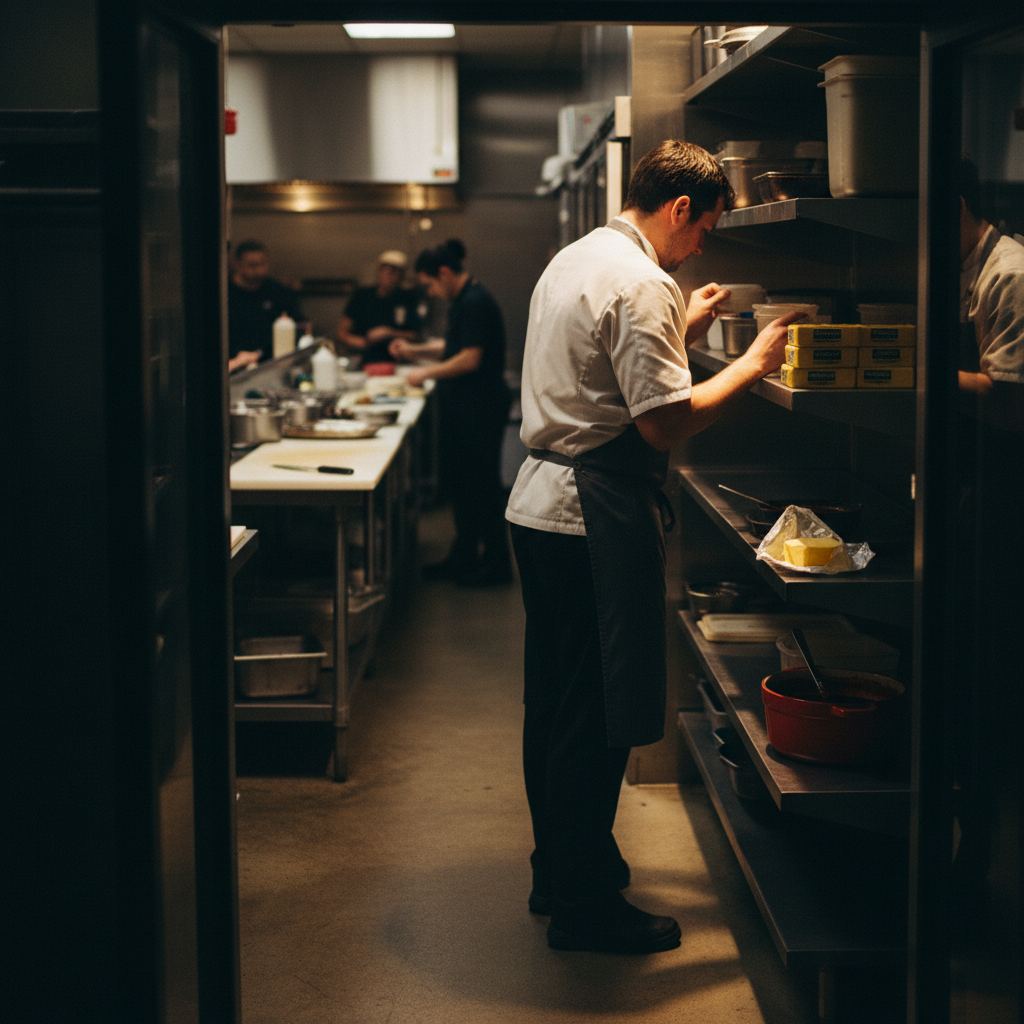
Columbus food service. Illustration generated with AI. Not a photograph of a Foody Finance client or location.

What drives financing conversations in Columbus

Buildouts near campus and the Short North often mean converting older storefronts, which turns up outdated electrical or plumbing that inspectors flag mid-project. German Village and Franklinton spaces carry similar retrofit costs, so equipment and construction financing both need room for surprises that a clean-sheet build wouldn't face.

Revenue and seasonality in Columbus

Ohio State home game weekends and student move-in periods drive concentrated spikes near campus, while downtown and Grandview lean on steady weekday office and residential traffic. Winter weather slows outdoor seating for months, so a business built around patio revenue needs a plan for the gap between football season and spring.

What this does to your numbers

Football Saturdays bring in a big chunk of your year, but winter can be quiet for months at a time.

Permitting in Columbus, and what it costs to wait

Columbus Public Health runs food service licensing while the city's Department of Building and Zoning Services handles separate construction permits, and older buildings in German Village or the Short North frequently need code upgrades uncovered once walls open. Ohio's liquor permit process through the state runs independently, adding another track that doesn't move on the contractor's schedule.

What the wait actually costs

Older buildings hide problems behind the walls, and fixing them after demo starts costs more than planning for them upfront.

What raises the cost of capital here

  • 01Older storefront conversions in German Village and the Short North often uncover electrical or plumbing code issues mid-build.
  • 02Ohio's state-run liquor permit process operates on a separate timeline from city building permits.
  • 03Ohio State home game weekends concentrate revenue into a handful of fall dates that surrounding weeks don't match.

Which program usually fits here

Equipment financing covers the surprise repairs, while a credit line smooths out the winter slowdown after the season ends.

Columbus
Ohio outline. Boundary data: US Census Bureau cartographic boundary files, public domain. Simplified for display.

Free review, no hard credit pull

Get funds now and review your options

Step 01 of 03 · Your operation

A specialist reviews every request and reaches out the same business day

Areas we serve

  • Short North
  • German Village
  • Franklinton
  • Clintonville
  • Grandview Heights

Financing terms on this page

Definitions for the terms used above.

equipment paper
A loan or lease tied to a specific machine. The machine itself is the security, so approval leans on the value of the hardware more than on your bank statements.
covers
The number of guests served. Lenders pair it with check average to judge how reliable a month really is.
buildout capital
Money for the work that turns a space into a working kitchen: plumbing, electrical, hoods, walls, and permits. It pays for labor and materials you cannot resell, so it is priced differently than money for a fryer.
draw
Taking money out of an approved line or loan. Draws tied to construction milestones mean you only start paying interest on each piece as you use it.
working capital
Cash for the everyday gaps: payroll, inventory, rent, and repairs. It is repaid out of daily or weekly sales rather than from one big event.
hard credit pull
A formal credit check that shows on your report and can move your score a few points. It happens only after you pick a specific lender, not to get information.
underwriting
The lender reading your numbers to decide how much risk you are. Bank statements, time in business, and existing debt carry the most weight.
term
How long you have to repay. A longer term lowers the monthly payment and raises what the money costs in total.

Columbus financing questions

Does an Ohio State game schedule really affect restaurant financing near campus?

Home game Saturdays in the fall can generate a disproportionate share of monthly revenue for bars and restaurants near the Short North and campus area, which means a loan payment sized for an average month can strain the off-season stretch between January and August. Financing sized around that uneven calendar, rather than a flat monthly average, holds up better through the summer lull.

Why do renovations in older Columbus buildings run over budget?

Storefronts in German Village and parts of the Short North predate current code, and opening walls or upgrading kitchen equipment often exposes electrical or plumbing work the city's Building and Zoning Services division requires before it signs off. That discovery typically happens mid-project, after the original buildout budget was already set.

Why does Ohio State's academic calendar matter so much for Columbus restaurant financials?

Campus-area and Short North restaurants near Ohio State depend on roughly 60,000 students who leave the city each summer, so revenue can drop sharply from May through August compared to the fall football season and spring semester. A lender reviewing a Columbus restaurant's bank statements should check whether its address sits inside the campus and Short North corridor, where summer often means a real drop in traffic, or in German Village, Clintonville, or a suburban node like Easton, where the customer base does not disappear seasonally in the same way.

How do Columbus food businesses start a financing conversation?

Start with a free review by a specialist. You share the basics of the business, the use of funds, and recent bank statements, and you see every program that fits before any credit application exists. Short term options commonly fund in 1 to 3 business days once you choose an offer.

Do you serve areas outside Columbus in Ohio?

Yes. Every program is available statewide in Ohio and nationwide.

What is buildout and expansion, and when does it fit a Columbus operator?

Construction money for the work that turns a space into a working kitchen, usually released in stages as the job progresses. Use it for a second location, a remodel, a patio, or a kitchen conversion, and size it to cover the permit wait, not just the build. Typical size is 50,000 to 2,000,000, funding runs 1 to 4 weeks once you choose an offer, and you repay it as fixed payment, often with a draw schedule. You will be asked for: application, contractor bids, lease, financials.

What is equipment financing, and when does it fit a Columbus operator?

You borrow against a specific machine, and the machine is what backs the loan. Use it when a fryer, a walk-in, an oven, or a vehicle has to be replaced and you would rather keep the cash in the account. Typical size is 5,000 to 500,000, funding runs 1 to 5 business days once you choose an offer, and you repay it as fixed monthly payment. You will be asked for: application, equipment quote, bank statements.

What is working capital, and when does it fit a Columbus operator?

Cash for the everyday gaps, repaid out of sales on a set schedule instead of at the end of a project. Use it for payroll, inventory, a slow stretch, or a job you have to fund before the client pays you. Typical size is 10,000 to 500,000, funding runs 1 to 3 business days once you choose an offer, and you repay it as fixed daily, weekly, or monthly payment. You will be asked for: application, 3 to 6 months of bank statements.

Why does the Columbus calendar change what I should borrow?

Football Saturdays bring in a big chunk of your year, but winter can be quiet for months at a time.

What does waiting actually cost me in Columbus?

Older buildings hide problems behind the walls, and fixing them after demo starts costs more than planning for them upfront.

Which program do most Columbus operators end up using?

Equipment financing covers the surprise repairs, while a credit line smooths out the winter slowdown after the season ends. That is a starting point, not a decision. The specialist review looks at your deposits, your time in business, and what the money is for before anything is recommended.

Does asking about financing in Columbus affect my credit?

No. Getting information is a conversation, not an application. There is no credit application and no hard credit pull until you have picked a specific lender and want to move forward.

Start the conversation

Talk to a specialist before you fill out an application.

Start with a free, no-obligation review. We will send the right application only after we know what you actually qualify for.

Start a free review

Prefer to call

(833) 505-1900