FL metro

Restaurant financing in St. Petersburg.

Downtown St. Petersburg fills with conference and cruise traffic while a Gulf humidity season slows walk-ins for weeks at a time, and payroll doesn't pause with the tide.

How do St. Petersburg food businesses get funded?

St. Petersburg operators start with a free review with a specialist, share recent business bank statements, and are matched to the programs that fit the use of funds. Working capital funds in 1 to 3 business days after you choose an offer, equipment in 1 to 5, and buildout capital in 1 to 4 weeks.

Estimates, not offers: Amounts, terms, and funding times are estimates based on programs commonly available in food service. Actual terms vary by program, lender underwriting, time in business, revenue, and credit profile. Nothing here is an offer of credit or a guarantee of approval. See source and method.

How St. Petersburg eats, and what that does to cash

01

Where St. Petersburg eats

Beach Drive downtown carries the white-tablecloth crowd, tourists off the Vinoy and the Dali museum, and diners paying 30 dollars and up for a seafood entree. The EDGE District and the Grand Central District along Central Avenue run the opposite lane, with dive bars, tattoo-shop neighbors, and 12 dollar sandwich counters that stay open late on weekends. Old Northeast feeds a residential brunch crowd on Sunday mornings, mostly families and retirees walking over from bungalow streets. The Warehouse Arts District, further west on Central, has converted garages into taprooms and small kitchens serving a younger, artist-adjacent crowd that spends less per ticket but comes back weekly. St Pete Beach and Pass-a-Grille pull a seasonal tourist base willing to pay resort prices for a grouper sandwich with a gulf view, but that traffic thins hard once snowbirds leave. Each district draws a different wallet, from the Beach Drive diner dropping 60 dollars a head to the Central Avenue regular nursing a 6 dollar draft, and that spread means uneven nightly deposits depending on which corridor a kitchen sits in.
02

What St. Petersburg orders

Cuban sandwiches remain a lunch staple citywide, tied to the city's Ybor-adjacent Cuban and Spanish immigrant history, typically 10 to 13 dollars at counter-service spots. Stone crab claws show up on menus from October through May, the legal harvest season, and disappear from boards the rest of the year, forcing seasonal menu swaps. Gulf grouper sandwiches and fresh-catch specials run 16 to 22 dollars at casual seafood counters near the waterfront. Craft beer is a real format here, with breweries like 3 Daughters and Green Bench running kitchens that serve pretzels, wings, and flatbreads rather than full dinners. Food trucks cluster around Williams Park and near the Dali on weekends, selling 8 to 12 dollar plates to a walk-up crowd. Rooftop bars downtown charge a premium for the same appetizers a ground-floor spot sells cheaper, banking on the water view. Poke bowls and fast-casual grain bowls have multiplied near the innovation district for a weekday office lunch crowd. The stone crab season cutoff alone forces a hard menu and supplier changeover twice a year, which means inventory swings a kitchen has to plan for months ahead.

03

The St. Petersburg calendar

The Tampa Bay Rays play spring training and, historically, regular season games at Tropicana Field, drawing game-day crowds that spike bar and restaurant traffic on scattered weeknights and weekends from April through September. The Firestone Grand Prix of St. Petersburg, an IndyCar street race held in late February or early March, closes downtown streets and pulls a multi-day crowd that fills every restaurant within walking distance of the circuit. Snowbird season runs roughly November through April, when the city's population and restaurant demand both climb as northern retirees arrive for winter. Hurricane season runs June through November, and any named storm approaching the Gulf can shut down waterfront dining for days at a time with little notice. Summer itself, July and August especially, sees local foot traffic drop as year-round residents avoid the heat and humidity during midday hours. St. Pete Beach's tourist season peaks in the winter months and again around spring break in March. A kitchen near the Grand Prix route can sell out a whole weekend, then sit quiet for weeks, which means uneven weekly revenue baked into the calendar itself.

04

Growth and cost pattern

New restaurant activity concentrates along the Central Avenue corridor, particularly the stretch through the EDGE District and into the Grand Central District, where older storefronts get subdivided into smaller footprint concepts. The Skyway Marina District, further south on 34th Street, has seen new leases as rents downtown climb past what a first-time operator can absorb. Warehouse Arts District buildouts often involve converting former industrial garages, which means added cost for plumbing and ventilation retrofits not required in a standard strip-mall shell. Flood zone requirements near the waterfront raise insurance costs and can require elevated equipment platforms, adding to buildout budgets before a kitchen opens. Labor costs track closely with the seasonal population, since staffing needs peak from November through April and then have to be trimmed back for the slower summer months. Utility costs run high year-round because of continuous air conditioning demand in the Gulf coast humidity. A restaurant opening in a converted warehouse space can face buildout delays measured in months once flood and hurricane code retrofits are added to the permit process.

Food service operation in St. Petersburg
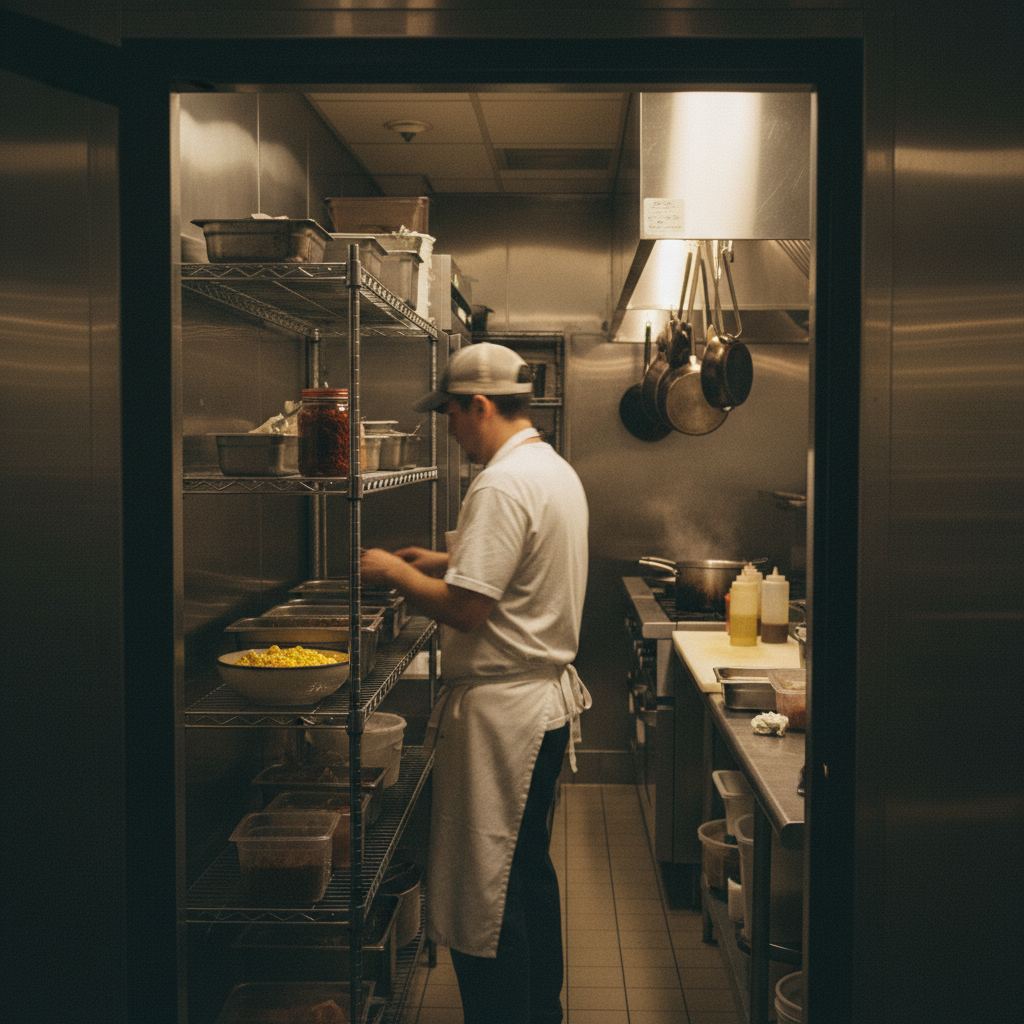
St. Petersburg food service. Illustration generated with AI. Not a photograph of a Foody Finance client or location.

What drives financing conversations in St. Petersburg

Operators here spend capital on hurricane-rated equipment protection, walk-in cooler redundancy, and staffing that flexes between snowbird season and the slower Gulf summer stretch. Buildouts near the waterfront also need flood-zone-rated electrical and refrigeration work, which raises the baseline cost of any new location.

Revenue and seasonality in St. Petersburg

Revenue skews toward dinner and weekend brunch, with a visible lift during winter snowbird months and around Tampa Bay area events. Ticket sizes rise with the tourist mix, but summer humidity and hurricane-season cancellations pull cash flow down for stretches that owners have to plan around each year.

What this does to your numbers

Snowbird winters bring in the money, but the slow Gulf summer and storm season can drain the account fast.

Permitting in St. Petersburg, and what it costs to wait

Pinellas County's health department handles food service inspections separately from the city's alcohol and outdoor seating approvals, so a patio expansion can clear health review while zoning and right-of-way sign-off lag behind. That gap forces a request that covers rent and payroll during the stretch when the dining room is licensed but the patio isn't.

What the wait actually costs

If a patio or liquor approval drags, you're paying rent on space you can't fully use yet.

What raises the cost of capital here

  • 01Flood-zone construction codes add cost to any electrical or refrigeration buildout near the waterfront
  • 02Snowbird season concentrates revenue into roughly five months, thinning cash the rest of the year
  • 03Hurricane season closures and insurance requirements strain reserves during the slowest quarter

Which program usually fits here

A working capital line covers the slow months, and equipment financing covers hurricane-ready gear without draining cash reserves.

St. Petersburg
Florida outline. Boundary data: US Census Bureau cartographic boundary files, public domain. Simplified for display.

Free review, no hard credit pull

Get funds now and review your options

Step 01 of 03 · Your operation

A specialist reviews every request and reaches out the same business day

Areas we serve

  • Downtown St. Petersburg
  • Grand Central District
  • Old Northeast
  • Central Arts District
  • Historic Kenwood

Financing terms on this page

Definitions for the terms used above.

covers
The number of guests served. Lenders pair it with check average to judge how reliable a month really is.
working capital
Cash for the everyday gaps: payroll, inventory, rent, and repairs. It is repaid out of daily or weekly sales rather than from one big event.
equipment paper
A loan or lease tied to a specific machine. The machine itself is the security, so approval leans on the value of the hardware more than on your bank statements.
buildout capital
Money for the work that turns a space into a working kitchen: plumbing, electrical, hoods, walls, and permits. It pays for labor and materials you cannot resell, so it is priced differently than money for a fryer.
draw
Taking money out of an approved line or loan. Draws tied to construction milestones mean you only start paying interest on each piece as you use it.
hard credit pull
A formal credit check that shows on your report and can move your score a few points. It happens only after you pick a specific lender, not to get information.
underwriting
The lender reading your numbers to decide how much risk you are. Bank statements, time in business, and existing debt carry the most weight.
term
How long you have to repay. A longer term lowers the monthly payment and raises what the money costs in total.

St. Petersburg financing questions

Why does a St. Petersburg buildout near the waterfront cost more than one inland?

Properties in flood-prone zones near Tampa Bay require elevated or flood-rated electrical panels and refrigeration mounts under county building code, which adds cost beyond what a standard kitchen buildout requires. Lenders reviewing an equipment or buildout request typically want that flood-zone spec priced in up front rather than discovered mid-project.

How does hurricane season affect a restaurant loan request in St. Petersburg?

Storm closures and evacuation orders during peak hurricane months can shut a kitchen for days with no revenue, even if the building itself isn't damaged. A working capital cushion sized around that seasonal risk, rather than just average monthly sales, is what keeps payroll and rent covered through a storm week.

How does the snowbird population affect a St. Petersburg restaurant's cash flow through the year?

Lenders reviewing a St. Petersburg restaurant's numbers typically see a clear seasonal curve, with revenue climbing from November through April as the snowbird population arrives and then dropping through the summer months when many retirees head north again. That pattern is common enough in this market that it does not signal mismanagement on its own, but it does mean a lender will want to see enough cash reserve built up during the winter months to cover the leaner summer stretch without falling behind on fixed costs like rent and equipment payments.

How do St. Petersburg food businesses start a financing conversation?

Start with a free review by a specialist. You share the basics of the business, the use of funds, and recent bank statements, and you see every program that fits before any credit application exists. Short term options commonly fund in 1 to 3 business days once you choose an offer.

Do you serve areas outside St. Petersburg in Florida?

Yes. Every program is available statewide in Florida and nationwide.

What is working capital, and when does it fit a St. Petersburg operator?

Cash for the everyday gaps, repaid out of sales on a set schedule instead of at the end of a project. Use it for payroll, inventory, a slow stretch, or a job you have to fund before the client pays you. Typical size is 10,000 to 500,000, funding runs 1 to 3 business days once you choose an offer, and you repay it as fixed daily, weekly, or monthly payment. You will be asked for: application, 3 to 6 months of bank statements.

What is equipment financing, and when does it fit a St. Petersburg operator?

You borrow against a specific machine, and the machine is what backs the loan. Use it when a fryer, a walk-in, an oven, or a vehicle has to be replaced and you would rather keep the cash in the account. Typical size is 5,000 to 500,000, funding runs 1 to 5 business days once you choose an offer, and you repay it as fixed monthly payment. You will be asked for: application, equipment quote, bank statements.

What is buildout and expansion, and when does it fit a St. Petersburg operator?

Construction money for the work that turns a space into a working kitchen, usually released in stages as the job progresses. Use it for a second location, a remodel, a patio, or a kitchen conversion, and size it to cover the permit wait, not just the build. Typical size is 50,000 to 2,000,000, funding runs 1 to 4 weeks once you choose an offer, and you repay it as fixed payment, often with a draw schedule. You will be asked for: application, contractor bids, lease, financials.

Why does the St. Petersburg calendar change what I should borrow?

Snowbird winters bring in the money, but the slow Gulf summer and storm season can drain the account fast.

What does waiting actually cost me in St. Petersburg?

If a patio or liquor approval drags, you're paying rent on space you can't fully use yet.

Which program do most St. Petersburg operators end up using?

A working capital line covers the slow months, and equipment financing covers hurricane-ready gear without draining cash reserves. That is a starting point, not a decision. The specialist review looks at your deposits, your time in business, and what the money is for before anything is recommended.

Does asking about financing in St. Petersburg affect my credit?

No. Getting information is a conversation, not an application. There is no credit application and no hard credit pull until you have picked a specific lender and want to move forward.

Start the conversation

Talk to a specialist before you fill out an application.

Start with a free, no-obligation review. We will send the right application only after we know what you actually qualify for.

Start a free review

Prefer to call

(833) 505-1900