DC restaurants run on a government and association calendar, with catering demand that clusters around session weeks and conferences.
How do Washington DC food businesses get funded?
Washington DC operators start with a free review with a specialist, share recent business bank statements, and are matched to the programs that fit the use of funds. Working capital funds in 1 to 3 business days after you choose an offer, equipment in 1 to 5, and buildout capital in 1 to 4 weeks.
Estimates, not offers: Amounts, terms, and funding times are estimates based on programs commonly available in food service. Actual terms vary by program, lender underwriting, time in business, revenue, and credit profile. Nothing here is an offer of credit or a guarantee of approval. See source and method.
How Washington DC eats, and what that does to cash
01
Where Washington DC eats
Capitol Hill and the Barracks Row corridor serve congressional staff and lobbyists weekday lunches at 18 to 30 dollars, then shift to a residential dinner crowd. The U Street corridor, historically the center of Black Washington nightlife, now mixes legacy soul food spots with newer restaurants and bars drawing a late night crowd. Georgetown draws tourists and students from Georgetown University to higher end restaurants and shopping district cafes at 25 to 40 dollars an entree. The Wharf, a newer waterfront development along the Southwest waterfront, holds seafood restaurants and hotel dining built around tourism and event traffic. Adams Morgan carries a dense late night bar and restaurant strip drawing a younger crowd. The National Mall's museum corridor drives steady tourist lunch traffic to nearby counter service spots regardless of congressional schedules. Federal government shutdowns, when they occur, hit K Street and Capitol Hill lunch counters immediately since furloughed staff stop buying weekday meals downtown.
02
What Washington DC actually serves
Half smokes, a spicier local sausage tradition sold at Ben's Chili Bowl on U Street since 1958, run 6 to 9 dollars and represent the city's signature street food. Ethiopian restaurants, concentrated historically along U Street and now spread into Maryland suburbs like Silver Spring, serve injera based platters at 15 to 22 dollars, reflecting one of the largest Ethiopian populations outside Ethiopia. Power lunch steakhouses near K Street and downtown charge 40 to 70 dollars an entree, filled by lobbyists and law firm expense accounts. Food trucks cluster near federal buildings and the National Mall for weekday lunch, serving 10 to 14 dollar meals to government workers. Congressional session calendars directly affect Capitol Hill restaurant traffic, since recesses empty the neighborhood of staff. Embassy Row and the Dupont Circle area support a distinct international restaurant scene tied to the diplomatic community rather than lobbyist spending. A K Street steakhouse dependent on lobbyist expense account dinners sees bookings drop fast during a congressional recess or a government shutdown.
03
The calendar that runs Washington DC
The Cherry Blossom Festival each March and April brings a multi week tourist surge to the National Mall and nearby restaurants. Congressional session calendars, with recesses in August and around winter holidays, directly set Capitol Hill and K Street lunch volume, since staff numbers on the Hill swing with whether Congress is in session. Presidential inaugurations every four years in January bring an enormous but temporary surge to downtown restaurants and hotels. The Washington Nationals play at Nationals Park from April through September, and the Washington Capitals and Wizards play downtown at Capital One Arena from October through April. Federal government shutdowns, though irregular, can suspend furloughed staff spending within days of taking effect. Georgetown University's academic calendar adds a student driven demand layer to that neighborhood's tourist and shopping traffic. A restaurant near the Capitol that books its heaviest staffing for a normal session week can face a costly overstaffing problem if Congress recesses unexpectedly.
04
Where Washington DC growth and costs land
New restaurant openings concentrate in the Wharf, NoMa near Union Station, and along the H Street corridor, where former industrial and rowhouse blocks have converted to restaurant space at costs below downtown's K Street core. Commercial rent downtown near K Street and the White House remains among the highest in the region, driven by law firm and lobbying tenant demand. DC's minimum wage, higher than the federal minimum and higher than neighboring Maryland and Virginia suburbs, raises payroll costs inside the district compared to just across the border in Arlington or Bethesda. Historic preservation review in rowhouse neighborhoods like Georgetown and Capitol Hill can slow buildout permitting timelines. New development around Nationals Park and the Navy Yard has pulled significant new restaurant growth toward the Southeast waterfront in recent years. A restaurant opening in a historic Georgetown rowhouse can face months of preservation board review before construction on a new kitchen exhaust system is even approved.
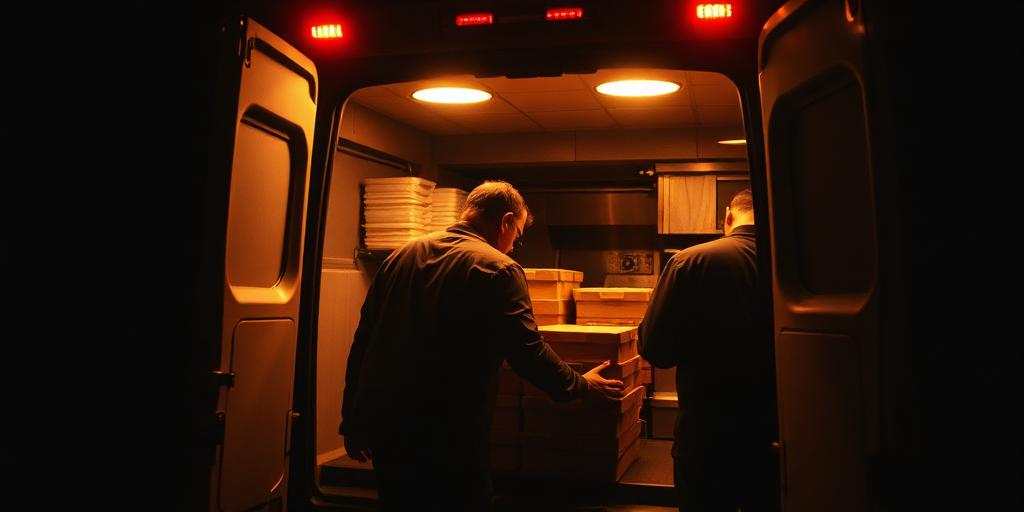
Washington DC food service. Illustration generated with AI. Not a photograph of a Foody Finance client or location.
What drives financing conversations in Washington DC
Catering operators need capital ahead of large contracts, and restaurants face buildout costs inflated by historic district requirements.
Revenue and seasonality in Washington DC
Association, corporate, and political catering carry weekday revenue at high check averages, the August recess and late December are predictable holes, and spring tourism lifts the dining rooms.
What this does to your numbers
Session weeks, conventions, and universities set the calendar, and August is the reliable quiet month.
Permitting in Washington DC, and what it costs to wait
DC Health licensing plus historic and landmark review can add months to a facade or ventilation change. Buildout draws here are usually tied to inspection milestones so interest is not accruing while the file sits.
What the wait actually costs
Historic and landmark review can add months, and government and association catering pays 30 to 60 days after the event.
What raises the cost of capital here
01Legislative and convention calendars set catering demand more than the residential population does
02Historic district and DC Health review can extend buildout timelines significantly
03Federal contracting rules shape how large catering clients pay, often on net terms
Which program usually fits here
A line of credit against outstanding invoices covers the gap between doing the work and getting paid for it.
District of Columbia outline. Boundary data: US Census Bureau cartographic boundary files, public domain. Simplified for display.
Taking money out of an approved line or loan. Draws tied to construction milestones mean you only start paying interest on each piece as you use it.
line of credit
A preapproved pool of money you pull from only when you need it, then pay back and reuse. You pay for what you draw, not for the full amount sitting there.
covers
The number of guests served. Lenders pair it with check average to judge how reliable a month really is.
net 30
You deliver now and get paid 30 or 60 days later. Catering and contract accounts run this way, which is why the food cost is out of your account before the money comes in.
working capital
Cash for the everyday gaps: payroll, inventory, rent, and repairs. It is repaid out of daily or weekly sales rather than from one big event.
buildout capital
Money for the work that turns a space into a working kitchen: plumbing, electrical, hoods, walls, and permits. It pays for labor and materials you cannot resell, so it is priced differently than money for a fryer.
equipment paper
A loan or lease tied to a specific machine. The machine itself is the security, so approval leans on the value of the hardware more than on your bank statements.
hard credit pull
A formal credit check that shows on your report and can move your score a few points. It happens only after you pick a specific lender, not to get information.
underwriting
The lender reading your numbers to decide how much risk you are. Bank statements, time in business, and existing debt carry the most weight.
term
How long you have to repay. A longer term lowers the monthly payment and raises what the money costs in total.
How do DC caterers finance work that pays on net 30 or net 60?
Receivables financing or working capital bridges the gap between spending on food and labor and getting paid. Contracts and invoices are the supporting documents that make that request straightforward.
Does the congressional calendar affect a DC financing request?
It explains the revenue shape. Recess periods create predictable dips, and presenting the calendar alongside the statements keeps those months from reading as decline.
How do government shutdowns and congressional recesses show up in a DC restaurant's bank statements?
Restaurants near the Capitol, K Street, and downtown federal buildings often see an immediate, sharp drop in weekday lunch deposits within days of a shutdown or the start of a congressional recess, since furloughed staff and traveling members of Congress stop generating routine lunch traffic almost overnight. Lenders reviewing a DC restaurant near the Hill or federal core typically check deposit history against known recess and past shutdown dates before judging a slow month, since a dip tied to a shutdown reflects the location's federal dependence rather than a decline in the restaurant's underlying business.
How do Washington DC food businesses start a financing conversation?
Start with a free review by a specialist. You share the basics of the business, the use of funds, and recent bank statements, and you see every program that fits before any credit application exists. Short term options commonly fund in 1 to 3 business days once you choose an offer.
Do you serve areas outside Washington DC in District of Columbia?
Yes. Every program is available statewide in District of Columbia and nationwide.
What is working capital, and when does it fit a Washington DC operator?
Cash for the everyday gaps, repaid out of sales on a set schedule instead of at the end of a project. Use it for payroll, inventory, a slow stretch, or a job you have to fund before the client pays you. Typical size is 10,000 to 500,000, funding runs 1 to 3 business days once you choose an offer, and you repay it as fixed daily, weekly, or monthly payment. You will be asked for: application, 3 to 6 months of bank statements.
What is buildout and expansion, and when does it fit a Washington DC operator?
Construction money for the work that turns a space into a working kitchen, usually released in stages as the job progresses. Use it for a second location, a remodel, a patio, or a kitchen conversion, and size it to cover the permit wait, not just the build. Typical size is 50,000 to 2,000,000, funding runs 1 to 4 weeks once you choose an offer, and you repay it as fixed payment, often with a draw schedule. You will be asked for: application, contractor bids, lease, financials.
What is equipment financing, and when does it fit a Washington DC operator?
You borrow against a specific machine, and the machine is what backs the loan. Use it when a fryer, a walk-in, an oven, or a vehicle has to be replaced and you would rather keep the cash in the account. Typical size is 5,000 to 500,000, funding runs 1 to 5 business days once you choose an offer, and you repay it as fixed monthly payment. You will be asked for: application, equipment quote, bank statements.
Why does the Washington DC calendar change what I should borrow?
Session weeks, conventions, and universities set the calendar, and August is the reliable quiet month.
What does waiting actually cost me in Washington DC?
Historic and landmark review can add months, and government and association catering pays 30 to 60 days after the event.
Which program do most Washington DC operators end up using?
A line of credit against outstanding invoices covers the gap between doing the work and getting paid for it. That is a starting point, not a decision. The specialist review looks at your deposits, your time in business, and what the money is for before anything is recommended.
Does asking about financing in Washington DC affect my credit?
No. Getting information is a conversation, not an application. There is no credit application and no hard credit pull until you have picked a specific lender and want to move forward.
Start the conversation
Talk to a specialist before you fill out an application.
Start with a free, no-obligation review. We will send the right application only after we know what you actually qualify for.