Back to LocationsAll 50 states
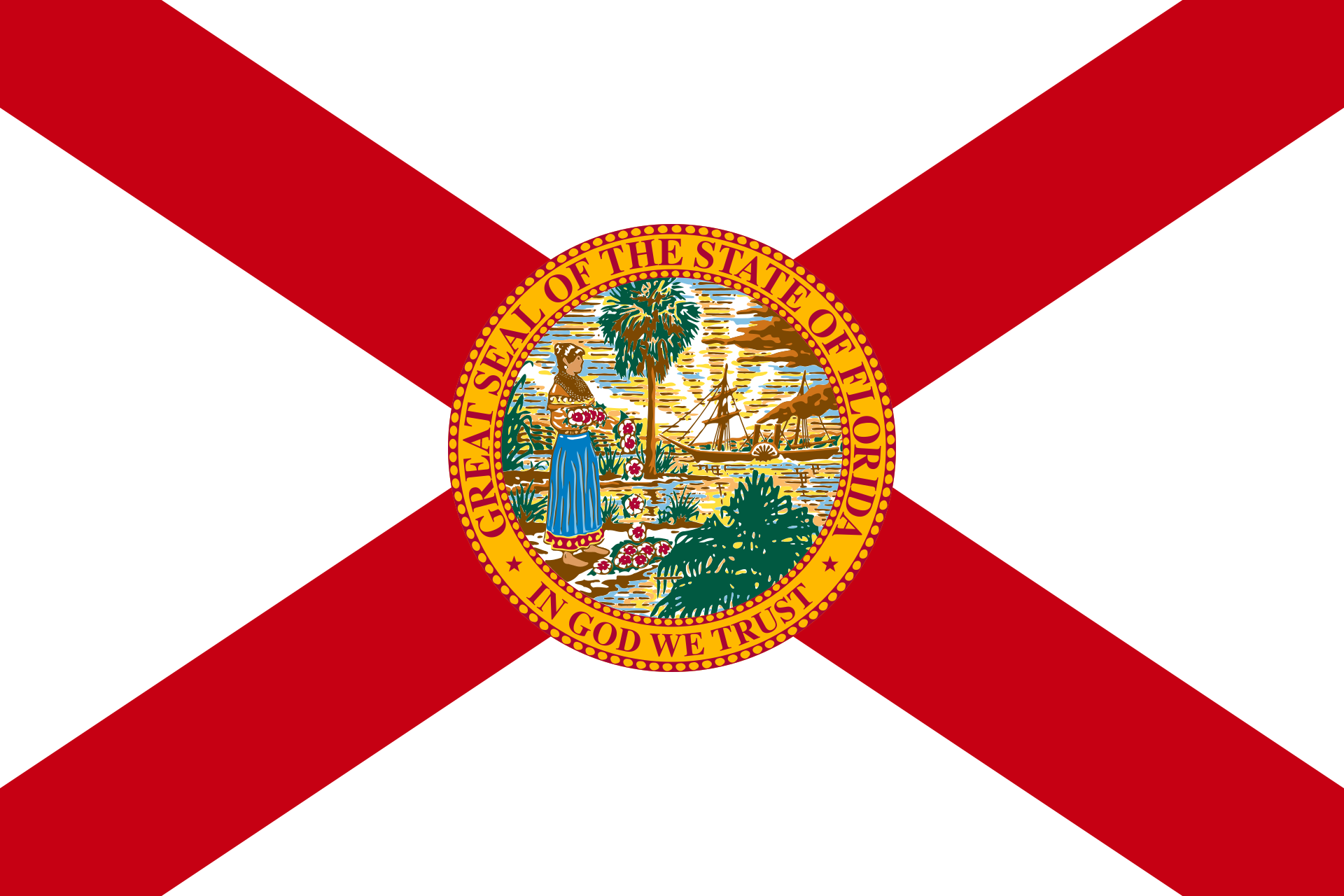
Flag of Florida

FL coverage

RESTAURANT AND FOOD SERVICE FINANCING IN FLORIDA

Florida operators manage tourism seasonality and hurricane risk in the same budget.

Flag of Florida. Public domain, via Wikimedia Commons.

Can food businesses in Florida get financing?

Yes. Foody Finance works with restaurants, bars, caterers, food trucks, ghost kitchens, and distributors across Florida. Equipment requests commonly fund in 1 to 5 business days, working capital in 1 to 3, and SBA financing in 3 to 12 weeks.

Estimates, not offers: Amounts, terms, and funding times are estimates based on programs commonly available in food service. Actual terms vary by program, lender underwriting, time in business, revenue, and credit profile. Nothing here is an offer of credit or a guarantee of approval. See source and method.

How Florida actually makes its money in food

01

What Florida actually orders

Florida's plate splits by region more than any state its size. Miami and the Southeast run on Cuban sandwiches, croquetas and cafecito windows, with Venezuelan and Colombian arepas filling in the gaps in Doral and Weston. Tampa claims the Cuban sandwich too, but with a Tampa-style version built on Italian salami that locals defend against Miami's version. The Panhandle, culturally closer to Alabama and Georgia than to South Florida, runs on fried mullet, oyster houses in Apalachicola, and Gulf shrimp boils. Central Florida, anchored by Orlando, carries a tourist-driven mix of chain casual dining feeding theme park visitors alongside a growing Puerto Rican food scene in Kissimmee tied to post-Hurricane Maria migration. Stone crab season, October through May, drives a specific seasonal menu and price spike at coastal seafood houses statewide. Snowbird season from November through April swells populations and check averages in Naples, Sarasota and the Gulf Coast retirement corridors, then drops off hard each summer, leaving those same restaurants to staff for half the covers with the same fixed lease.
02

How ports, agriculture and retirees built the menu

Cuban immigration after 1959, concentrated through the Freedom Flights era, built Miami's Cuban food identity and later diversified as Nicaraguan, Colombian and Venezuelan arrivals layered onto it through the 1980s and 2000s. Central Florida's citrus industry, though shrunk by citrus greening disease, still shapes packing-town identity in Polk County and around Lake Wales. Walt Disney World's 1971 opening rerouted Central Florida's entire economy toward tourism dining, pulling labor and capital away from agriculture and into hospitality corridors along International Drive. The Panhandle's seafood houses trace to commercial fishing fleets out of Panama City and Apalachicola that predate statehood-era tourism by a century. Snowbird migration, decades old, built a Northeastern-transplant dining base in Naples, Boca Raton and Sarasota that expects white-tablecloth Italian and steakhouse fare unlike native Florida cooking. Cruise ports in Miami, Port Everglades and Port Canaveral generate a rotating population of embarkation-day diners who eat one meal at nearby restaurants before boarding. A restaurant near a cruise terminal depends on ship schedules for a predictable but narrow embarkation-day revenue window that vanishes the moment sailing schedules shift.

03

A calendar built on hurricanes and snowbirds

Florida's restaurant year runs opposite the rest of the country. Snowbird season from November through April brings peak covers to the Gulf Coast, Naples and the Keys, while summer becomes the off-season for anywhere that isn't a theme park. Hurricane season, officially June through November, forces every coastal and Central Florida operator to plan around storm closures, spoiled inventory from power loss, and the week-long evacuation orders that can empty a market overnight, as Hurricane Ian did to Fort Myers in September 2022 and Hurricane Michael did to the Panhandle in October 2018. Spring break, March through early April, spikes traffic in Panama City Beach, Fort Lauderdale and Miami Beach with a younger, lower-check crowd. Stone crab season opens October 15 and closes May 15, giving coastal seafood restaurants a hard calendar boundary for their signature dish. Art Basel Miami Beach in early December drives one of the highest-grossing weeks of the year for South Florida fine dining. A single named storm during peak snowbird season can force a coastal restaurant to discard a week of perishable inventory it had stocked for its highest-margin months.

04

Who owns the restaurant and who staffs it

Florida's operator base splits between family-owned Cuban and Latin American restaurants concentrated in Miami-Dade, franchise-heavy casual dining chains that dominate tourist corridors like International Drive and US-192 near Orlando, and independent seafood houses along the Gulf Coast and Panhandle often run by families with generational ties to commercial fishing. Florida has no state income tax, which operators cite when recruiting management from higher-tax states, but the state's minimum wage rises on a fixed statutory schedule toward $15 by 2026, already ahead of many Southern neighbors. Seasonal labor swings hard: theme park corridors and snowbird destinations need double the staff from November through April that they need in July and August, and many operators rely on H-2B visa workers and college-age seasonal hires to cover the gap. Housing costs in Naples, Miami Beach and the Keys have pushed kitchen staff to commute over an hour, since workforce housing near the restaurants themselves has become unaffordable. A seasonal restaurant that hires up for snowbird season faces a fixed payroll base each November that it must cover before the first strong month of receipts arrives.

05

The cost of running a kitchen in Florida

Commercial insurance is Florida's defining operating cost, driven by hurricane exposure that has pushed property and business interruption premiums well above the national average, with some coastal operators reporting policy non-renewals after successive storm seasons. Flood insurance is often mandatory for any coastal lease, adding a fixed cost regardless of claims history. Rent in Miami Beach, Naples and Palm Beach reflects tourism-driven real estate values that outpace the wages available to staff those same restaurants, creating a persistent gap between lease cost and local labor cost. Produce sourcing benefits from in-state agriculture in the winter growing season around Immokalee and the Everglades Agricultural Area, but summer heat and hurricane risk to Central American and Caribbean supply routes push seafood and produce costs up mid-year. Utility costs spike in summer as air conditioning load rises with heat and humidity, a fixed cost independent of covers served. Workers' compensation costs run high in a state with a large service-industry workforce and frequent slip-and-fall claims tied to wet, humid kitchen and dining conditions. A hurricane-driven insurance non-renewal can force a coastal restaurant into a scramble for replacement coverage that arrives at a materially higher premium with no notice period to absorb it.

06

Where growth is heading next

New restaurant openings concentrate along Florida's I-4 corridor between Tampa and Orlando, where population growth from domestic migration has outpaced existing dining supply, and in fast-growing suburbs like Wesley Chapel, Lakewood Ranch and St. Johns County near Jacksonville. Downtown Miami and Brickell continue to add high-end concepts tied to condo tower construction and a wave of finance-sector relocations from New York. Southwest Florida, particularly Fort Myers and Cape Coral, is rebuilding restaurant stock after Hurricane Ian's 2022 damage, with new buildout required to meet updated post-storm wind and flood codes that add material and permitting cost beyond a typical build. The Panhandle's 30A corridor continues to draw upscale seasonal concepts tied to vacation rental growth rather than year-round local population. Villages-area growth near Ocala reflects retiree population expansion inland, away from coastal insurance costs, creating a new inland dining market. A restaurant building out in a post-Ian flood zone must meet elevated construction standards that extend the buildout timeline and delay the opening date past the season it was originally planned to catch.

Licensing and permitting in Florida, and what it costs to wait

The Department of Business and Professional Regulation licenses restaurants, and separate permits apply to mobile units.

Mobile units carry their own permit track and their own downtime, and storm exposure on top of it is why standby capacity gets financed before hurricane season rather than after a loss.

What Florida operators finance

Flexible repayment structures and standby lines of credit fit this market better than fixed obligations.

The Florida revenue calendar

Snowbird and tourism season runs roughly November through April, hurricane season overlaps the slow months, and summer volume depends heavily on whether the market is coastal or theme park driven.

Revenue mix and seasonality in Florida

Season runs opposite most of the country, with January through April carrying tourist markets, summer softening in the south and lifting in the panhandle, and hurricane months capable of erasing a week of revenue with no warning.

What this does to your numbers

November to April carries the year. Summer is thinner, and hurricane season sits directly on top of the slow months.

What a delay costs in Florida

A 3 day power loss is spoiled inventory, lost covers, and sometimes a dead compressor at the same time. Insurance pays later, if it pays, and payroll is due Friday.

What underwriting looks at in Florida

  • 01Storm closures and power loss create sudden inventory and equipment losses
  • 02DBPR licensing and separate mobile unit permits govern trucks and commissaries
  • 03Insurance cost per location has become a material underwriting factor

Which program usually fits here

Keep an approved line sitting unused before storm season. Applying after the storm is the version that costs the most and takes the longest.

Markets we serve in Florida

We work with operators across Florida, including Miami, Orlando, Tampa, Jacksonville, Fort Lauderdale, Naples, and Sarasota. Rural and small market operators qualify for the same programs.

Metro market pages in Florida

Food service operation in Florida
Illustrative image generated with AI.
Florida outline. Boundary data: US Census Bureau cartographic boundary files, public domain. Simplified for display.

Free review, no hard credit pull

Get funds now and review your options

Step 01 of 03 · Your operation

A specialist reviews every request and reaches out the same business day

Typical Florida timelines
 Working capitalEquipmentSBA
Time to funding1 to 3 business days1 to 5 business days3 to 12 weeks
Documents3 to 6 months of bank statementsEquipment quote plus statementsTax returns, financials, debt schedule
Common use in this stateSnowbird and tourism season runs roughly November through April, hurricane season overlaps the slow months, and summer volume depends heavily on whether the market is coastal or theme park driven.Storm closures and power loss create sudden inventory and equipment lossesAcquisition, refinance, or a longer buildout

Estimates, not offers: Amounts, terms, and funding times are estimates based on programs commonly available in food service. Actual terms vary by program, lender underwriting, time in business, revenue, and credit profile. Nothing here is an offer of credit or a guarantee of approval. See source and method.

One page PDF with the Florida timelines table and the state plate photo.

Florida plateKey lime pieTourist season front loads revenue, and refrigeration reliability in the heat is a revenue question, not a maintenance one.

Financing terms on this page

Definitions for the terms used above.

underwriting
The lender reading your numbers to decide how much risk you are. Bank statements, time in business, and existing debt carry the most weight.
covers
The number of guests served. Lenders pair it with check average to judge how reliable a month really is.
line of credit
A preapproved pool of money you pull from only when you need it, then pay back and reuse. You pay for what you draw, not for the full amount sitting there.
draw
Taking money out of an approved line or loan. Draws tied to construction milestones mean you only start paying interest on each piece as you use it.
equipment paper
A loan or lease tied to a specific machine. The machine itself is the security, so approval leans on the value of the hardware more than on your bank statements.
working capital
Cash for the everyday gaps: payroll, inventory, rent, and repairs. It is repaid out of daily or weekly sales rather than from one big event.
hard credit pull
A formal credit check that shows on your report and can move your score a few points. It happens only after you pick a specific lender, not to get information.
SBA loan
A bank loan partly guaranteed by the Small Business Administration. Lowest cost of the options, longest paperwork, and the slowest to fund.
merchant cash advance
You sell a slice of future card sales for cash today. Fastest money available, and the most expensive, so it fits an emergency rather than a plan.
term
How long you have to repay. A longer term lowers the monthly payment and raises what the money costs in total.
buildout capital
Money for the work that turns a space into a working kitchen: plumbing, electrical, hoods, walls, and permits. It pays for labor and materials you cannot resell, so it is priced differently than money for a fryer.
commissary
A licensed production kitchen used to prep off site, most often by trucks and catering operations. It carries its own rent, equipment, and permits.
collateral
Something the lender can take back if the loan is not repaid, usually the equipment being financed. More collateral generally means a lower cost.

Florida financing questions

Can I get restaurant financing in Florida?

Yes. Every Foody Finance program is available to food service operators in Florida, including equipment financing, working capital, lines of credit, SBA loans, and buildout capital.

How fast can a Florida restaurant get funded?

Short term programs commonly fund in 1 to 3 business days and equipment requests in 1 to 5. SBA financing in Florida runs 3 to 12 weeks.

Should a Florida operator have financing in place before hurricane season?

An approved line that sits undrawn is far more useful than an urgent application after a closure. Post storm demand spikes and equipment lead times stretch, so operators who arranged capacity in the spring restock first.

Which Florida cities do you serve?

All of them. Operators we work with in Florida run in Miami, Orlando, Tampa, Jacksonville, Fort Lauderdale, Naples, and Sarasota, along with smaller markets across the state. Underwriting reviews deposits and the use of funds, not the population of the market.

What documents do Florida operators need?

For the first review, just the form. If you choose a short term program, the lender usually asks for 3 to 6 months of business bank statements. SBA adds tax returns, interim financials, and a debt schedule.

Does Florida licensing affect financing?

Licensing affects buildout timelines and, in some transactions, collateral value. We factor local permitting into how a Florida request is structured.

Do I need a hard credit pull to start in Florida?

No. The first conversation is a review of your situation and the programs you likely qualify for. A hard pull only happens once you choose a specific lender and submit their application.

What is business line of credit, and when does it fit a Florida operator?

An approved limit you pull from only when you need it, then repay and reuse. Use it for a season you can see coming, so you draw before the peak and pay it back out of the peak. Typical size is 10,000 to 250,000, funding runs 2 to 7 business days once you choose an offer, and you repay it as interest on the drawn balance only. You will be asked for: application, bank statements.

What is equipment financing, and when does it fit a Florida operator?

You borrow against a specific machine, and the machine is what backs the loan. Use it when a fryer, a walk-in, an oven, or a vehicle has to be replaced and you would rather keep the cash in the account. Typical size is 5,000 to 500,000, funding runs 1 to 5 business days once you choose an offer, and you repay it as fixed monthly payment. You will be asked for: application, equipment quote, bank statements.

What is working capital, and when does it fit a Florida operator?

Cash for the everyday gaps, repaid out of sales on a set schedule instead of at the end of a project. Use it for payroll, inventory, a slow stretch, or a job you have to fund before the client pays you. Typical size is 10,000 to 500,000, funding runs 1 to 3 business days once you choose an offer, and you repay it as fixed daily, weekly, or monthly payment. You will be asked for: application, 3 to 6 months of bank statements.

Why does the Florida calendar change what I should borrow?

November to April carries the year. Summer is thinner, and hurricane season sits directly on top of the slow months.

What does waiting actually cost me in Florida?

A 3 day power loss is spoiled inventory, lost covers, and sometimes a dead compressor at the same time. Insurance pays later, if it pays, and payroll is due Friday.

Which program do most Florida operators end up using?

Keep an approved line sitting unused before storm season. Applying after the storm is the version that costs the most and takes the longest. That is a starting point, not a decision. The specialist review looks at your deposits, your time in business, and what the money is for before anything is recommended.

Does asking about financing in Florida affect my credit?

No. Getting information is a conversation, not an application. There is no credit application and no hard credit pull until you have picked a specific lender and want to move forward.

Start the conversation

Talk to a specialist before you fill out an application.

Start with a free, no-obligation review. We will send the right application only after we know what you actually qualify for.

Start a free review

Prefer to call

(833) 505-1900