GA metro

Restaurant financing in Atlanta.

Atlanta's food hall and mixed use development boom created a class of operator running small footprints with fast expansion plans.

How do Atlanta food businesses get funded?

Atlanta operators start with a free review with a specialist, share recent business bank statements, and are matched to the programs that fit the use of funds. Working capital funds in 1 to 3 business days after you choose an offer, equipment in 1 to 5, and buildout capital in 1 to 4 weeks.

Estimates, not offers: Amounts, terms, and funding times are estimates based on programs commonly available in food service. Actual terms vary by program, lender underwriting, time in business, revenue, and credit profile. Nothing here is an offer of credit or a guarantee of approval. See source and method.

How Atlanta eats, and what that does to cash

01

Where Atlanta eats

Buckhead carries the city's higher end steakhouse and nightclub district, serving a wealthier crowd and out of town business travelers staying in the area's hotel corridor. Midtown, near Piedmont Park, holds a denser mix of chef driven restaurants and cocktail bars serving young professionals working in the district's office towers. The West End and Cascade Road serve a historically Black, working and middle class population with soul food restaurants and casual dining at lower price points than Buckhead. East Atlanta Village and Little Five Points hold a bar and late night food scene serving a younger, alternative crowd. Old Fourth Ward, near the Atlanta BeltLine, has grown quickly with breweries and fast casual restaurants serving both new residents and BeltLine foot and bike traffic. Decatur, just east of the city, supports an independent restaurant scene serving a college town style population near Agnes Scott College. Rent along the BeltLine has risen sharply as development has followed the trail, changing what a new lease costs compared to a decade ago.
02

What Atlanta orders

Soul food, including fried chicken, collard greens, and mac and cheese, remains a defining citywide dish, served at both longstanding cafeterias in the West End and newer chef driven interpretations in Midtown. Fried chicken specifically anchors both quick service and sit down menus across every price tier. Southern brunch, heavy on biscuits and shrimp and grits, drives weekend crowds at restaurants across Midtown and Decatur. Food halls, including Ponce City Market's central food hall inside the former Sears building, group counter service vendors along the BeltLine for a mixed tourist and local crowd. Late night food, tied to Atlanta's hip hop and nightlife culture, keeps kitchens in East Atlanta Village and around Buckhead's clubs open past midnight on weekends. Barbecue holds a smaller but steady presence at counter service spots across the metro. A soul food plate runs ten to fifteen dollars, a Ponce City Market food hall meal runs similarly, and Buckhead steakhouse dinners regularly pass seventy five dollars a person. Restaurants that depend on late night hours face higher security and staffing costs tied to extended operating hours.

03

The Atlanta calendar

Mercedes-Benz Stadium and State Farm Arena downtown host Falcons, Braves adjacent events, Hawks games, and major conventions that spike restaurant traffic on scattered event nights throughout the year. The Georgia World Congress Center's convention calendar brings steady weekday trade show traffic to downtown restaurants outside of major sports events. Hartsfield-Jackson Atlanta International Airport, one of the busiest airports in the world, supports a constant stream of layover and business travel dining near the airport corridor independent of the local calendar. Atlanta's film and television production industry, concentrated in studios around the metro, brings crews and related dining demand tied to production schedules rather than a fixed season. The Atlanta Jazz Festival each Memorial Day weekend and Music Midtown each fall draw large crowds to Piedmont Park. Summer humidity cuts some outdoor patio comfort from June through August, though it does not stop dining the way extreme desert heat does elsewhere. A downtown Atlanta restaurant near the stadiums plans staffing around an uneven schedule of game days and convention bookings rather than a single predictable season.

04

Growth and cost in Atlanta

New restaurant growth concentrates along the Atlanta BeltLine corridor and in fast growing suburbs like Alpharetta and Sandy Springs, where corporate relocations have added office and residential density. Buckhead and Midtown still command the highest rents in the metro, pushing many independent operators toward Old Fourth Ward, East Atlanta, or Decatur instead. Labor costs have risen with Atlanta's population growth, though they remain below coastal metros, and film and television production has created competition for hospitality workers during peak filming seasons. Buildout near the BeltLine often involves older industrial buildings that require updated electrical and plumbing systems before a commercial kitchen can open. Traffic congestion across the metro affects delivery and staffing logistics, since employees and suppliers often commute long distances between suburbs and central restaurant districts. Summer utility costs rise with humidity driven cooling demand. A BeltLine adjacent buildout in an older warehouse can take longer than a new suburban shell in Alpharetta, delaying the first month of revenue while fixed lease payments continue.

Food service operation in Atlanta
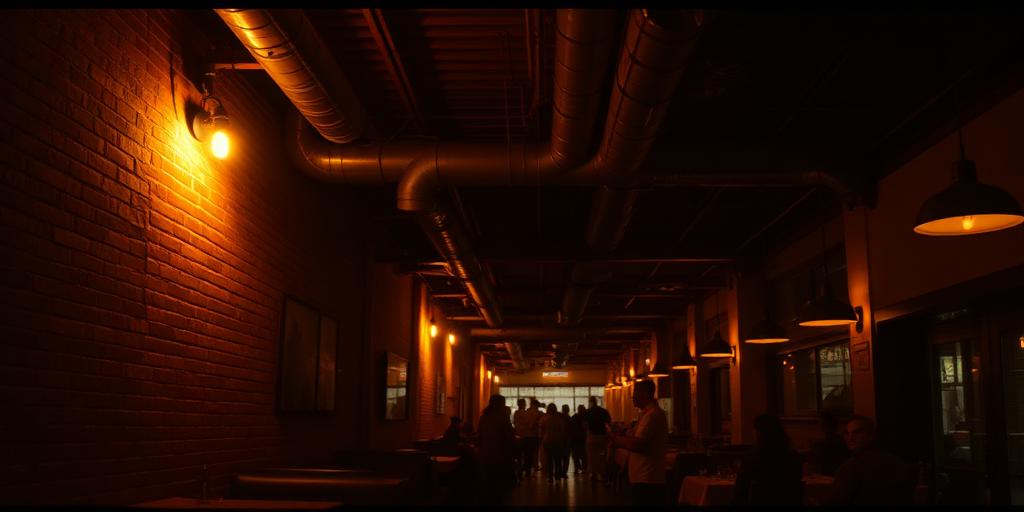
Atlanta food service. Illustration generated with AI. Not a photograph of a Foody Finance client or location.

What drives financing conversations in Atlanta

Small footprint buildouts and equipment packages dominate, and catering demand from corporate accounts drives vehicle and cold storage financing.

Revenue and seasonality in Atlanta

Corporate catering and event volume anchor weekdays, film and convention activity lifts specific weeks, and growth corridor suburbs deliver steadier family dining than the core.

What this does to your numbers

Corporate catering follows the office calendar with a December peak, and film production catering is a real, separate revenue line.

Permitting in Atlanta, and what it costs to wait

Fulton, DeKalb, and Cobb run their own health and alcohol processes, so a second location one county over restarts the clock. Expansion capital here is sized per site rather than per brand because timelines do not transfer.

What the wait actually costs

Suburban permit desks and city and county alcohol rules differ enough to move an opening date by a month or more.

What raises the cost of capital here

  • 01Corporate catering demand extends well outside the perimeter into Cobb, Gwinnett, and Fulton suburbs
  • 02Alcohol licensing is handled city by city, so the same concept faces different timelines across the metro
  • 03Airport and convention volume supports high throughput concepts with heavy equipment loads

Which program usually fits here

Catering revenue that pays on terms needs a line of credit behind it, so a large booking does not create a payroll problem.

Atlanta
Georgia outline. Boundary data: US Census Bureau cartographic boundary files, public domain. Simplified for display.

Free review, no hard credit pull

Get funds now and review your options

Step 01 of 03 · Your operation

A specialist reviews every request and reaches out the same business day

Areas we serve

  • Midtown
  • West End
  • Buckhead
  • Decatur
  • Alpharetta

Financing terms on this page

Definitions for the terms used above.

line of credit
A preapproved pool of money you pull from only when you need it, then pay back and reuse. You pay for what you draw, not for the full amount sitting there.
buildout capital
Money for the work that turns a space into a working kitchen: plumbing, electrical, hoods, walls, and permits. It pays for labor and materials you cannot resell, so it is priced differently than money for a fryer.
draw
Taking money out of an approved line or loan. Draws tied to construction milestones mean you only start paying interest on each piece as you use it.
equipment paper
A loan or lease tied to a specific machine. The machine itself is the security, so approval leans on the value of the hardware more than on your bank statements.
working capital
Cash for the everyday gaps: payroll, inventory, rent, and repairs. It is repaid out of daily or weekly sales rather than from one big event.
hard credit pull
A formal credit check that shows on your report and can move your score a few points. It happens only after you pick a specific lender, not to get information.
underwriting
The lender reading your numbers to decide how much risk you are. Bank statements, time in business, and existing debt carry the most weight.
covers
The number of guests served. Lenders pair it with check average to judge how reliable a month really is.
term
How long you have to repay. A longer term lowers the monthly payment and raises what the money costs in total.

Atlanta financing questions

Can Atlanta catering vehicles and cold storage be financed together?

They are usually separate structures. Refrigerated vans finance against title and walk in cold storage finances as equipment or buildout, and splitting them commonly produces better terms than one blended request.

Does opening in a different Atlanta suburb change the funding timeline?

It changes the permitting timeline, which changes the carrying cost. Alcohol and health review vary by jurisdiction, so the capital covering rent during review should be sized to the specific municipality.

How does Atlanta's convention and event calendar create uneven restaurant revenue downtown?

Mercedes-Benz Stadium, State Farm Arena, and the Georgia World Congress Center each book events independently, so a downtown Atlanta restaurant can see a strong week driven by a convention, a sold out concert, or a Falcons game followed by a quiet week with no scheduled events nearby. That scheduling is set by venue operators, not by any predictable local season, making downtown revenue harder to forecast than a suburban restaurant serving steady daily commuter traffic. Lenders should review a downtown Atlanta applicant's actual booking dependent revenue pattern rather than assume evenly distributed monthly sales.

How do Atlanta food businesses start a financing conversation?

Start with a free review by a specialist. You share the basics of the business, the use of funds, and recent bank statements, and you see every program that fits before any credit application exists. Short term options commonly fund in 1 to 3 business days once you choose an offer.

Do you serve areas outside Atlanta in Georgia?

Yes. Every program is available statewide in Georgia and nationwide.

What is buildout and expansion, and when does it fit a Atlanta operator?

Construction money for the work that turns a space into a working kitchen, usually released in stages as the job progresses. Use it for a second location, a remodel, a patio, or a kitchen conversion, and size it to cover the permit wait, not just the build. Typical size is 50,000 to 2,000,000, funding runs 1 to 4 weeks once you choose an offer, and you repay it as fixed payment, often with a draw schedule. You will be asked for: application, contractor bids, lease, financials.

What is equipment financing, and when does it fit a Atlanta operator?

You borrow against a specific machine, and the machine is what backs the loan. Use it when a fryer, a walk-in, an oven, or a vehicle has to be replaced and you would rather keep the cash in the account. Typical size is 5,000 to 500,000, funding runs 1 to 5 business days once you choose an offer, and you repay it as fixed monthly payment. You will be asked for: application, equipment quote, bank statements.

What is working capital, and when does it fit a Atlanta operator?

Cash for the everyday gaps, repaid out of sales on a set schedule instead of at the end of a project. Use it for payroll, inventory, a slow stretch, or a job you have to fund before the client pays you. Typical size is 10,000 to 500,000, funding runs 1 to 3 business days once you choose an offer, and you repay it as fixed daily, weekly, or monthly payment. You will be asked for: application, 3 to 6 months of bank statements.

Why does the Atlanta calendar change what I should borrow?

Corporate catering follows the office calendar with a December peak, and film production catering is a real, separate revenue line.

What does waiting actually cost me in Atlanta?

Suburban permit desks and city and county alcohol rules differ enough to move an opening date by a month or more.

Which program do most Atlanta operators end up using?

Catering revenue that pays on terms needs a line of credit behind it, so a large booking does not create a payroll problem. That is a starting point, not a decision. The specialist review looks at your deposits, your time in business, and what the money is for before anything is recommended.

Does asking about financing in Atlanta affect my credit?

No. Getting information is a conversation, not an application. There is no credit application and no hard credit pull until you have picked a specific lender and want to move forward.

Start the conversation

Talk to a specialist before you fill out an application.

Start with a free, no-obligation review. We will send the right application only after we know what you actually qualify for.

Start a free review

Prefer to call

(833) 505-1900