NY metro

Restaurant financing in Buffalo.

Lake-effect snow can bury Buffalo sidewalks for days at a time, and a restaurant still has to make payroll whether anyone can get through the door or not.

How do Buffalo food businesses get funded?

Buffalo operators start with a free review with a specialist, share recent business bank statements, and are matched to the programs that fit the use of funds. Working capital funds in 1 to 3 business days after you choose an offer, equipment in 1 to 5, and buildout capital in 1 to 4 weeks.

Estimates, not offers: Amounts, terms, and funding times are estimates based on programs commonly available in food service. Actual terms vary by program, lender underwriting, time in business, revenue, and credit profile. Nothing here is an offer of credit or a guarantee of approval. See source and method.

How Buffalo eats, and what that does to cash

01

Where Buffalo eats

Elmwood Village is Buffalo's premier walkable dining strip, running along Elmwood Avenue with a mix of independent bistros, coffee shops, and boutique restaurants drawing a younger, higher-income crowd willing to spend 30 dollars or more per person at dinner. Allentown, just east of downtown, carries the city's late-night bar scene, with dive bars and small kitchens serving cheap food to a crowd that stays out past midnight on weekends. Hertel Avenue, in the city's historically Italian North Buffalo neighborhood, is still lined with red-sauce Italian restaurants and bakeries serving multi-generational family customers. Downtown's Chippewa District has rebuilt itself around nightlife tied to hockey and concert crowds from the arena, with bars and restaurants that see huge single-night spikes on event days. The Larkinville area, a converted industrial district near downtown, has become a newer food and beer garden destination in warmer months. Each neighborhood serves a genuinely different crowd, from Elmwood's date-night diners to Allentown's late bar crowd, and that split means a restaurant's neighborhood choice determines whether its busiest hours are 7 p.m. or 11 p.m.
02

What Buffalo orders

Buffalo wings, invented at the Anchor Bar downtown and still served there alongside dozens of other wing spots citywide, remain the city's single most recognizable dish and a baseline menu item at nearly every bar. Beef on weck, roast beef on a salt-and-caraway kummelweck roll, is a distinct local sandwich sold at old-school spots like Charlie the Butcher, typically 8 to 10 dollars. Fish fry Fridays are a serious tradition during Lent, with churches, fire halls, and restaurants alike serving breaded haddock or cod dinners to lines that can stretch out the door. Sponge candy, a local chocolate confection, is sold in candy shops across the city and makes a genuine local export gift item. Late-night bar food, wings especially, does heavy business after Sabres games and concerts let out downtown. Pierogi and other Polish-heritage dishes remain common on the East Side, reflecting Buffalo's immigrant history. The Lenten fish fry season creates a sharp six to seven week spike in fish inventory needs each winter, followed by an equally sharp drop-off the week after Easter that leaves kitchens holding excess frozen stock if they over-order.

03

The Buffalo calendar

Buffalo Bills home games at Highmark Stadium in Orchard Park, played from September through January, are the single biggest recurring driver of bar and restaurant revenue citywide, with tailgate culture extending well beyond the stadium into downtown bars on game days. University at Buffalo's academic calendar supports restaurants near its North and South campuses, with demand dropping during winter and summer breaks. Winter itself, from December through March, brings genuine lake-effect snow events that can shut down entire neighborhoods for a day or more with little warning, wiping out expected revenue on short notice. The Lenten fish fry season, roughly February through Easter, is a predictable and profitable stretch for many family restaurants. Summer, June through August, brings the city's outdoor festival season, including events at Canalside on the waterfront, drawing crowds that spend more time outdoors than in the colder months. The National Buffalo Wing Festival each Labor Day weekend draws visitors specifically for the city's signature dish. A single unexpected snowstorm shutting down a restaurant for even one Bills game day can erase a week's worth of expected bar revenue.

04

Growth and cost pattern

New restaurant activity has concentrated in Larkinville and the Cobblestone District near downtown, both former industrial areas converted into mixed-use dining and entertainment districts over the past decade. Elmwood Village remains largely built out, pushing new independent concepts toward North Buffalo and the Hertel Avenue corridor instead. Buildout costs in Buffalo carry a real cold-climate premium, since any new restaurant needs adequate insulation, snow-load-rated roofing, and heating capacity that a Sun Belt city would never budget for. Snow removal itself is an ongoing operating cost from November through March, both for a restaurant's own lot and, in some neighborhoods, a shared municipal assessment. Labor costs are moderate relative to other Northeast cities, though winter weather can make staffing unreliable when employees cannot safely commute. Utility costs spike sharply in winter with heating demand. A restaurant forced to close for a lake-effect snow emergency loses not just that day's revenue but often several scheduled shifts of hourly staff pay owed regardless of whether the doors opened, a direct payroll gap tied to weather rather than demand.

Food service operation in Buffalo
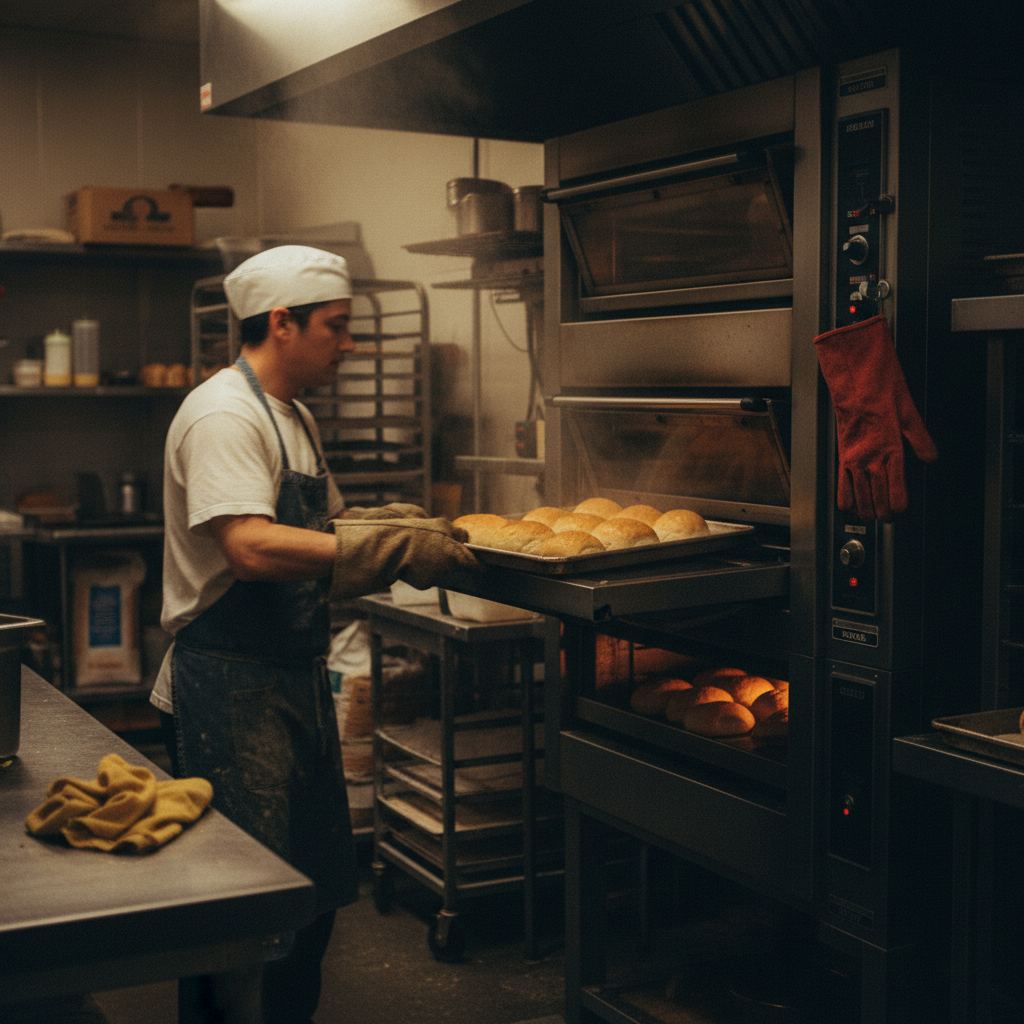
Buffalo food service. Illustration generated with AI. Not a photograph of a Foody Finance client or location.

What drives financing conversations in Buffalo

Capital here funds snow-season resilience, from backup power and delivery-ready kitchen setups to staffing that can flex around sudden closures. Buildouts in revitalizing areas like Larkinville or the Elmwood Village also need funding that accounts for older building stock, since much of Buffalo's commercial real estate needs electrical and plumbing work before a kitchen can open.

Revenue and seasonality in Buffalo

Bills game days and the warmer months from May through September drive strong revenue swings, while the depth of winter and lake-effect storm closures can wipe out entire days of expected sales. Delivery and takeout carry a larger share of winter revenue here than in most markets, which changes how owners plan staffing and menu design for the cold months.

What this does to your numbers

Summer and Bills season bring in good money, but a bad winter storm week can wipe out sales fast.

Permitting in Buffalo, and what it costs to wait

Erie County's health department oversees food service permitting while the New York State Liquor Authority handles alcohol licensing on its own separate review process, and older Buffalo buildings often require additional fire and building code work before either approval can move forward. That combination means renovation timelines here often run longer than a straightforward buildout, so a financing request needs to carry fixed costs through an extended pre-opening period.

What the wait actually costs

An old building needing electrical work can delay opening well past when rent starts.

What raises the cost of capital here

  • 01Lake-effect snow closures can eliminate multiple full sales days in a single winter month
  • 02Older commercial building stock often requires electrical and plumbing upgrades before permitting clears
  • 03Bills home game Sundays concentrate a disproportionate share of fall and winter revenue

Which program usually fits here

A working capital cushion covers snow-closure days, and equipment financing handles backup power and delivery setups for winter.

Buffalo
New York outline. Boundary data: US Census Bureau cartographic boundary files, public domain. Simplified for display.

Free review, no hard credit pull

Get funds now and review your options

Step 01 of 03 · Your operation

A specialist reviews every request and reaches out the same business day

Areas we serve

  • Elmwood Village
  • Larkinville
  • Allentown
  • North Buffalo
  • Hertel Avenue

Financing terms on this page

Definitions for the terms used above.

working capital
Cash for the everyday gaps: payroll, inventory, rent, and repairs. It is repaid out of daily or weekly sales rather than from one big event.
covers
The number of guests served. Lenders pair it with check average to judge how reliable a month really is.
equipment paper
A loan or lease tied to a specific machine. The machine itself is the security, so approval leans on the value of the hardware more than on your bank statements.
line of credit
A preapproved pool of money you pull from only when you need it, then pay back and reuse. You pay for what you draw, not for the full amount sitting there.
draw
Taking money out of an approved line or loan. Draws tied to construction milestones mean you only start paying interest on each piece as you use it.
hard credit pull
A formal credit check that shows on your report and can move your score a few points. It happens only after you pick a specific lender, not to get information.
buildout capital
Money for the work that turns a space into a working kitchen: plumbing, electrical, hoods, walls, and permits. It pays for labor and materials you cannot resell, so it is priced differently than money for a fryer.
underwriting
The lender reading your numbers to decide how much risk you are. Bank statements, time in business, and existing debt carry the most weight.
term
How long you have to repay. A longer term lowers the monthly payment and raises what the money costs in total.

Buffalo financing questions

Why do Buffalo restaurants need financing built around winter closures specifically?

Lake-effect snow can shut down entire commercial corridors like Hertel Avenue or Elmwood Village for a day or more with little warning, and that lost revenue doesn't get made back later in the week. Working capital sized around a realistic number of storm closures per winter, not just average monthly sales, keeps payroll covered through those unplanned shutdowns.

How does older building stock in Buffalo affect buildout costs?

Much of Buffalo's commercial real estate, particularly in neighborhoods like Allentown, predates modern electrical and plumbing codes, so a kitchen buildout often requires infrastructure upgrades before health and fire inspections can even begin. That adds cost and time to a project compared to opening in a newer building, and financing needs to account for both before revenue starts.

How much does the Buffalo Bills schedule actually matter to a restaurant that isn't near the stadium itself?

More than most cities' sports schedules matter to their restaurants. Bills games pull bar and restaurant traffic citywide, not just near Highmark Stadium in Orchard Park, because tailgate culture and game-watching extend into Elmwood Village, downtown, and neighborhood bars across Buffalo on every Sunday the team plays at home. Lenders reviewing a Buffalo bar or restaurant's revenue should expect visible spikes on Bills Sundays from September through January and should treat a location with no such spike as unusual for the market, since it suggests the business either sits outside the city's active social geography or is not capturing game-day traffic that competitors are.

How do Buffalo food businesses start a financing conversation?

Start with a free review by a specialist. You share the basics of the business, the use of funds, and recent bank statements, and you see every program that fits before any credit application exists. Short term options commonly fund in 1 to 3 business days once you choose an offer.

Do you serve areas outside Buffalo in New York?

Yes. Every program is available statewide in New York and nationwide.

What is working capital, and when does it fit a Buffalo operator?

Cash for the everyday gaps, repaid out of sales on a set schedule instead of at the end of a project. Use it for payroll, inventory, a slow stretch, or a job you have to fund before the client pays you. Typical size is 10,000 to 500,000, funding runs 1 to 3 business days once you choose an offer, and you repay it as fixed daily, weekly, or monthly payment. You will be asked for: application, 3 to 6 months of bank statements.

What is equipment financing, and when does it fit a Buffalo operator?

You borrow against a specific machine, and the machine is what backs the loan. Use it when a fryer, a walk-in, an oven, or a vehicle has to be replaced and you would rather keep the cash in the account. Typical size is 5,000 to 500,000, funding runs 1 to 5 business days once you choose an offer, and you repay it as fixed monthly payment. You will be asked for: application, equipment quote, bank statements.

What is business line of credit, and when does it fit a Buffalo operator?

An approved limit you pull from only when you need it, then repay and reuse. Use it for a season you can see coming, so you draw before the peak and pay it back out of the peak. Typical size is 10,000 to 250,000, funding runs 2 to 7 business days once you choose an offer, and you repay it as interest on the drawn balance only. You will be asked for: application, bank statements.

Why does the Buffalo calendar change what I should borrow?

Summer and Bills season bring in good money, but a bad winter storm week can wipe out sales fast.

What does waiting actually cost me in Buffalo?

An old building needing electrical work can delay opening well past when rent starts.

Which program do most Buffalo operators end up using?

A working capital cushion covers snow-closure days, and equipment financing handles backup power and delivery setups for winter. That is a starting point, not a decision. The specialist review looks at your deposits, your time in business, and what the money is for before anything is recommended.

Does asking about financing in Buffalo affect my credit?

No. Getting information is a conversation, not an application. There is no credit application and no hard credit pull until you have picked a specific lender and want to move forward.

Start the conversation

Talk to a specialist before you fill out an application.

Start with a free, no-obligation review. We will send the right application only after we know what you actually qualify for.

Start a free review

Prefer to call

(833) 505-1900