A restaurant in Lawrenceville can be slammed during a Steelers Sunday and dead by Tuesday once students clear out for winter break. Cash on hand has to stretch across both realities.
How do Pittsburgh food businesses get funded?
Pittsburgh operators start with a free review with a specialist, share recent business bank statements, and are matched to the programs that fit the use of funds. Working capital funds in 1 to 3 business days after you choose an offer, equipment in 1 to 5, and buildout capital in 1 to 4 weeks.
Estimates, not offers: Amounts, terms, and funding times are estimates based on programs commonly available in food service. Actual terms vary by program, lender underwriting, time in business, revenue, and credit profile. Nothing here is an offer of credit or a guarantee of approval. See source and method.
How Pittsburgh eats, and what that does to cash
01
Where Pittsburgh eats
The Strip District carries the daytime crowd with Pennsylvania Macaroni Company, Enrico Biscotti, and produce stalls that feed both tourists and line cooks stocking up before service. Lawrenceville has become the reservation corridor, with Butcher and the Rye and a run of chef-driven spots along Butler Street pulling a 30s and 40s crowd paying 40 to 70 dollars a head. Squirrel Hill and Oakland run the byoev college and family trade near Pitt and Carnegie Mellon, cheaper checks and faster turns. The South Side's Carson Street strip is the late night bar food economy, wings and fries after last call. Bloomfield keeps the city's old Italian grocery and red sauce identity intact. A restaurant's neighborhood decides whether it lives on weekday lunch, weekend dinner, or 1 a.m. drunk food, and that split determines how thin or thick the slow shift staffing has to run before payroll eats the margin.
02
What Pittsburgh orders
The Primanti Bros sandwich, fries and coleslaw stacked inside the bread, is the baseline reference point and it travels on menus across the city at 12 to 15 dollars. Pierogies, both from church fundraiser kitchens and bar menus, sell steady in fall and winter. Fish sandwiches during Lent turn into a citywide event, with parishes and corner bars both running specials from Ash Wednesday through Easter. Kennywood-adjacent and stadium concessions push volume around Steelers and Pirates game days. Counter service dominates the Strip District food stalls, while Lawrenceville and East Liberty run full table service with 60 to 90 minute waits on Fridays. Breweries like Dancing Gnome and Hitchhiker attached food trucks or small kitchens rather than full lines. The Lenten fish rush means kitchens buy far more seafood in a 6 week window than the rest of the year combined, and that inventory swing has to be financed before the season's revenue arrives.
03
The Pittsburgh calendar
UPMC, Highmark, and the University of Pittsburgh anchor daytime lunch traffic downtown and in Oakland year round, a rare steady base for a rust belt city. Steelers home games from September through early January drive Sunday spikes on the North Side and South Side. Pirates season from April through September fills PNC Park's surrounding bars on weeknights. Carnegie Mellon and Pitt move out for summer break, thinning Oakland's lunch counts from May through August. The Pittsburgh Marathon in May and the Three Rivers Regatta in summer bring one-off crowds downtown. January and February, after the holiday rush and before spring, are the flattest weeks for sit-down dinner traffic citywide, and operators without a football or hospital-driven base run at a cash deficit through those 8 weeks.
04
Growth and cost in Pittsburgh
New restaurant openings cluster in Lawrenceville, East Liberty, and the emerging Millvale corridor across the Allegheny, where older commercial buildings convert into kitchens at lower buildout cost than downtown high rises. Downtown itself has struggled to refill ground floor retail since office occupancy dropped, leaving landlords more willing to negotiate rent and tenant improvement allowances. Labor draws from a large service-industry base tied to the universities and hospitals, keeping wages closer to Rust Belt averages than coastal ones. Older building stock in Bloomfield and the South Side often means hidden costs in electrical and HVAC upgrades once permitting inspectors get involved. Winter buildouts routinely stall when concrete or exterior work can't proceed below freezing, and that seasonal delay pushes planned spring openings into summer, burning through construction loan draws before the doors ever open.
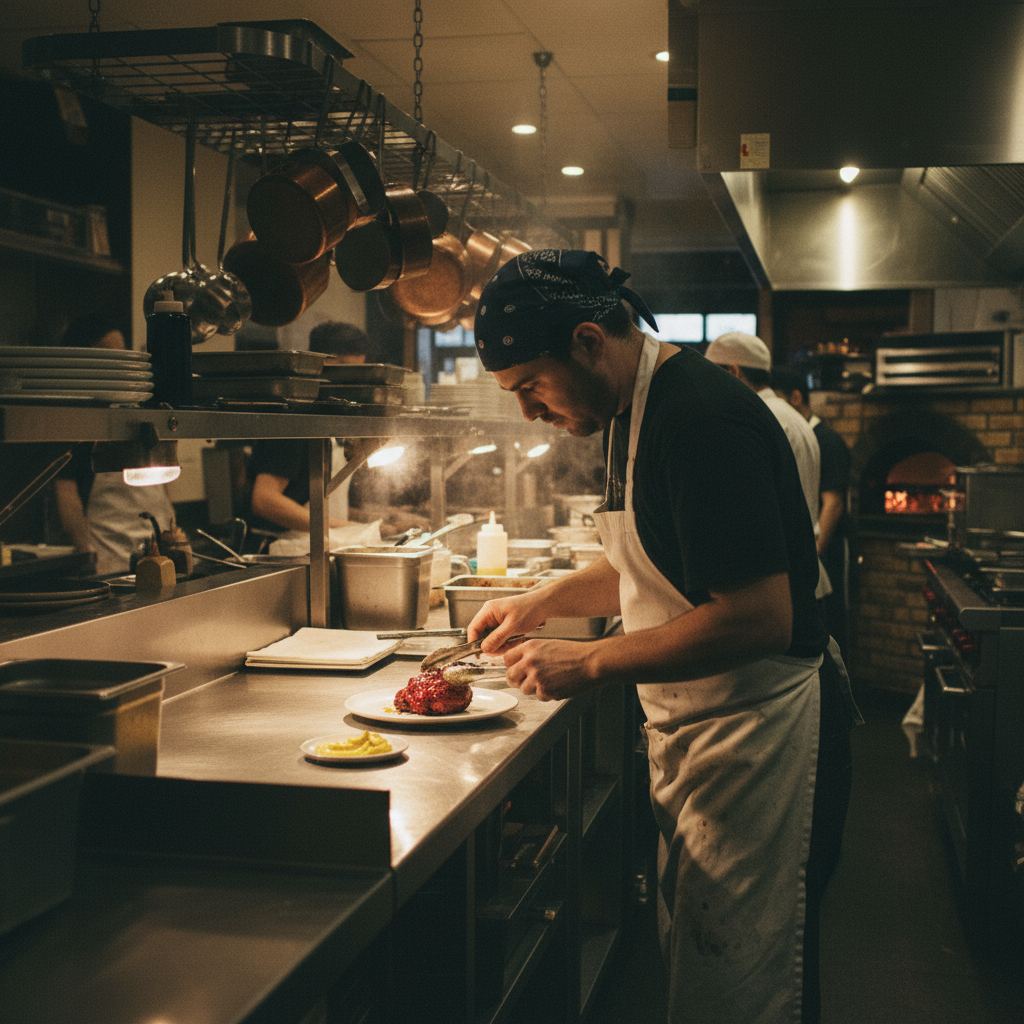
Pittsburgh food service. Illustration generated with AI. Not a photograph of a Foody Finance client or location.
What drives financing conversations in Pittsburgh
Kitchens here often need money for hood and ventilation upgrades in century-old Strip District buildings, plus HVAC replacement ahead of humid summers and icy winters. University breaks pull Oakland traffic out for weeks at a time, so the financing needs to cover fixed costs through gaps the calendar creates on its own, not just the equipment invoice.
Revenue and seasonality in Pittsburgh
Steelers, Pirates, and Penguins home games drive concentrated spikes on the South Side and near the stadiums, while Pitt and Carnegie Mellon terms shape Oakland's weekday lunch counts. Winter slows outdoor dining across the city, and catering fills some of that gap, but settlement on card batches still lands a few days after the rush, leaving a short window where payroll is due before the weekend's revenue clears.
What this does to your numbers
Game days and school terms bring big swings, so a slow week near Pitt's winter break can look nothing like a Steelers Sunday on the South Side.
Permitting in Pittsburgh, and what it costs to wait
The Allegheny County Health Department, not a city agency, issues food facility permits across Pittsburgh, while the Pennsylvania Liquor Control Board handles alcohol licensing on its own separate schedule. Older Strip District and South Side buildings frequently need structural or fire code work before either approval clears. A build-out budget has to absorb rent during that in-between period when the space is fitted but not yet licensed.
What the wait actually costs
If the state liquor license lags behind the county health permit, you're covering rent on a finished space that still can't pour a drink.
What raises the cost of capital here
01Allegheny County Health Department permitting is separate from any city zoning or occupancy review, adding a parallel track.
02Older Strip District and South Side building stock often needs fire suppression or structural work before final inspection.
03University academic calendar creates multi-week Oakland traffic gaps during winter and summer breaks.
Which program usually fits here
An SBA loan works for the bigger build-out costs in older buildings, while a line of credit handles the week-to-week swings tied to game days and the school calendar.
Pennsylvania outline. Boundary data: US Census Bureau cartographic boundary files, public domain. Simplified for display.
A bank loan partly guaranteed by the Small Business Administration. Lowest cost of the options, longest paperwork, and the slowest to fund.
line of credit
A preapproved pool of money you pull from only when you need it, then pay back and reuse. You pay for what you draw, not for the full amount sitting there.
equipment paper
A loan or lease tied to a specific machine. The machine itself is the security, so approval leans on the value of the hardware more than on your bank statements.
working capital
Cash for the everyday gaps: payroll, inventory, rent, and repairs. It is repaid out of daily or weekly sales rather than from one big event.
hard credit pull
A formal credit check that shows on your report and can move your score a few points. It happens only after you pick a specific lender, not to get information.
buildout capital
Money for the work that turns a space into a working kitchen: plumbing, electrical, hoods, walls, and permits. It pays for labor and materials you cannot resell, so it is priced differently than money for a fryer.
draw
Taking money out of an approved line or loan. Draws tied to construction milestones mean you only start paying interest on each piece as you use it.
underwriting
The lender reading your numbers to decide how much risk you are. Bank statements, time in business, and existing debt carry the most weight.
covers
The number of guests served. Lenders pair it with check average to judge how reliable a month really is.
term
How long you have to repay. A longer term lowers the monthly payment and raises what the money costs in total.
How does the Pennsylvania Liquor Control Board process affect a Pittsburgh opening timeline?
The PLCB reviews license transfers and new applications at the state level, separate from Allegheny County's food facility permit, and quota limits on liquor licenses in certain municipalities can add negotiation time on top of the standard review. A build-out budget should assume the space may sit finished but dry for weeks before the license clears.
Does Pitt and CMU's academic calendar really matter for financing an Oakland restaurant?
It matters because Oakland's weekday lunch volume tracks the semester closely, with winter and summer breaks pulling thousands of students out at once. Lenders reviewing an Oakland concept typically want to see a plan for covering rent and payroll during those multi-week enrollment gaps.
Why do so many Pittsburgh restaurants close for a week in late winter?
Pittsburgh's dinner traffic bottoms out in late January and February, after the holidays end and before Lenten fish specials and spring events pick up. Independent operators without a hospital or university lunch base often shut for a maintenance week rather than run a losing payroll during that stretch. Lenders reviewing a Pittsburgh restaurant's bank statements should expect this dip to show up every year in the same 4 to 6 week window, not as an anomaly, and should weigh annual cash flow rather than any single winter month when sizing working capital.
How do Pittsburgh food businesses start a financing conversation?
Start with a free review by a specialist. You share the basics of the business, the use of funds, and recent bank statements, and you see every program that fits before any credit application exists. Short term options commonly fund in 1 to 3 business days once you choose an offer.
Do you serve areas outside Pittsburgh in Pennsylvania?
Yes. Every program is available statewide in Pennsylvania and nationwide.
What is equipment financing, and when does it fit a Pittsburgh operator?
You borrow against a specific machine, and the machine is what backs the loan. Use it when a fryer, a walk-in, an oven, or a vehicle has to be replaced and you would rather keep the cash in the account. Typical size is 5,000 to 500,000, funding runs 1 to 5 business days once you choose an offer, and you repay it as fixed monthly payment. You will be asked for: application, equipment quote, bank statements.
What is sba loans, and when does it fit a Pittsburgh operator?
A bank loan partly guaranteed by the Small Business Administration, which is why the payment is the lowest available. Use it when you can plan months ahead. It is the cheapest money on this page and the slowest to arrive. Typical size is 50,000 to 5,000,000, funding runs 3 to 12 weeks once you choose an offer, and you repay it as amortized interest, lowest payment of any program. You will be asked for: tax returns, interim financials, debt schedule, plan.
What is working capital, and when does it fit a Pittsburgh operator?
Cash for the everyday gaps, repaid out of sales on a set schedule instead of at the end of a project. Use it for payroll, inventory, a slow stretch, or a job you have to fund before the client pays you. Typical size is 10,000 to 500,000, funding runs 1 to 3 business days once you choose an offer, and you repay it as fixed daily, weekly, or monthly payment. You will be asked for: application, 3 to 6 months of bank statements.
Why does the Pittsburgh calendar change what I should borrow?
Game days and school terms bring big swings, so a slow week near Pitt's winter break can look nothing like a Steelers Sunday on the South Side.
What does waiting actually cost me in Pittsburgh?
If the state liquor license lags behind the county health permit, you're covering rent on a finished space that still can't pour a drink.
Which program do most Pittsburgh operators end up using?
An SBA loan works for the bigger build-out costs in older buildings, while a line of credit handles the week-to-week swings tied to game days and the school calendar. That is a starting point, not a decision. The specialist review looks at your deposits, your time in business, and what the money is for before anything is recommended.
Does asking about financing in Pittsburgh affect my credit?
No. Getting information is a conversation, not an application. There is no credit application and no hard credit pull until you have picked a specific lender and want to move forward.
Start the conversation
Talk to a specialist before you fill out an application.
Start with a free, no-obligation review. We will send the right application only after we know what you actually qualify for.