PA metro

Restaurant financing in Philadelphia.

Philadelphia's BYOB and neighborhood restaurant model keeps buildout budgets modest and equipment quality critical.

How do Philadelphia food businesses get funded?

Philadelphia operators start with a free review with a specialist, share recent business bank statements, and are matched to the programs that fit the use of funds. Working capital funds in 1 to 3 business days after you choose an offer, equipment in 1 to 5, and buildout capital in 1 to 4 weeks.

Estimates, not offers: Amounts, terms, and funding times are estimates based on programs commonly available in food service. Actual terms vary by program, lender underwriting, time in business, revenue, and credit profile. Nothing here is an offer of credit or a guarantee of approval. See source and method.

How Philadelphia eats, and what that does to cash

01

Where Philadelphia eats

South Philadelphia's Italian Market on 9th Street holds cheesesteak counters, Italian delis, and produce stands that have anchored the neighborhood for generations, serving a working class and increasingly mixed crowd at low prices. Rittenhouse Square carries the city's higher end dining, with tasting menu restaurants and wine bars serving professionals and Center City residents at checks well above the citywide average. Fishtown and East Passyunk have built out a denser bar and restaurant scene over the past decade, pulling a younger crowd with natural wine bars and chef driven BYOBs. University City, anchored by the University of Pennsylvania and Drexel University, runs a counter service and casual dining economy tied to the academic calendar. Northern Liberties mixes breweries and gastropubs serving a nightlife crowd close to downtown. Chinatown, compact but dense along 10th and Race Streets, holds late night noodle shops and dim sum halls. Each district's price point tracks its residents, from six dollar cheesesteaks in South Philly to eighty dollar prix fixe dinners in Rittenhouse, meaning a concept's location decides its ceiling before it opens.
02

What Philadelphia orders

The cheesesteak remains the city's defining dish, sold from corner counters like those clustered in South Philadelphia for under fifteen dollars, with rivalries over cheese type and roll source treated as serious local debate. Roast pork sandwiches with broccoli rabe and provolone hold a strong secondary position at Italian delis across South Philly. Hoagies, the local term for sub sandwiches, appear on nearly every corner store and deli menu. BYOB restaurants, where diners bring their own wine, are a distinct local format that lowers a restaurant's liquor license overhead while keeping check averages moderate. Soft pretzels, sold from carts and bakeries, remain a cheap, walkable snack format across downtown. Reading Terminal Market downtown functions as the city's flagship food hall, with Amish, Jewish deli, and Pennsylvania Dutch vendors operating under one roof since the 1890s. A cheesesteak plate runs eight to fourteen dollars, a BYOB tasting dinner in Fishtown runs fifty to seventy five dollars, and Rittenhouse fine dining regularly exceeds one hundred dollars a person. BYOB's lower overhead lets new operators open with a smaller upfront liquor license cost, changing the cash needed at launch.

03

The Philadelphia calendar

Lincoln Financial Field and Citizens Bank Park in South Philadelphia drive Eagles and Phillies game day crowds that spike bar and restaurant revenue on scattered fall and summer dates. The Pennsylvania Convention Center in Center City brings steady weekday trade show traffic tied to its booking calendar, filling nearby lunch counters and hotel restaurants. The University of Pennsylvania, Drexel, and Temple University set an academic calendar that drives University City and North Philadelphia dining, with a marked slowdown each summer when students leave. The Philadelphia Flower Show each March and the Wing Bowl tradition each winter draw concentrated crowds to specific weeks. Independence Day draws heavy tourist traffic to Old City and Independence Hall each July, lifting nearby restaurant revenue for that holiday week. Winter, from January through March, runs slow for outdoor dependent restaurants given the region's cold, wet weather, cutting patio seating entirely for several months. A restaurant near the sports stadiums plans its heaviest staffing around a compressed fall football schedule and spring through summer baseball season, leaving winter as a period of reduced hours and revenue.

04

Growth and cost in Philadelphia

New restaurant openings have concentrated in Fishtown, East Passyunk, and Point Breeze, where older rowhouse storefronts offer lower rent than Center City or Rittenhouse Square while still drawing foot traffic from newly renovated blocks. Center City rents remain the highest in the metro, pushing many first time operators toward South Philadelphia or Kensington instead. Labor costs have risen steadily, and Philadelphia's minimum wage and paid sick leave requirements add fixed payroll costs that suburban Pennsylvania and New Jersey locations do not carry. Buildout in the city's older rowhouse buildings frequently requires updated electrical service and fire suppression systems before a commercial kitchen passes inspection, since many of these structures predate modern code. Winter buildout schedules can slip further when older, poorly insulated buildings need HVAC upgrades before opening. The city's L&I permitting process is known locally for extended review times on older properties. A first time operator converting a century old rowhouse storefront into a restaurant should expect a buildout schedule at least several weeks longer than a comparable new construction suburban shell, delaying the first month of revenue against fixed loan payments.

Food service operation in Philadelphia
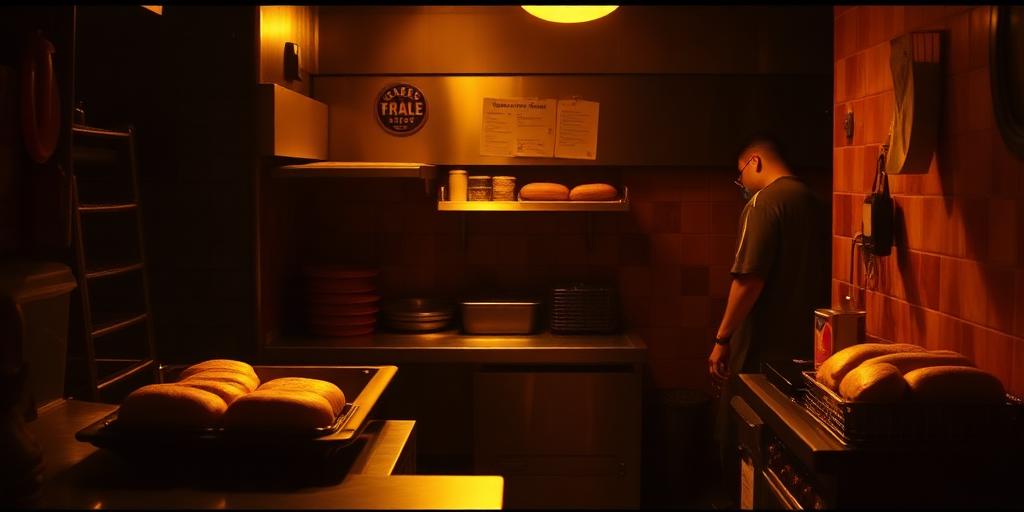
Philadelphia food service. Illustration generated with AI. Not a photograph of a Foody Finance client or location.

What drives financing conversations in Philadelphia

Older buildings mean electrical and ventilation upgrades often ride along with any kitchen equipment purchase, so financing requests tend to bundle both.

Revenue and seasonality in Philadelphia

Center City runs on office and event volume, neighborhood corridors on dinner and weekends, and university calendars visibly move entire blocks in the fall and spring.

What this does to your numbers

Year round volume with a winter dip, and a heavy BYOB presence that changes the margin a lender sees compared to a full bar.

Permitting in Philadelphia, and what it costs to wait

Licenses and Inspections review plus a quota liquor license market shape both the timeline and the price of entry. A license bought on the open market is a capital purchase financed alongside the buildout, not an operating cost paid out of cash.

What the wait actually costs

Quota liquor licenses trade at real prices, and older buildings raise the cost of ventilation and electrical work before new equipment can be set.

What raises the cost of capital here

  • 01Older row building stock means gas, electrical, and ventilation upgrades often exceed the equipment cost
  • 02Liquor license purchase prices in Pennsylvania are a capital item, not an operating expense
  • 03University calendars swing volume in Center City and University City neighborhoods

Which program usually fits here

Without bar revenue, lenders lean on equipment secured by the hardware rather than programs sized against alcohol sales.

Philadelphia
Pennsylvania outline. Boundary data: US Census Bureau cartographic boundary files, public domain. Simplified for display.

Free review, no hard credit pull

Get funds now and review your options

Step 01 of 03 · Your operation

A specialist reviews every request and reaches out the same business day

Areas we serve

  • Center City
  • Fishtown
  • South Philly
  • University City
  • Northern Liberties

Financing terms on this page

Definitions for the terms used above.

buildout capital
Money for the work that turns a space into a working kitchen: plumbing, electrical, hoods, walls, and permits. It pays for labor and materials you cannot resell, so it is priced differently than money for a fryer.
equipment paper
A loan or lease tied to a specific machine. The machine itself is the security, so approval leans on the value of the hardware more than on your bank statements.
working capital
Cash for the everyday gaps: payroll, inventory, rent, and repairs. It is repaid out of daily or weekly sales rather than from one big event.
draw
Taking money out of an approved line or loan. Draws tied to construction milestones mean you only start paying interest on each piece as you use it.
hard credit pull
A formal credit check that shows on your report and can move your score a few points. It happens only after you pick a specific lender, not to get information.
term
How long you have to repay. A longer term lowers the monthly payment and raises what the money costs in total.
underwriting
The lender reading your numbers to decide how much risk you are. Bank statements, time in business, and existing debt carry the most weight.
covers
The number of guests served. Lenders pair it with check average to judge how reliable a month really is.

Philadelphia financing questions

Can a Pennsylvania liquor license purchase be financed?

It is treated as an acquisition or expansion item rather than equipment, because the license is an intangible asset. Bring the purchase agreement to the first conversation so a specialist can present the programs that allow it.

Why do Philadelphia buildouts cost more than the equipment quote suggests?

In older buildings the service upgrade comes first. Panel capacity, gas line sizing, and ventilation frequently run more than the appliances themselves, so buildout capital rather than equipment paper is usually the right structure.

Why does BYOB matter so much to Philadelphia's restaurant economics?

Pennsylvania's liquor license costs are high, and Philadelphia's licenses in particular can be expensive and slow to transfer, so many independent restaurants operate as BYOB instead, letting diners bring their own wine or beer rather than the restaurant carrying a bar program. That removes a large upfront license cost and ongoing liquor inventory and staffing expense, but it also caps the revenue per table since the restaurant earns nothing on alcohol markup. Lenders comparing a Philadelphia BYOB concept to a full bar restaurant elsewhere should expect a lower revenue per cover but also a lower fixed cost structure at opening.

How do Philadelphia food businesses start a financing conversation?

Start with a free review by a specialist. You share the basics of the business, the use of funds, and recent bank statements, and you see every program that fits before any credit application exists. Short term options commonly fund in 1 to 3 business days once you choose an offer.

Do you serve areas outside Philadelphia in Pennsylvania?

Yes. Every program is available statewide in Pennsylvania and nationwide.

What is equipment financing, and when does it fit a Philadelphia operator?

You borrow against a specific machine, and the machine is what backs the loan. Use it when a fryer, a walk-in, an oven, or a vehicle has to be replaced and you would rather keep the cash in the account. Typical size is 5,000 to 500,000, funding runs 1 to 5 business days once you choose an offer, and you repay it as fixed monthly payment. You will be asked for: application, equipment quote, bank statements.

What is working capital, and when does it fit a Philadelphia operator?

Cash for the everyday gaps, repaid out of sales on a set schedule instead of at the end of a project. Use it for payroll, inventory, a slow stretch, or a job you have to fund before the client pays you. Typical size is 10,000 to 500,000, funding runs 1 to 3 business days once you choose an offer, and you repay it as fixed daily, weekly, or monthly payment. You will be asked for: application, 3 to 6 months of bank statements.

What is buildout and expansion, and when does it fit a Philadelphia operator?

Construction money for the work that turns a space into a working kitchen, usually released in stages as the job progresses. Use it for a second location, a remodel, a patio, or a kitchen conversion, and size it to cover the permit wait, not just the build. Typical size is 50,000 to 2,000,000, funding runs 1 to 4 weeks once you choose an offer, and you repay it as fixed payment, often with a draw schedule. You will be asked for: application, contractor bids, lease, financials.

Why does the Philadelphia calendar change what I should borrow?

Year round volume with a winter dip, and a heavy BYOB presence that changes the margin a lender sees compared to a full bar.

What does waiting actually cost me in Philadelphia?

Quota liquor licenses trade at real prices, and older buildings raise the cost of ventilation and electrical work before new equipment can be set.

Which program do most Philadelphia operators end up using?

Without bar revenue, lenders lean on equipment secured by the hardware rather than programs sized against alcohol sales. That is a starting point, not a decision. The specialist review looks at your deposits, your time in business, and what the money is for before anything is recommended.

Does asking about financing in Philadelphia affect my credit?

No. Getting information is a conversation, not an application. There is no credit application and no hard credit pull until you have picked a specific lender and want to move forward.

Start the conversation

Talk to a specialist before you fill out an application.

Start with a free, no-obligation review. We will send the right application only after we know what you actually qualify for.

Start a free review

Prefer to call

(833) 505-1900