NY metro

Restaurant financing in New York City.

Rent per square foot in Manhattan forces kitchens into footprints where every piece of equipment has to earn its place, and replacing one of them cannot wait for a savings cycle.

How do New York City food businesses get funded?

New York City operators start with a free request. Our team reviews it and looks for a funding partner that fits the use of funds. The partner sends its own secure application and sets the timing from there. Working capital commonly funds in 1 to 3 business days after an accepted offer, equipment in 1 to 5, and buildout capital in 1 to 4 weeks.

Estimates, not offers: Amounts, terms, and funding times are estimates based on programs commonly available in food service. Actual terms vary by program, lender underwriting, time in business, revenue, and credit profile. Nothing here is an offer of credit or a guarantee of approval. See source and method.

How New York City eats, and what that does to cash

01

Where New York eats

The East Village and Lower East Side run late night ramen, natural wine bars, and slice shops charging 4 to 6 dollars a slice, drawing a mostly under-35 crowd out past midnight. Flushing and Sunset Park carry the city's Chinese and Latin American food economy, with Flushing's Golden Mall and Roosevelt Avenue built on cash-heavy, family-run counters rather than reservations. Williamsburg and Greenpoint mix Polish diners that predate the neighborhood's turnover with 20 dollar cocktail bars serving the same block. Midtown lives on the office lunch, with Koreatown on 32nd Street and the Garment District feeding a weekday rush that vanishes by 3pm and on weekends. The Upper East and Upper West Sides skew toward white-tablecloth brunch and family dinners tied to school calendars. Astoria carries Greek and Middle Eastern kitchens serving both neighborhood regulars and destination diners from Manhattan. Every one of these districts runs on a different rent tier, and a lease signed on assumptions from one neighborhood does not transfer to the next, which forces owners to reunderwrite labor cost per shift block by block.
02

What New York actually serves

Dollar and 2 dollar pizza slices remain a real price anchor across the boroughs even as sit-down Neapolitan runs 18 to 24 dollars a pie. Bagel shops selling before 11am, halal carts clustered near Midtown corners, and bodega deli counters making chopped cheese sandwiches for 6 to 8 dollars carry breakfast and lunch citywide. Food halls, Chelsea Market, Time Out Market, and DeKalb Market Hall, let multiple small operators share one rent roll and one buildout instead of four separate ones. Late night dining runs past 2am in the East Village and Koreatown, driven by service industry workers finishing their own shifts. Outdoor dining sheds built during 2020 and 2021 still stand on many blocks, adding seasonal seating revenue from April through October. Full-service dinner checks in Manhattan average well above outer-borough prices for comparable cuisine. A kitchen sized for lunch rush volume in Midtown sits idle most nights, which means idle equipment hours factor directly into whether the lease pencils.

03

The calendar that runs the year

Restaurant Week in late January and again in July pulls diners into prix fixe menus at fixed price points, softening the post-holiday slump. NYU, Columbia, and CUNY campuses empty out in late May and refill in September, swinging volume for delivery-heavy blocks near each campus. The US Open in late August and early September fills Queens-adjacent spots near Flushing Meadows. The Javits Center convention calendar, including the New York International Auto Show in spring and fashion week twice a year, drives Midtown west side lunch and dinner traffic in concentrated weeks. Broadway's fall and holiday season, October through New Year's Eve, keeps Theater District pre-show dinner seatings full between 5 and 7:30pm. Thanksgiving week and the week between Christmas and New Year's carry outsized tourist volume in Midtown while emptying residential-neighborhood spots as locals travel, producing a citywide split in weekly revenue that owners have to plan payroll around rather than average out.

04

Where the money and the buildout go

New locations increasingly open in Ridgewood, Bushwick, and Astoria, where commercial rent per square foot runs a fraction of Manhattan avenues, and in outer-borough transit hubs like Jamaica and Downtown Brooklyn. A Manhattan avenue storefront buildout routinely stalls on Department of Buildings and FDNY sign-off timelines that run longer than in most US cities, and a ventilation or grease trap retrofit in a pre-war building adds unplanned weeks. Labor cost carries New York's minimum wage plus the expectation of tipped service staff earning well above it in full-service rooms, while counter-service concepts hold labor down by cutting front-of-house headcount. Con Edison utility costs and NYC water and sewer charges run higher than national averages for kitchens running hood systems and dish machines at volume. These combined pressures mean a buildout delay of even 6 to 8 weeks on a Manhattan lease can burn through a deposit's worth of holding costs before the doors open.

Food service operation in New York City
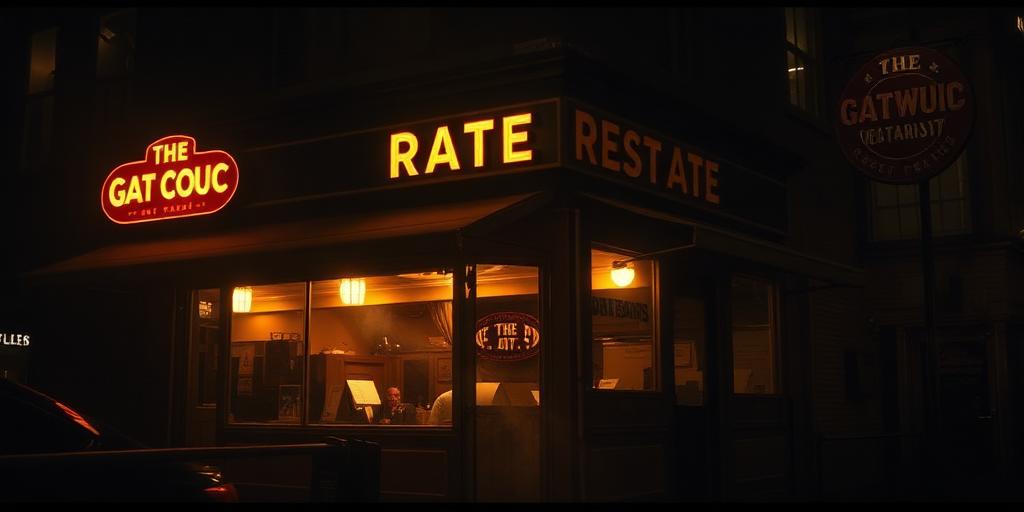
New York City food service. Illustration generated with AI. Not a photograph of a Foody Finance client or location.

What drives financing conversations in New York City

Buildouts run high because of union labor, Department of Buildings permitting, and hood and ventilation requirements in older buildings. Most requests we see from the five boroughs are equipment replacement and buildout capital.

Revenue and seasonality in New York City

Covers and check averages run high against the steepest occupancy and labor cost in the country, outdoor dining adds a real summer revenue line, and December events lift the last six weeks of the year.

What this does to your numbers

Check averages are high and so is everything you pay to earn them. Rent, labor, and delivery cost per cover leave less of each dollar than the sales number suggests.

Permitting in New York City, and what it costs to wait

Department of Health licensing and Department of Buildings review run on separate tracks, and a hood, gas, or egress change pulls in Fire Department sign off on top of both. Rent runs the entire time, so a five borough buildout request has to fund months of preopening occupancy alongside the construction itself.

What the wait actually costs

Buildings department review and fire sign off can add months after construction is finished, and rent runs every one of those days with no sales against it.

What raises the cost of capital here

  • 01Department of Buildings plan review and Fire Department sign off can add months to a hood or gas line change
  • 02Union and prevailing wage construction pricing raises buildout budgets above the national norm per square foot
  • 03Freight elevator scheduling and street permits add cost to every equipment delivery

Which program usually fits here

Put months of preopening rent and payroll inside the buildout request. Financing the construction alone is what leaves operators short at the finish line.

New York City
New York outline. Boundary data: US Census Bureau cartographic boundary files, public domain. Simplified for display.

Free review, no hard credit pull

Get funds now and review your options

Step 01 of 03 · Your operation

We collect the information you enter to respond to your request and, if you ask to be contacted, to share it with our funding partners. See our Privacy Policy.

By submitting, you agree that Foody Finance may refer your funding request to our independent funding partners, and that one or more of those partners may contact you by phone, text, or email, including through automated technology. Foody Finance is an independent business financing referral service paid a referral fee by the funding partner on referred accounts that fund or activate. We are not a lender, we do not make credit decisions, and we do not quote rates or terms.

Our team reviews every request within 1 business day.

Areas we serve

  • Manhattan
  • Brooklyn
  • Queens
  • The Bronx
  • Staten Island

Financing terms on this page

Definitions for the terms used above. Every term links to its entry in the full glossary.

covers
The number of guests served. Lenders pair it with check average to judge how reliable a month really is.
plan review
The city or county reading your kitchen drawings before you are allowed to build. Nothing gets installed until it clears, and rent runs the whole time.
buildout capital
Money for the work that turns a space into a working kitchen: plumbing, electrical, hoods, walls, and permits. It pays for labor and materials you cannot resell, so it is priced differently than money for a fryer.
equipment paper
A loan or lease tied to a specific machine. The machine itself is the security, so approval leans on the value of the hardware more than on your bank statements.
draw
Taking money out of an approved line or loan. Draws tied to construction milestones mean you only start paying interest on each piece as you use it.
remaining lease term
How many years are left on your lease. Lenders want the loan paid off before the lease ends, so a short remaining term caps what you can borrow.
term
How long you have to repay. A longer term lowers the monthly payment and raises what the money costs in total.
working capital
Cash for the everyday gaps: payroll, inventory, rent, and repairs. It is repaid out of daily or weekly sales rather than from one big event.
hard credit pull
A formal credit check that shows on your report and can move your score a few points. It happens only after you pick a specific lender, not to get information.
underwriting
The lender reading your numbers to decide how much risk you are. Bank statements, time in business, and existing debt carry the most weight.
merchant cash advance
You sell a slice of future card sales for cash today. Fastest money available, and the most expensive, so it fits an emergency rather than a plan.

New York City financing questions

Can financing cover a New York City hood or ventilation upgrade?

Yes. Ventilation work is normally financed as buildout capital rather than equipment paper, because most of the spend is labor, permitting, and structural work rather than a titled asset. Draws can be tied to inspection milestones so you are not paying interest while you wait on the Department of Buildings.

Do landlords in the five boroughs affect what a lender will approve?

Remaining lease term matters. Lenders sizing buildout or expansion capital want the payback window to sit inside the lease, so a 3 year remaining term caps what a funding partner can realistically offer. Have the lease ready when a funding partner contacts you.

Why do two New York restaurants with similar sales look completely different on paper to a lender?

A Manhattan full-service room and an outer-borough counter concept can post similar top-line revenue while carrying very different fixed costs. The Manhattan lease often includes key money, a longer buildout amortization, and tipped-wage payroll exposure, while the outer-borough shop runs thinner margins on lower rent and cash-heavy sales that are harder to verify. Lenders weigh neighborhood rent comparables, borough-specific labor cost, and how much of stated revenue is card versus cash before treating two similar-looking New York restaurants as comparable risk.

How do New York City food businesses start a financing conversation?

Start with a free request. Our team reviews the business basics and use of funds, then looks for a funding partner that fits. If a partner thinks they can help, its specialist contacts you, sends its own secure application, and sets the timing from there. Short term options commonly fund in 1 to 3 business days after an accepted offer.

Do you serve areas outside New York City in New York?

Yes. We work with food service operators across New York and in 49 states and Washington, DC. Program availability varies by state. Merchant cash advance and other revenue-based financing structures are not offered to businesses in Texas, Virginia, or Connecticut.

What is equipment financing, and when does it fit a New York City operator?

You borrow against a specific machine, and the machine is what backs the loan. Use it when a fryer, a walk-in, an oven, or a vehicle has to be replaced and you would rather keep the cash in the account. Typical size is 5,000 to 500,000, funding runs 1 to 5 business days once you choose an offer, and you repay it as fixed monthly payment. You will be asked for: application, equipment quote, bank statements.

What is buildout and expansion, and when does it fit a New York City operator?

Construction money for the work that turns a space into a working kitchen, usually released in stages as the job progresses. Use it for a second location, a remodel, a patio, or a kitchen conversion, and size it to cover the permit wait, not just the build. Typical size is 50,000 to 2,000,000, funding runs 1 to 4 weeks once you choose an offer, and you repay it as fixed payment, often with a draw schedule. You will be asked for: application, contractor bids, lease, financials.

What is working capital, and when does it fit a New York City operator?

Cash for the everyday gaps, repaid out of sales on a set schedule instead of at the end of a project. Use it for payroll, inventory, a slow stretch, or a job you have to fund before the client pays you. Typical size is 10,000 to 500,000, funding runs 1 to 3 business days once you choose an offer, and you repay it as fixed daily, weekly, or monthly payment. You will be asked for: application, 3 to 6 months of bank statements.

Why does the New York City calendar change what I should borrow?

Check averages are high and so is everything you pay to earn them. Rent, labor, and delivery cost per cover leave less of each dollar than the sales number suggests.

What does waiting actually cost me in New York City?

Buildings department review and fire sign off can add months after construction is finished, and rent runs every one of those days with no sales against it.

Which program do most New York City operators end up using?

Put months of preopening rent and payroll inside the buildout request. Financing the construction alone is what leaves operators short at the finish line. That is a starting point, not a decision. Our team reviews your deposits, time in business, and use of funds before looking for a funding partner that fits.

Does asking about financing in New York City affect my credit?

No. Getting information is a conversation, not an application. There is no credit application and no hard credit pull until you have picked a specific lender and want to move forward.

A location page indicates that Foody Finance is taking clients in that market. It does not represent a physical office, storefront, or licensed presence in that city or state. All services are delivered remotely by our US-based team.

Start the conversation

Send a request before you fill out an application.

Start with a free, no-obligation request. Our team reviews it and looks for a funding partner that fits.

Start a free review

Prefer to call

(833) 505-1900