AZ metro

Restaurant financing in Tucson.

Snowbird season fills Tucson dining rooms from January through March, then the desert heat empties them by June, leaving owners to fund a full year on six good months. Owners plan the calendar accordingly.

How do Tucson food businesses get funded?

Tucson operators start with a free review with a specialist, share recent business bank statements, and are matched to the programs that fit the use of funds. Working capital funds in 1 to 3 business days after you choose an offer, equipment in 1 to 5, and buildout capital in 1 to 4 weeks.

Estimates, not offers: Amounts, terms, and funding times are estimates based on programs commonly available in food service. Actual terms vary by program, lender underwriting, time in business, revenue, and credit profile. Nothing here is an offer of credit or a guarantee of approval. See source and method.

How Tucson eats, and what that does to cash

01

Where Tucson eats

Fourth Avenue near the University of Arizona carries a student crowd through counter service taco spots, dive bars, and late night noodle windows priced under 12 dollars a plate. Downtown around Congress Street and the Rialto Theatre mixes pre show dinners with cocktail bars, drawing a 25 to 40 dollar per person crowd on show nights. The Mercado San Agustin on the west side anchors a food hall format with local vendors selling Sonoran hot dogs and mesquite baked goods at 8 to 15 dollars. St. Philip's Plaza and the Catalina Foothills carry the higher end, with patio dining and wine lists serving retirees and second home owners at 40 dollars and up per person. South Tucson, a separate incorporated city inside Tucson's borders, holds the oldest Mexican food family businesses, several running since the 1950s, at 10 to 18 dollars a plate. Each district draws a different wallet, and a menu built for Fourth Avenue students fails on a Foothills patio, which forces owners to choose one customer base or run split pricing that strains a single kitchen's payroll structure.
02

Dishes and formats Tucson is known for

Tucson is a UNESCO City of Gastronomy, built on the Sonoran hot dog, a bacon wrapped hot dog piled with beans, onions, and toppings, sold from carts and drive through style stands for 5 to 8 dollars. Chimichangas, credited to Tucson kitchens, run 12 to 18 dollars as a sit down plate. Mesquite grilling and mesquite flour baking show up in bakeries and barbecue counters across the south side. Taquerias line South 12th Avenue and South Sixth Avenue, many operating from converted gas stations and trailers with 6 to 10 dollar tacos and cash only registers. Craft breweries, including several near the Iron Horse and Armory Park neighborhoods, run kitchen and taproom combinations serving pub food at 12 to 16 dollars. Patio dining is a year round expectation given the desert climate outside the peak summer months. Food trucks cluster near the University of Arizona campus and downtown office blocks for weekday lunch. This mix of low ticket, high volume formats means owners depend on steady cart and truck turnover, and any slow lunch rush directly shrinks same day cash on hand.

03

Tucson's calendar

The University of Arizona, with more than 40,000 students, drives Fourth Avenue and campus adjacent traffic from late August through early May, with a sharp drop during winter break and again in summer. Raytheon Missiles and Defense and Davis-Monthan Air Force Base anchor steady weekday lunch demand year round on the south and east sides. The Tucson Gem, Mineral and Fossil Showcase in late January and early February fills hotels and restaurants citywide for roughly two weeks, one of the busiest stretches of the year. Snowbird season, October through March, brings retirees and seasonal residents who fill Foothills restaurants and golf club dining rooms. Summer, June through August, is the slow season as students leave and daytime heat regularly exceeds 100 degrees, cutting lunch and patio traffic. The Tucson Festival of Books each March draws large crowds downtown for a single weekend. This split between a packed winter tourist calendar and a hollowed out summer means restaurants build cash reserves in January and February to cover thin receipts in July and August.

04

Growth and cost pattern in Tucson

New restaurant activity concentrates along Fourth Avenue, the revitalized downtown core near Congress Street, and the Marana and Oro Valley suburbs to the north, where retail centers are still filling out. Rent runs lower than comparable Southwest metros, but older downtown buildings, many dating to the early 1900s, carry buildout costs for updated electrical and plumbing that new construction elsewhere avoids. Labor draws from a large university student pool, which keeps wage rates moderate but creates scheduling gaps around finals weeks and summer break. Utility costs spike in summer as walk in coolers and HVAC systems run harder against extreme heat, adding to July and August operating costs during the slowest sales months. Water costs matter more here than in most cities given regional scarcity concerns, and some landlords pass through irrigation and cooling surcharges. New buildout in the Foothills favors patio construction and shade structures, adding permitting steps beyond a standard kitchen build. This combination of low base rent but high seasonal utility swings forces owners to budget unevenly across the summer cooling months.

Food service operation in Tucson
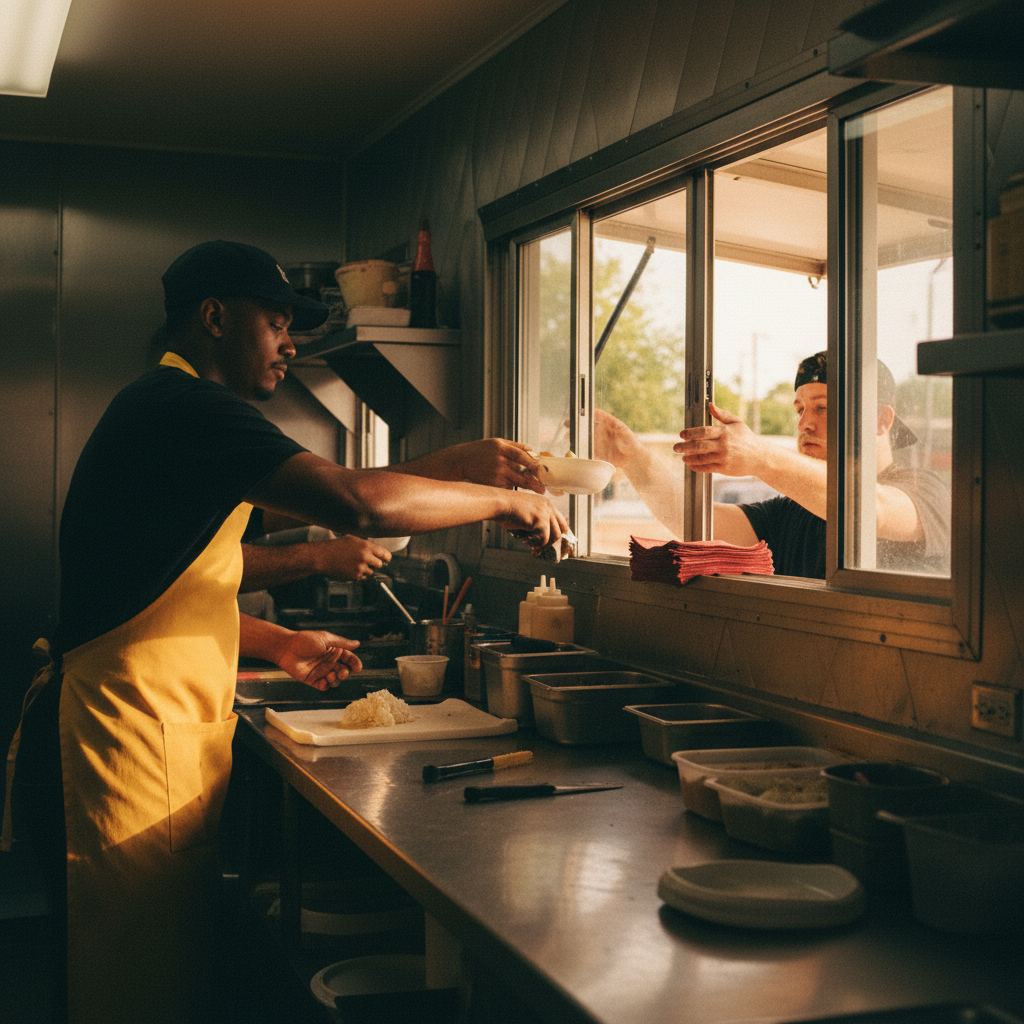
Tucson food service. Illustration generated with AI. Not a photograph of a Foody Finance client or location.

What drives financing conversations in Tucson

Capital here tends to cover walk-in cooler upgrades and patio misting systems before the summer drop, plus payroll during the slow monsoon stretch when university students leave and tourism thins out. Restaurants near the University of Arizona also lean on financing to renovate ahead of fall move-in traffic.

Revenue and seasonality in Tucson

Winter and spring carry most annual revenue as snowbirds and spring training visitors fill patios, while July and August often run at a fraction of that pace. Ticket sizes lean cash and card evenly, but slow season receivables from catering and events can lag 30 to 45 days.

What this does to your numbers

Money comes in heavy during snowbird season and thins out fast once summer heat sets in, so the bank balance has to stretch across months with almost no tourists.

Permitting in Tucson, and what it costs to wait

Pima County Health Department handles food service permits and plan review, while liquor licensing runs through the Arizona Department of Liquor Licenses and Control on a separate state track with its own posting period. A concept combining a kitchen buildout with a new liquor license should expect the two approvals to land weeks apart, so financing needs to cover rent and staffing before either clears.

What the wait actually costs

If a liquor license or health permit takes longer than expected, a restaurant can miss the whole winter season it was counting on to cover the rest of the year.

What raises the cost of capital here

  • 01Summer utility costs spike from patio cooling and walk-in refrigeration running nonstop in triple digit heat.
  • 02University of Arizona academic calendar creates a hard demand cliff every May and June near campus.
  • 03Water costs for outdoor misting and irrigation add a recurring desert-specific overhead line.

Which program usually fits here

A working capital loan or line of credit fits because it covers slow summer months, while equipment financing fits for cooling and patio gear needed before the heat hits.

Tucson
Arizona outline. Boundary data: US Census Bureau cartographic boundary files, public domain. Simplified for display.

Free review, no hard credit pull

Get funds now and review your options

Step 01 of 03 · Your operation

A specialist reviews every request and reaches out the same business day

Areas we serve

  • Fourth Avenue
  • Downtown Congress Street
  • Sam Hughes
  • Barrio Viejo
  • Rita Ranch

Financing terms on this page

Definitions for the terms used above.

plan review
The city or county reading your kitchen drawings before you are allowed to build. Nothing gets installed until it clears, and rent runs the whole time.
working capital
Cash for the everyday gaps: payroll, inventory, rent, and repairs. It is repaid out of daily or weekly sales rather than from one big event.
line of credit
A preapproved pool of money you pull from only when you need it, then pay back and reuse. You pay for what you draw, not for the full amount sitting there.
covers
The number of guests served. Lenders pair it with check average to judge how reliable a month really is.
equipment paper
A loan or lease tied to a specific machine. The machine itself is the security, so approval leans on the value of the hardware more than on your bank statements.
term
How long you have to repay. A longer term lowers the monthly payment and raises what the money costs in total.
draw
Taking money out of an approved line or loan. Draws tied to construction milestones mean you only start paying interest on each piece as you use it.
hard credit pull
A formal credit check that shows on your report and can move your score a few points. It happens only after you pick a specific lender, not to get information.
buildout capital
Money for the work that turns a space into a working kitchen: plumbing, electrical, hoods, walls, and permits. It pays for labor and materials you cannot resell, so it is priced differently than money for a fryer.
underwriting
The lender reading your numbers to decide how much risk you are. Bank statements, time in business, and existing debt carry the most weight.
commissary
A licensed production kitchen used to prep off site, most often by trucks and catering operations. It carries its own rent, equipment, and permits.

Tucson financing questions

How does spring training affect financing timing in Tucson?

Cactus League games run from late February through March and bring a short but real spike in bar and restaurant traffic near Hi Corbett Field and downtown. Owners who want new patio seating or extra staff in place for that window usually need equipment or working capital financing lined up by January, since Pima County plan review and vendor lead times can eat into the runway before games start.

Why do Tucson restaurants need financing for the summer slowdown specifically?

University of Arizona students leave for the summer and daytime heat keeps even locals off patios, so June through August revenue can fall well below the winter peak. A working capital line or short-term loan is often used to keep payroll and rent current through that stretch without cutting staff a business will need again by September.

Why do so many Tucson restaurants close for weeks in late summer instead of just cutting hours?

Extreme heat and the university's summer break overlap from June through August, cutting both walk in traffic and delivery volume at once. Rather than run a kitchen at a fraction of capacity while still paying full utility bills for walk in coolers and air conditioning against 100 degree days, many independent owners close outright for two to four weeks, often timed around July. This lets them cut payroll to zero, skip perishable ordering, and handle equipment maintenance during the deadest stretch. Lenders reviewing a Tucson restaurant's financials should expect this planned gap and read it as normal seasonal management rather than distress, provided the closure appears consistently in prior years' statements.

How do Tucson food businesses start a financing conversation?

Start with a free review by a specialist. You share the basics of the business, the use of funds, and recent bank statements, and you see every program that fits before any credit application exists. Short term options commonly fund in 1 to 3 business days once you choose an offer.

Do you serve areas outside Tucson in Arizona?

Yes. Every program is available statewide in Arizona and nationwide.

What is working capital, and when does it fit a Tucson operator?

Cash for the everyday gaps, repaid out of sales on a set schedule instead of at the end of a project. Use it for payroll, inventory, a slow stretch, or a job you have to fund before the client pays you. Typical size is 10,000 to 500,000, funding runs 1 to 3 business days once you choose an offer, and you repay it as fixed daily, weekly, or monthly payment. You will be asked for: application, 3 to 6 months of bank statements.

What is equipment financing, and when does it fit a Tucson operator?

You borrow against a specific machine, and the machine is what backs the loan. Use it when a fryer, a walk-in, an oven, or a vehicle has to be replaced and you would rather keep the cash in the account. Typical size is 5,000 to 500,000, funding runs 1 to 5 business days once you choose an offer, and you repay it as fixed monthly payment. You will be asked for: application, equipment quote, bank statements.

What is business line of credit, and when does it fit a Tucson operator?

An approved limit you pull from only when you need it, then repay and reuse. Use it for a season you can see coming, so you draw before the peak and pay it back out of the peak. Typical size is 10,000 to 250,000, funding runs 2 to 7 business days once you choose an offer, and you repay it as interest on the drawn balance only. You will be asked for: application, bank statements.

Why does the Tucson calendar change what I should borrow?

Money comes in heavy during snowbird season and thins out fast once summer heat sets in, so the bank balance has to stretch across months with almost no tourists.

What does waiting actually cost me in Tucson?

If a liquor license or health permit takes longer than expected, a restaurant can miss the whole winter season it was counting on to cover the rest of the year.

Which program do most Tucson operators end up using?

A working capital loan or line of credit fits because it covers slow summer months, while equipment financing fits for cooling and patio gear needed before the heat hits. That is a starting point, not a decision. The specialist review looks at your deposits, your time in business, and what the money is for before anything is recommended.

Does asking about financing in Tucson affect my credit?

No. Getting information is a conversation, not an application. There is no credit application and no hard credit pull until you have picked a specific lender and want to move forward.

Start the conversation

Talk to a specialist before you fill out an application.

Start with a free, no-obligation review. We will send the right application only after we know what you actually qualify for.

Start a free review

Prefer to call

(833) 505-1900