AZ metro

Restaurant financing in Gilbert.

Gilbert's Heritage District draws steady family dining traffic, but summer heat and a fast-growing but still-maturing residential base mean new locations often open before demand fully catches up.

How do Gilbert food businesses get funded?

Gilbert operators start with a free review with a specialist, share recent business bank statements, and are matched to the programs that fit the use of funds. Working capital funds in 1 to 3 business days after you choose an offer, equipment in 1 to 5, and buildout capital in 1 to 4 weeks.

Estimates, not offers: Amounts, terms, and funding times are estimates based on programs commonly available in food service. Actual terms vary by program, lender underwriting, time in business, revenue, and credit profile. Nothing here is an offer of credit or a guarantee of approval. See source and method.

How Gilbert eats, and what that does to cash

01

Where Gilbert eats

The Heritage District, Gilbert's original downtown along Gilbert Road, has rebuilt itself around a farm-to-table and craft brewery identity, drawing a young-family and date-night crowd willing to spend 20 to 30 dollars a person at restaurants that emphasize locally sourced produce. Agritopia, an urban farm neighborhood on the east side, has its own small cluster of restaurants built directly around the working farm, including a bakery and a farm-stand restaurant that draws visitors from across the Phoenix metro specifically for that concept. The area near SanTan Village, shared with neighboring Chandler, pulls Gilbert residents toward chain restaurants and mall-anchored dining rather than the Heritage District's independent scene. Val Vista and the eastern residential corridors carry standard suburban strip-mall restaurants serving nearby subdivisions with little destination draw of their own. Gilbert's identity differs from neighboring Chandler's tech-employer-driven lunch crowd in that its dining is built more around family leisure time and weekend visits than weekday shift breaks. A Heritage District restaurant depends heavily on weekend and evening family traffic, unlike a Chandler restaurant near Intel that depends on weekday lunch shifts.
02

What Gilbert orders

Farm-to-table dining is a defining local format, anchored by Agritopia's working farm restaurants that source directly from adjacent fields and market that connection explicitly on their menus. The Heritage District's brewery row serves elevated pub food alongside local craft beer, with entrees generally in the 15 to 22 dollar range. Family-style breakfast and brunch spots do heavy weekend business, reflecting Gilbert's demographic lean toward households with young children who eat out earlier in the day rather than late at night. Farmers markets and roadside produce stands, tied to Gilbert's agricultural history as a former farming town, support a handful of restaurants built around seasonal, rotating menus. Food truck gatherings and pop-up events in the Heritage District draw evening crowds on select weeknights. Fast-casual chains dominate the areas near SanTan Village and Val Vista, serving the broader commuter population less interested in a destination dining experience. Because Gilbert's water table and agricultural zoning near Agritopia are treated as part of the dining brand itself, restaurants built there face real limits on how much they can expand physical footprint without disturbing the farmland that draws customers in the first place.

03

The Gilbert calendar

Gilbert Days, an annual community festival held each fall, draws family crowds to the Heritage District and briefly lifts nearby restaurant traffic. The town's farmers markets run on a seasonal schedule tied to Arizona's growing calendar, with the most abundant produce and heaviest market foot traffic occurring in the cooler months from October through April rather than during the intense summer heat. Gilbert's school district calendar strongly shapes family dining patterns, with weekday evening traffic dropping during school breaks when families travel out of town rather than eating locally. Winter, tied to the broader Phoenix snowbird season, brings a mild but real increase in visitors to the Heritage District's restaurants. Summer, June through August, cuts patio dining sharply just as it does across the rest of the East Valley, though Gilbert's family-oriented restaurants see less of a nightlife-driven collapse than a bar-heavy district would. The gap between Gilbert's active October-through-April market season and the quiet summer growing season creates a real difference in produce availability that farm-to-table restaurants have to plan menus around each year.

04

Growth and cost pattern

New restaurant growth in Gilbert concentrates in the Heritage District, where continued redevelopment of older downtown buildings has added brewery and restaurant space over the past several years, and along the town's eastern edge near Higley and Williams Field Roads as new residential subdivisions get built. Agritopia's model of building restaurants directly into a working farm development is unusual and costly to replicate, since it requires securing agricultural land close to a growing suburban population, a combination that has become harder to find as Gilbert's remaining farmland shrinks. Rent in the Heritage District has climbed as the area's reputation has grown, making it less accessible to first-time independent operators than it was a decade ago. Buildout costs for farm-to-table concepts often run higher due to specialized refrigeration and rotating menu requirements tied to seasonal produce availability. Labor costs track the broader East Valley market. Water costs and agricultural zoning restrictions near Agritopia add a real and unusual line item for restaurants there compared to a standard strip-mall buildout elsewhere in town. A farm-to-table kitchen tied to a specific harvest schedule can face inventory swings each time a crop comes in early or late.

Food service operation in Gilbert
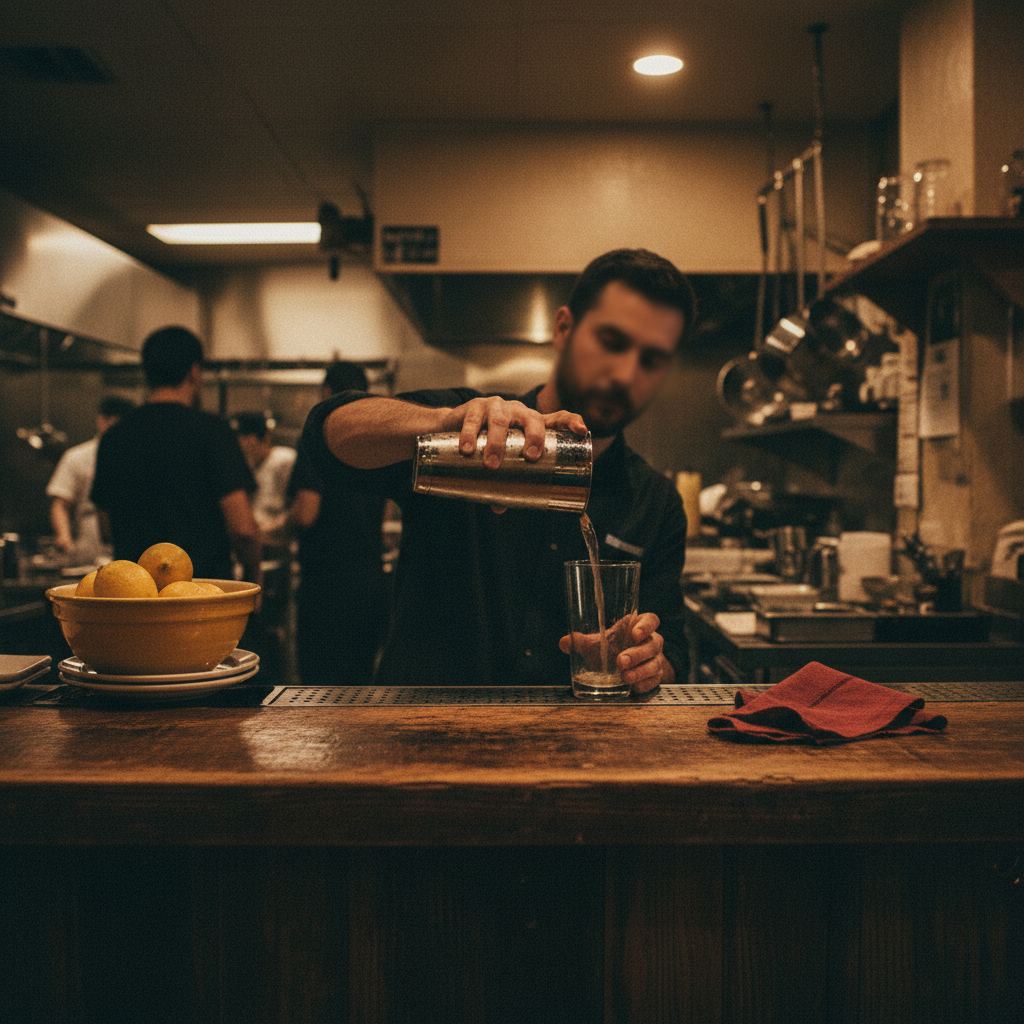
Gilbert food service. Illustration generated with AI. Not a photograph of a Foody Finance client or location.

What drives financing conversations in Gilbert

Funding here typically covers buildout costs for locations opening ahead of rooftop growth in newer Gilbert subdivisions, along with equipment for the HVAC and patio demands of an Arizona summer. Family-dining and fast-casual concepts also use working capital to manage the seasonal dip that follows the busy fall and winter months.

Revenue and seasonality in Gilbert

Family dining traffic in the Heritage District and around SanTan Village stays fairly steady through fall, winter, and spring, then drops off with summer heat from June through August. New developments in areas like Cooley Station can take time to reach full rooftop density, so early-stage locations there often see revenue build gradually rather than hit target volume immediately.

What this does to your numbers

Fall through spring is steady, but summer heat can quiet things down for a few months.

Permitting in Gilbert, and what it costs to wait

Maricopa County Environmental Services permits food establishments in Gilbert, while alcohol licensing runs through the Arizona Department of Liquor Licenses and Control on a separate state review track. Because Gilbert continues to add new commercial development, some locations also face longer site-plan and zoning review tied to surrounding infrastructure not yet fully built out, which can push back a planned opening date.

What the wait actually costs

Opening in a newer development means waiting for the neighborhood to fill in before sales hit full stride.

What raises the cost of capital here

  • 01New residential developments can take time to reach the rooftop density a location was built to serve
  • 02Summer heat reduces patio use and evening foot traffic from June through August
  • 03Site-plan and zoning review can run longer in newly developed commercial corridors

Which program usually fits here

Buildout financing supports opening ahead of rooftop growth, and equipment financing covers the HVAC needs of an Arizona summer.

Gilbert
Arizona outline. Boundary data: US Census Bureau cartographic boundary files, public domain. Simplified for display.

Free review, no hard credit pull

Get funds now and review your options

Step 01 of 03 · Your operation

A specialist reviews every request and reaches out the same business day

Areas we serve

  • Heritage District
  • SanTan Village area
  • Val Vista Lakes
  • Cooley Station
  • Downtown Gilbert

Financing terms on this page

Definitions for the terms used above.

buildout capital
Money for the work that turns a space into a working kitchen: plumbing, electrical, hoods, walls, and permits. It pays for labor and materials you cannot resell, so it is priced differently than money for a fryer.
equipment paper
A loan or lease tied to a specific machine. The machine itself is the security, so approval leans on the value of the hardware more than on your bank statements.
covers
The number of guests served. Lenders pair it with check average to judge how reliable a month really is.
working capital
Cash for the everyday gaps: payroll, inventory, rent, and repairs. It is repaid out of daily or weekly sales rather than from one big event.
draw
Taking money out of an approved line or loan. Draws tied to construction milestones mean you only start paying interest on each piece as you use it.
hard credit pull
A formal credit check that shows on your report and can move your score a few points. It happens only after you pick a specific lender, not to get information.
underwriting
The lender reading your numbers to decide how much risk you are. Bank statements, time in business, and existing debt carry the most weight.
commissary
A licensed production kitchen used to prep off site, most often by trucks and catering operations. It carries its own rent, equipment, and permits.
term
How long you have to repay. A longer term lowers the monthly payment and raises what the money costs in total.

Gilbert financing questions

Why do restaurants in newer Gilbert developments need different financing than Heritage District locations?

A location opening in a newer area like Cooley Station may see revenue build gradually as surrounding rooftops fill in, compared to an established spot in the Heritage District that already has a proven customer base. Buildout financing for the newer location typically needs to plan for a slower ramp-up period rather than assuming immediate full volume.

How does Gilbert's summer heat affect family-dining traffic specifically?

Family-oriented concepts around SanTan Village and Val Vista Lakes often see evening and weekend traffic pull back once temperatures climb past 100 degrees for months at a stretch, since fewer families are out for casual dinners in that heat. Working capital built around that seasonal dip helps cover staffing and rent without cutting hours through the summer.

How does Gilbert's farm-to-table identity, especially around Agritopia, create financial patterns different from a standard suburban restaurant?

A restaurant built around a working farm connection, like those at Agritopia, depends on seasonal produce availability in a way a standard chain-adjacent restaurant near SanTan Village does not, which can create visible cost and menu shifts tied to Arizona's October-through-April growing season rather than to broader economic conditions. Lenders reviewing such a restaurant's numbers should expect ingredient costs and possibly menu pricing to move with the local harvest calendar, and should not read a spring cost spike or a summer menu change as financial distress when it reflects normal seasonal produce planning.

How do Gilbert food businesses start a financing conversation?

Start with a free review by a specialist. You share the basics of the business, the use of funds, and recent bank statements, and you see every program that fits before any credit application exists. Short term options commonly fund in 1 to 3 business days once you choose an offer.

Do you serve areas outside Gilbert in Arizona?

Yes. Every program is available statewide in Arizona and nationwide.

What is buildout and expansion, and when does it fit a Gilbert operator?

Construction money for the work that turns a space into a working kitchen, usually released in stages as the job progresses. Use it for a second location, a remodel, a patio, or a kitchen conversion, and size it to cover the permit wait, not just the build. Typical size is 50,000 to 2,000,000, funding runs 1 to 4 weeks once you choose an offer, and you repay it as fixed payment, often with a draw schedule. You will be asked for: application, contractor bids, lease, financials.

What is equipment financing, and when does it fit a Gilbert operator?

You borrow against a specific machine, and the machine is what backs the loan. Use it when a fryer, a walk-in, an oven, or a vehicle has to be replaced and you would rather keep the cash in the account. Typical size is 5,000 to 500,000, funding runs 1 to 5 business days once you choose an offer, and you repay it as fixed monthly payment. You will be asked for: application, equipment quote, bank statements.

What is working capital, and when does it fit a Gilbert operator?

Cash for the everyday gaps, repaid out of sales on a set schedule instead of at the end of a project. Use it for payroll, inventory, a slow stretch, or a job you have to fund before the client pays you. Typical size is 10,000 to 500,000, funding runs 1 to 3 business days once you choose an offer, and you repay it as fixed daily, weekly, or monthly payment. You will be asked for: application, 3 to 6 months of bank statements.

Why does the Gilbert calendar change what I should borrow?

Fall through spring is steady, but summer heat can quiet things down for a few months.

What does waiting actually cost me in Gilbert?

Opening in a newer development means waiting for the neighborhood to fill in before sales hit full stride.

Which program do most Gilbert operators end up using?

Buildout financing supports opening ahead of rooftop growth, and equipment financing covers the HVAC needs of an Arizona summer. That is a starting point, not a decision. The specialist review looks at your deposits, your time in business, and what the money is for before anything is recommended.

Does asking about financing in Gilbert affect my credit?

No. Getting information is a conversation, not an application. There is no credit application and no hard credit pull until you have picked a specific lender and want to move forward.

Start the conversation

Talk to a specialist before you fill out an application.

Start with a free, no-obligation review. We will send the right application only after we know what you actually qualify for.

Start a free review

Prefer to call

(833) 505-1900