AZ metro

Restaurant financing in Scottsdale.

Scottsdale's winter season brings in high-spending visitors who disappear almost entirely by July, and a kitchen built for peak season has to survive the rest of the year on far less traffic.

How do Scottsdale food businesses get funded?

Scottsdale operators start with a free review with a specialist, share recent business bank statements, and are matched to the programs that fit the use of funds. Working capital funds in 1 to 3 business days after you choose an offer, equipment in 1 to 5, and buildout capital in 1 to 4 weeks.

Estimates, not offers: Amounts, terms, and funding times are estimates based on programs commonly available in food service. Actual terms vary by program, lender underwriting, time in business, revenue, and credit profile. Nothing here is an offer of credit or a guarantee of approval. See source and method.

How Scottsdale eats, and what that does to cash

01

Where Scottsdale eats

Old Town Scottsdale is the city's dense walkable core, mixing upscale steakhouses and rooftop bars with a nightlife strip along Scottsdale Road and 5th Avenue that draws bachelorette parties and weekend visitors from across the Phoenix metro. Scottsdale Fashion Square anchors a cluster of higher-end restaurants aimed at a shopping crowd with real disposable income, comfortable with entrees over 30 dollars. Kierland Commons and the surrounding North Scottsdale area cater to an older, wealthier residential population and golf course visitors, favoring reservations-only dining over walk-in bars. DC Ranch and the far north Scottsdale foothills support a smaller number of high-end restaurants serving nearby luxury home communities, with less foot traffic but higher average spend per table. Old Town's bar-heavy blocks depend on a young, often out-of-state visitor base rather than locals, unlike Kierland's more resident-driven crowd. Because Old Town's nightlife economy leans so heavily on tourists and bachelorette or golf-trip groups, a slow winter travel season or a canceled convention hits those bars far harder than it hits a Kierland dinner restaurant serving nearby homeowners.
02

What Scottsdale orders

Upscale patio dining is the default format citywide for much of the year, with restaurants investing heavily in misting systems, retractable shade, and heaters to keep outdoor seating usable from October through May. Steakhouses are a genuine local staple, reflecting both the resort tourist base and a wealthier resident population willing to spend 50 dollars or more per person on a dinner entree. Golf course restaurants, attached to the area's many resort and public courses, do steady lunch and after-round business tied directly to tee time schedules rather than typical meal hours. Brunch culture is heavily developed in Old Town and North Scottsdale, with bottomless mimosa formats drawing weekend crowds well into early afternoon. Old Town's nightlife bars serve a bar-food menu built around shareable plates rather than full dinners, priced to match a drinking-focused crowd. Resort restaurants attached to properties near Camelback Mountain and in North Scottsdale cater heavily to out-of-town guests rather than locals. Because so much outdoor seating depends on cooler weather, the arrival of summer heat physically removes patio capacity from Scottsdale kitchens for nearly four months each year.

03

The Scottsdale calendar

The Waste Management Phoenix Open, held at TPC Scottsdale in early February, is the single largest annual event for the city's restaurants and bars, drawing hundreds of thousands of attendees over tournament week and filling every restaurant within miles of the course. Cactus League spring training, with the Scottsdale Stadium and nearby Salt River Fields hosting games in March, brings a sustained six-week visitor surge each spring. Winter overall, roughly November through April, is Scottsdale's peak season, when snowbirds and resort guests fill both Old Town nightlife spots and North Scottsdale fine dining. Summer, June through August, is a dramatic drop, with daytime highs regularly above 105 degrees driving many restaurants to cut hours or close patios entirely during the hottest weeks. Some Old Town restaurants close for renovation specifically during the slowest summer weeks, timing construction to the season when they would lose the least revenue anyway. The gap between a February tournament week and a July weekday can represent the difference between a restaurant's best and worst week of the entire year.

04

Growth and cost pattern

New restaurant growth continues in Kierland Commons and the broader North Scottsdale area as luxury residential development pushes further north toward the city's edge. Old Town remains largely built out and commands the highest commercial rents in the city, making it difficult for a first-time independent operator to secure ground-floor space without significant backing. DC Ranch and other far north Scottsdale communities have added smaller-format restaurants serving nearby luxury subdivisions, with lower foot traffic but higher per-ticket spending offsetting the smaller customer base. Labor costs run high relative to the rest of the Phoenix metro given the service standard expected at Scottsdale's higher-end restaurants. Seasonal staffing is a real operational challenge, since many restaurants scale up hiring for the winter tourist season and cut back sharply for summer, creating a recurring hiring and layoff cycle each year. Utility costs climb steeply in summer with near-constant air conditioning demand. A restaurant that overstaffs for the Phoenix Open week and cannot scale back fast enough afterward can carry excess payroll costs into the slower weeks that immediately follow the tournament.

Food service operation in Scottsdale
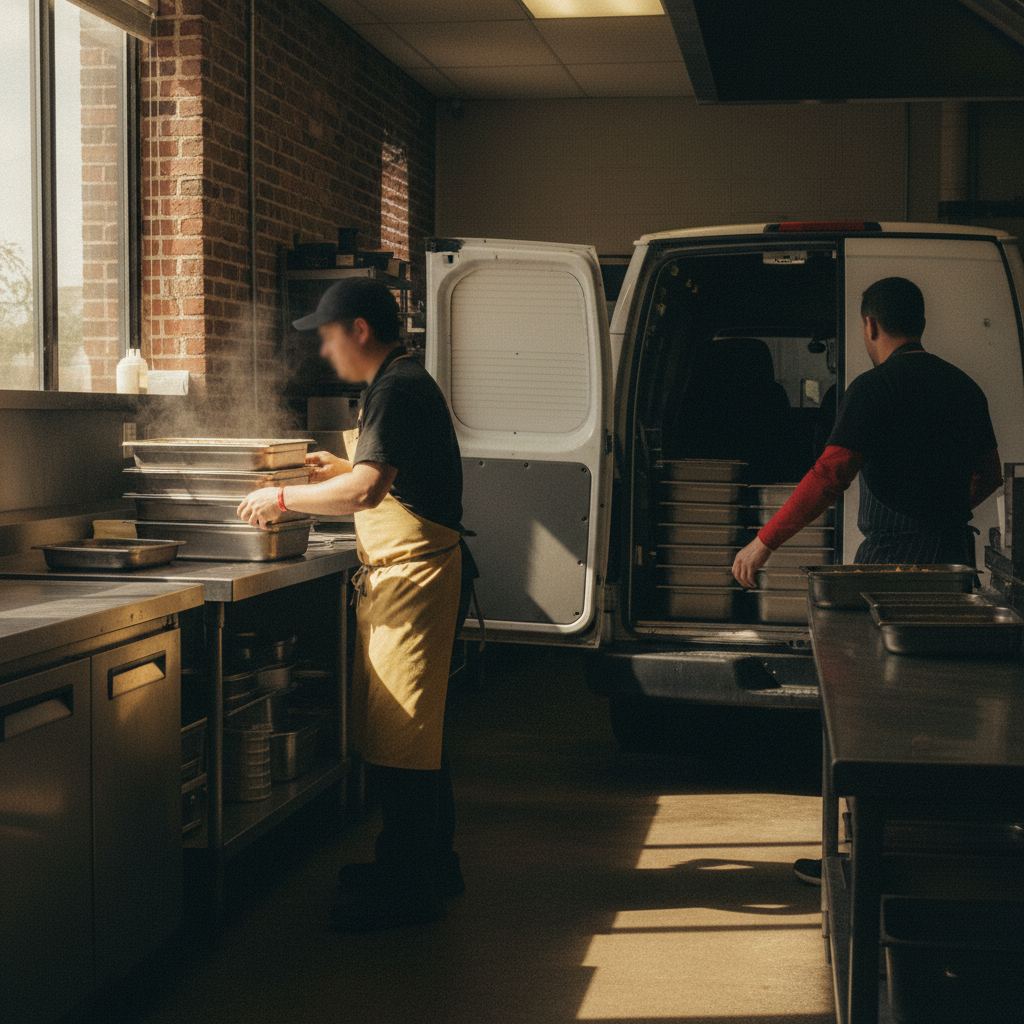
Scottsdale food service. Illustration generated with AI. Not a photograph of a Foody Finance client or location.

What drives financing conversations in Scottsdale

Capital here typically funds premium buildouts that match Old Town or Fashion Square-area guest expectations, along with the cash cushion needed to carry payroll through the slow summer months. Golf and resort-adjacent operators also use financing to staff up quickly ahead of snowbird season and spring training crowds.

Revenue and seasonality in Scottsdale

Revenue climbs sharply from October through April as snowbirds, spring training crowds, and golf tourism arrive, then falls off hard from June through August as extreme heat sets in. Check averages run higher than in most Arizona markets given the resort and luxury customer base, but that peak season has to fund payroll and rent through a long, hot off-season.

What this does to your numbers

Winter and spring bring in the big money, and summer heat can leave the account thin for months.

Permitting in Scottsdale, and what it costs to wait

Maricopa County Environmental Services handles food safety permitting in Scottsdale while alcohol licensing runs through the Arizona Department of Liquor Licenses and Control, a state-level process independent of the county timeline. Old Town locations near the entertainment district also face additional city review for outdoor seating and noise, which can extend the pre-opening period a financing plan needs to cover.

What the wait actually costs

Extra city review for outdoor seating in Old Town can delay opening past when rent starts.

What raises the cost of capital here

  • 01Snowbird and spring training season concentrates the bulk of annual revenue into about seven months
  • 02Old Town's entertainment district adds extra city review for outdoor seating and noise permits
  • 03Extreme summer heat pushes local demand and staffing needs down sharply from June through August

Which program usually fits here

A working capital cushion carries the slow summer, and buildout financing supports the premium build guests here expect.

Scottsdale
Arizona outline. Boundary data: US Census Bureau cartographic boundary files, public domain. Simplified for display.

Free review, no hard credit pull

Get funds now and review your options

Step 01 of 03 · Your operation

A specialist reviews every request and reaches out the same business day

Areas we serve

  • Old Town Scottsdale
  • Fashion Square area
  • Kierland
  • DC Ranch
  • South Scottsdale

Financing terms on this page

Definitions for the terms used above.

working capital
Cash for the everyday gaps: payroll, inventory, rent, and repairs. It is repaid out of daily or weekly sales rather than from one big event.
buildout capital
Money for the work that turns a space into a working kitchen: plumbing, electrical, hoods, walls, and permits. It pays for labor and materials you cannot resell, so it is priced differently than money for a fryer.
draw
Taking money out of an approved line or loan. Draws tied to construction milestones mean you only start paying interest on each piece as you use it.
line of credit
A preapproved pool of money you pull from only when you need it, then pay back and reuse. You pay for what you draw, not for the full amount sitting there.
hard credit pull
A formal credit check that shows on your report and can move your score a few points. It happens only after you pick a specific lender, not to get information.
covers
The number of guests served. Lenders pair it with check average to judge how reliable a month really is.
commissary
A licensed production kitchen used to prep off site, most often by trucks and catering operations. It carries its own rent, equipment, and permits.
term
How long you have to repay. A longer term lowers the monthly payment and raises what the money costs in total.

Scottsdale financing questions

Why does Scottsdale's snowbird season shape restaurant financing decisions?

Areas like Old Town and Kierland see a large jump in spending from October through April as seasonal residents and spring training visitors arrive, then a steep drop once summer heat sets in. A financing plan that only looks at annual averages misses how much of the year's revenue and staffing need to be front-loaded into that winter and spring window.

How does Old Town Scottsdale's entertainment district affect permitting timelines?

Restaurants and bars near Old Town's nightlife corridor often face added city review for outdoor seating, noise levels, and hours of operation beyond the standard county health and state liquor approvals. That extra layer can stretch the pre-opening timeline, and financing needs to cover rent and staffing costs through the additional review period.

How much does Old Town Scottsdale's bachelorette and golf-trip tourist base change how a restaurant's weekly revenue should look compared to a North Scottsdale restaurant?

An Old Town restaurant or bar built around bachelorette parties, golf trips, and weekend visitors typically shows sharp swings tied to weekends and to the winter tourist season, since much of its customer base is not local. A North Scottsdale restaurant near Kierland or DC Ranch, serving a more resident-driven crowd, usually shows steadier weekday revenue with less dramatic weekend spikes. Lenders comparing two Scottsdale restaurants should expect an Old Town bar's numbers to track flight and hotel booking patterns more closely than a North Scottsdale dinner restaurant's, and a flat, even revenue pattern in Old Town would actually be the unusual result worth questioning.

How do Scottsdale food businesses start a financing conversation?

Start with a free review by a specialist. You share the basics of the business, the use of funds, and recent bank statements, and you see every program that fits before any credit application exists. Short term options commonly fund in 1 to 3 business days once you choose an offer.

Do you serve areas outside Scottsdale in Arizona?

Yes. Every program is available statewide in Arizona and nationwide.

What is working capital, and when does it fit a Scottsdale operator?

Cash for the everyday gaps, repaid out of sales on a set schedule instead of at the end of a project. Use it for payroll, inventory, a slow stretch, or a job you have to fund before the client pays you. Typical size is 10,000 to 500,000, funding runs 1 to 3 business days once you choose an offer, and you repay it as fixed daily, weekly, or monthly payment. You will be asked for: application, 3 to 6 months of bank statements.

What is buildout and expansion, and when does it fit a Scottsdale operator?

Construction money for the work that turns a space into a working kitchen, usually released in stages as the job progresses. Use it for a second location, a remodel, a patio, or a kitchen conversion, and size it to cover the permit wait, not just the build. Typical size is 50,000 to 2,000,000, funding runs 1 to 4 weeks once you choose an offer, and you repay it as fixed payment, often with a draw schedule. You will be asked for: application, contractor bids, lease, financials.

What is business line of credit, and when does it fit a Scottsdale operator?

An approved limit you pull from only when you need it, then repay and reuse. Use it for a season you can see coming, so you draw before the peak and pay it back out of the peak. Typical size is 10,000 to 250,000, funding runs 2 to 7 business days once you choose an offer, and you repay it as interest on the drawn balance only. You will be asked for: application, bank statements.

Why does the Scottsdale calendar change what I should borrow?

Winter and spring bring in the big money, and summer heat can leave the account thin for months.

What does waiting actually cost me in Scottsdale?

Extra city review for outdoor seating in Old Town can delay opening past when rent starts.

Which program do most Scottsdale operators end up using?

A working capital cushion carries the slow summer, and buildout financing supports the premium build guests here expect. That is a starting point, not a decision. The specialist review looks at your deposits, your time in business, and what the money is for before anything is recommended.

Does asking about financing in Scottsdale affect my credit?

No. Getting information is a conversation, not an application. There is no credit application and no hard credit pull until you have picked a specific lender and want to move forward.

Start the conversation

Talk to a specialist before you fill out an application.

Start with a free, no-obligation review. We will send the right application only after we know what you actually qualify for.

Start a free review

Prefer to call

(833) 505-1900