Mesa's restaurant scene runs on two calendars at once, a winter snowbird and Cactus League spring training rush followed by a summer stretch where foot traffic drops off sharply. Owners budget around both windows.
How do Mesa food businesses get funded?
Mesa operators start with a free request. Our team reviews it and looks for a funding partner that fits the use of funds. The partner sends its own secure application and sets the timing from there. Working capital commonly funds in 1 to 3 business days after an accepted offer, equipment in 1 to 5, and buildout capital in 1 to 4 weeks.
Estimates, not offers: Amounts, terms, and funding times are estimates based on programs commonly available in food service. Actual terms vary by program, lender underwriting, time in business, revenue, and credit profile. Nothing here is an offer of credit or a guarantee of approval. See source and method.
How Mesa eats, and what that does to cash
01
Where Mesa eats
Downtown Mesa, rebuilt around Main Street and the Mesa Arts Center, carries a growing counter service and craft cocktail scene aimed at a younger crowd pulled in by the light rail extension, with checks running 12 to 22 dollars. The Mesa Riverview shopping district near Loop 202 holds chain casual dining serving suburban families at 20 to 30 dollars. Dobson Ranch and east Mesa near Signal Butte Road carry newer strip mall fast casual serving a fast growing residential population priced under 15 dollars. Sloan Park and the Cubs spring training complex draw seasonal crowds each spring to nearby sports bars and patio restaurants. Historic Mesa near the Arizona Temple grounds attracts a family and tourist crowd with moderate priced sit down dining. Unlike Tucson's university driven core, Mesa's dining map is built around commuter corridors and spring training tourism rather than a single walkable district, which means owners need a car dependent, drive up visible location far more than downtown foot traffic to hit volume targets.
02
Dishes and formats Mesa is known for
Mesa is a spring training hub, home to the Chicago Cubs' Sloan Park and the Oakland Athletics' former Hohokam Stadium grounds, and sports bar formats with large patios built for game day crowds define much of the city's dining, priced 15 to 25 dollars a person. Drive through and fast casual chains dominate along Main Street, Baseline Road, and the Loop 202 corridor, reflecting Mesa's spread out, car dependent layout. Mexican food, particularly Sonoran style, runs through family owned counter service spots citywide at 8 to 14 dollars. Downtown Mesa's revitalization has added food hall and brewery kitchen formats near the arts center, priced 12 to 18 dollars. Barbecue and steakhouse formats serve the city's large suburban family population on weekend evenings. Patio dining runs nearly year round outside the hottest summer weeks. Because so much of Mesa's dining revenue ties to spring training crowds concentrated in a six week window, restaurants near the stadiums see a sharp late February through March peak followed by a steep falloff once teams break camp.
03
Mesa's calendar
Cactus League spring training runs from late February through late March, filling Sloan Park and drawing crowds to nearby restaurants and sports bars for roughly six weeks, one of the sharpest seasonal spikes of any Arizona city. Arizona State University's Polytechnic campus in southeast Mesa adds steady student demand during the fall and spring semesters. Banner Health facilities and the growing east Mesa technology and manufacturing corridor, including semiconductor investment near Elliot Road, support weekday lunch demand year round. Summer, June through August, sees the sharpest drop as daytime highs regularly exceed 105 degrees and snowbird residents leave for cooler climates. The Mesa Arts Festival each November and December holiday events downtown bring a smaller but reliable boost. Because spring training compresses so much of the year's tourism revenue near the stadiums into six weeks in late winter, and summer heat drains traffic citywide for three months after, restaurant owners near Sloan Park see the most extreme swing between best month and worst month of any format in the region.
04
Growth and cost pattern in Mesa
New restaurant construction concentrates in east Mesa near the Elliot Road technology corridor, where semiconductor manufacturing investment is adding rooftops and daytime workers, and in the Mesa Riverview and Loop 202 retail corridors offering turnkey shell space. Downtown Mesa's older buildings near Main Street require more extensive electrical and code upgrades for restaurant use than the newer east side shells. Rent runs below Phoenix and Scottsdale, making Mesa attractive for owners priced out of those markets, though land near the stadiums has grown more expensive as spring training tourism has expanded. Labor costs are shaped by competition from the expanding manufacturing sector in east Mesa, which pays hourly wages that can outbid restaurant kitchens for entry level workers. Utility costs spike sharply from June through August as extreme heat drives air conditioning and walk in cooler loads to their yearly peak, arriving right as summer traffic falls off. This means east Mesa restaurants face rising labor competition from manufacturing at the same time downtown and stadium area restaurants face their post spring training revenue drop.
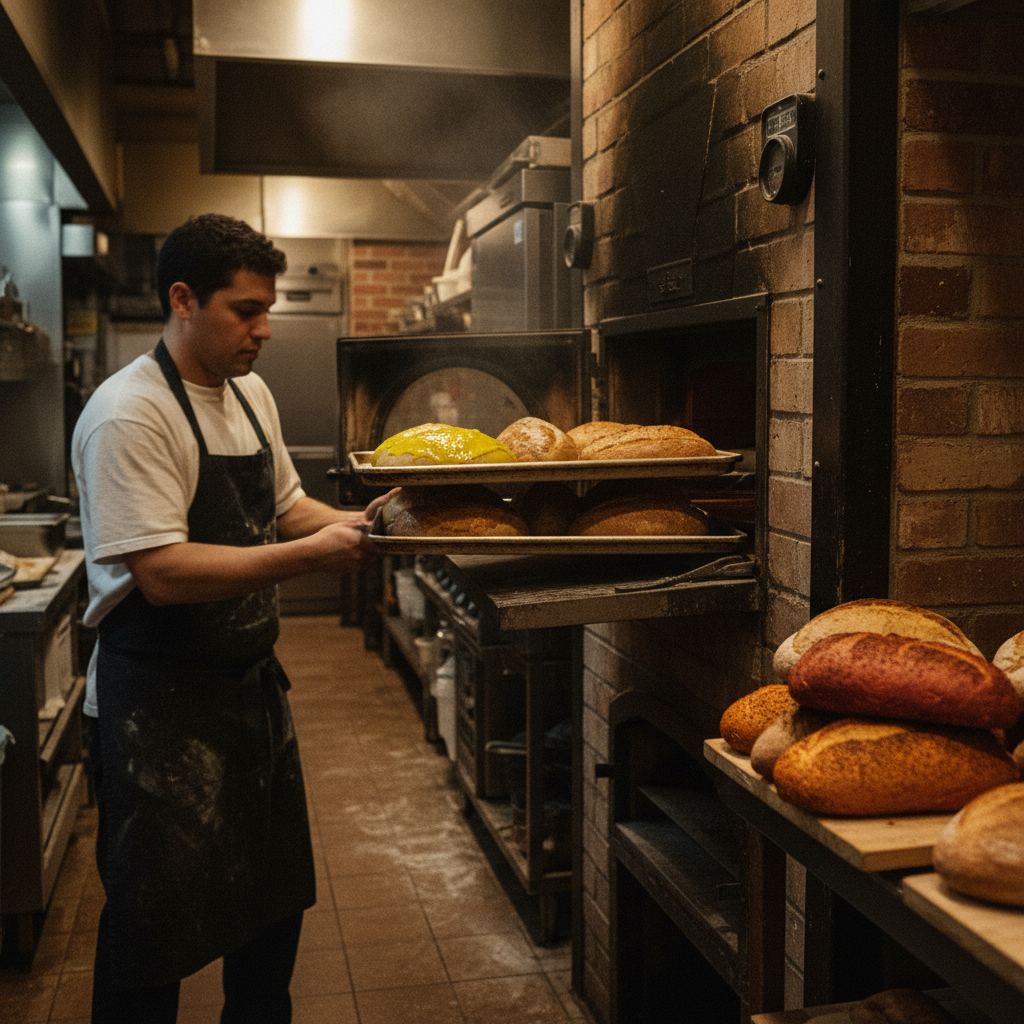
Mesa food service Illustration generated with AI. Not a photograph of a Foody Finance client or location.
What drives financing conversations in Mesa
Capital here often goes toward patio shade structures and outdoor cooling ahead of the spring training crowds at Sloan Park, plus payroll coverage through the slow summer months. Newer development near Eastmark and Riverview also drives buildout financing for restaurants opening in ground-floor retail space.
Revenue and seasonality in Mesa
February through April brings spring training crowds and snowbird residents who fill both quick-service and full-service spots near Sloan Park and downtown Mesa, while June through August traffic drops as temperatures climb past 100 degrees. Card payments dominate, and slow season cash reserves have to stretch across roughly four lean months.
What this does to your numbers
Business is strong during spring training and winter, then drops hard once summer heat sets in, so the slow months need to be planned for ahead of time.
Permitting in Mesa, and what it costs to wait
Maricopa County Environmental Services handles food facility permitting and inspection, while the Arizona Department of Liquor Licenses and Control processes liquor applications on its own state-level timeline separate from the county process. A new concept timed to open before Cactus League games start in late February needs both approvals to clear early enough that construction delays do not push the opening past the season.
What the wait actually costs
A late buildout or license means missing the spring training crowd that will not come back until next year.
What raises the cost of capital here
01Cactus League spring training games create a sharp seasonal demand spike near Sloan Park each year
02Summer heat above 100 degrees pushes utility and refrigeration costs up while cutting outdoor dining traffic
03New development in Eastmark and Riverview adds buildout costs tied to ground-floor retail shells
Which program usually fits here
Equipment financing fits for patio and cooling upgrades before spring training, and working capital fits for carrying the business through the hot summer months.
Arizona outline. Boundary data: US Census Bureau cartographic boundary files, public domain. Simplified for display.
A loan or lease tied to a specific machine. The machine itself is the security, so approval leans on the value of the hardware more than on your bank statements.
Money for the work that turns a space into a working kitchen: plumbing, electrical, hoods, walls, and permits. It pays for labor and materials you cannot resell, so it is priced differently than money for a fryer.
A formal credit check that shows on your report and can move your score a few points. It happens only after you pick a specific lender, not to get information.
How does Cubs and A's spring training affect Mesa restaurant financing?
Sloan Park and the surrounding Cactus League games bring several weeks of concentrated visitor spending each February and March, and restaurants near that traffic often use equipment financing to add patio seating, extra point-of-sale stations, or outdoor cooling before the season starts. Missing that window because a buildout ran late means losing the single busiest stretch of the year.
Why does Mesa's summer slowdown matter for loan planning?
Once spring training ends and snowbirds head home, Mesa's summer heat cuts patio and lunch traffic noticeably through June, July, and August. Owners often plan working capital coverage for that stretch specifically, since it is the predictable low point rather than a surprise, and payroll still has to be met while revenue is down.
Why do restaurants near Sloan Park in Mesa plan their whole year around six weeks in spring?
Cactus League spring training draws visiting fans, media, and Cubs affiliated staff to the Sloan Park area for a compressed late February through March window, and nearby restaurants can see their single busiest weeks of the year during this stretch. Owners in this corridor often stock up on inventory and add temporary staff specifically for spring training, then scale back sharply once teams break camp and head north. This creates a revenue pattern where one seven week block can represent a disproportionate share of annual sales for restaurants directly adjacent to the stadium. Lenders reviewing statements from restaurants in this specific corridor should expect this concentrated spike and treat the quieter months that follow as the normal baseline, not a downturn.
How do Mesa food businesses start a financing conversation?
Start with a free request. Our team reviews the business basics and use of funds, then looks for a funding partner that fits. If a partner thinks they can help, its specialist contacts you, sends its own secure application, and sets the timing from there. Short term options commonly fund in 1 to 3 business days after an accepted offer.
Do you serve areas outside Mesa in Arizona?
Yes. We work with food service operators across Arizona and in 49 states and Washington, DC. Program availability varies by state. Merchant cash advance and other revenue-based financing structures are not offered to businesses in Texas, Virginia, or Connecticut.
What is equipment financing, and when does it fit a Mesa operator?
You borrow against a specific machine, and the machine is what backs the loan. Use it when a fryer, a walk-in, an oven, or a vehicle has to be replaced and you would rather keep the cash in the account. Typical size is 5,000 to 500,000, funding runs 1 to 5 business days once you choose an offer, and you repay it as fixed monthly payment. You will be asked for: application, equipment quote, bank statements.
What is working capital, and when does it fit a Mesa operator?
Cash for the everyday gaps, repaid out of sales on a set schedule instead of at the end of a project. Use it for payroll, inventory, a slow stretch, or a job you have to fund before the client pays you. Typical size is 10,000 to 500,000, funding runs 1 to 3 business days once you choose an offer, and you repay it as fixed daily, weekly, or monthly payment. You will be asked for: application, 3 to 6 months of bank statements.
What is buildout and expansion, and when does it fit a Mesa operator?
Construction money for the work that turns a space into a working kitchen, usually released in stages as the job progresses. Use it for a second location, a remodel, a patio, or a kitchen conversion, and size it to cover the permit wait, not just the build. Typical size is 50,000 to 2,000,000, funding runs 1 to 4 weeks once you choose an offer, and you repay it as fixed payment, often with a draw schedule. You will be asked for: application, contractor bids, lease, financials.
Why does the Mesa calendar change what I should borrow?
Business is strong during spring training and winter, then drops hard once summer heat sets in, so the slow months need to be planned for ahead of time.
What does waiting actually cost me in Mesa?
A late buildout or license means missing the spring training crowd that will not come back until next year.
Which program do most Mesa operators end up using?
Equipment financing fits for patio and cooling upgrades before spring training, and working capital fits for carrying the business through the hot summer months. That is a starting point, not a decision. Our team reviews your deposits, time in business, and use of funds before looking for a funding partner that fits.
Does asking about financing in Mesa affect my credit?
No. Getting information is a conversation, not an application. There is no credit application and no hard credit pull until you have picked a specific lender and want to move forward.
A location page indicates that Foody Finance is taking clients in that market. It does not represent a physical office, storefront, or licensed presence in that city or state. All services are delivered remotely by our US-based team.
Start the conversation
Send a request before you fill out an application
Start with a free, no-obligation request. Our team reviews it and looks for a funding partner that fits.