A Carytown restaurant can fill up on a Saturday while a Scott's Addition spot two miles away is just starting to build its regulars, and both are considered established parts of Richmond's dining scene
How do Richmond food businesses get funded?
Richmond operators start with a free request. Our team reviews it and looks for a funding partner that fits the use of funds. The partner sends its own secure application and sets the timing from there. Working capital commonly funds in 1 to 3 business days after an accepted offer, equipment in 1 to 5, and buildout capital in 1 to 4 weeks.
Estimates, not offers: Amounts, terms, and funding times are estimates based on programs commonly available in food service. Actual terms vary by program, lender underwriting, time in business, revenue, and credit profile. Nothing here is an offer of credit or a guarantee of approval. See source and method.
How Richmond eats, and what that does to cash
01
Where Richmond eats
Carytown along West Cary Street carries independent restaurants, coffee shops, and bars serving a mixed college and young professional crowd at moderate prices. Shockoe Bottom and Shockoe Slip hold the historic warehouse district's late-night bars and restaurants, drawing weekend crowds down near the river and the Main Street Station area. The Fan, adjacent to Virginia Commonwealth University, runs on counter-service pizza, cheap wings, and student-budget dining alongside pricier spots on Grace and Strawberry streets. Scott's Addition, a former industrial zone, has become the city's brewery and cidery corridor, with Hardywood Park Craft Brewery and The Veil Brewing Co. anchoring a food truck and taproom scene that draws higher-spending adults on weekends. Church Hill's East Broad Street corridor has added chef-driven restaurants like Alewife and Metzger Bar and Butchery, serving a gentrifying residential base at higher tickets than the surrounding neighborhood. Southside and the East End carry lower-cost, family-run restaurants serving working-class neighborhoods with far thinner margins than the northside districts.
02
What Richmond orders
Richmond's food identity centers on Southern and soul food staples alongside a strong Vietnamese presence from the Eden Center in nearby Falls Church notwithstanding, with local pho and banh mi shops concentrated on Broad Street. Barbecue and biscuit counters draw morning and lunch crowds at moderate ten to fifteen dollar tickets. The brewery kitchen format dominates Scott's Addition, pairing rotating food trucks with beer flights rather than full kitchens, which keeps overhead lower for operators but ties revenue to weekend foot traffic. Food halls, including Chelsea Restaurant Group ventures near VCU, use counter service to serve a lunch crowd on tight fifteen-minute turnarounds. James River-adjacent restaurants in Manchester lean on patio seating for the eight warmer months. A sit-down dinner for two with drinks downtown or in Church Hill typically runs seventy to one hundred dollars, while Fan district student spots average under fifteen dollars per person. Kitchens built for high beer and cider volume, rather than full food service, face costly equipment retrofits when a brewery-adjacent concept tries to expand its menu.
03
The Richmond calendar
Virginia Commonwealth University drives Fan district and downtown restaurant traffic during the fall and spring semesters, with a sharp drop each May through August when students leave. The state government, headquartered downtown, fills lunch counters on weekdays when the General Assembly is in session, January through March. The Richmond Folk Festival in October along the riverfront draws large multi-day crowds downtown, a key autumn revenue event. Dominion Energy and Capital One, both major regional employers, support steady weekday lunch demand near their downtown and Innsbrook offices year-round. The Ukrop's-founded Maymont Flower and Garden Show and the UCI-linked cycling legacy events draw seasonal spring tourism. Summer brings James River tubing and outdoor recreation crowds to Manchester and Rocketts Landing restaurants. The weeks around Christmas and early January see the steepest citywide drop as both students and legislators are away, leaving restaurants dependent on both institutions with a six-week revenue gap.
04
Growth and cost in Richmond
New restaurant growth concentrates in Scott's Addition, where former industrial buildings offer lower per-square-foot buildout costs than Carytown or Church Hill, though demand from breweries has pushed commercial rents up sharply in the past five years. Manchester, across the James River, is adding restaurant space tied to residential conversion of old tobacco warehouses, with construction timelines often extended by historic preservation review. Labor costs are shaped by competition from VCU Health and Capital One, both of which pull from the same young workforce that restaurants rely on for hourly staff. Utility costs run highest in July and August for kitchens in older Church Hill buildings lacking updated electrical service, a common buildout obstacle in the historic district. Deposit timing on Scott's Addition leases has tightened as brewery-adjacent demand outpaces available industrial space, and operators there often pay six months of rent upfront before opening.
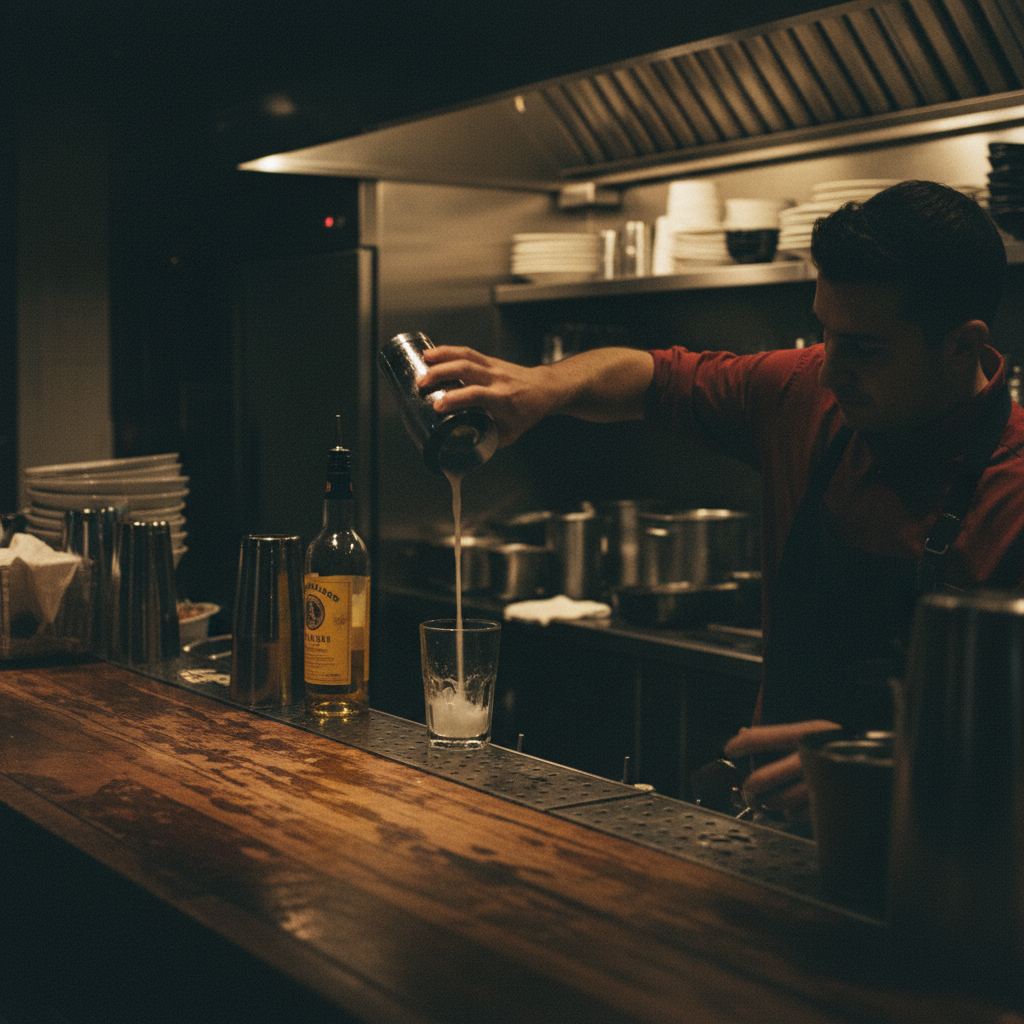
Richmond food service Illustration generated with AI. Not a photograph of a Foody Finance client or location.
What drives financing conversations in Richmond
Financing in Richmond frequently funds conversions of old industrial and warehouse buildings, since Scott's Addition's growth as a dining district runs through adaptive reuse of former manufacturing space rather than ground-up construction. That kind of buildout carries higher structural and mechanical costs than a standard retail shell, and lenders should expect that in a Richmond request.
Revenue and seasonality in Richmond
Richmond's dining revenue draws from VCU's student population, state government workers downtown, and a growing craft beverage scene concentrated in Scott's Addition, with weekday lunch strongest near government offices and weekend traffic strongest in Carytown and The Fan. Ticket averages hold steady year-round with a modest bump during VCU's academic calendar and Richmond's spring and fall festival season.
What this does to your numbers
Sales near the university drop off hard during school breaks, so the calendar matters as much as the day of the week for a restaurant near VCU.
Permitting in Richmond, and what it costs to wait
The Richmond City Health District handles food establishment permitting while the city's Department of Planning and Development Review manages zoning and building permits separately, and a Virginia ABC license adds its own state-level timeline for any bar or brewery concept. Adaptive reuse projects in Scott's Addition often require a historic tax credit review in addition to standard permitting when the building qualifies, and that review can extend a project's timeline well past what a new-build restaurant space would need.
What the wait actually costs
Turning an old warehouse in Scott's Addition into a restaurant can take longer than a normal buildout, especially if the building qualifies for historic tax review, and rent still comes due during that stretch.
What raises the cost of capital here
01Historic tax credit reviews for Scott's Addition warehouse conversions can extend project timelines
02VCU's academic calendar drives seasonal demand swings near the university corridor
03State government worker lunch traffic downtown creates a steady but narrow weekday window
Which program usually fits here
SBA or buildout financing fits warehouse conversions here well because the spending covers real structural work, not just decor, and needs a longer repayment term to match.
Virginia outline. Boundary data: US Census Bureau cartographic boundary files, public domain. Simplified for display.
Money for the work that turns a space into a working kitchen: plumbing, electrical, hoods, walls, and permits. It pays for labor and materials you cannot resell, so it is priced differently than money for a fryer.
A loan or lease tied to a specific machine. The machine itself is the security, so approval leans on the value of the hardware more than on your bank statements.
A formal credit check that shows on your report and can move your score a few points. It happens only after you pick a specific lender, not to get information.
Why do restaurant buildouts in Scott's Addition cost more than a standard storefront conversion?
Many Scott's Addition buildings are former industrial and manufacturing spaces, so bringing them up to restaurant code often means new HVAC, upgraded electrical service, and structural work the original building wasn't designed for. If the building qualifies for historic tax credits, an added state review can also extend the permitting timeline, which means holding costs on the space run longer than a standard buildout.
Does VCU's academic calendar change revenue for Richmond restaurants near the campus?
Yes. Restaurants near VCU's campus and the Fan district see a meaningful drop in weekday traffic during summer and winter breaks when students leave the city, followed by a rebound each fall and spring semester. Owners in that corridor often plan staffing levels around the academic calendar rather than a standard weekly forecast.
How does Richmond's mix of state government and university employment affect restaurant lending?
Richmond has two large, highly predictable but seasonal customer bases: the General Assembly, which meets January through March, and VCU, which empties out each summer. Lenders often ask whether a concept's location depends on one, both, or neither of these cycles, because a Fan district restaurant near VCU carries a different summer risk profile than a Shockoe Slip restaurant serving state employees and tourists year-round. Concepts in Scott's Addition or Church Hill that rely on neither institution are underwritten against weekend and evening foot traffic instead, which shows steadier month to month revenue but lower peak volume.
How do Richmond food businesses start a financing conversation?
Start with a free request. Our team reviews the business basics and use of funds, then looks for a funding partner that fits. If a partner thinks they can help, its specialist contacts you, sends its own secure application, and sets the timing from there. Short term options commonly fund in 1 to 3 business days after an accepted offer.
Do you serve areas outside Richmond in Virginia?
Yes. We work with food service operators across Virginia and in 49 states and Washington, DC. Program availability varies by state. Merchant cash advance and other revenue-based financing structures are not offered to businesses in Texas, Virginia, or Connecticut.
What is buildout and expansion, and when does it fit a Richmond operator?
Construction money for the work that turns a space into a working kitchen, usually released in stages as the job progresses. Use it for a second location, a remodel, a patio, or a kitchen conversion, and size it to cover the permit wait, not just the build. Typical size is 50,000 to 2,000,000, funding runs 1 to 4 weeks once you choose an offer, and you repay it as fixed payment, often with a draw schedule. You will be asked for: application, contractor bids, lease, financials.
What is sba loans, and when does it fit a Richmond operator?
A bank loan partly guaranteed by the Small Business Administration, which is why the payment is the lowest available. Use it when you can plan months ahead. It is the cheapest money on this page and the slowest to arrive. Typical size is 50,000 to 5,000,000, funding runs 3 to 12 weeks once you choose an offer, and you repay it as amortized interest, lowest payment of any program. You will be asked for: tax returns, interim financials, debt schedule, plan.
What is equipment financing, and when does it fit a Richmond operator?
You borrow against a specific machine, and the machine is what backs the loan. Use it when a fryer, a walk-in, an oven, or a vehicle has to be replaced and you would rather keep the cash in the account. Typical size is 5,000 to 500,000, funding runs 1 to 5 business days once you choose an offer, and you repay it as fixed monthly payment. You will be asked for: application, equipment quote, bank statements.
Why does the Richmond calendar change what I should borrow?
Sales near the university drop off hard during school breaks, so the calendar matters as much as the day of the week for a restaurant near VCU.
What does waiting actually cost me in Richmond?
Turning an old warehouse in Scott's Addition into a restaurant can take longer than a normal buildout, especially if the building qualifies for historic tax review, and rent still comes due during that stretch.
Which program do most Richmond operators end up using?
SBA or buildout financing fits warehouse conversions here well because the spending covers real structural work, not just decor, and needs a longer repayment term to match. That is a starting point, not a decision. Our team reviews your deposits, time in business, and use of funds before looking for a funding partner that fits.
Does asking about financing in Richmond affect my credit?
No. Getting information is a conversation, not an application. There is no credit application and no hard credit pull until you have picked a specific lender and want to move forward.
A location page indicates that Foody Finance is taking clients in that market. It does not represent a physical office, storefront, or licensed presence in that city or state. All services are delivered remotely by our US-based team.
Start the conversation
Send a request before you fill out an application
Start with a free, no-obligation request. Our team reviews it and looks for a funding partner that fits.