VA metro

Restaurant financing in Chesapeake.

Chesapeake spreads its restaurant traffic across five boroughs instead of one downtown core, so a location that looks slow on a map can still be doing fine three miles away.

How do Chesapeake food businesses get funded?

Chesapeake operators start with a free review with a specialist, share recent business bank statements, and are matched to the programs that fit the use of funds. Working capital funds in 1 to 3 business days after you choose an offer, equipment in 1 to 5, and buildout capital in 1 to 4 weeks.

Estimates, not offers: Amounts, terms, and funding times are estimates based on programs commonly available in food service. Actual terms vary by program, lender underwriting, time in business, revenue, and credit profile. Nothing here is an offer of credit or a guarantee of approval. See source and method.

How Chesapeake eats, and what that does to cash

01

Where Chesapeake eats

Chesapeake spreads across Great Bridge, Greenbrier, and South Norfolk, and each pulls a different crowd. Greenbrier Mall and the surrounding Crossways Boulevard corridor carry chain casual dining and fast casual traffic from office parks and the Chesapeake Conference Center, with tickets landing in the 12 to 20 dollar range at lunch. Great Bridge, along Cedar Road and near the historic locks, draws a slower, sit-down crowd on weekends, families after Saturday markets, retirees, and boaters passing through the Intracoastal Waterway locks. South Norfolk's Historic District has smaller storefronts and newer chef-driven openings feeding off spillover from Norfolk's Ghent scene, with entrees closer to 18 to 28 dollars. Deep Creek and the Western Branch area lean toward drive through and strip mall counter service tied to shift workers from nearby industrial and shipping employers. Military families from Naval Support Activity Norfolk and Naval Medical Center Portsmouth commute in and shape a value oriented, early dinner pattern. The city has no dense downtown core comparable to Norfolk, so restaurants depend on car traffic and visibility along Battlefield Boulevard and Volvo Parkway, and that spread-out layout means slower walk-in traffic and heavier reliance on delivery apps for evening revenue.
02

Dishes and formats Chesapeake is known for

Seafood dominates, with Chesapeake Bay blue crab served as crab cakes, crab dip, and steamed crabs by the dozen at casual seafood houses along Battlefield Boulevard and near the Great Dismal Swamp waterways, typically 16 to 24 dollars a plate. Peanuts show up on menus as a nod to Suffolk and Southampton County farms nearby, roasted and boiled as bar snacks. Barbecue trailers and smokehouses cluster near Greenbrier, serving pulled pork and brisket plates at 11 to 15 dollars for a lunch crowd from office parks. Drive through and fast casual dominate Volvo Parkway and Battlefield Boulevard, feeding shift changes at logistics and distribution centers. Patio dining is limited but growing around Great Bridge's waterfront, where boaters tie up for a meal near the locks. Food halls have not taken hold here the way they have in Norfolk, so independent operators compete directly against national chains for the same suburban lots. Late night options are thin outside of a few bars near South Norfolk, since the city lacks a walkable nightlife core, and that gap concentrates weekend revenue into a narrow Friday and Saturday dinner window, leaving weeknight receipts flat and predictable but low.

03

The calendar in Chesapeake

Chesapeake's dining calendar follows military pay cycles, school schedules for Chesapeake Public Schools, and shipping activity tied to the Port of Virginia in nearby Norfolk and Portsmouth. The Chesapeake Jubilee, held each spring in City Park, draws family crowds and pushes concession and nearby restaurant traffic up for a single weekend. Summer brings boat traffic through the Great Bridge Locks and steady seafood house business through August, as Virginia Beach tourists spill over for a quieter, less crowded meal. September and October carry Chesapeake's fall festivals and youth sports tournaments at the Chesapeake Sportsplex, filling nearby fast casual spots with team parents on weekend mornings. November and December slow considerably outside of holiday parties tied to corporate offices in Greenbrier, since the city has no major convention draw of its own. January and February are the quietest months, with military deployment cycles and post-holiday spending pullback cutting weekday lunch traffic at office park restaurants, and operators without a cash reserve built from the fall season often struggle to cover January payroll.

04

Growth and cost pattern in Chesapeake

New restaurant construction concentrates along the Route 168 Bypass corridor and in the Grassfield and Hickory areas, where residential growth has outpaced retail buildout, leaving open outparcels ready for ground-up construction rather than costly retrofits. Commercial rent runs below Virginia Beach and Norfolk rates, which draws regional chains testing suburban expansion, but buildout costs still require full kitchen hookups since many of these lots are undeveloped rather than second-generation restaurant space. Labor competes directly with the shipping, warehousing, and shipbuilding industries tied to the Port of Virginia and Norfolk Naval Shipyard, which pay hourly wages that pull kitchen staff away from restaurant jobs. Utility costs run moderate, but flood zone requirements near the Elizabeth River and Great Dismal Swamp add insurance and construction costs for any site near water. Because so much of the city's growth is greenfield rather than infill, permitting and site plan approval for stormwater management often adds months beyond a typical build timeline, delaying opening dates and stretching the gap between lease signing and first revenue.

Food service operation in Chesapeake
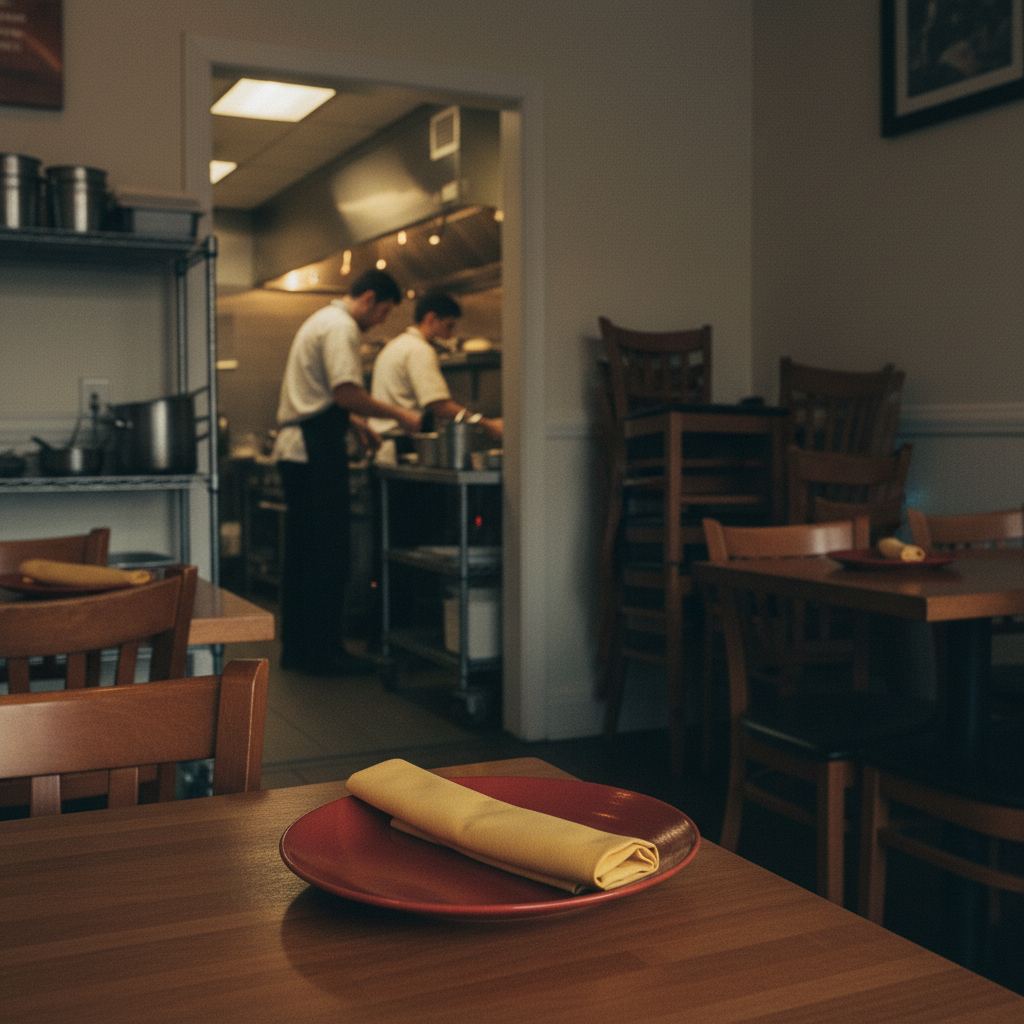
Chesapeake food service. Illustration generated with AI. Not a photograph of a Foody Finance client or location.

What drives financing conversations in Chesapeake

Capital in Chesapeake usually goes toward second locations and delivery-ready kitchen layouts, since the city's population is spread across Greenbrier, South Norfolk, and Western Branch rather than concentrated in a walkable center. A single storefront rarely captures the whole trade area, which pushes owners toward funding a second footprint sooner than they would in a denser city.

Revenue and seasonality in Chesapeake

Chesapeake's restaurant traffic leans on suburban families and commuters working around the Hampton Roads shipyards and logistics corridors, with weekday lunch steadier than weekend dinner in most of the borough centers. Ticket sizes hold fairly flat across the year since there's no strong tourist season pulling numbers up or down.

What this does to your numbers

Because the city doesn't have one main downtown, sales depend on which side of Chesapeake a customer lives on, so a slow month in one borough doesn't mean the whole business is struggling.

Permitting in Chesapeake, and what it costs to wait

Chesapeake's health inspections run through the Chesapeake Health Department while site plan approval for any new restaurant shell goes through city planning, and the two rarely close on the same week. Because so much of the city's restaurant stock sits in retail centers built for other uses, converting a former retail bay to a commercial kitchen often triggers a fire marshal review that a strip mall space downtown wouldn't need, and financing needs to cover rent on that space before it opens.

What the wait actually costs

Turning a strip mall space into a working kitchen usually takes longer than owners plan for, and every extra week means paying rent on an empty space.

What raises the cost of capital here

  • 01Retail center conversions to restaurant use often trigger added fire suppression requirements
  • 02Trade areas split across five boroughs mean a single location rarely covers full city demand
  • 03Highway access near Great Bridge and Greenbrier shapes where delivery-heavy concepts locate

Which program usually fits here

Buildout financing fits best for a retail-to-restaurant conversion here since the cost is mostly in getting the space code-compliant, not in ongoing operating expenses.

Chesapeake
Virginia outline. Boundary data: US Census Bureau cartographic boundary files, public domain. Simplified for display.

Free review, no hard credit pull

Get funds now and review your options

Step 01 of 03 · Your operation

A specialist reviews every request and reaches out the same business day

Areas we serve

  • Greenbrier
  • South Norfolk
  • Western Branch
  • Great Bridge
  • Deep Creek

Financing terms on this page

Definitions for the terms used above.

plan review
The city or county reading your kitchen drawings before you are allowed to build. Nothing gets installed until it clears, and rent runs the whole time.
covers
The number of guests served. Lenders pair it with check average to judge how reliable a month really is.
buildout capital
Money for the work that turns a space into a working kitchen: plumbing, electrical, hoods, walls, and permits. It pays for labor and materials you cannot resell, so it is priced differently than money for a fryer.
draw
Taking money out of an approved line or loan. Draws tied to construction milestones mean you only start paying interest on each piece as you use it.
equipment paper
A loan or lease tied to a specific machine. The machine itself is the security, so approval leans on the value of the hardware more than on your bank statements.
line of credit
A preapproved pool of money you pull from only when you need it, then pay back and reuse. You pay for what you draw, not for the full amount sitting there.
hard credit pull
A formal credit check that shows on your report and can move your score a few points. It happens only after you pick a specific lender, not to get information.
working capital
Cash for the everyday gaps: payroll, inventory, rent, and repairs. It is repaid out of daily or weekly sales rather than from one big event.
underwriting
The lender reading your numbers to decide how much risk you are. Bank statements, time in business, and existing debt carry the most weight.
term
How long you have to repay. A longer term lowers the monthly payment and raises what the money costs in total.

Chesapeake financing questions

Is it better to open one large restaurant in Chesapeake or plan for multiple smaller locations?

Because the city's population and shopping centers are spread across separate borough hubs like Greenbrier, Western Branch, and Great Bridge, a single large location often underperforms relative to its size since no one site draws from the whole city. Many operators here plan financing around a smaller flagship plus a second location within a year or two rather than one oversized buildout.

Why does converting a retail space to a restaurant in Chesapeake take longer than expected?

Retail bays weren't built with commercial kitchen exhaust or grease trap capacity in mind, so a fire marshal review and plumbing retrofit often get added once the health department sees the actual equipment layout. That extra review cycle sits outside the standard health permit timeline, which means rent obligations start well before the kitchen can legally cook.

Why do so many Chesapeake restaurants sit in shopping centers rather than a walkable downtown?

Chesapeake incorporated in 1963 from a merger of South Norfolk and Norfolk County, and it grew as a car-dependent suburb rather than around a historic town center. Its population spread across Great Bridge, Greenbrier, and Deep Creek rather than concentrating in one core, so retail and dining followed arterial roads like Battlefield Boulevard and Volvo Parkway instead of a Main Street. This means restaurant success depends heavily on visibility from the road and parking lot access rather than foot traffic, and it shapes how lenders read a location's revenue potential based on traffic counts rather than pedestrian density.

How do Chesapeake food businesses start a financing conversation?

Start with a free review by a specialist. You share the basics of the business, the use of funds, and recent bank statements, and you see every program that fits before any credit application exists. Short term options commonly fund in 1 to 3 business days once you choose an offer.

Do you serve areas outside Chesapeake in Virginia?

Yes. Every program is available statewide in Virginia and nationwide.

What is buildout and expansion, and when does it fit a Chesapeake operator?

Construction money for the work that turns a space into a working kitchen, usually released in stages as the job progresses. Use it for a second location, a remodel, a patio, or a kitchen conversion, and size it to cover the permit wait, not just the build. Typical size is 50,000 to 2,000,000, funding runs 1 to 4 weeks once you choose an offer, and you repay it as fixed payment, often with a draw schedule. You will be asked for: application, contractor bids, lease, financials.

What is equipment financing, and when does it fit a Chesapeake operator?

You borrow against a specific machine, and the machine is what backs the loan. Use it when a fryer, a walk-in, an oven, or a vehicle has to be replaced and you would rather keep the cash in the account. Typical size is 5,000 to 500,000, funding runs 1 to 5 business days once you choose an offer, and you repay it as fixed monthly payment. You will be asked for: application, equipment quote, bank statements.

What is business line of credit, and when does it fit a Chesapeake operator?

An approved limit you pull from only when you need it, then repay and reuse. Use it for a season you can see coming, so you draw before the peak and pay it back out of the peak. Typical size is 10,000 to 250,000, funding runs 2 to 7 business days once you choose an offer, and you repay it as interest on the drawn balance only. You will be asked for: application, bank statements.

Why does the Chesapeake calendar change what I should borrow?

Because the city doesn't have one main downtown, sales depend on which side of Chesapeake a customer lives on, so a slow month in one borough doesn't mean the whole business is struggling.

What does waiting actually cost me in Chesapeake?

Turning a strip mall space into a working kitchen usually takes longer than owners plan for, and every extra week means paying rent on an empty space.

Which program do most Chesapeake operators end up using?

Buildout financing fits best for a retail-to-restaurant conversion here since the cost is mostly in getting the space code-compliant, not in ongoing operating expenses. That is a starting point, not a decision. The specialist review looks at your deposits, your time in business, and what the money is for before anything is recommended.

Does asking about financing in Chesapeake affect my credit?

No. Getting information is a conversation, not an application. There is no credit application and no hard credit pull until you have picked a specific lender and want to move forward.

Start the conversation

Talk to a specialist before you fill out an application.

Start with a free, no-obligation review. We will send the right application only after we know what you actually qualify for.

Start a free review

Prefer to call

(833) 505-1900