UT metro

Restaurant financing in Salt Lake City.

Utah's specific liquor laws add a layer of complexity most restaurant owners moving here have never dealt with, and getting that structure wrong can stall an opening date that construction alone would have hit on time.

How do Salt Lake City food businesses get funded?

Salt Lake City operators start with a free review with a specialist, share recent business bank statements, and are matched to the programs that fit the use of funds. Working capital funds in 1 to 3 business days after you choose an offer, equipment in 1 to 5, and buildout capital in 1 to 4 weeks.

Estimates, not offers: Amounts, terms, and funding times are estimates based on programs commonly available in food service. Actual terms vary by program, lender underwriting, time in business, revenue, and credit profile. Nothing here is an offer of credit or a guarantee of approval. See source and method.

How Salt Lake City eats, and what that does to cash

01

Where Salt Lake City eats

The Granary District and 9th and 9th neighborhood carry Salt Lake's coffee-shop and brunch-forward dining, drawing a younger, remote-work crowd that spends steadily on weekday mornings rather than weekend nights. Downtown, around Main Street and the Gallivan Center, holds the convention and office lunch trade tied to the Salt Palace Convention Center, with a heavy but narrow weekday window and quiet evenings outside convention weeks. Sugar House, further south along 2100 South, runs a denser bar and restaurant strip that benefits from Utah's more relaxed dining-and-drinking rules than rural parts of the state, pulling a 20s-and-30s crowd on weekend nights. The Avenues and Capitol Hill hold smaller neighborhood cafes serving a residential, walk-in customer base. Ballpark, near Smith's Ballpark, sees game-night spikes tied to the Salt Lake Bees season and little traffic otherwise. Rent downtown near the convention center runs well above Sugar House or Granary rates, and a restaurant built around convention foot traffic can post strong individual weeks that do not repeat evenly, leaving weeks between conventions with a real gap against fixed downtown rent.
02

What Salt Lake City orders

Utah's own scone, a fried-dough bread served with honey butter rather than the British biscuit, appears at breakfast counters like Ruth's Diner up Emigration Canyon. Green chili and pastrami burgers show up on diner menus as a regional standard alongside fry sauce, a ketchup-and-mayo condiment nearly universal at Utah drive-throughs and burger counters. Salt Lake's craft brewery scene, including Uinta and Squatters, built brewery-kitchen formats serving elevated pub food alongside house beer, constrained historically by Utah's alcohol laws that cap draft beer strength and require food service alongside bar seating in many licenses. Food trucks cluster downtown on weekdays near office towers and at Truck Stop food-truck park events in warmer months. Costs run 12 to 18 dollars for a casual sit-down entree, moderate relative to coastal cities. Utah's liquor licensing requirements, including mandatory food sales percentages for bar-restaurant hybrids, mean a brewery kitchen that under-orders food inventory against a busy beer weekend can find itself out of compliance and out of pocket on a rush reorder mid-service.

03

The calendar that runs Salt Lake City

The Salt Palace Convention Center schedule sets much of downtown's weekday food demand, with major conventions like the Outdoor Retailer show and various tech and medical conferences filling hotel restaurants and nearby lunch counters on specific announced weeks throughout the year. Sundance Film Festival in late January, held primarily in Park City but drawing satellite events and overflow dining traffic into Salt Lake, produces a sharp ten-day spike in a normally slow winter month. Ski season, roughly November through April, brings visitors through Salt Lake International Airport who eat downtown before heading to nearby resorts, concentrating traffic on travel days. The University of Utah's fall and spring semesters and Utah Jazz home games at the Delta Center from October through April keep weeknight bar and restaurant traffic elevated near downtown. Summer brings the Utah Arts Festival in June and steady outdoor dining season through September. A restaurant that leans on Sundance week and Jazz playoff runs to cover a slow October between semesters and before ski season starts is betting on two overlapping but separate calendars lining up in its favor.

04

Growth and cost pattern

New restaurant construction concentrates in the Granary District and along State Street south of downtown, where former industrial buildings offer larger footprints at lower per-square-foot cost than the central business district, though many need full electrical and ventilation upgrades before a commercial kitchen can operate. Sugar House has seen infill mixed-use development add ground-floor restaurant space with modern buildouts already roughed in, shortening the permitting timeline compared to older Granary buildings. Utah's liquor license system requires a separate state license on top of local permits, and the state caps the number of full-service liquor licenses available, which has historically created a waiting period of several months to over a year for new restaurants seeking a full bar rather than a beer-only license. Labor costs remain moderate relative to West Coast metros, though rapid population growth along the Wasatch Front has pushed wages up faster than in past years. A restaurant that opens its kitchen on schedule but is still waiting on a state liquor license months later loses the higher-margin bar revenue it budgeted for during its first two quarters.

Food service operation in Salt Lake City
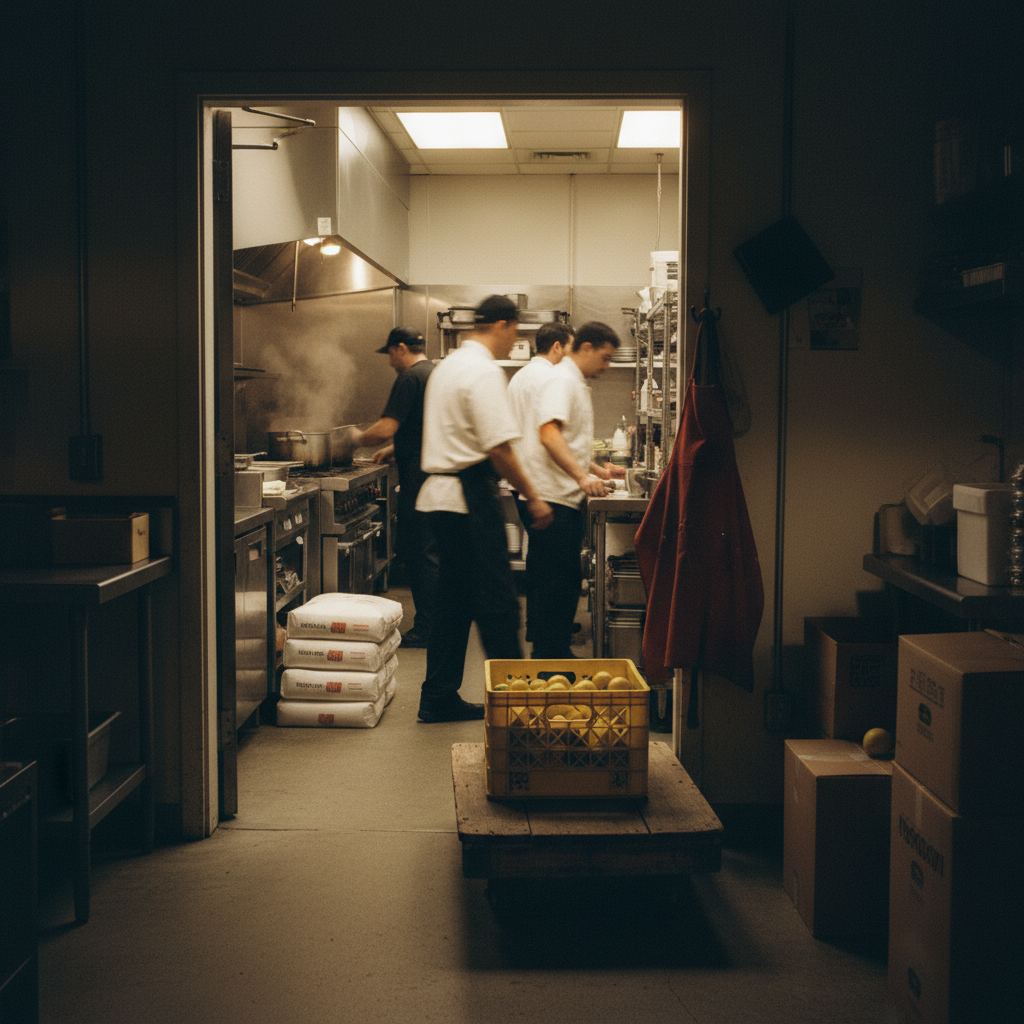
Salt Lake City food service. Illustration generated with AI. Not a photograph of a Foody Finance client or location.

What drives financing conversations in Salt Lake City

Financing here often covers the buildout requirements tied to Utah's liquor licensing categories, along with seasonal staffing for the ski season crowd that flows through the city on the way to nearby resorts. Restaurants near Temple Square and downtown convention venues also plan capital around a business travel and event calendar that runs heavier than typical leisure tourism.

Revenue and seasonality in Salt Lake City

Ski season from roughly November through April brings a steady flow of visitors heading to and from nearby resorts, while summer draws a different mix of outdoor tourism and convention business downtown. Utah's lower per-capita alcohol consumption compared to national averages also shapes revenue mix, with food sales often carrying a larger share of the check than in comparable-sized cities elsewhere.

What this does to your numbers

Ski season brings steady extra business for months, but you still need enough food sales the rest of the year since drink sales run lower here than in most cities.

Permitting in Salt Lake City, and what it costs to wait

Salt Lake County Health Department handles food service permitting and inspection separately from city building and fire review, and the Utah Department of Alcoholic Beverage Services controls liquor licensing under rules that differ meaningfully from most other states, including quotas that can create a waiting period for new licenses. A restaurant planning a full bar program should budget for the possibility that a license isn't immediately available even after construction is finished.

What the wait actually costs

Utah's liquor license system can leave you waiting even after your restaurant is fully built and ready to open.

What raises the cost of capital here

  • 01Utah's liquor license quota system can create a waiting period independent of construction timelines
  • 02Ski season traffic from November through April requires seasonal staffing beyond the summer baseline
  • 03Food sales typically carry a larger share of revenue here than in cities with higher alcohol consumption

Which program usually fits here

An SBA loan fits well for the full buildout cost, since it can cover both construction and the extra time spent waiting on a liquor license.

Salt Lake City
Utah outline. Boundary data: US Census Bureau cartographic boundary files, public domain. Simplified for display.

Free review, no hard credit pull

Get funds now and review your options

Step 01 of 03 · Your operation

A specialist reviews every request and reaches out the same business day

Areas we serve

  • Downtown/Temple Square
  • Sugar House
  • The Avenues
  • 9th and 9th
  • Marmalade District

Financing terms on this page

Definitions for the terms used above.

draw
Taking money out of an approved line or loan. Draws tied to construction milestones mean you only start paying interest on each piece as you use it.
SBA loan
A bank loan partly guaranteed by the Small Business Administration. Lowest cost of the options, longest paperwork, and the slowest to fund.
line of credit
A preapproved pool of money you pull from only when you need it, then pay back and reuse. You pay for what you draw, not for the full amount sitting there.
buildout capital
Money for the work that turns a space into a working kitchen: plumbing, electrical, hoods, walls, and permits. It pays for labor and materials you cannot resell, so it is priced differently than money for a fryer.
working capital
Cash for the everyday gaps: payroll, inventory, rent, and repairs. It is repaid out of daily or weekly sales rather than from one big event.
hard credit pull
A formal credit check that shows on your report and can move your score a few points. It happens only after you pick a specific lender, not to get information.
covers
The number of guests served. Lenders pair it with check average to judge how reliable a month really is.
equipment paper
A loan or lease tied to a specific machine. The machine itself is the security, so approval leans on the value of the hardware more than on your bank statements.
term
How long you have to repay. A longer term lowers the monthly payment and raises what the money costs in total.

Salt Lake City financing questions

Why can a finished restaurant buildout in Salt Lake City still not be able to open for drinks?

Utah's Department of Alcoholic Beverage Services issues liquor licenses under a quota system, and depending on the license category, a new restaurant can face a waiting period even after its health permit and building sign-off are complete. A buildout loan or line of credit should be sized to cover rent and payroll for however long that license wait runs, since construction finishing on time doesn't guarantee the license does too.

How does ski season affect staffing needs for a Salt Lake City restaurant?

From roughly November through April, visitors traveling to and from nearby resorts add steady traffic downtown and in neighborhoods along main travel routes, on top of the regular local customer base. A restaurant that scales staffing up for that stretch and back down in the off-season needs financing flexible enough to match, rather than a fixed loan payment sized for the busiest months.

Why does Salt Lake City's liquor licensing system matter for restaurant lending?

Utah's state-controlled liquor license system caps the number of full-service licenses statewide, and new restaurants often operate for months on a beer-only or limited license while waiting for a full license to become available. A restaurant's early bank statements may understate its eventual bar revenue if it opened before securing a full license, so lenders should ask directly about license status and projected timeline rather than assuming current alcohol sales reflect the business's steady-state revenue once full licensing comes through.

How do Salt Lake City food businesses start a financing conversation?

Start with a free review by a specialist. You share the basics of the business, the use of funds, and recent bank statements, and you see every program that fits before any credit application exists. Short term options commonly fund in 1 to 3 business days once you choose an offer.

Do you serve areas outside Salt Lake City in Utah?

Yes. Every program is available statewide in Utah and nationwide.

What is sba loans, and when does it fit a Salt Lake City operator?

A bank loan partly guaranteed by the Small Business Administration, which is why the payment is the lowest available. Use it when you can plan months ahead. It is the cheapest money on this page and the slowest to arrive. Typical size is 50,000 to 5,000,000, funding runs 3 to 12 weeks once you choose an offer, and you repay it as amortized interest, lowest payment of any program. You will be asked for: tax returns, interim financials, debt schedule, plan.

What is buildout and expansion, and when does it fit a Salt Lake City operator?

Construction money for the work that turns a space into a working kitchen, usually released in stages as the job progresses. Use it for a second location, a remodel, a patio, or a kitchen conversion, and size it to cover the permit wait, not just the build. Typical size is 50,000 to 2,000,000, funding runs 1 to 4 weeks once you choose an offer, and you repay it as fixed payment, often with a draw schedule. You will be asked for: application, contractor bids, lease, financials.

What is working capital, and when does it fit a Salt Lake City operator?

Cash for the everyday gaps, repaid out of sales on a set schedule instead of at the end of a project. Use it for payroll, inventory, a slow stretch, or a job you have to fund before the client pays you. Typical size is 10,000 to 500,000, funding runs 1 to 3 business days once you choose an offer, and you repay it as fixed daily, weekly, or monthly payment. You will be asked for: application, 3 to 6 months of bank statements.

Why does the Salt Lake City calendar change what I should borrow?

Ski season brings steady extra business for months, but you still need enough food sales the rest of the year since drink sales run lower here than in most cities.

What does waiting actually cost me in Salt Lake City?

Utah's liquor license system can leave you waiting even after your restaurant is fully built and ready to open.

Which program do most Salt Lake City operators end up using?

An SBA loan fits well for the full buildout cost, since it can cover both construction and the extra time spent waiting on a liquor license. That is a starting point, not a decision. The specialist review looks at your deposits, your time in business, and what the money is for before anything is recommended.

Does asking about financing in Salt Lake City affect my credit?

No. Getting information is a conversation, not an application. There is no credit application and no hard credit pull until you have picked a specific lender and want to move forward.

Start the conversation

Talk to a specialist before you fill out an application.

Start with a free, no-obligation review. We will send the right application only after we know what you actually qualify for.

Start a free review

Prefer to call

(833) 505-1900