Winston-Salem's downtown has grown around the arts district and Wake Forest's campus, but a restaurant here still has to cover slow stretches between university sessions and convention bookings.
How do Winston-Salem food businesses get funded?
Winston-Salem operators start with a free review with a specialist, share recent business bank statements, and are matched to the programs that fit the use of funds. Working capital funds in 1 to 3 business days after you choose an offer, equipment in 1 to 5, and buildout capital in 1 to 4 weeks.
Estimates, not offers: Amounts, terms, and funding times are estimates based on programs commonly available in food service. Actual terms vary by program, lender underwriting, time in business, revenue, and credit profile. Nothing here is an offer of credit or a guarantee of approval. See source and method.
How Winston-Salem eats, and what that does to cash
01
Where Winston-Salem eats
Downtown's Arts District along Trade Street mixes galleries with independent restaurants and bars, drawing a crowd for the monthly Gallery Hop and a steady weekend dinner trade otherwise. The Innovation Quarter, built on former tobacco factory land near downtown, has brought a new weekday lunch crowd of biotech and Wake Forest University medical researchers to restaurants and food trucks in that immediate area. West End, an older residential neighborhood just west of downtown, supports a handful of neighborhood restaurants serving a mostly local, repeat customer base rather than tourists. Reynolda Village, near Wake Forest University's main campus, carries a small, upscale shopping-center dining cluster serving university-adjacent families and staff. Downtown's restaurant scene has grown steadily as former tobacco and textile buildings get converted into apartments and offices, bringing more residents within walking distance of Trade Street. The Innovation Quarter's lunch crowd depends heavily on a five-day office and lab schedule, unlike Trade Street's restaurants, which depend more on evening and weekend traffic, meaning the two areas can see opposite peak hours within blocks of each other.
02
What Winston-Salem orders
Moravian traditions run deep here given the city's founding by Moravian settlers, and Moravian sugar cake and thin, spiced Moravian cookies remain genuine local specialty items sold at bakeries with roots going back generations. Barbecue, both whole-hog and Lexington-style with its distinct vinegar-and-ketchup dip, is common across the region given Winston-Salem's position in North Carolina's barbecue belt. Southern diner classics, including chicken and dumplings and country-style vegetable plates, remain standard at family restaurants throughout the city. Tobacco heritage still shapes the local food economy indirectly, since the same downtown buildings once used for cigarette manufacturing now house restaurants and food halls as part of the city's redevelopment. Craft breweries have grown in the Arts District, pairing beer with elevated Southern pub food. Food trucks cluster around the Innovation Quarter for weekday lunch, serving the biotech and university research workforce. When the annual Moravian sugar cake baking season around Christmas hits, demand at specialty bakeries spikes sharply and then drops off entirely once the holiday passes, a predictable seasonal inventory swing tied to a single cultural tradition.
03
The Winston-Salem calendar
Wake Forest University's academic calendar, along with its Demon Deacons athletics program, shapes restaurant demand near campus and Reynolda Village, with fall football season and spring semester bringing steady traffic that drops during summer and winter breaks. The Dixie Classic Fair each October is one of the city's largest annual events, drawing crowds from across the region and lifting restaurant traffic citywide during its run. RiverRun International Film Festival each spring brings visitors downtown for roughly a week, filling nearby restaurants and bars during screenings. Reynolds American, the tobacco company headquartered in the city, along with other major regional employers, supports a stable weekday office lunch crowd downtown largely independent of tourism. Innovation Quarter's biotech and research employers keep weekday lunch demand steady through most of the year outside major holidays. Summer overall is a moderate slowdown as Wake Forest students leave and downtown foot traffic dips, though it is less severe than in a pure college town. A specialty bakery tied to the Moravian sugar cake tradition can see nearly its entire annual holiday-season revenue concentrated into a few weeks each December.
04
Growth and cost pattern
New restaurant development concentrates in the Innovation Quarter, where continued biotech and research facility construction on former tobacco company land has steadily added office workers needing nearby lunch options, and in downtown's broader Arts District as former industrial buildings continue converting to mixed-use residential and retail space. West End and Reynolda Village see slower, smaller-scale growth tied to steady residential demand rather than new development. Commercial rent downtown has climbed as redevelopment has progressed but remains lower than in larger North Carolina cities like Charlotte or Raleigh, making it comparatively accessible for independent operators. Buildout costs for restaurants moving into converted historic tobacco or textile buildings can run higher than a standard new-construction shell, given the need to update aging electrical and plumbing systems while preserving certain historic architectural features required by local preservation rules. Labor costs track the broader Piedmont Triad region. Utility costs are moderate given the region's mild climate compared to either the Deep South or the Northeast. A restaurant taking on a historic building conversion in the Arts District can face real buildout delays waiting on preservation approvals before construction can proceed.
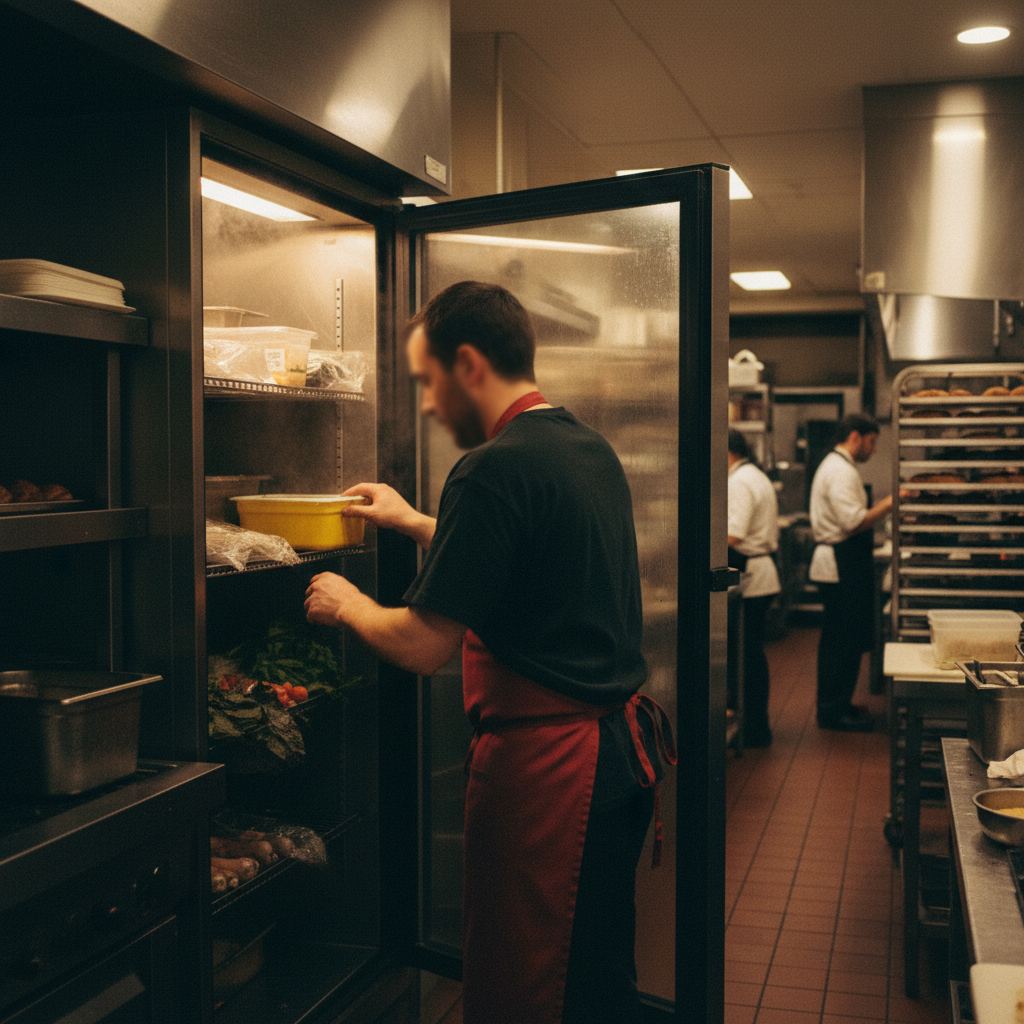
Winston-Salem food service. Illustration generated with AI. Not a photograph of a Foody Finance client or location.
What drives financing conversations in Winston-Salem
Capital here funds buildouts in the revitalized Downtown Arts District and Innovation Quarter, where older tobacco-era warehouse buildings often need significant electrical and plumbing work before a kitchen can open. Working capital also helps operators manage the gap between Wake Forest's academic calendar and the slower summer months when student spending drops off.
Revenue and seasonality in Winston-Salem
Wake Forest's academic year and downtown arts and convention events drive steady weekday and weekend traffic through fall and spring, while summer brings a noticeable slowdown as students leave and event bookings thin out. Innovation Quarter's growing biotech and research workforce has added a more consistent weekday lunch base that helps offset some of that seasonal dip.
What this does to your numbers
The school year and downtown events keep things busy, but summer can slow down noticeably.
Permitting in Winston-Salem, and what it costs to wait
Forsyth County's health department handles food service inspections while alcohol licensing runs through the North Carolina ABC Commission, a state process separate from the county health track. Many Innovation Quarter and downtown buildings also carry historic designation, which can add preservation review to any exterior or structural work before a permit clears.
What the wait actually costs
Historic building review can push back your opening date if you're renovating an older space.
What raises the cost of capital here
01Historic building designation in the Innovation Quarter can add preservation review to renovation permits
02Wake Forest's academic calendar creates a predictable summer revenue dip near campus
03North Carolina ABC licensing runs on a separate state timeline from county health permitting
Which program usually fits here
Buildout financingcovers the extra work older buildings need, and working capital carries the business through the summer slowdown.
North Carolina outline. Boundary data: US Census Bureau cartographic boundary files, public domain. Simplified for display.
Money for the work that turns a space into a working kitchen: plumbing, electrical, hoods, walls, and permits. It pays for labor and materials you cannot resell, so it is priced differently than money for a fryer.
covers
The number of guests served. Lenders pair it with check average to judge how reliable a month really is.
working capital
Cash for the everyday gaps: payroll, inventory, rent, and repairs. It is repaid out of daily or weekly sales rather than from one big event.
draw
Taking money out of an approved line or loan. Draws tied to construction milestones mean you only start paying interest on each piece as you use it.
equipment paper
A loan or lease tied to a specific machine. The machine itself is the security, so approval leans on the value of the hardware more than on your bank statements.
hard credit pull
A formal credit check that shows on your report and can move your score a few points. It happens only after you pick a specific lender, not to get information.
underwriting
The lender reading your numbers to decide how much risk you are. Bank statements, time in business, and existing debt carry the most weight.
term
How long you have to repay. A longer term lowers the monthly payment and raises what the money costs in total.
Why do buildouts in Winston-Salem's Innovation Quarter cost more than a typical strip-mall location?
Many buildings in the Innovation Quarter are converted tobacco-era warehouses with historic designation, which means renovation work often requires preservation review in addition to standard electrical and plumbing upgrades needed to bring the space up to modern kitchen code. That combination extends both the timeline and the cost compared to opening in newer commercial space.
How does Wake Forest's academic calendar affect nearby restaurant revenue?
Restaurants near campus and in the Downtown Arts District see a real pullback in traffic once Wake Forest lets out for summer, since student spending accounts for a meaningful share of weekday business during the school year. Working capital set aside during the fall and spring peak is what typically covers the leaner summer stretch.
How does Winston-Salem's shift away from a tobacco-based economy show up in restaurant demand patterns downtown?
As former tobacco manufacturing buildings downtown have been converted into the Innovation Quarter's biotech offices and labs, the weekday lunch crowd supporting nearby restaurants has shifted from factory shift workers to a more white-collar research and university-affiliated population, generally with steadier five-day schedules and less seasonal variation than a tourism-dependent business would show. Lenders reviewing a restaurant near the Innovation Quarter should expect a fairly stable weekday pattern with predictable dips around major holidays and university breaks, and should treat that stability as a reasonable baseline for this specific location rather than expecting the sharper seasonal swings typical of restaurants in more tourism-driven parts of the city.
How do Winston-Salem food businesses start a financing conversation?
Start with a free review by a specialist. You share the basics of the business, the use of funds, and recent bank statements, and you see every program that fits before any credit application exists. Short term options commonly fund in 1 to 3 business days once you choose an offer.
Do you serve areas outside Winston-Salem in North Carolina?
Yes. Every program is available statewide in North Carolina and nationwide.
What is working capital, and when does it fit a Winston-Salem operator?
Cash for the everyday gaps, repaid out of sales on a set schedule instead of at the end of a project. Use it for payroll, inventory, a slow stretch, or a job you have to fund before the client pays you. Typical size is 10,000 to 500,000, funding runs 1 to 3 business days once you choose an offer, and you repay it as fixed daily, weekly, or monthly payment. You will be asked for: application, 3 to 6 months of bank statements.
What is buildout and expansion, and when does it fit a Winston-Salem operator?
Construction money for the work that turns a space into a working kitchen, usually released in stages as the job progresses. Use it for a second location, a remodel, a patio, or a kitchen conversion, and size it to cover the permit wait, not just the build. Typical size is 50,000 to 2,000,000, funding runs 1 to 4 weeks once you choose an offer, and you repay it as fixed payment, often with a draw schedule. You will be asked for: application, contractor bids, lease, financials.
What is equipment financing, and when does it fit a Winston-Salem operator?
You borrow against a specific machine, and the machine is what backs the loan. Use it when a fryer, a walk-in, an oven, or a vehicle has to be replaced and you would rather keep the cash in the account. Typical size is 5,000 to 500,000, funding runs 1 to 5 business days once you choose an offer, and you repay it as fixed monthly payment. You will be asked for: application, equipment quote, bank statements.
Why does the Winston-Salem calendar change what I should borrow?
The school year and downtown events keep things busy, but summer can slow down noticeably.
What does waiting actually cost me in Winston-Salem?
Historic building review can push back your opening date if you're renovating an older space.
Which program do most Winston-Salem operators end up using?
Buildout financing covers the extra work older buildings need, and working capital carries the business through the summer slowdown. That is a starting point, not a decision. The specialist review looks at your deposits, your time in business, and what the money is for before anything is recommended.
Does asking about financing in Winston-Salem affect my credit?
No. Getting information is a conversation, not an application. There is no credit application and no hard credit pull until you have picked a specific lender and want to move forward.
Start the conversation
Talk to a specialist before you fill out an application.
Start with a free, no-obligation review. We will send the right application only after we know what you actually qualify for.