NC metro

Restaurant financing in Greensboro.

A Fisher Park caterer can book back to back events during Furniture Market season and then watch the calendar go quiet for weeks after. The bank account has to absorb both extremes.

How do Greensboro food businesses get funded?

Greensboro operators start with a free review with a specialist, share recent business bank statements, and are matched to the programs that fit the use of funds. Working capital funds in 1 to 3 business days after you choose an offer, equipment in 1 to 5, and buildout capital in 1 to 4 weeks.

Estimates, not offers: Amounts, terms, and funding times are estimates based on programs commonly available in food service. Actual terms vary by program, lender underwriting, time in business, revenue, and credit profile. Nothing here is an offer of credit or a guarantee of approval. See source and method.

How Greensboro eats, and what that does to cash

01

Where Greensboro eats

Downtown Greensboro's Elm Street corridor carries the city's dinner and nightlife trade, with restaurants and bars drawing a 20s to 40s crowd spending 25 to 50 dollars a head near the Tanger Center. The Lindley Park and Sunset Hills area around Battleground Avenue runs a family and brunch crowd tied to nearby neighborhoods and Guilford College. State Street, a few blocks of boutiques and restaurants near Fisher Park, pulls an older, higher-spending local crowd rather than tourists. The area near North Carolina A&T draws a student budget crowd for wings, subs, and late night counter food. High Point Road and the strip near the old furniture market carry a more transient, chain-heavy commercial corridor. A restaurant's location among these districts determines whether Friday or Sunday carries the week's revenue, and misjudging that split leaves payroll scheduled against the wrong peak.
02

What Greensboro orders

Lexington-style barbecue with red slaw and a vinegar-based sauce is the regional reference point, sold at counter-service barbecue joints across Guilford County for 10 to 16 dollars a plate. Livermush, a pork and cornmeal loaf, still shows up on breakfast menus at diners serving an older local clientele. Greensboro's food truck scene, concentrated around downtown lunch hours and Center City Park events, runs on cash-heavy, low-overhead formats. Wing spots and sub shops near A&T and UNCG serve late into the night on a college calendar. Craft breweries like Gibb's Hundred and Preyer downtown pair small kitchens or rotating food trucks with their taprooms rather than full service lines. Barbecue's slow-smoked format means kitchens commit meat and fuel costs 12 to 18 hours before a single plate sells, and a slow lunch leaves that sunk cost unrecovered for the day.

03

The Greensboro calendar

The Greensboro Coliseum Complex drives the city's biggest single swings, hosting the ACC men's basketball tournament most years in March and concerts and conventions through the fall that spike bar and restaurant traffic downtown for the surrounding week. North Carolina A&T and UNCG set the college calendar, with May through early August thinning student-driven counters near both campuses. Furniture Market, held each April and October at the High Point market complex just south of the city, pulls a business travel crowd into Greensboro hotels and restaurants for roughly a week each time. Wyndham Championship golf in August fills courses and nearby restaurants for a week. The slowest stretch citywide falls in late summer between the spring furniture market and the return of students in August, when neither event nor academic traffic is running.

04

Growth and cost in Greensboro

New restaurant space is opening along the revitalized South Elm Street blocks downtown and in the Revolution Mill redevelopment, a converted textile mill complex north of downtown now leasing to food and retail tenants. Rent remains lower than in Charlotte or Raleigh, and Guilford County's manufacturing and logistics base, including major employers near the Piedmont Triad International Airport, keeps commercial labor costs moderate. Older mill buildings like Revolution Mill require substantial electrical and plumbing upgrades before a commercial kitchen can pass inspection, adding time most operators underestimate. The furniture market's twice-yearly demand spikes tempt operators to expand capacity for events that last only a week, and equipment purchased for that surge sits underused the other 50 weeks, straining the return on that capital investment.

Food service operation in Greensboro
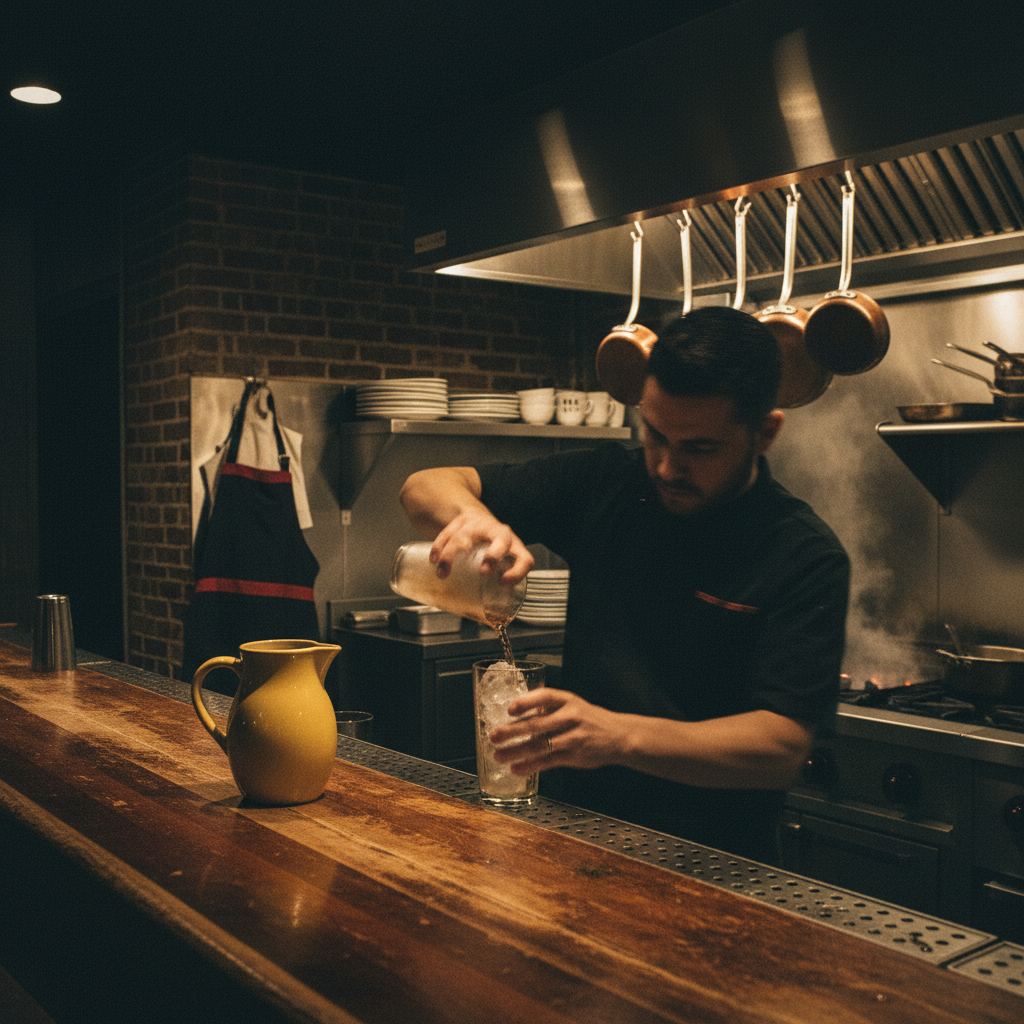
Greensboro food service. Illustration generated with AI. Not a photograph of a Foody Finance client or location.

What drives financing conversations in Greensboro

Operators here spend on banquet and catering equipment ahead of High Point Market's spring and fall runs, since that trade show pulls thousands of buyers within driving distance of Greensboro. Between markets, spending shifts toward everyday working capital to keep staff on payroll while covers settle back to normal. Financing needs to bridge that predictable feast and famine pattern tied to the trade show calendar.

Revenue and seasonality in Greensboro

Furniture Market weeks in spring and fall bring a surge of business travelers and buyers who spend heavily on dining and catering downtown, while the rest of the year runs on steadier local traffic supported by Guilford County's textile and logistics workforce. Corporate catering accounts often pay on 30 day terms, which means a busy Market week doesn't turn into usable cash until well after the vendor bills for that same week come due.

What this does to your numbers

Furniture Market weeks bring a rush of catering business twice a year, then things go quiet, so the bank balance spikes and drops on a predictable but sharp schedule.

Permitting in Greensboro, and what it costs to wait

The Guilford County Department of Public Health issues food service permits for Greensboro restaurants, and alcohol permitting runs through the North Carolina ABC Commission on a separate application. A restaurant near the Coliseum or downtown convention district may also face additional fire marshal review tied to occupancy load during Market weeks. The financing plan needs to cover the lag between build-out completion and the day the ABC permit actually clears.

What the wait actually costs

If the state alcohol permit takes longer than the build-out, you're paying rent on a space that's ready but can't serve a drink yet.

What raises the cost of capital here

  • 01High Point Market's twice yearly buyer surge concentrates catering and banquet demand into two short windows.
  • 02NC ABC Commission permitting is a distinct state-level track from the county health permit.
  • 03Corporate catering net-30 terms delay cash from Market week bookings past the vendor payment deadlines they create.

Which program usually fits here

A working capital loan fits the gap between a busy Market week and when corporate catering invoices actually get paid on 30 day terms.

Greensboro
North Carolina outline. Boundary data: US Census Bureau cartographic boundary files, public domain. Simplified for display.

Free review, no hard credit pull

Get funds now and review your options

Step 01 of 03 · Your operation

A specialist reviews every request and reaches out the same business day

Areas we serve

  • Downtown Greensboro
  • Fisher Park
  • Irving Park
  • Lindley Park
  • Sunset Hills

Financing terms on this page

Definitions for the terms used above.

working capital
Cash for the everyday gaps: payroll, inventory, rent, and repairs. It is repaid out of daily or weekly sales rather than from one big event.
draw
Taking money out of an approved line or loan. Draws tied to construction milestones mean you only start paying interest on each piece as you use it.
line of credit
A preapproved pool of money you pull from only when you need it, then pay back and reuse. You pay for what you draw, not for the full amount sitting there.
equipment paper
A loan or lease tied to a specific machine. The machine itself is the security, so approval leans on the value of the hardware more than on your bank statements.
buildout capital
Money for the work that turns a space into a working kitchen: plumbing, electrical, hoods, walls, and permits. It pays for labor and materials you cannot resell, so it is priced differently than money for a fryer.
hard credit pull
A formal credit check that shows on your report and can move your score a few points. It happens only after you pick a specific lender, not to get information.
covers
The number of guests served. Lenders pair it with check average to judge how reliable a month really is.
underwriting
The lender reading your numbers to decide how much risk you are. Bank statements, time in business, and existing debt carry the most weight.
term
How long you have to repay. A longer term lowers the monthly payment and raises what the money costs in total.

Greensboro financing questions

How does High Point Market affect financing needs for a Greensboro caterer?

Market week draws buyers from across the furniture industry into the region twice a year, and catering bookings for those weeks often require upfront purchases of food, rentals, and staffing weeks before the invoices get paid. A line of credit or working capital loan lets a caterer stock up ahead of the surge without waiting on 30 day payment terms from corporate clients.

Why does an ABC permit sometimes lag behind a Greensboro build-out?

The NC ABC Commission runs its review independently of the Guilford County health inspection, and background and premises checks can extend past the point where the kitchen itself is ready to open. A build-out budget should plan for rent and staffing costs during that gap.

How does the twice-yearly furniture market affect a Greensboro restaurant's books?

High Point's furniture market each April and October pulls business travelers and buyers into Greensboro's hotels and restaurants for roughly a week at a time, producing a sharp revenue spike that does not repeat monthly. A restaurant's bank statements from those two months can look unusually strong compared to the rest of the year. Lenders should treat those weeks as one-time events tied to a known trade show calendar rather than evidence of a permanently higher run rate, and should base underwriting on the months outside the market windows.

How do Greensboro food businesses start a financing conversation?

Start with a free review by a specialist. You share the basics of the business, the use of funds, and recent bank statements, and you see every program that fits before any credit application exists. Short term options commonly fund in 1 to 3 business days once you choose an offer.

Do you serve areas outside Greensboro in North Carolina?

Yes. Every program is available statewide in North Carolina and nationwide.

What is working capital, and when does it fit a Greensboro operator?

Cash for the everyday gaps, repaid out of sales on a set schedule instead of at the end of a project. Use it for payroll, inventory, a slow stretch, or a job you have to fund before the client pays you. Typical size is 10,000 to 500,000, funding runs 1 to 3 business days once you choose an offer, and you repay it as fixed daily, weekly, or monthly payment. You will be asked for: application, 3 to 6 months of bank statements.

What is equipment financing, and when does it fit a Greensboro operator?

You borrow against a specific machine, and the machine is what backs the loan. Use it when a fryer, a walk-in, an oven, or a vehicle has to be replaced and you would rather keep the cash in the account. Typical size is 5,000 to 500,000, funding runs 1 to 5 business days once you choose an offer, and you repay it as fixed monthly payment. You will be asked for: application, equipment quote, bank statements.

What is buildout and expansion, and when does it fit a Greensboro operator?

Construction money for the work that turns a space into a working kitchen, usually released in stages as the job progresses. Use it for a second location, a remodel, a patio, or a kitchen conversion, and size it to cover the permit wait, not just the build. Typical size is 50,000 to 2,000,000, funding runs 1 to 4 weeks once you choose an offer, and you repay it as fixed payment, often with a draw schedule. You will be asked for: application, contractor bids, lease, financials.

Why does the Greensboro calendar change what I should borrow?

Furniture Market weeks bring a rush of catering business twice a year, then things go quiet, so the bank balance spikes and drops on a predictable but sharp schedule.

What does waiting actually cost me in Greensboro?

If the state alcohol permit takes longer than the build-out, you're paying rent on a space that's ready but can't serve a drink yet.

Which program do most Greensboro operators end up using?

A working capital loan fits the gap between a busy Market week and when corporate catering invoices actually get paid on 30 day terms. That is a starting point, not a decision. The specialist review looks at your deposits, your time in business, and what the money is for before anything is recommended.

Does asking about financing in Greensboro affect my credit?

No. Getting information is a conversation, not an application. There is no credit application and no hard credit pull until you have picked a specific lender and want to move forward.

Start the conversation

Talk to a specialist before you fill out an application.

Start with a free, no-obligation review. We will send the right application only after we know what you actually qualify for.

Start a free review

Prefer to call

(833) 505-1900