Omaha restaurants near the Old Market and Charles Schwab Field see a real jump in business every June when the College World Series brings crowds downtown for weeks. Staffing plans shift around it.
How do Omaha food businesses get funded?
Omaha operators start with a free review with a specialist, share recent business bank statements, and are matched to the programs that fit the use of funds. Working capital funds in 1 to 3 business days after you choose an offer, equipment in 1 to 5, and buildout capital in 1 to 4 weeks.
Estimates, not offers: Amounts, terms, and funding times are estimates based on programs commonly available in food service. Actual terms vary by program, lender underwriting, time in business, revenue, and credit profile. Nothing here is an offer of credit or a guarantee of approval. See source and method.
How Omaha eats, and what that does to cash
01
Where Omaha eats
The Old Market, a preserved cobblestone warehouse district downtown, carries Omaha's densest restaurant row, mixing steakhouses and cocktail bars aimed at tourists and downtown workers at 25 to 45 dollars per person. Blackstone District, revitalized around Farnam Street, holds a younger counter service and brewery crowd at 12 to 20 dollars. Dundee, an older streetcar suburb neighborhood, carries neighborhood cafes and family restaurants around 15 to 22 dollars. Aksarben Village, built on a former horse racing site near the University of Nebraska Omaha, serves a mixed office worker and student crowd at 15 to 25 dollars. West Omaha's suburban corridors along 132nd and 144th Streets carry chain casual dining serving fast growing residential subdivisions. Downtown near the CHI Health Center Omaha draws convention and concert crowds. Because Omaha's steakhouse identity is concentrated in the Old Market at higher price points while the rest of the city runs on more modest suburban and neighborhood pricing, an owner opening outside downtown needs a different menu strategy than the tourist facing steakhouse model the city is best known for nationally.
02
Dishes and formats Omaha is known for
Omaha built its national food identity on beef, tied to its history as a major stockyard and meatpacking center, and steakhouse formats in the Old Market still anchor that reputation at 30 to 50 dollars a plate. The Reuben sandwich has a competing origin claim tied to Omaha's Blackstone Hotel, and delis across the city still serve it as a signature lunch item at 10 to 14 dollars. Runza, a bread pocket filled with beef and cabbage, is a regional fast food format unique to Nebraska, sold from drive through chains at 6 to 9 dollars. Craft breweries have expanded through the Old Market and Benson neighborhoods, pairing taprooms with pub food. Food halls have opened in redeveloped warehouse space near downtown. Patio dining runs from late spring through early fall given the Midwest climate, with a firm seasonal close by late October. Because the steakhouse format depends on premium beef cuts sourced through a supply chain still tied to regional packing operations, cattle price swings hit Omaha's signature restaurant category more directly than most other cities' menus.
03
Omaha's calendar
The College World Series, held each June at Charles Schwab Field downtown, brings a two to three week surge of college baseball fans filling Old Market restaurants and hotels, one of the most concentrated tourism events tied to a single neighborhood anywhere in the region. Omaha's status as headquarters to several major companies including Berkshire Hathaway, Union Pacific, and Mutual of Omaha supports steady weekday downtown lunch demand year round, with a notable bump each May around Berkshire's shareholder meeting weekend, which draws tens of thousands of visitors. The University of Nebraska Omaha and Creighton University add student driven demand near midtown and downtown during the academic year. Winter, December through February, brings harsh cold that suppresses foot traffic and patio use entirely. The Omaha Farmers Market in the Old Market runs weekends from May through October, adding weekend foot traffic during the warmer months. Because the College World Series and Berkshire's shareholder weekend both land in late spring and early summer, downtown restaurants see a concentrated multi week peak followed by a slower ordinary summer once both events end.
04
Growth and cost pattern in Omaha
New restaurant growth concentrates in the Blackstone District, Aksarben Village, and fast growing west Omaha suburbs near 144th Street, where newer retail centers offer turnkey shell space at lower buildout cost than downtown's historic buildings. The Old Market's 19th century warehouse buildings require structural, electrical, and accessibility upgrades that add significant buildout time and cost compared to suburban strip mall space. Rent runs well below coastal metros, giving Omaha a cost advantage, though downtown space tied to College World Series and convention traffic commands a premium given the concentrated seasonal demand. Labor costs are shaped by the presence of several large corporate headquarters, which compete for entry level and administrative workers but generally leave restaurant kitchen wages moderate. Utility costs swing between cold winter heating from December through February and humid summer cooling from June through August, both adding meaningfully to operating costs. Because so much downtown tourism concentrates into the College World Series' two to three week window each June, restaurant owners in the Old Market treat that stretch as a critical cash building period ahead of the calmer months that follow.
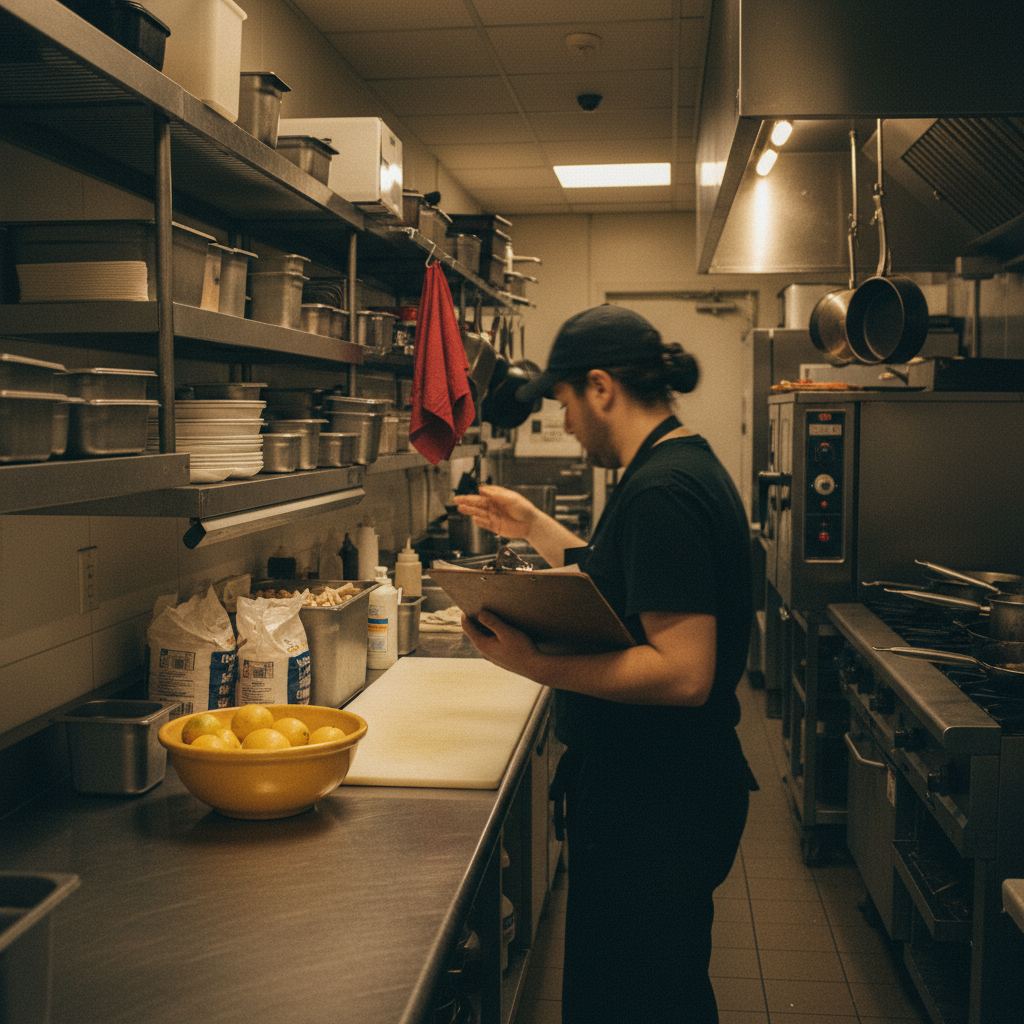
Omaha food service. Illustration generated with AI. Not a photograph of a Foody Finance client or location.
What drives financing conversations in Omaha
Financing often covers extra staffing and inventory for the College World Series stretch, plus buildout work in older Old Market storefronts that need updated kitchens. Restaurants tied to Omaha's steady corporate base, including Berkshire Hathaway and other headquartered companies, also use working capital for catering and private event growth.
Revenue and seasonality in Omaha
The College World Series in June brings a sharp, short-lived spike in downtown bar traffic, while the rest of the year runs on steadier local and corporate spending tied to Omaha's headquartered companies. Blackstone and Dundee see even weekday lunch and weekend dinner patterns, with catering invoices common among corporate clients.
What this does to your numbers
June brings a short, busy stretch downtown from the College World Series, but the rest of the year runs on steadier local business.
Permitting in Omaha, and what it costs to wait
The Douglas County Health Department handles food establishment permitting and inspections for Omaha, while liquor licensing goes through the Nebraska Liquor Control Commission on a state process separate from county health. A new Old Market restaurant hoping to open before the College World Series should start both approvals early, since the commission will not speed up for a seasonal deadline.
What the wait actually costs
Starting a liquor license too late means missing the College World Series crowd entirely for that year.
What raises the cost of capital here
01The College World Series each June concentrates a large share of downtown visitor spending into a few weeks.
02Older Old Market buildings often need kitchen and ventilation upgrades that add cost to a straightforward buildout.
03Omaha's corporate headquarters base supports steadier weekday catering and private event demand than purely tourist markets.
Which program usually fits here
Working capital fits for stocking up before the tournament, and a line of credit fits for the steadier corporate lunch and catering business the rest of the year.
Nebraska outline. Boundary data: US Census Bureau cartographic boundary files, public domain. Simplified for display.
Cash for the everyday gaps: payroll, inventory, rent, and repairs. It is repaid out of daily or weekly sales rather than from one big event.
line of credit
A preapproved pool of money you pull from only when you need it, then pay back and reuse. You pay for what you draw, not for the full amount sitting there.
draw
Taking money out of an approved line or loan. Draws tied to construction milestones mean you only start paying interest on each piece as you use it.
equipment paper
A loan or lease tied to a specific machine. The machine itself is the security, so approval leans on the value of the hardware more than on your bank statements.
hard credit pull
A formal credit check that shows on your report and can move your score a few points. It happens only after you pick a specific lender, not to get information.
buildout capital
Money for the work that turns a space into a working kitchen: plumbing, electrical, hoods, walls, and permits. It pays for labor and materials you cannot resell, so it is priced differently than money for a fryer.
covers
The number of guests served. Lenders pair it with check average to judge how reliable a month really is.
underwriting
The lender reading your numbers to decide how much risk you are. Bank statements, time in business, and existing debt carry the most weight.
term
How long you have to repay. A longer term lowers the monthly payment and raises what the money costs in total.
How should Omaha restaurants plan financing around the College World Series?
The tournament runs each June at Charles Schwab Field and draws crowds to the Old Market and downtown for close to two weeks, which is enough to justify extra staffing and inventory for restaurants in that footprint. Working capital lined up before the season starts helps cover the upfront cost of stocking up, since suppliers need lead time and the revenue does not land until the games begin.
Why does Omaha's corporate base matter for restaurant lending decisions?
Berkshire Hathaway and other major companies headquartered in Omaha support a steady stream of weekday business lunches, client dinners, and catered events that do not depend on tourism or a single event calendar. That steadier demand base is one reason financing structured around ongoing working capital, rather than a single seasonal push, fits many Omaha concepts outside the College World Series window.
Why do Omaha's Old Market restaurants plan inventory around a single event each June?
The College World Series draws college baseball fans and their families to downtown Omaha for a concentrated two to three week stretch each June, filling Old Market restaurants well beyond typical weekday volume. Owners in this district often negotiate short term staffing increases and place larger produce and beef orders specifically for this window, since demand can outpace normal supply chain timing if not planned in advance. Once the tournament ends, downtown traffic returns to a more typical summer pace built around office workers and regular tourism. Lenders reviewing an Old Market restaurant's June revenue should expect a clear spike tied to this single event and should not project that monthly figure forward as a representative baseline for the rest of the year.
How do Omaha food businesses start a financing conversation?
Start with a free review by a specialist. You share the basics of the business, the use of funds, and recent bank statements, and you see every program that fits before any credit application exists. Short term options commonly fund in 1 to 3 business days once you choose an offer.
Do you serve areas outside Omaha in Nebraska?
Yes. Every program is available statewide in Nebraska and nationwide.
What is working capital, and when does it fit a Omaha operator?
Cash for the everyday gaps, repaid out of sales on a set schedule instead of at the end of a project. Use it for payroll, inventory, a slow stretch, or a job you have to fund before the client pays you. Typical size is 10,000 to 500,000, funding runs 1 to 3 business days once you choose an offer, and you repay it as fixed daily, weekly, or monthly payment. You will be asked for: application, 3 to 6 months of bank statements.
What is equipment financing, and when does it fit a Omaha operator?
You borrow against a specific machine, and the machine is what backs the loan. Use it when a fryer, a walk-in, an oven, or a vehicle has to be replaced and you would rather keep the cash in the account. Typical size is 5,000 to 500,000, funding runs 1 to 5 business days once you choose an offer, and you repay it as fixed monthly payment. You will be asked for: application, equipment quote, bank statements.
What is business line of credit, and when does it fit a Omaha operator?
An approved limit you pull from only when you need it, then repay and reuse. Use it for a season you can see coming, so you draw before the peak and pay it back out of the peak. Typical size is 10,000 to 250,000, funding runs 2 to 7 business days once you choose an offer, and you repay it as interest on the drawn balance only. You will be asked for: application, bank statements.
Why does the Omaha calendar change what I should borrow?
June brings a short, busy stretch downtown from the College World Series, but the rest of the year runs on steadier local business.
What does waiting actually cost me in Omaha?
Starting a liquor license too late means missing the College World Series crowd entirely for that year.
Which program do most Omaha operators end up using?
Working capital fits for stocking up before the tournament, and a line of credit fits for the steadier corporate lunch and catering business the rest of the year. That is a starting point, not a decision. The specialist review looks at your deposits, your time in business, and what the money is for before anything is recommended.
Does asking about financing in Omaha affect my credit?
No. Getting information is a conversation, not an application. There is no credit application and no hard credit pull until you have picked a specific lender and want to move forward.
Start the conversation
Talk to a specialist before you fill out an application.
Start with a free, no-obligation review. We will send the right application only after we know what you actually qualify for.