Minneapolis winters compress patio revenue into a short window and put heating and equipment reliability under pressure the rest of the year.
How do Minneapolis food businesses get funded?
Minneapolis operators start with a free review with a specialist, share recent business bank statements, and are matched to the programs that fit the use of funds. Working capital funds in 1 to 3 business days after you choose an offer, equipment in 1 to 5, and buildout capital in 1 to 4 weeks.
Estimates, not offers: Amounts, terms, and funding times are estimates based on programs commonly available in food service. Actual terms vary by program, lender underwriting, time in business, revenue, and credit profile. Nothing here is an offer of credit or a guarantee of approval. See source and method.
How Minneapolis eats, and what that does to cash
01
Where Minneapolis eats
The North Loop, a converted warehouse district, holds the city's density of upscale restaurants and cocktail bars serving young professionals at 25 to 40 dollars an entree. Uptown, around Lake Street and Hennepin Avenue, mixes casual restaurants and bars serving a younger crowd, though the corridor has rebuilt slowly since 2020 damage along parts of Lake Street. Eat Street, on Nicollet Avenue, carries a dense strip of Vietnamese, Somali, and other immigrant owned restaurants serving meals at 10 to 16 dollars. Dinkytown and Stadium Village near the University of Minnesota campus serve students with counter service and late night spots. Downtown's skyway system connects office towers to restaurants that depend almost entirely on weekday office lunch traffic and go quiet on weekends. Hmong and Southeast Asian food vendors, concentrated in Frogtown across the river in St. Paul, extend the region's immigrant food economy beyond the Somali corridor alone. A downtown skyway restaurant with no street level entrance earns nothing on weekends when office towers empty and skyway doors lock.
02
What Minneapolis actually serves
Somali and East African restaurants, concentrated on Cedar Riverside and along Lake Street, serve sambusas and dishes like bariis at 10 to 15 dollars, reflecting one of the largest Somali communities in the country. Juicy Lucy burgers, a Minneapolis claim to fame from bars like Matt's and the 5-8 Club, run 10 to 14 dollars. Skyway lunch counters serve office workers quick meals at 9 to 13 dollars on weekdays only, since most close by 3 p.m. and stay shut on weekends. Scandinavian influenced bakeries and lutefisk serving supper clubs persist in pockets, tied to the region's Nordic immigrant history. Patio and rooftop season is short, running roughly May through September, given the region's cold winters. Twins games at Target Field from April through September add a fourth major sports calendar to downtown's game day restaurant traffic. A skyway lunch counter open only weekday business hours has no way to recover a slow week with weekend sales the way a street level restaurant can.
03
The calendar that runs Minneapolis
The Minnesota State Fair in late August draws over a million visitors to the fairgrounds in Falcon Heights, pulling food trends and vendor traffic that shapes the following year's restaurant menus. The Minnesota Vikings play at U.S. Bank Stadium from September through January, and the Timberwolves play at Target Center from October through April, both anchoring downtown game night traffic. Winters, roughly November through March, cut outdoor dining entirely and push office lunch traffic into the skyway system rather than street level restaurants. The University of Minnesota's academic calendar drives Dinkytown traffic, with a slow summer between spring and fall semesters. Northeast Minneapolis breweries near Marshall Street have become a weekend destination distinct from downtown's weekday office crowd. A restaurant depending on summer patio season loses nearly half the year to a Minnesota winter that eliminates outdoor seating revenue entirely.
04
Where Minneapolis growth and costs land
New restaurant construction concentrates in the North Loop and in northeast Minneapolis, where former industrial buildings near Marshall Street convert into brewery and restaurant space at lower cost than downtown towers. St. Paul, across the river, offers lower commercial rents and has drawn some restaurant growth as Minneapolis's core rents rose. Winter construction delays are a real buildout risk, since exterior work and patio construction often cannot proceed between November and March. Labor costs rose sharply after Minneapolis passed a citywide minimum wage ordinance that phased in above the state minimum, raising payroll costs faster here than in surrounding suburbs. Property tax increases tied to rising commercial valuations in the North Loop have added pressure on restaurant operators renewing leases in the district. A restaurant permitted for spring construction that slips into a Minnesota winter faces months of delay before exterior buildout work can resume.
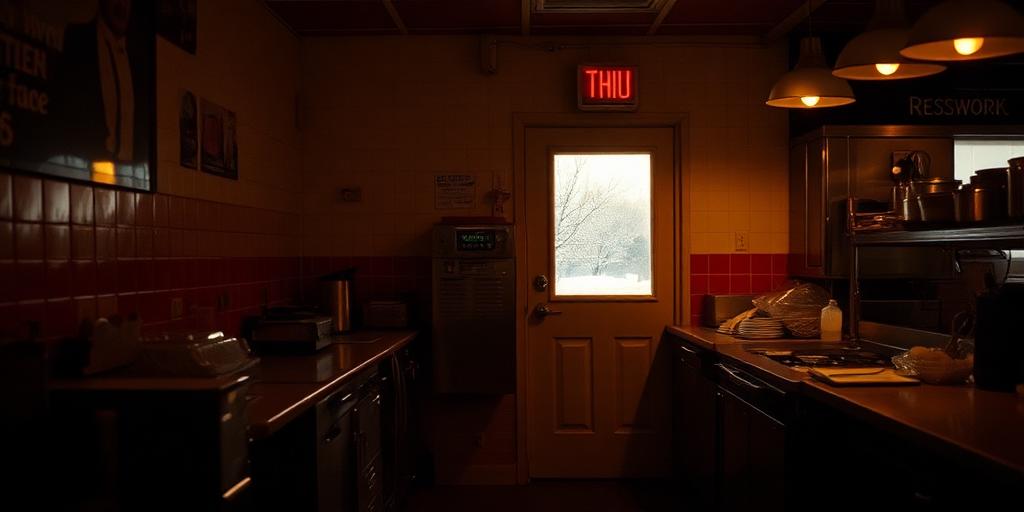
Minneapolis food service. Illustration generated with AI. Not a photograph of a Foody Finance client or location.
What drives financing conversations in Minneapolis
Lines of credit sized to cover the January through March gap are the most requested structure in this market.
Revenue and seasonality in Minneapolis
Patio and event months from May through September carry the year, deep winter runs on delivery and regulars, and downtown volume depends on office and event attendance.
What this does to your numbers
Patio season from May to September carries a disproportionate share of the year, and deep winter leans on delivery and regulars.
Permitting in Minneapolis, and what it costs to wait
City licensing and county health permitting both gate an opening, and a winter opening date means the first months of operation land in the thinnest revenue stretch of the year. The request has to carry payroll to spring, not just to opening day.
What the wait actually costs
Winter heating and snow removal stay fixed while covers drop, so the same cost sits on a smaller sales base for months.
What raises the cost of capital here
01Skyway connected downtown locations run on weekday office traffic that neighborhood spots do not see
02Winter reduces patio and walk in revenue for roughly 5 months
03Twin Cities municipalities license separately, so Minneapolis and St. Paul timelines differ
Which program usually fits here
Enclosures and patio work extend the earning calendar, and a line of creditcovers the winter without raising the payment all year.
Minnesota outline. Boundary data: US Census Bureau cartographic boundary files, public domain. Simplified for display.
The number of guests served. Lenders pair it with check average to judge how reliable a month really is.
line of credit
A preapproved pool of money you pull from only when you need it, then pay back and reuse. You pay for what you draw, not for the full amount sitting there.
underwriting
The lender reading your numbers to decide how much risk you are. Bank statements, time in business, and existing debt carry the most weight.
draw
Taking money out of an approved line or loan. Draws tied to construction milestones mean you only start paying interest on each piece as you use it.
working capital
Cash for the everyday gaps: payroll, inventory, rent, and repairs. It is repaid out of daily or weekly sales rather than from one big event.
equipment paper
A loan or lease tied to a specific machine. The machine itself is the security, so approval leans on the value of the hardware more than on your bank statements.
hard credit pull
A formal credit check that shows on your report and can move your score a few points. It happens only after you pick a specific lender, not to get information.
buildout capital
Money for the work that turns a space into a working kitchen: plumbing, electrical, hoods, walls, and permits. It pays for labor and materials you cannot resell, so it is priced differently than money for a fryer.
term
How long you have to repay. A longer term lowers the monthly payment and raises what the money costs in total.
How do Minneapolis operators finance a 5 month winter?
A line of credit sized to the gap, drawn in January and repaid across summer, fits this calendar better than a fixed note. The key is sizing to the actual shortfall rather than a round number.
Does a skyway location change the financing picture?
It changes the revenue pattern. Weekday only volume with no weekend base reads differently in underwriting, so the request should be supported by the lease terms and traffic pattern rather than by annual averages alone.
How does Minneapolis's skyway system change how a downtown restaurant location should be evaluated?
A restaurant with skyway level access instead of a street level entrance draws almost all its traffic from office workers on weekdays and can see revenue fall close to zero on weekends and holidays when skyway doors are locked, a pattern that would look like a business failing if judged against a typical street front restaurant's weekly sales curve. Lenders reviewing a downtown Minneapolis restaurant's financials usually ask whether the entrance sits at street level or skyway level first, since that single fact determines whether a quiet Saturday is a warning sign or simply how the location has always operated.
How do Minneapolis food businesses start a financing conversation?
Start with a free review by a specialist. You share the basics of the business, the use of funds, and recent bank statements, and you see every program that fits before any credit application exists. Short term options commonly fund in 1 to 3 business days once you choose an offer.
Do you serve areas outside Minneapolis in Minnesota?
Yes. Every program is available statewide in Minnesota and nationwide.
What is business line of credit, and when does it fit a Minneapolis operator?
An approved limit you pull from only when you need it, then repay and reuse. Use it for a season you can see coming, so you draw before the peak and pay it back out of the peak. Typical size is 10,000 to 250,000, funding runs 2 to 7 business days once you choose an offer, and you repay it as interest on the drawn balance only. You will be asked for: application, bank statements.
What is working capital, and when does it fit a Minneapolis operator?
Cash for the everyday gaps, repaid out of sales on a set schedule instead of at the end of a project. Use it for payroll, inventory, a slow stretch, or a job you have to fund before the client pays you. Typical size is 10,000 to 500,000, funding runs 1 to 3 business days once you choose an offer, and you repay it as fixed daily, weekly, or monthly payment. You will be asked for: application, 3 to 6 months of bank statements.
What is equipment financing, and when does it fit a Minneapolis operator?
You borrow against a specific machine, and the machine is what backs the loan. Use it when a fryer, a walk-in, an oven, or a vehicle has to be replaced and you would rather keep the cash in the account. Typical size is 5,000 to 500,000, funding runs 1 to 5 business days once you choose an offer, and you repay it as fixed monthly payment. You will be asked for: application, equipment quote, bank statements.
Why does the Minneapolis calendar change what I should borrow?
Patio season from May to September carries a disproportionate share of the year, and deep winter leans on delivery and regulars.
What does waiting actually cost me in Minneapolis?
Winter heating and snow removal stay fixed while covers drop, so the same cost sits on a smaller sales base for months.
Which program do most Minneapolis operators end up using?
Enclosures and patio work extend the earning calendar, and a line of credit covers the winter without raising the payment all year. That is a starting point, not a decision. The specialist review looks at your deposits, your time in business, and what the money is for before anything is recommended.
Does asking about financing in Minneapolis affect my credit?
No. Getting information is a conversation, not an application. There is no credit application and no hard credit pull until you have picked a specific lender and want to move forward.
Start the conversation
Talk to a specialist before you fill out an application.
Start with a free, no-obligation review. We will send the right application only after we know what you actually qualify for.