MO metro

Restaurant financing in Kansas City.

Kansas City's barbecue and game day economy runs on Chiefs and Royals schedules, so restaurants near the stadiums plan staffing and inventory around a calendar they do not control.

How do Kansas City food businesses get funded?

Kansas City operators start with a free review with a specialist, share recent business bank statements, and are matched to the programs that fit the use of funds. Working capital funds in 1 to 3 business days after you choose an offer, equipment in 1 to 5, and buildout capital in 1 to 4 weeks.

Estimates, not offers: Amounts, terms, and funding times are estimates based on programs commonly available in food service. Actual terms vary by program, lender underwriting, time in business, revenue, and credit profile. Nothing here is an offer of credit or a guarantee of approval. See source and method.

How Kansas City eats, and what that does to cash

01

Where Kansas City eats

The Country Club Plaza, an early 20th century shopping district built in Spanish Revival style, carries upscale dining and patio seating aimed at tourists and professionals at 30 to 45 dollars per person. The Crossroads Arts District, filled with converted warehouses, mixes gallery openings with counter service and brewery kitchens at 15 to 25 dollars, busiest during First Friday events. Westport, one of the city's oldest neighborhoods, carries the late night bar and live music crowd with 10 to 18 dollar bar food. The historic 18th and Vine jazz district anchors barbecue and soul food tied to the city's jazz heritage, priced 12 to 20 dollars. Downtown near the Power and Light District serves convention and event crowds around 20 to 35 dollars per person. Because Kansas City straddles the Missouri and Kansas state line, restaurants in Kansas side suburbs like Overland Park operate under different state tax and liquor rules than Missouri side neighborhoods just a few miles away, which forces multi location owners to track two separate regulatory calendars for the same metro.
02

Dishes and formats Kansas City is known for

Kansas City style barbecue, built on a thick tomato and molasses based sauce and slow smoked burnt ends, defines the city's signature dish, served from counter service smokehouses at 12 to 20 dollars a plate, with landmark spots dating back decades near the East Bottoms and 18th and Vine. Kansas City strip steak, named for the city's stockyard history, anchors higher end steakhouse formats downtown and on the Plaza at 40 dollars and up. Fried chicken family restaurants, several operating since the mid 20th century, remain a Sunday dinner tradition citywide at 15 to 22 dollars. Craft breweries have expanded through the Crossroads and West Bottoms industrial buildings, pairing taprooms with barbecue or pub food. Food trucks cluster downtown for weekday lunch near office towers and the Power and Light District. Because barbecue smoking requires long lead times, often 12 to 18 hours per batch, a single equipment failure or unexpected volume spike from a convention or game day can leave a smokehouse unable to meet same day demand, directly costing that day's sales.

03

Kansas City's calendar

Arrowhead Stadium, home of the Kansas City Chiefs, and Kauffman Stadium, home of the Royals, sit side by side east of downtown and drive massive game day traffic to nearby sports bars from September through January for football and April through September for baseball. The National World War I Museum and Memorial and downtown convention business through the Kansas City Convention Center support steady weekday demand. The American Royal, a livestock show and barbecue competition each fall, draws crowds tied directly to the city's barbecue identity. The Plaza Art Fair each September and the Plaza's holiday lighting from Thanksgiving through early January bring dense seasonal foot traffic to that district specifically. Winter months, January and February, see the steepest drop in outdoor dining and tourist traffic citywide. With football season overlapping the holiday shopping and lighting season from November through January, downtown and Plaza restaurants see their strongest overlapping months, while the quiet stretch after the Super Bowl through early spring tests cash reserves built up during that run.

04

Growth and cost pattern in Kansas City

New restaurant growth concentrates in the Crossroads Arts District's converted warehouse spaces, the North Kansas City and River Market areas along the Missouri River, and fast growing Kansas side suburbs like Overland Park and Olathe. Rent runs below coastal metros, and older Crossroads warehouse buildoutS often require significant electrical, fire suppression, and accessibility upgrades that add months to a build timeline. Labor costs differ across the state line, since Missouri and Kansas set separate minimum wage and tax rules, meaning an owner opening on the Kansas side budgets differently than one blocks away in Missouri. Smokehouse formats require substantial ventilation and grease trap infrastructure that raises buildout costs above a standard kitchen. Utility costs rise in both summer cooling and winter heating seasons given the region's temperature swings between humid summers and cold winters. Because game day traffic at Arrowhead and Kauffman concentrates so much revenue into specific weekends, restaurants near the stadiums plan inventory and staffing around the NFL and MLB schedules months in advance to avoid running short on peak days.

Food service operation in Kansas City
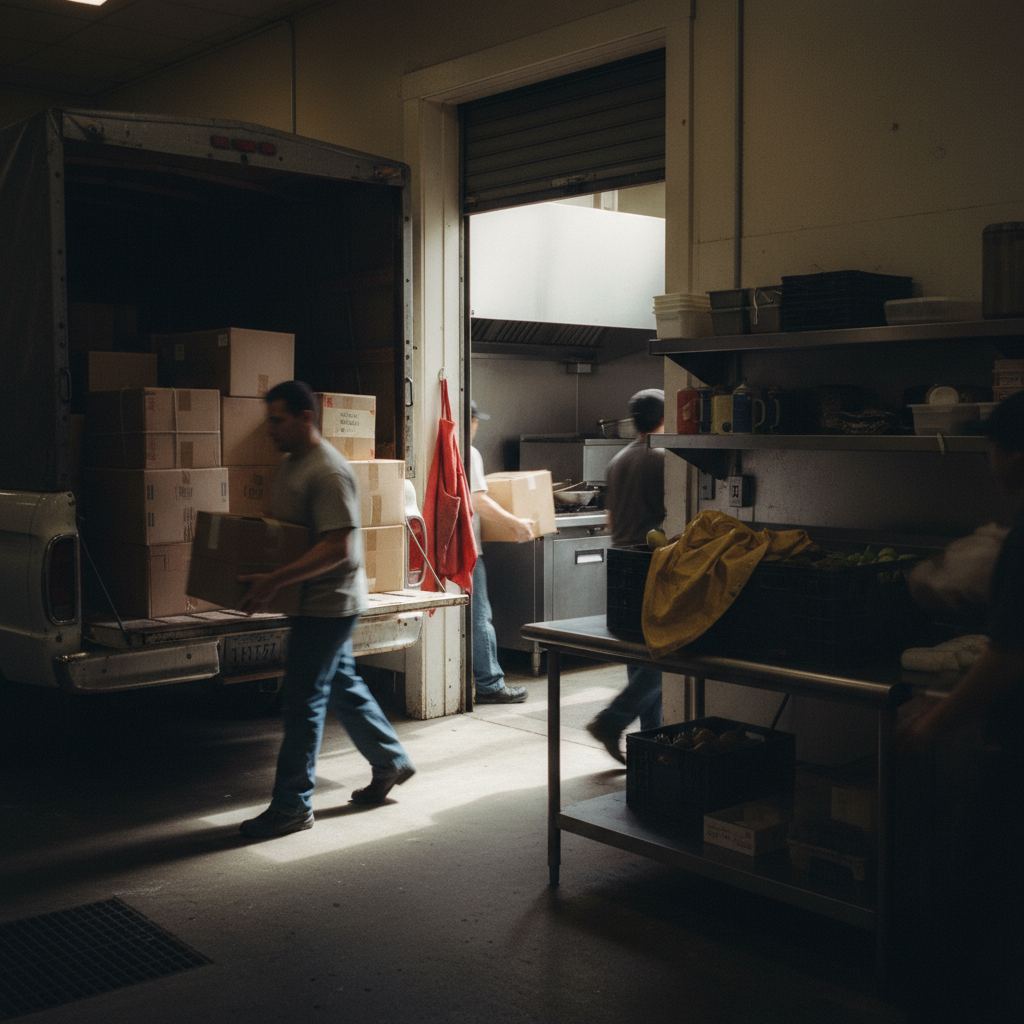
Kansas City food service. Illustration generated with AI. Not a photograph of a Foody Finance client or location.

What drives financing conversations in Kansas City

Financing often covers smokers and specialized cooking equipment for barbecue operators, plus inventory buildup ahead of major home game stretches near the Truman Sports Complex. Restaurants in the Crossroads and Power & Light District also use buildout capital to convert older warehouse space into dining rooms.

Revenue and seasonality in Kansas City

Chiefs and Royals home games drive sharp spikes near the Truman Sports Complex, while weekday traffic in Waldo and Westport stays steadier through the year. Barbecue spots see heavier weekend cash and card volume, and corporate catering adds invoice-based receivables.

What this does to your numbers

Game days near the stadium bring in a lot of business fast, but the calendar is set by the Chiefs and Royals, not the restaurant.

Permitting in Kansas City, and what it costs to wait

The Kansas City Health Department issues food establishment permits within city limits, while liquor licensing runs through the Missouri Division of Alcohol and Tobacco Control alongside a separate city liquor license process. A barbecue restaurant adding a smoker setup and a full bar should expect the equipment installation and the liquor approval to move on different timelines, with rent due on both while they finish.

What the wait actually costs

A slow equipment delivery or license approval can mean missing a big home stand that will not repeat for weeks.

What raises the cost of capital here

  • 01Chiefs and Royals home schedules create sharp week-to-week swings in demand near the stadium district.
  • 02Specialized smoker and pit equipment for barbecue concepts carries higher upfront cost than standard kitchen gear.
  • 03Older Crossroads and River Market warehouse conversions often require structural and ventilation upgrades.

Which program usually fits here

Equipment financing fits for smokers and pits that cost more upfront, and a line of credit fits for stocking up before a busy game stretch.

Kansas City
Missouri outline. Boundary data: US Census Bureau cartographic boundary files, public domain. Simplified for display.

Free review, no hard credit pull

Get funds now and review your options

Step 01 of 03 · Your operation

A specialist reviews every request and reaches out the same business day

Areas we serve

  • Westport
  • Crossroads Arts District
  • Power and Light District
  • River Market
  • Waldo

Financing terms on this page

Definitions for the terms used above.

equipment paper
A loan or lease tied to a specific machine. The machine itself is the security, so approval leans on the value of the hardware more than on your bank statements.
line of credit
A preapproved pool of money you pull from only when you need it, then pay back and reuse. You pay for what you draw, not for the full amount sitting there.
working capital
Cash for the everyday gaps: payroll, inventory, rent, and repairs. It is repaid out of daily or weekly sales rather than from one big event.
draw
Taking money out of an approved line or loan. Draws tied to construction milestones mean you only start paying interest on each piece as you use it.
hard credit pull
A formal credit check that shows on your report and can move your score a few points. It happens only after you pick a specific lender, not to get information.
buildout capital
Money for the work that turns a space into a working kitchen: plumbing, electrical, hoods, walls, and permits. It pays for labor and materials you cannot resell, so it is priced differently than money for a fryer.
covers
The number of guests served. Lenders pair it with check average to judge how reliable a month really is.
underwriting
The lender reading your numbers to decide how much risk you are. Bank statements, time in business, and existing debt carry the most weight.
term
How long you have to repay. A longer term lowers the monthly payment and raises what the money costs in total.

Kansas City financing questions

How do Chiefs game days change financing needs for Kansas City restaurants?

Restaurants and bars near the Truman Sports Complex and in areas like Westport see a heavy spike in demand on Chiefs and Royals game days, which means staffing up and stocking inventory well beyond a normal weekday. Equipment and working capital financing help cover that inventory buildup in advance, since suppliers need lead time before a big home stand.

Why does barbecue equipment financing look different in Kansas City?

A commercial smoker or offset pit setup costs considerably more than standard line equipment, and Kansas City's barbecue reputation means new concepts often need to open with serious cooking capacity from day one rather than scaling up slowly. Equipment financing sized for that upfront cost is common among new barbecue operators here.

Why does the Missouri-Kansas state line matter for restaurant owners in the Kansas City metro?

The Kansas City metro spans two states, and restaurants located just blocks apart can face different sales tax rates, liquor licensing rules, and minimum wage requirements depending on which side of the state line they sit on. An owner considering a second location in Overland Park or Olathe on the Kansas side needs separate compliance research from a Missouri side location in Kansas City proper or North Kansas City, even though both markets draw from the same regional customer base. Lenders evaluating a Kansas City area multi-unit operator should expect separate tax and licensing line items across locations and should not assume uniform state level costs the way they might in a single state metro.

How do Kansas City food businesses start a financing conversation?

Start with a free review by a specialist. You share the basics of the business, the use of funds, and recent bank statements, and you see every program that fits before any credit application exists. Short term options commonly fund in 1 to 3 business days once you choose an offer.

Do you serve areas outside Kansas City in Missouri?

Yes. Every program is available statewide in Missouri and nationwide.

What is equipment financing, and when does it fit a Kansas City operator?

You borrow against a specific machine, and the machine is what backs the loan. Use it when a fryer, a walk-in, an oven, or a vehicle has to be replaced and you would rather keep the cash in the account. Typical size is 5,000 to 500,000, funding runs 1 to 5 business days once you choose an offer, and you repay it as fixed monthly payment. You will be asked for: application, equipment quote, bank statements.

What is working capital, and when does it fit a Kansas City operator?

Cash for the everyday gaps, repaid out of sales on a set schedule instead of at the end of a project. Use it for payroll, inventory, a slow stretch, or a job you have to fund before the client pays you. Typical size is 10,000 to 500,000, funding runs 1 to 3 business days once you choose an offer, and you repay it as fixed daily, weekly, or monthly payment. You will be asked for: application, 3 to 6 months of bank statements.

What is business line of credit, and when does it fit a Kansas City operator?

An approved limit you pull from only when you need it, then repay and reuse. Use it for a season you can see coming, so you draw before the peak and pay it back out of the peak. Typical size is 10,000 to 250,000, funding runs 2 to 7 business days once you choose an offer, and you repay it as interest on the drawn balance only. You will be asked for: application, bank statements.

Why does the Kansas City calendar change what I should borrow?

Game days near the stadium bring in a lot of business fast, but the calendar is set by the Chiefs and Royals, not the restaurant.

What does waiting actually cost me in Kansas City?

A slow equipment delivery or license approval can mean missing a big home stand that will not repeat for weeks.

Which program do most Kansas City operators end up using?

Equipment financing fits for smokers and pits that cost more upfront, and a line of credit fits for stocking up before a busy game stretch. That is a starting point, not a decision. The specialist review looks at your deposits, your time in business, and what the money is for before anything is recommended.

Does asking about financing in Kansas City affect my credit?

No. Getting information is a conversation, not an application. There is no credit application and no hard credit pull until you have picked a specific lender and want to move forward.

Start the conversation

Talk to a specialist before you fill out an application.

Start with a free, no-obligation review. We will send the right application only after we know what you actually qualify for.

Start a free review

Prefer to call

(833) 505-1900