IA metro

Restaurant financing in Des Moines.

A downtown Des Moines lunch spot can pack in insurance company employees on a Tuesday and then sit half-empty on a weekend when those same office towers go dark.

How do Des Moines food businesses get funded?

Des Moines operators start with a free review with a specialist, share recent business bank statements, and are matched to the programs that fit the use of funds. Working capital funds in 1 to 3 business days after you choose an offer, equipment in 1 to 5, and buildout capital in 1 to 4 weeks.

Estimates, not offers: Amounts, terms, and funding times are estimates based on programs commonly available in food service. Actual terms vary by program, lender underwriting, time in business, revenue, and credit profile. Nothing here is an offer of credit or a guarantee of approval. See source and method.

How Des Moines eats, and what that does to cash

01

Where Des Moines eats

The East Village anchors the city's chef-driven scene with restaurants like Django and Alba drawing professionals from the nearby state capitol and insurance towers downtown, running dinner tabs in the 30 to 50 dollar range per person. Court Avenue holds the bar and nightlife cluster, packed on Friday and Saturday nights with a college-age and young-professional crowd chasing happy hour and late kitchens. Beaverdale and the Drake neighborhood near Drake University serve a family and student mix with pizza counters and coffee shops priced under 15 dollars a ticket. Valley Junction in West Des Moines pulls an antique-shopping, weekend-brunch crowd along its historic strip. Ingersoll Avenue mixes wine bars with casual ethnic spots serving Vietnamese and Mexican food to a mixed-income audience. Downtown's skywalk system feeds a lunch-only economy of counter service delis and salad bars that empties out by 2pm on weekdays, leaving those operators dependent on a narrow five-hour daily window that concentrates payroll costs into a thin revenue band.
02

What Des Moines actually eats

Iowa's pork chop culture runs deep here, with breaded tenderloin sandwiches served at counter-service diners as the default lunch order, typically 8 to 11 dollars. Maid-Rite loose meat sandwiches remain a native format found at multiple standalone locations across the metro. Taco trucks and taquerias cluster along SE 14th Street and University Avenue, serving the city's Latino population with tacos priced 2 to 3 dollars each. Craft breweries like Confluence and Exile run kitchen operations attached to taprooms, popular for weekend patio service April through October. Food halls have emerged downtown inside repurposed office space, offering multiple counter-service vendors under one roof to capture lunch traffic from state government workers. Late-night options thin out fast outside Court Avenue, with most kitchens closing by 10pm on weeknights. This narrow late-night window limits any single location's ability to recover fixed overnight labor costs on slow weeknights.

03

The Des Moines calendar

Principal Financial Group, Wells Fargo, and the state government workforce anchor weekday lunch demand downtown, with a visible drop during the last two weeks of December when state offices and corporate campuses close. The Iowa State Fair in August draws crowds to the fairgrounds on the east side, spiking demand for fried food vendors and nearby restaurants for eleven straight days. Drake University's academic calendar drives Beaverdale and university-area traffic from late August through May, with a steep falloff during the June and July break. Wells Fargo Arena and the Iowa Events Center downtown host concerts and the state's high school basketball tournaments, creating concentrated weekend surges. The World Food and Music Festival in June brings temporary vendor stalls downtown. Winter months from January through March see the steepest falloff in outdoor and patio-dependent revenue, forcing brewery kitchens and patio bars into a seasonal revenue trough that strains cash flow for three consecutive months.

04

Growth and cost in Des Moines

New restaurant openings concentrate in the East Village, the Ingersoll corridor, and suburban West Des Moines near Jordan Creek Town Center, where retail buildout is newer and parking is easier to secure than downtown. Commercial rents remain lower than coastal comparable cities, but downtown skywalk-level space carries a premium tied to lunch-hour foot traffic. Labor costs have risen with competition from warehouse and insurance-sector employers who pay hourly wages that compete directly with kitchen staff. Utility costs spike in January and February with Iowa's cold winters raising heating demand for full-service dining rooms. Buildout timelines in older East Village storefronts often run longer than suburban shells because of aging electrical and plumbing systems requiring inspection and remediation before occupancy permits clear, which delays opening dates and extends the period an operator carries rent without revenue.

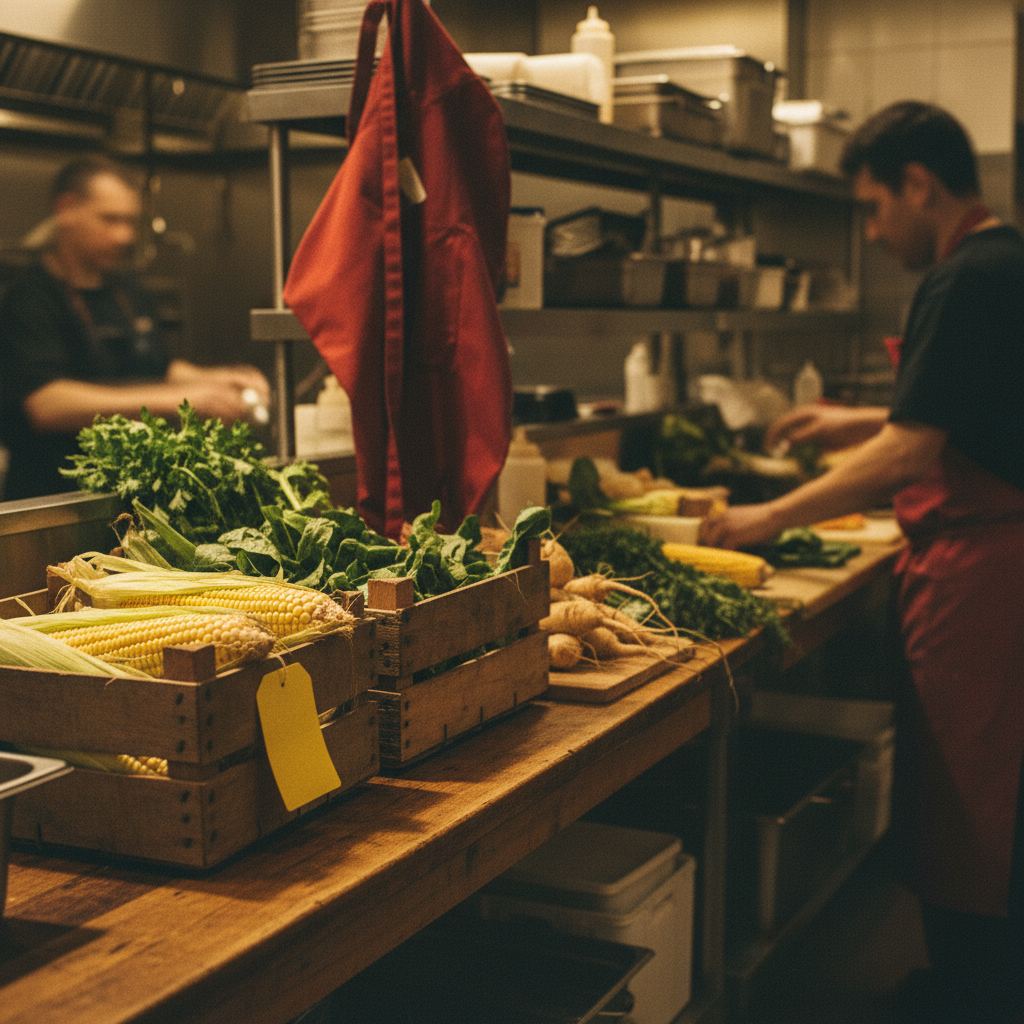
Food service operation in Des Moines
Des Moines food service. Illustration generated with AI. Not a photograph of a Foody Finance client or location.

What drives financing conversations in Des Moines

Capital in Des Moines often funds catering equipment and banquet capacity, since the city's insurance and financial services workforce drives strong weekday demand that doesn't carry into weekends the way it would in a tourist-heavy market. Owners also use financing to prepare for the Iowa State Fair and RAGBRAI, both of which pull short but intense surges in food service demand statewide.

Revenue and seasonality in Des Moines

Des Moines restaurant revenue leans on weekday lunch traffic from insurance and financial services employers downtown, with East Village and Ingersoll picking up more evening and weekend business from a younger residential base. The Iowa State Fair each August and RAGBRAI's route through the area create short windows of unusually high demand that don't reflect typical monthly volume.

What this does to your numbers

Weekday lunch from office workers downtown carries a lot of the week, but weekends can be noticeably quieter unless the location is somewhere people actually live, like East Village.

Permitting in Des Moines, and what it costs to wait

The Polk County Health Department handles food establishment permits for most of Des Moines while the city's Permit and Development Center reviews building and zoning changes separately, and Iowa's Alcoholic Beverages Division issues liquor licenses on its own state track. Historic buildings in areas like Sherman Hill and the East Village can add a design review step tied to preservation guidelines, and that step can run past the standard construction permit timeline before a loan's buildout draws are complete.

What the wait actually costs

A historic building in Sherman Hill can need an extra design review before construction finishes, and that means paying rent longer before the doors open.

What raises the cost of capital here

  • 01Downtown insurance and financial sector employment drives weekday lunch far above weekend demand
  • 02Historic preservation design review in Sherman Hill and East Village can extend buildout permitting
  • 03Iowa State Fair and RAGBRAI create brief statewide demand spikes outside normal seasonal patterns

Which program usually fits here

Working capital fits the weekday-heavy downtown pattern well since it can smooth out the gap between a strong Tuesday lunch and a quiet Saturday without a fixed payment that assumes steady daily sales.

Des Moines
Iowa outline. Boundary data: US Census Bureau cartographic boundary files, public domain. Simplified for display.

Free review, no hard credit pull

Get funds now and review your options

Step 01 of 03 · Your operation

A specialist reviews every request and reaches out the same business day

Areas we serve

  • East Village
  • Beaverdale
  • Ingersoll
  • Downtown Des Moines
  • Sherman Hill

Financing terms on this page

Definitions for the terms used above.

draw
Taking money out of an approved line or loan. Draws tied to construction milestones mean you only start paying interest on each piece as you use it.
working capital
Cash for the everyday gaps: payroll, inventory, rent, and repairs. It is repaid out of daily or weekly sales rather than from one big event.
term
How long you have to repay. A longer term lowers the monthly payment and raises what the money costs in total.
equipment paper
A loan or lease tied to a specific machine. The machine itself is the security, so approval leans on the value of the hardware more than on your bank statements.
SBA loan
A bank loan partly guaranteed by the Small Business Administration. Lowest cost of the options, longest paperwork, and the slowest to fund.
hard credit pull
A formal credit check that shows on your report and can move your score a few points. It happens only after you pick a specific lender, not to get information.
buildout capital
Money for the work that turns a space into a working kitchen: plumbing, electrical, hoods, walls, and permits. It pays for labor and materials you cannot resell, so it is priced differently than money for a fryer.
covers
The number of guests served. Lenders pair it with check average to judge how reliable a month really is.
underwriting
The lender reading your numbers to decide how much risk you are. Bank statements, time in business, and existing debt carry the most weight.

Des Moines financing questions

Does the Iowa State Fair affect restaurant financing needs in Des Moines?

Restaurants and food vendors near the fairgrounds and downtown often see a sharp but short increase in demand during the fair's roughly ten-day run each August, which requires temporary staffing and inventory beyond a typical week. Because that surge doesn't repeat until the following year, operators usually plan for it with short-term working capital rather than a permanent staffing increase.

Why is weekday lunch so much stronger than weekend business for downtown Des Moines restaurants?

Downtown Des Moines is anchored by large insurance and financial services employers whose workforce drives a heavy weekday lunch crowd that largely disappears on weekends when those offices are closed. Restaurants relying on that downtown office base often see weekend revenue concentrated instead in East Village or Ingersoll, which pulls in a residential and nightlife crowd the office core doesn't have.

Why do Des Moines restaurants see such a sharp dip in late December?

Des Moines' downtown core runs heavily on state government and insurance-sector office workers who take extended holiday breaks, and many state offices close between Christmas and New Year's Day. Restaurants and counter-service delis inside the skywalk system see foot traffic drop sharply during this window since there is little residential population downtown to replace office lunch demand. Lenders reviewing a Des Moines operator's financials should expect this seasonal dip as a recurring, structural pattern tied to downtown's office-dependent customer base rather than a one-time anomaly, and should look at trailing twelve-month averages rather than any single December statement.

How do Des Moines food businesses start a financing conversation?

Start with a free review by a specialist. You share the basics of the business, the use of funds, and recent bank statements, and you see every program that fits before any credit application exists. Short term options commonly fund in 1 to 3 business days once you choose an offer.

Do you serve areas outside Des Moines in Iowa?

Yes. Every program is available statewide in Iowa and nationwide.

What is working capital, and when does it fit a Des Moines operator?

Cash for the everyday gaps, repaid out of sales on a set schedule instead of at the end of a project. Use it for payroll, inventory, a slow stretch, or a job you have to fund before the client pays you. Typical size is 10,000 to 500,000, funding runs 1 to 3 business days once you choose an offer, and you repay it as fixed daily, weekly, or monthly payment. You will be asked for: application, 3 to 6 months of bank statements.

What is equipment financing, and when does it fit a Des Moines operator?

You borrow against a specific machine, and the machine is what backs the loan. Use it when a fryer, a walk-in, an oven, or a vehicle has to be replaced and you would rather keep the cash in the account. Typical size is 5,000 to 500,000, funding runs 1 to 5 business days once you choose an offer, and you repay it as fixed monthly payment. You will be asked for: application, equipment quote, bank statements.

What is sba loans, and when does it fit a Des Moines operator?

A bank loan partly guaranteed by the Small Business Administration, which is why the payment is the lowest available. Use it when you can plan months ahead. It is the cheapest money on this page and the slowest to arrive. Typical size is 50,000 to 5,000,000, funding runs 3 to 12 weeks once you choose an offer, and you repay it as amortized interest, lowest payment of any program. You will be asked for: tax returns, interim financials, debt schedule, plan.

Why does the Des Moines calendar change what I should borrow?

Weekday lunch from office workers downtown carries a lot of the week, but weekends can be noticeably quieter unless the location is somewhere people actually live, like East Village.

What does waiting actually cost me in Des Moines?

A historic building in Sherman Hill can need an extra design review before construction finishes, and that means paying rent longer before the doors open.

Which program do most Des Moines operators end up using?

Working capital fits the weekday-heavy downtown pattern well since it can smooth out the gap between a strong Tuesday lunch and a quiet Saturday without a fixed payment that assumes steady daily sales. That is a starting point, not a decision. The specialist review looks at your deposits, your time in business, and what the money is for before anything is recommended.

Does asking about financing in Des Moines affect my credit?

No. Getting information is a conversation, not an application. There is no credit application and no hard credit pull until you have picked a specific lender and want to move forward.

Start the conversation

Talk to a specialist before you fill out an application.

Start with a free, no-obligation review. We will send the right application only after we know what you actually qualify for.

Start a free review

Prefer to call

(833) 505-1900